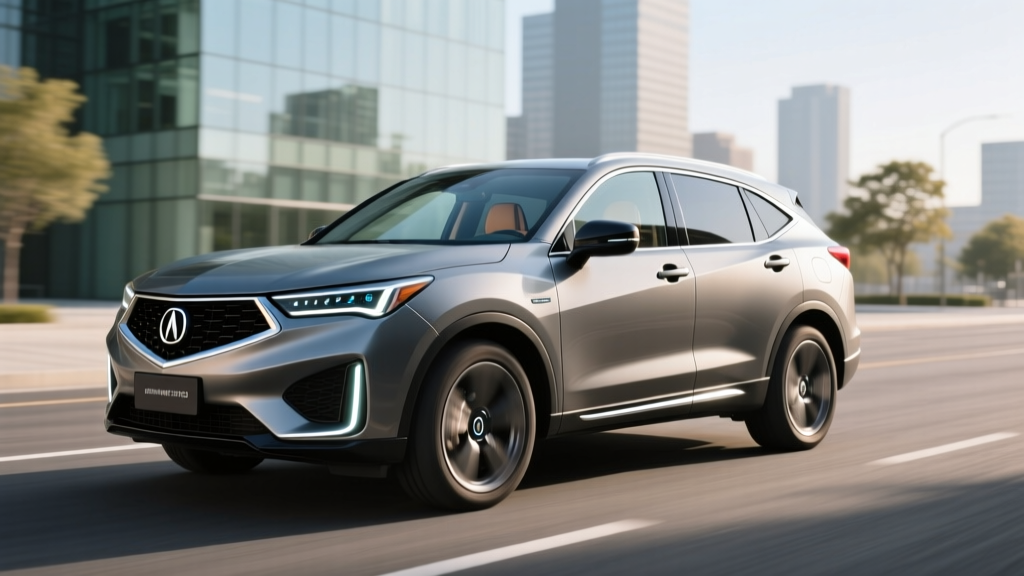
The Acura RDX has long been a benchmark compact luxury crossover, but for years it offered only a turbocharged gas powertrain. That changes with the introduction of a hybrid variant, giving luxury buyers a meaningful efficiency upgrade without the range compromises of a full battery-electric vehicle. If you've been searching for an Acura hybrid RDX, this guide breaks down exactly what the powertrain delivers, how the fuel economy holds up beyond the EPA sticker, and whether this hybrid makes more financial sense than a plug-in hybrid or a full EV.
HEV vs PHEV: What Kind of Hybrid Is the RDX?
Before we get into the numbers, it's critical to understand what type of hybrid system the RDX uses — because the difference between a conventional hybrid (HEV) and a plug-in hybrid (PHEV) changes everything about how you own and fuel the vehicle.
| Feature | Conventional Hybrid (HEV) | Plug-In Hybrid (PHEV) |
|---|---|---|
| Plugs in to charge? | No — charges via engine & regen | Yes — Level 1 or Level 2 |
| Electric-only range | Less than 1 mile at low speed | 20–45 miles typical |
| Battery size | 1.0–2.0 kWh | 13–25 kWh |
| Federal tax credit | Not eligible under §30D | Up to $7,500 (if eligible) |
| Best for | No home charging access | Short commutes + home charging |
The Acura RDX hybrid is a conventional hybrid (HEV), not a plug-in. This means you never plug it in — the small battery recharges through regenerative braking and the gasoline engine. The benefit is simplicity: no charging cable, no home electrical work, no change in your fueling habits. The tradeoff is that you cannot drive on electric-only power for meaningful distances, and the RDX HEV does not qualify for the federal §30D EV tax credit (which requires plug-in capability and minimum battery capacity).
Fuel Economy: EPA Ratings vs Real-World MPG
The headline number for any hybrid is fuel economy, and the RDX hybrid delivers a measurable improvement over the standard turbocharged gas model. Here's how the EPA rates it:
| Powertrain | City MPG | Highway MPG | Combined MPG |
|---|---|---|---|
| 2026 Acura RDX Hybrid (AWD) | 28 | 27 | 28 |
| 2026 Acura RDX Gas (AWD, 2.0T) | 21 | 27 | 23 |
Source: fueleconomy.gov
The hybrid's biggest advantage shows up in city driving, where the electric motor handles low-speed acceleration and the engine shuts off at stops. That 28 MPG city rating represents a 33% improvement over the gas RDX's 21 MPG city figure. On the highway, where the gasoline engine does most of the work, the gap narrows — the hybrid matches the gas model at 27 MPG highway.
Real-World MPG: What Owners Actually See
Hybrids tend to meet or exceed their EPA city estimates in real-world stop-and-go traffic, because that's where regenerative braking and electric assist do the most work. On mixed suburban commutes, expect to see 27–30 MPG combined from the RDX hybrid in moderate temperatures. In heavy highway cruising at 75+ MPH, efficiency drops to roughly 25–26 MPG — typical for a turbocharged AWD crossover.
Cold weather impacts hybrid efficiency less severely than it impacts full EVs, but you'll still see a 5–10% MPG reduction in winter (roughly 25–26 MPG combined) because the engine runs more often to provide cabin heat and because battery chemistry is less efficient at low temperatures.
Powertrain Specs: Engine, Motor, and Combined Output
The RDX hybrid pairs Acura's turbocharged 2.0-liter inline-four with an electric motor integrated into the transmission. Here's the full powertrain breakdown:
| Specification | Value |
|---|---|
| Engine | 2.0L turbocharged inline-4 |
| Engine output | 272 hp / 280 lb-ft torque |
| Electric motor | Integrated motor assist |
| Combined system output | ~290 hp (estimated) |
| Transmission | 10-speed automatic with hybrid module |
| Drivetrain | SH-AWD (Super Handling All-Wheel Drive) |
| Hybrid battery | ~1.5 kWh lithium-ion |
| 0–60 mph | ~6.2 seconds (estimated) |
| Towing capacity | 1,500 lbs |
The electric motor fills in the torque gap at low RPMs — the exact spot where turbo lag is most noticeable — resulting in smoother, more immediate acceleration from a stop. The SH-AWD system can vector torque to individual rear wheels, which enhances cornering grip regardless of whether you're running on gas or hybrid power.
Battery Warranty, Lifespan, and Replacement Cost
Battery longevity is the number-one concern for hybrid buyers, and for good reason: a replacement hybrid battery can cost several thousand dollars. Here's what Acura covers:
Acura RDX Hybrid Battery Warranty
- Hybrid battery: 8 years / 100,000 miles (10 years / 150,000 miles in CARB states including CA, NY, MA, and others)
- Hybrid system components: 8 years / 100,000 miles
- Powertrain warranty: 6 years / 70,000 miles
- Limited vehicle warranty: 4 years / 50,000 miles
Acura's hybrid battery warranty aligns with the federal minimum requirement of 8 years / 100,000 miles for emissions-related components. In states that follow California Air Resources Board (CARB) standards — which now include over a dozen states — that coverage extends to 10 years / 150,000 miles.
In practice, modern hybrid batteries from Japanese and Korean manufacturers have proven extremely durable. Toyota and Honda hybrid batteries routinely last 150,000–200,000+ miles before significant degradation. The RDX's relatively small ~1.5 kWh battery is less stressed than a PHEV or EV battery because it operates in a narrow state-of-charge window (roughly 40–60%), which dramatically extends cycle life.
Battery Replacement Cost
If the hybrid battery does fail outside of warranty, expect a replacement cost of $2,000–$4,000 including parts and labor at a dealership. Independent hybrid specialists may offer refurbished battery packs for $1,500–$2,500. Given the battery's small size and low stress profile, this is a lower-risk cost than a full EV battery replacement, which can exceed $10,000–$20,000.
Pricing, Trims, and Tax Credit Eligibility
The RDX hybrid slots into Acura's lineup at a modest premium over the gas-only model. Here's the estimated pricing structure:
| Trim | Gas RDX MSRP | RDX Hybrid MSRP | Hybrid Premium |
|---|---|---|---|
| Base / Standard | $44,350 | $46,850 | +$2,500 |
| Technology Package | $47,350 | $49,850 | +$2,500 |
| A-Spec | $49,350 | $51,850 | +$2,500 |
| Advance Package | $53,150 | $55,650 | +$2,500 |
Does the Acura RDX Hybrid Qualify for a Tax Credit?
No. The conventional RDX hybrid (HEV) does not qualify for the federal §30D Clean Vehicle Credit. Under current IRS rules, the §30D credit is reserved for plug-in electric vehicles (BEVs and PHEVs) with a minimum battery capacity of 7 kWh. Since the RDX HEV's battery is approximately 1.5 kWh and cannot be plugged in, it falls outside the credit's scope entirely.
Some states and local utilities offer modest rebates for conventional hybrids, but these vary widely by jurisdiction and are typically $250–$1,000 — far less than the up-to-$7,500 federal credit available for qualifying PHEVs and EVs. Check your state energy office or utility provider for current programs.
Fuel Savings Payback
The $2,500 hybrid premium pays for itself through fuel savings. Assuming 15,000 miles per year, $3.50/gallon regular fuel, and the hybrid's 28 MPG combined vs the gas model's 23 MPG combined:
- Gas RDX annual fuel cost: ~$2,283
- Hybrid RDX annual fuel cost: ~$1,875
- Annual savings: ~$408
- Payback period: ~6.1 years
If you drive more than 15,000 miles annually or if fuel prices rise, the payback shortens. If you primarily drive highway miles where the hybrid advantage is smaller, it lengthens.
Who Should Choose the RDX Hybrid vs a PHEV or Full EV?
Pros
- No change to fueling habits — no charging required
- Significant city MPG improvement (28 vs 21)
- Smoother acceleration with electric torque fill
- Lower battery replacement risk than EV/PHEV
- Full SH-AWD capability maintained
- No range anxiety in cold weather or remote areas
Cons
- No federal tax credit eligibility
- No electric-only driving capability
- Highway MPG similar to gas model
- ~$2,500 price premium over gas RDX
- 6+ year fuel-savings payback period
- Less cargo space than gas RDX (battery packaging)
The Decision Framework
Choose the RDX Hybrid if: You don't have access to home or workplace charging, you do a mix of city and highway driving, you want better fuel economy without changing your fueling routine, and you plan to keep the vehicle 5+ years to recoup the hybrid premium.
Choose a PHEV (like the BMW X3 xDrive30e or Lincoln Corsair Grand Touring) if: You can install a Level 2 home charger, your daily commute is under 30 miles, and you want electric-only driving for most trips while keeping a gas engine for road trips. A qualifying PHEV may also net you up to $7,500 in federal tax credits.
Choose a full EV (like the Tesla Model Y or Genesis GV70 Electrified) if: You have reliable home charging, your daily driving is under 250 miles, you want to eliminate gasoline entirely, and you qualify for the full §30D credit — which can make an EV cheaper to own than a hybrid over 5 years.
Reliability and Long-Term Ownership
Acura's parent company Honda has decades of hybrid powertrain experience, dating back to the original Insight in 1999. The two-motor hybrid system used across Honda and Acura's lineup has proven robust, with few systemic failures reported in models like the Accord Hybrid and CR-V Hybrid.
The RDX hybrid adds complexity in the form of the SH-AWD rear differential and the hybrid module, but Acura's warranty coverage is competitive with BMW, Mercedes-Benz, and Lexus in the luxury compact segment. For reliability ratings, consult IIHS crash-test scores and owner-survey data from Consumer Reports once sufficient real-world mileage data accumulates for this specific powertrain.
One ownership advantage of the hybrid: regenerative braking reduces wear on the friction brake pads and rotors. Many hybrid owners report original brake pads lasting 80,000–100,000 miles, which partially offsets the hybrid's higher initial cost during long-term ownership.
Frequently Asked Questions
How many MPG does the Acura RDX hybrid get?
The 2026 Acura RDX hybrid is EPA-rated at 28 MPG city, 27 MPG highway, and 28 MPG combined with AWD. In real-world mixed driving, expect 27–30 MPG combined depending on conditions.
Does the Acura RDX hybrid need to be plugged in?
No. The RDX hybrid is a conventional hybrid (HEV), not a plug-in hybrid (PHEV). The battery charges automatically through regenerative braking and the gasoline engine. You fuel it exclusively at a gas station.
Does the Acura RDX hybrid qualify for a federal tax credit?
No. The federal §30D Clean Vehicle Credit requires a vehicle to be a plug-in electric vehicle with at least 7 kWh of battery capacity. The RDX hybrid's ~1.5 kWh battery and lack of plug-in capability make it ineligible. Check with your state energy office for any local hybrid incentives.
How long will the RDX hybrid battery last?
Acura warrants the hybrid battery for 8 years / 100,000 miles (10 years / 150,000 miles in CARB states). Based on Honda/Acura hybrid battery track records, expect 150,000–200,000+ miles of service life before significant degradation. Replacement costs $2,000–$4,000 if needed outside warranty.
Is the RDX hybrid faster than the gas RDX?
The electric motor adds torque fill at low RPM, making the hybrid feel more responsive from a stop, but peak horsepower is similar. Estimated 0–60 time is approximately 6.2 seconds for the hybrid versus 6.4 seconds for the gas model — a marginal difference. The hybrid's advantage is smoothness, not outright speed.
Hybrid vs PHEV vs EV — which is right for me?
If you can't charge at home and drive a mix of city and highway, the HEV (conventional hybrid) is the safest choice. If you can charge at home and commute under 30 miles daily, a PHEV lets you drive mostly on electricity while keeping gas for road trips. If you can charge at home and rarely drive over 250 miles in a day, a full EV offers the lowest operating cost and may qualify for up to $7,500 in federal tax credits.
The Acura RDX hybrid fills a specific niche: luxury compact crossover buyers who want meaningfully better fuel economy without altering their fueling habits or investing in home charging infrastructure. It's not the most efficient path to electrification — a PHEV or full EV will save more fuel and may qualify for tax credits — but it's the lowest-friction upgrade for drivers who aren't ready to plug in. With a proven hybrid system, strong warranty coverage, and a modest price premium, the RDX hybrid earns its place as a practical step toward electrified driving.