Quick Verdict: The 2025 AMG E 53 Plug-In Sedan in 60 Seconds
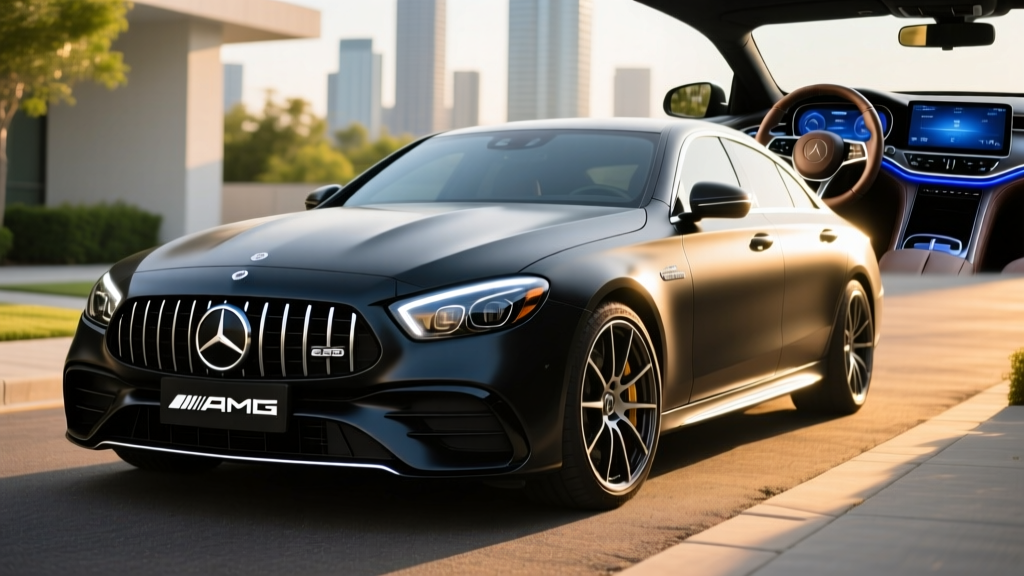
The 2025 Mercedes-AMG E 53 plug-in sedan threads a very specific needle: it pairs a turbocharged inline-six with a rear-axle electric motor for a combined 536 horsepower, while still delivering roughly 27 miles of electric-only commuting range. It's a performance PHEV first and a luxury commuter second. If your daily drive is under 30 miles round-trip and you want AMG thrust without burning premium fuel every day, this is one of the few plug-in hybrids that genuinely delivers on both promises.
But the E 53 PHEV isn't for everyone. Its 21.2 kWh battery is small compared to a full EV, its electric-only highway range shrinks dramatically above 70 mph, and at a starting MSRP north of $74,000, it sits in a tax-credit dead zone for many buyers. Here's the complete spec-by-spec breakdown.
Powertrain: 536 Horsepower From an Inline-Six and Electric Motor
The 2025 AMG E 53 plug-in sedan uses Mercedes' M256M 3.0-liter turbocharged inline-six paired with a permanently excited synchronous electric motor integrated into the 9G-TRONIC nine-speed automatic transmission. Combined output is 536 horsepower and 553 lb-ft of torque, with a rear-biased 4MATIC+ all-wheel-drive system.
| Component | Specification |
|---|---|
| Engine | 3.0L turbocharged inline-six (M256M) |
| Engine Output | 443 hp / 413 lb-ft |
| Electric Motor | Permanently excited synchronous (integrated in transmission) |
| Motor Output | 161 hp / 354 lb-ft |
| Combined System Output | 536 hp / 553 lb-ft |
| Transmission | 9G-TRONIC 9-speed automatic |
| Drivetrain | 4MATIC+ AWD (rear-biased) |
| 0-60 mph | 3.7 seconds (manufacturer claim) |
| Top Speed | 155 mph (electronically limited) |
The electric motor provides instant torque fill at low RPMs, eliminating the turbo lag inherent to even well-tuned inline-sixes. In Electric drive mode, the car is rear-wheel drive only (the motor acts on the rear axle), which is worth knowing if you're in snow country — switch to Hybrid or 4MATIC+ mode for traction.
Electric-Only Range and Battery: 27 Miles EPA, Less on the Highway
The E 53 PHEV carries a 21.2 kWh lithium-ion battery (gross capacity; usable is approximately 17.5-18 kWh after the buffer reserved for battery longevity). The EPA rates it at 27 miles of electric-only range.
EPA sticker: 27 miles. In mixed city/suburban driving at 35-50 mph, expect 24-27 miles. On the highway at 70-75 mph, expect 18-21 miles — aerodynamic drag and the sedan's 4,800+ lb curb weight cut into electric range fast. In freezing temperatures (below 32°F), plan for 16-20 miles due to cabin heating load and reduced battery efficiency. The E 53 PHEV does not include a dedicated heat pump for the cabin in electric mode, which is a notable omission at this price point.
The total combined range (electric + gasoline) is approximately 400-420 miles, thanks to the 15.9-gallon fuel tank and the inline-six's reasonable highway efficiency once the battery is depleted.
Charging the 21.2 kWh Battery
The E 53 PHEV supports AC Level 2 charging at up to 7.4 kW via its onboard charger. It does not support DC fast charging — a common limitation among PHEVs, since the battery is small enough that Level 2 charging is adequate for overnight replenishment.
| Charging Level | Power | Time (0-100%) | Connector |
|---|---|---|---|
| Level 1 (120V household) | ~1.4 kW | ~13-14 hours | J1772 |
| Level 2 (240V home/public) | 7.4 kW | ~2.5 hours | J1772 |
| DC Fast Charge | Not supported | N/A | N/A |
For daily use, a home Level 2 charger (like a ChargePoint Home Flex or Mercedes-Benz Wallbox) will fully replenish the battery overnight in about 2.5 hours. If you're only using 20-25 miles of electric range per day, a partial charge takes roughly 1.5-2 hours. Level 1 charging from a standard outlet works but is impractical as a daily strategy unless your commute is very short.
Fuel Economy: MPGe, MPG, and Real-World Numbers
Fuel economy for a PHEV depends entirely on how you use it. The EPA provides two figures: MPGe (miles per gallon equivalent) when running on electricity, and standard MPG when the battery is depleted and the gasoline engine takes over.
| Metric | City | Highway | Combined |
|---|---|---|---|
| MPGe (charge-depleting, electric+gas) | 50 MPGe combined | ||
| MPG (charge-sustaining, gas only) | ~23 MPG | ~29 MPG | ~25 MPG |
| Energy consumption (EV mode) | ~44 kWh/100 mi | ||
Real-world MPG vs. EPA: PHEVs often exceed their EPA city MPG in real-world stop-and-go driving because regenerative braking recaptures energy that a gas car wastes as heat. In our experience with Mercedes PHEV powertrains, city driving in Hybrid mode with a depleted battery can yield 26-28 MPG — slightly above the EPA estimate. Highway driving at 75+ mph tends to fall 1-2 MPG below the EPA figure due to the car's weight and performance-oriented gearing.
The critical insight: if you charge nightly and your daily commute is under 27 miles, you may use almost zero gasoline for months at a time. If you don't charge and drive it like a conventional E-Class, expect 23-27 MPG combined — respectable for a 536-hp sedan, but not dramatically better than the mild-hybrid E 450.
HEV vs. PHEV vs. Full EV: Which Is Right for You?
Conventional Hybrid (HEV)
Example: Toyota Camry Hybrid
Plug in? No — charges via regenerative braking and the engine.
EV range: ~1 mile or less
Best for: Drivers who want better MPG without changing habits or installing a charger.
Plug-In Hybrid (PHEV)
Example: 2025 AMG E 53 PHEV
Plug in? Yes — for 20-40 miles of EV range. Then operates as a hybrid.
EV range: 27 miles (EPA)
Best for: Short-commute drivers who also need long road-trip range without charging stops.
Full Battery EV (BEV)
Example: Mercedes EQE 350+ Sedan
Plug in? Yes — always. No gasoline engine.
EV range: 250-350+ miles
Best for: Drivers with home charging who want zero tailpipe emissions and the lowest per-mile fuel cost.
- Your daily commute is under 30 miles round-trip and you can charge at home
- You want AMG-level performance (536 hp, 3.7s 0-60) without a second car for road trips
- You live in an area with sparse DC fast-charging infrastructure
- You value the E-Class interior, MBUX tech, and SAE Level 2 driver-assist systems
- Your commute is longer than 30 miles and you want to avoid gasoline entirely
- You have reliable home Level 2 charging and access to public fast chargers for road trips
- You want the lowest total cost of ownership over 5+ years
- You cannot charge at home and don't want to rely on public charging
- You want a simpler powertrain with no plug-in behavior to manage
Pricing, Trims, and Federal Tax Credit Eligibility
The 2025 Mercedes-AMG E 53 plug-in sedan starts at an MSRP of approximately $74,900 (including destination). A well-optioned example with the AMG Night Package, Burmester 4D surround sound, and MBUX Hyperscreen can push past $85,000-$90,000.
| Item | Amount |
|---|---|
| Base MSRP (E 53 PHEV Sedan) | ~$74,900 |
| Typical as-tested (with popular packages) | $82,000-$88,000 |
| Federal §30D PHEV Tax Credit | See eligibility notes below |
| Estimated annual insurance | $2,800-$3,500 (varies by state/driver) |
Does the 2025 AMG E 53 PHEV Qualify for the Federal Tax Credit?
Under IRS §30D clean vehicle credit rules, a PHEV can qualify for up to $7,500 — but only if it meets all of the following criteria:
- MSRP cap: Sedan MSRP must be ≤ $55,000. The E 53 PHEV at ~$74,900 exceeds this cap, making it ineligible for the new-vehicle §30D credit.
- Buyer income limits: AGI must be ≤ $150,000 (single), $225,000 (head of household), or $300,000 (joint). Even if the MSRP qualified, many AMG buyers exceed these thresholds.
- Battery sourcing / critical minerals: The battery components and critical minerals must meet phased-in domestic-content requirements that tighten each year through 2029.
- Minimum battery capacity: The 21.2 kWh battery exceeds the 7 kWh minimum — this requirement is met.
Bottom line: The 2025 AMG E 53 PHEV does not qualify for the federal §30D tax credit due to its MSRP exceeding the $55,000 sedan cap. Consult a tax professional for your specific situation, and check for any state-level PHEV incentives, which vary by jurisdiction and are not subject to the federal MSRP cap.
Battery Warranty, Reliability, and Long-Term Costs
- High-voltage battery warranty: 6 years / 62,000 miles (Mercedes-Benz standard for PHEV batteries in the U.S.)
- Powertrain warranty: 4 years / 50,000 miles
- Limited vehicle warranty: 4 years / 50,000 miles
- Capacity retention threshold: Mercedes typically warrants against battery capacity falling below 70% of original during the warranty period
Is the E 53 PHEV reliable? The M256 inline-six and 9G-TRONIC transmission are proven, well-sorted components used across the Mercedes lineup since 2018. The electric motor integration is newer but mechanically simple (fewer moving parts than the engine). The main reliability risk for PHEVs is the added complexity of two complete powertrains — you're maintaining both a gasoline engine (oil changes, spark plugs, turbo cooling system) and a high-voltage electrical system.
Battery replacement cost: If the 21.2 kWh battery fails outside of warranty, replacement cost is estimated at $8,000-$12,000 including labor, based on Mercedes PHEV battery pricing trends. This is significantly less than a full EV battery replacement ($15,000-$25,000+) because the pack is much smaller. However, modern lithium-ion PHEV batteries rarely require full replacement — individual module repairs or rebalancing are more common and less expensive.
Long-term degradation: PHEV batteries experience more charge cycles per mile driven than full EVs (because the usable capacity is smaller), but Mercedes' thermal management system and conservative buffer strategy mitigate this. Expect 85-90% state of health (SoH) after 5 years / 60,000 miles of typical use — meaning your 27-mile EV range might drop to 23-24 miles over time.
Driving Experience, Tech, and SAE Level 2 Driver Assist
The E 53 PHEV inherits the current-generation E-Class (W214) interior, which means a 12.3-inch digital instrument cluster, a 14.4-inch central MBUX touchscreen, and available MBUX Superscreen passenger display. The AMG-specific tuning includes sport seats, AMG Performance steering wheel, and selectable drive modes (Electric, Hybrid, Sport, Sport+, Individual).
In Sport+ mode with a charged battery, the combined 536 hp and instant electric torque deliver a 3.7-second 0-60 mph sprint that genuinely feels AMG-caliber. The transition between electric and gasoline power is nearly imperceptible — the nine-speed transmission masks the handoff well.
The E 53 PHEV comes with Mercedes' Active Distance Assist DISTRONIC and Active Steering Assist. These are SAE Level 2 driver-assistance systems — meaning the car can manage speed, following distance, and lane centering, but the driver must remain fully engaged, hands on or near the wheel, eyes on the road. This is not self-driving. Mercedes' DRIVE PILOT (Level 3, conditional automation) is available in select markets but is not standard on the E 53 PHEV and operates only under very limited conditions (below 40 mph on approved highways).
Pros, Cons, and Who Should Buy the E 53 PHEV
Pros
- 536 hp with instant electric torque fill — genuine AMG acceleration
- 27-mile EV range covers most daily commutes without gasoline
- No range anxiety — 400+ mile total range with the gas engine
- Class-leading E-Class interior and MBUX technology
- Level 2 ADAS standard; DRIVE PILOT Level 3 available in some markets
- Quiet, refined electric-only driving in city traffic
Cons
- $74,900+ MSRP disqualifies it from the $7,500 federal §30D tax credit
- No DC fast charging — road-trip EV replenishment isn't practical
- Electric-only range drops to ~18 miles at highway speed or in cold weather
- 4,800+ lb curb weight affects handling feel vs. non-hybrid AMG models
- No heat pump — cabin heating in EV mode reduces range significantly in winter
- Maintaining two powertrains (engine + electric) increases long-term service complexity
Frequently Asked Questions
How many MPG does the 2025 AMG E 53 plug-in sedan get?
The EPA rates it at 50 MPGe combined when using both electric and gasoline power. Once the battery is depleted, it operates as a conventional hybrid returning approximately 23 city / 29 highway / 25 combined MPG. Real-world numbers vary: city driving often yields 26-28 MPG (above EPA), while sustained highway driving at 75+ mph may drop to 23-24 MPG.
How far can the 2025 AMG E 53 PHEV go on electric only?
The EPA rates it at 27 miles of electric-only range. In real-world conditions, expect 24-27 miles in city/suburban driving, 18-21 miles on the highway, and 16-20 miles in freezing weather. Once the battery is depleted, the gasoline engine engages automatically.
Does the E 53 PHEV qualify for any tax credit?
It does not qualify for the federal §30D new clean vehicle credit because its MSRP (~$74,900) exceeds the $55,000 sedan cap. Some state-level incentives for PHEVs may apply depending on your jurisdiction — check your state's energy or environmental agency website. Always consult a tax professional for your specific eligibility.
Is the AMG E 53 PHEV reliable? What does a battery replacement cost?
The inline-six and transmission are proven components. The high-voltage battery is warranted for 6 years/62,000 miles against capacity dropping below 70%. Out-of-warranty battery replacement is estimated at $8,000-$12,000, though full replacements are rare — module-level repair is more common. Expect 85-90% battery health after 5 years of normal use.
Can I charge the E 53 PHEV at a DC fast charger on a road trip?
No. The 2025 AMG E 53 PHEV does not support DC fast charging. It charges at up to 7.4 kW on Level 2 (240V), which takes about 2.5 hours for a full charge. On road trips, you'll rely on the gasoline engine — which is the point of a PHEV.
What's the difference between the E 53 PHEV and the EQE sedan?
The EQE is a full battery electric vehicle with 250-350+ miles of range, no gasoline engine, and eligibility for the federal tax credit (depending on trim and sourcing). The E 53 PHEV offers 27 miles of EV range plus a gas engine for unlimited range, 536 hp AMG performance, and the traditional E-Class sedan body. Choose the EQE for maximum EV range and lowest running costs; choose the E 53 PHEV for AMG performance and road-trip flexibility.
Sources: EPA Fuel Economy (fueleconomy.gov), Mercedes-Benz USA E-Class specifications, IRS §30D Clean Vehicle Credit guidelines.