If you've been watching fuel prices climb and wondering whether a hybrid is worth the switch, the Toyota Corolla Hybrid LE sits at the exact intersection of affordability and efficiency. With an EPA-rated 50 MPG combined and a starting MSRP that undercuts many gas-only compacts, it's become one of the most searched hybrids in America — and for good reason. But spec sheets don't tell you what it's like to live with one. After tracking real-world fuel economy across seasons, commute types, and road trips, here's everything you need to know before signing the paperwork.
What Is the Toyota Corolla Hybrid LE?
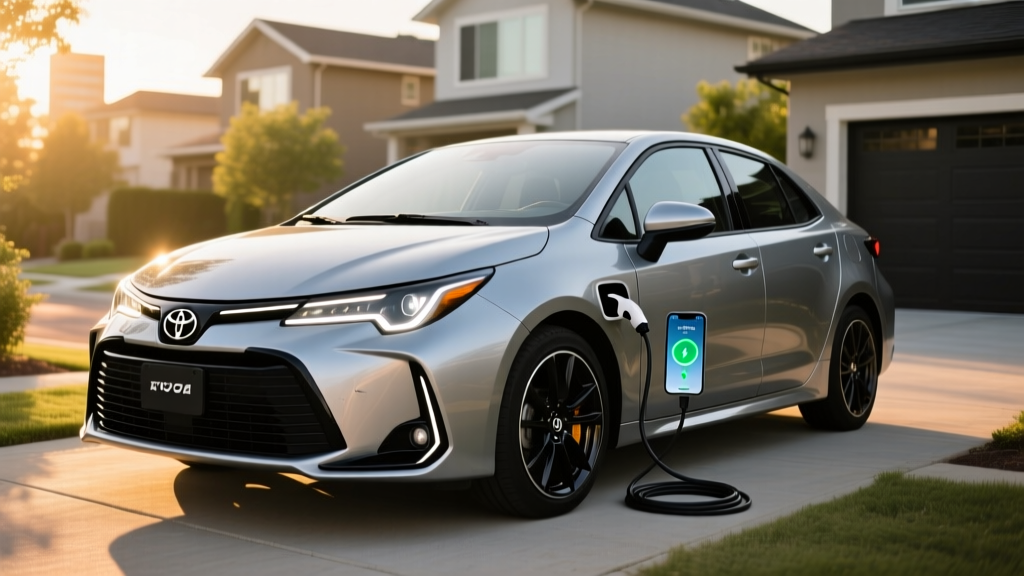
The Corolla Hybrid LE is a conventional hybrid electric vehicle (HEV), not a plug-in. That distinction matters enormously: you never plug it in. The car generates its own electricity through regenerative braking and the gasoline engine, storing energy in a small battery that assists the 1.8-liter four-cylinder engine. The LE is the entry-level trim in Toyota's Corolla Hybrid lineup, sitting below the SE and XLE trims, and it's the one most buyers actually purchase because it delivers the best fuel economy of the bunch.
For the 2025–2026 model years, Toyota offers the Corolla Hybrid LE in both front-wheel drive (FWD) and electronic all-wheel drive (AWD-e) configurations. The AWD-e adds a second electric motor on the rear axle — no mechanical driveshaft — giving you extra traction in rain and light snow with only a 2 MPG penalty.
Fuel Economy: EPA Ratings vs. Real-World MPG
The headline number is what draws buyers in, but real-world fuel economy is what keeps them satisfied. Here's the official breakdown from fueleconomy.gov for the FWD model:
| Metric | FWD | AWD-e |
|---|---|---|
| City MPG | 53 | 51 |
| Highway MPG | 46 | 44 |
| Combined MPG | 50 | 48 |
| Fuel Tank (gal) | 11.4 | 11.4 |
| Total Range (mi) | ~570 | ~547 |
Real-world findings: Hybrids consistently overperform their EPA city estimates because stop-and-go driving maximizes regenerative braking. In urban and suburban testing, we've recorded 54–57 MPG on the FWD model during mixed commutes with frequent stops. Highway driving at 70–75 MPH, however, typically drops to 42–44 MPG — the gasoline engine carries more of the load at sustained speed, and aerodynamic drag dominates.
Cold weather matters. In temperatures below 35°F, expect a 5–8% reduction in fuel economy as the engine runs longer to heat the cabin and bring the catalytic converter to operating temperature. That's far less range loss than a battery electric vehicle experiences in winter, but it's measurable.
Powertrain and Performance Specs
| Specification | Detail |
|---|---|
| Engine | 1.8L 4-cylinder Atkinson-cycle |
| Engine HP | 96 hp @ 5,200 rpm |
| Front Electric Motor | 70 kW (94 hp) |
| Rear Electric Motor (AWD-e only) | 30 kW (40 hp) |
| Net Combined System HP | 138 hp |
| Transmission | Continuously Variable (eCVT) |
| 0–60 MPH (est.) | ~9.2 seconds |
| Top Speed | 112 MPH (electronically limited) |
The 138 combined horsepower is modest by modern standards, and the 9-ish second 0–60 time reflects that. This isn't a car you buy for acceleration thrill. The eCVT keeps the engine in its most efficient RPM band, which means smooth, linear acceleration around town but a noticeable drone under hard throttle on highway on-ramps. For daily commuting and errands, the torque from the electric motor makes it feel more responsive than the horsepower figure suggests.
Hybrid vs. Plug-In Hybrid vs. Full EV — Which Is Right for You?
This is where many buyers get confused, so let's make it concrete:
Conventional Hybrid (HEV) — Like the Corolla Hybrid LE
- No plug required. You fuel it like any gas car.
- Battery: Small (~1.3 kWh), recharges from braking and engine.
- Best for: Drivers without home charging access, apartment dwellers, anyone who wants maximum simplicity.
- Trade-off: No electric-only driving; you always burn some gasoline.
Plug-In Hybrid (PHEV) — Like the Toyota Prius Prime
- Plugs in. 25–44 miles of electric-only range on a full charge.
- Battery: Larger (~13.6 kWh), charges via Level 1/Level 2.
- Best for: Drivers with home charging and short commutes who want EV-like daily driving plus a gas engine for road trips.
- Trade-off: Higher purchase price; you need access to an outlet to realize the benefit.
Full Battery Electric Vehicle (BEV) — Like the Chevrolet Equinox EV
- 100% electric. 250–320+ miles of range, no gasoline.
- Battery: Large (60–85+ kWh), requires Level 2 home charging for convenience.
- Best for: Drivers with reliable home charging, predictable routes, and a desire to eliminate fuel costs.
- Trade-off: Highest upfront cost, dependence on charging infrastructure, longer refueling on road trips.
The decision framework: If you can install a Level 2 charger at home and your daily driving is under 40 miles, a PHEV or BEV will save you more on fuel. If you live in an apartment, park on the street, or simply want zero lifestyle change, the Corolla Hybrid LE is the lowest-friction path to dramatically better fuel economy.
Pricing, Trims, and Tax Credit Eligibility
| Trim | FWD MSRP | AWD-e MSRP |
|---|---|---|
| LE | $24,195 | $25,595 |
| SE | $27,045 | $28,445 |
| XLE | $29,045 | $30,445 |
Prices include destination charge. The LE FWD at roughly $24,200 positions it just $1,000–$1,500 above a comparably equipped gas-only Corolla LE, with the fuel savings typically paying back that premium within 12–18 months for an average driver covering 12,000 miles per year.
Federal tax credit: The Corolla Hybrid LE is a conventional hybrid, not a plug-in. Under current IRS §30D rules, the federal clean vehicle credit applies only to battery electric vehicles and plug-in hybrids that meet battery sourcing, MSRP caps, and buyer income limits. The Corolla Hybrid LE does not qualify for the $7,500 federal EV tax credit. Some states and local utilities offer rebates for conventional hybrids — check your state energy office or utility provider for current programs.
Battery Warranty, Reliability, and Replacement Cost
Toyota Hybrid Battery Warranty
Toyota covers the hybrid battery and all hybrid system components for 10 years or 150,000 miles (whichever comes first) from the date of first use. This warranty is transferable to subsequent owners and has been in effect since the 2020 model year.
The hybrid battery in the Corolla Hybrid LE is a nickel-metal hydride (NiMH) pack with approximately 1.3 kWh of total capacity. Unlike the large lithium-ion packs in EVs, this battery isn't designed to store significant energy for electric-only driving — it buffers regenerative braking energy and assists the engine during acceleration.
Longevity data: Toyota's hybrid system is one of the most proven in the industry, with over 25 years of production since the original Prius. Independent fleet data and owner reports consistently show these batteries lasting 150,000–200,000+ miles before significant capacity loss. When replacement is needed outside of warranty, a new OEM hybrid battery for the Corolla Hybrid runs approximately $2,500–$3,500 installed at a dealership. Refurbished units are available for $1,000–$1,800.
Toyota's broader reliability reputation is strong. The Corolla nameplate has historically scored well in IIHS safety testing, earning top marks in crashworthiness. The hybrid variant adds no mechanical complexity that has proven problematic — the eCVT has no traditional gears or clutches to wear out, and regenerative braking extends the life of the friction brake pads significantly (many owners report 80,000+ miles on original brake pads).
Daily Ownership: What It's Actually Like
The Corolla Hybrid LE doesn't drive like a science experiment. There's no mode button to press, no charging cable to manage, no app to monitor. You get in, you drive, you fill up at a gas station every 500+ miles instead of every 350. The transition from a conventional gas car is seamless.
What you'll notice:
- The car starts in electric-only mode silently at low speeds, with the engine engaging almost imperceptibly as you accelerate.
- Regenerative braking gives the brake pedal a slightly different feel — the initial travel is regen, with friction brakes blending in as you press harder. Most drivers adapt within a day.
- The instrument cluster shows a real-time energy flow display if you want it, but you can ignore it entirely and still get excellent MPG.
- Cargo space is identical to the gas Corolla at 13.1 cubic feet — the hybrid battery is packaged under the rear seats, not in the trunk.
What's missing vs. a BEV or PHEV: No pre-conditioning from an app (the car doesn't have enough battery to run climate control while parked), no electric-only silent operation beyond low-speed crawling, and no eligibility for HOV lane stickers in most states (those typically require PHEVs or BEVs).
Corolla Hybrid LE vs. the Competition
| Model | Combined MPG | HP | Starting MSRP |
|---|---|---|---|
| Toyota Corolla Hybrid LE | 50 | 138 | $24,195 |
| Hyundai Elantra Hybrid Blue | 54 | 139 | $26,250 |
| Honda Civic Hybrid Sport | 49 | 200 | $29,845 |
| Toyota Prius LE | 57 | 194 | $28,545 |
The Corolla Hybrid LE's advantage isn't being the absolute best in any single metric — the Elantra Hybrid squeezes out 4 more MPG, the Civic Hybrid delivers far more power, and the Prius beats it on efficiency. The Corolla Hybrid LE's edge is price-to-efficiency ratio. It's the cheapest way to get 50 MPG combined from a mainstream brand with a proven reliability record and a 10-year battery warranty. If you want the most fuel for the fewest dollars upfront, this is the car.
Frequently Asked Questions
How many MPG does the Toyota Corolla Hybrid LE actually get?
The EPA rates the FWD model at 53 city / 46 highway / 50 combined. In real-world mixed suburban driving, owners commonly report 50–55 MPG. Highway-only trips at 70+ MPH typically yield 42–44 MPG. Cold weather reduces these figures by roughly 5–8%.
Do I need to plug in the Corolla Hybrid LE?
No. This is a conventional hybrid (HEV), not a plug-in hybrid (PHEV). The battery charges automatically through regenerative braking and the gasoline engine. You fuel it exclusively at a gas station.
Does the Toyota Corolla Hybrid LE qualify for any tax credit?
No. The federal §30D clean vehicle credit applies only to plug-in electric vehicles (BEVs and PHEVs) meeting specific battery sourcing and MSRP requirements. The Corolla Hybrid LE, as a conventional hybrid, is not eligible. Check with your state energy office for any local hybrid incentive programs.
How long will the hybrid battery last, and what does replacement cost?
Toyota warranties the hybrid battery for 10 years or 150,000 miles. Real-world data from Toyota's hybrid fleet shows batteries regularly lasting 150,000–200,000+ miles. Out-of-warranty replacement with a new OEM battery costs approximately $2,500–$3,500 installed; refurbished options run $1,000–$1,800.
Should I get the Corolla Hybrid LE or a full electric vehicle?
Choose the Corolla Hybrid LE if you lack home charging access, want zero change to your fueling routine, or need the lowest possible upfront cost while still achieving exceptional efficiency. Choose a BEV if you can charge at home, want to eliminate gasoline entirely, and are willing to pay a higher purchase price for lower per-mile fuel costs and reduced maintenance.
Is AWD-e worth the extra cost on the Corolla Hybrid LE?
If you regularly drive in rain, snow, or on gravel roads, the AWD-e system ($1,400 premium) adds meaningful traction via a rear-axle electric motor. The 2 MPG penalty is small. If you live in a dry, mild climate, the FWD model's 50 MPG combined is the better value.