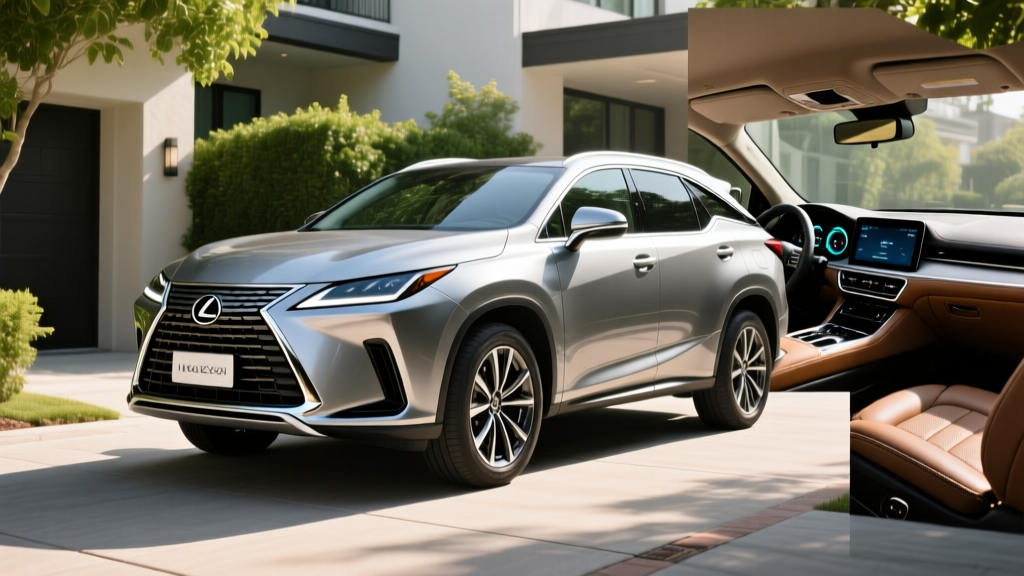
The 2024 Lexus TX arrived as the brand's first dedicated three-row luxury SUV, and Lexus didn't hedge its bets — it launched the nameplate with three distinct powertrains. The turbo-four TX 350 handles conventional duty, while two electrified options, the TX 500h F Sport Performance hybrid and the TX 550h+ plug-in hybrid, give buyers a genuine choice between self-charging efficiency and plug-in electric range. For anyone researching the 2024 Lexus TX hybrid, the critical first step is understanding which electrified variant you're actually looking at, because the HEV and PHEV serve fundamentally different use cases.
This guide breaks down both hybrid powertrains with exact EPA figures, real-world efficiency expectations, battery specs, warranty coverage, and federal tax credit eligibility so you can decide which TX — if any — fits your garage and your commute.
2024 Lexus TX Hybrid Lineup: HEV vs PHEV Explained
Lexus offers two electrified TX models, and confusing them is easy if you're scanning badge names. Here's the fundamental split:
TX 500h — Conventional Hybrid (HEV)
A self-charging hybrid. The gasoline engine and regenerative braking recharge a small battery. You never plug it in. The electric motor assists the engine for improved acceleration and efficiency, but the TX 500h cannot drive on electricity alone for meaningful distances. Think of it as a more efficient, smoother gas car.
TX 550h+ — Plug-In Hybrid (PHEV)
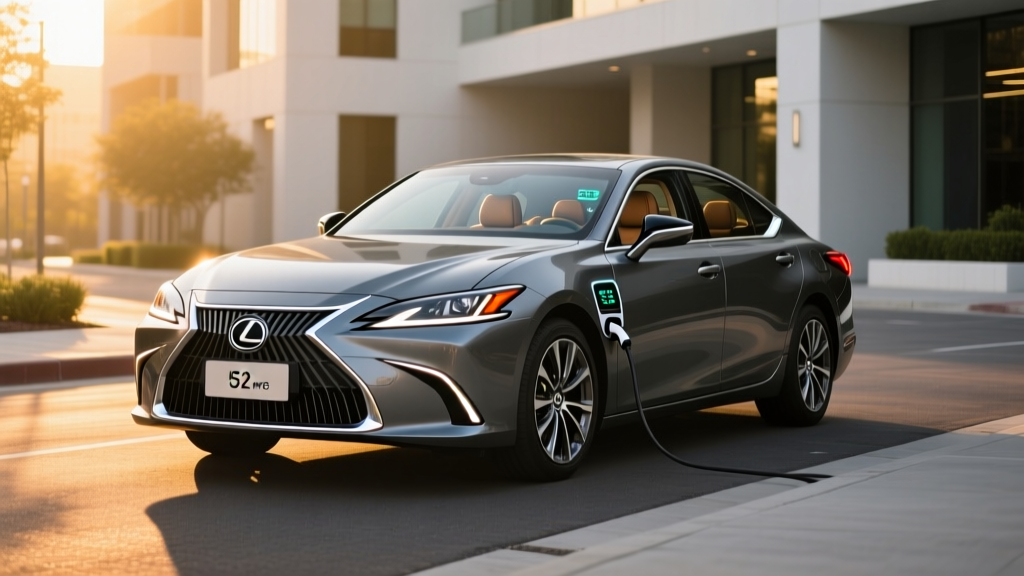
A plug-in hybrid with a substantially larger battery you charge via a wall outlet, Level 2 home charger, or public station. It delivers an EPA-rated 33 miles of electric-only driving before the gasoline engine engages. After the battery depletes, it operates as a conventional hybrid. Plug it in nightly and many owners rarely burn fuel on weekday commutes.
The distinction matters enormously for daily driving, fuel costs, and tax credit eligibility. Let's look at the numbers.
Powertrain Specs: TX 500h vs TX 550h+ Side by Side
| Specification | TX 500h (HEV) | TX 550h+ (PHEV) |
|---|---|---|
| Engine | 2.4L turbocharged 4-cylinder | 3.5L V6 naturally aspirated |
| Combined System Horsepower | 366 hp | 406 hp |
| Combined System Torque | 406 lb-ft | 406 lb-ft |
| Transmission | 6-speed automatic | e-CVT (electronically controlled) |
| Drivetrain | AWD (DIRECT4) | AWD (DIRECT4) |
| Hybrid Battery Capacity | ~1.4 kWh (nickel-metal hydride) | 18.1 kWh usable (lithium-ion) |
| Electric-Only Range | N/A (motor assist only) | 33 miles (EPA) |
| 0-60 mph | 5.9 seconds | 5.7 seconds |
| Towing Capacity | 5,000 lbs | 5,000 lbs |
| Seating | 6 or 7 passengers | 6 passengers (2nd-row captains) |
Both powertrains use Lexus's DIRECT4 all-wheel-drive system, which independently manages front and rear electric motor torque distribution. The TX 550h+ pairs its V6 with a more powerful electric motor setup, which is why it edges out the turbo-four hybrid in horsepower despite the larger, heavier battery pack.
Fuel Economy: EPA MPG and Real-World Expectations
Fuel efficiency is where these two hybrids diverge sharply. The following figures come from fueleconomy.gov, the EPA's official source.
| Model | City MPG | Highway MPG | Combined MPG | MPGe (PHEV EV mode) |
|---|---|---|---|---|
| TX 500h F Sport Performance (HEV) | 27 | 28 | 27 | N/A |
| TX 550h+ Luxury (PHEV, hybrid mode) | 29 | 28 | 29 | 64 MPGe |
Real-world MPG context: Conventional hybrids like the TX 500h often exceed their EPA city rating in stop-and-go traffic because regenerative braking recaptures more energy at low speeds. On a suburban commute with frequent lights, expect 28-30 mpg from the TX 500h. Sustained highway driving at 75+ mph will pull the TX 500h closer to 25-26 mpg, as aerodynamic drag dominates and the turbo engine works harder. The TX 550h+ in hybrid mode (battery depleted) tracks similarly, around 27-28 mpg combined.
TX 550h+ total range breakdown: With a 33-mile electric-only range and a roughly 17.8-gallon fuel tank, the PHEV can cover approximately 33 electric miles plus ~485 miles in hybrid mode — for a combined total range of around 518 miles before needing fuel or a plug. In practice, a nightly-charged TX 550h+ used for a 20-mile round-trip commute might visit a gas station once every 6-8 weeks.
TX 550h+ Charging: What Plug-In Owners Need to Know
The TX 550h+ is the only TX variant that plugs in, and its charging capabilities reflect Lexus's approach to luxury PHEVs: adequate for overnight replenishment, but not designed for DC fast charging.
| Charging Level | Power | 0-100% Time | Connector |
|---|---|---|---|
| Level 1 (120V household) | ~1.4 kW | ~13 hours | J1772 |
| Level 2 (240V home/public) | ~6.6 kW (onboard charger max) | ~3 hours | J1772 |
| DC Fast Charging | Not supported | N/A | N/A |
The absence of DC fast charging is typical for PHEVs in this class — the 18.1 kWh battery is small enough that a 6.6 kW Level 2 charger fills it in about three hours, which covers overnight and workplace charging scenarios. However, if you were hoping to top up at an Electrify America station during a road trip, that's not an option here. Plan your PHEV routine around predictable Level 2 access at home or work.
Home charging setup: Most TX 550h+ owners will install a 240V Level 2 home charger (such as a ChargePoint Home Flex or Emporia Vue) on a 40A or 50A circuit. Expect a full installation to run $800-$2,000 depending on panel proximity and local permitting. A licensed electrician should verify your panel has sufficient capacity before installation.
Pricing, Trims, and Federal Tax Credit Eligibility
The 2024 Lexus TX hybrid lineup is positioned firmly in luxury territory. Here's where each model starts, per Lexus's MSRP (destination included):
- TX 500h F Sport Performance: ~$72,400 MSRP (single trim, well-equipped)
- TX 550h+ Luxury: ~$78,800 MSRP
- TX 550h+ Executive: ~$83,000 MSRP (top-tier, massage seats, Mark Levinson audio)
Federal Tax Credit: Does the TX Hybrid Qualify?
Under the current IRS §30D rules, only the TX 550h+ plug-in hybrid is potentially eligible for a federal tax credit — conventional hybrids like the TX 500h do not qualify for §30D. However, eligibility is not guaranteed and depends on several conditions that change frequently:
- MSRP cap: SUVs must have an MSRP at or below $80,000. The TX 550h+ Luxury trim falls under this cap; the Executive trim may exceed it depending on options.
- Buyer income cap: Modified adjusted gross income must not exceed $300,000 (joint filers), $225,000 (head of household), or $150,000 (single).
- Battery sourcing: Critical minerals and battery components must meet phased-in domestic/free-trade-agreement sourcing thresholds. These requirements tighten annually and can reduce or eliminate the credit amount.
- Point-of-sale transfer: As of 2024, eligible buyers can transfer the credit to the dealer at purchase, reducing the purchase price directly rather than waiting for a tax refund.
The credit amount itself may be up to $7,500, but partial credits (e.g., $3,750 if only one sourcing requirement is met) are possible. Always verify current eligibility on IRS.gov and consult a tax professional before relying on the credit in your purchase math.
Battery and Powertrain Warranty Coverage
Lexus provides the following warranty coverage for both TX hybrid models:
- Hybrid battery: 10 years / 150,000 miles (whichever comes first)
- Hybrid system components: 8 years / 100,000 miles
- Basic vehicle warranty: 4 years / 50,000 miles
- Powertrain warranty: 6 years / 70,000 miles
Toyota/Lexus hybrid batteries have an exceptional longevity track record. Real-world data from the RX and ES hybrid lines shows most original batteries lasting 150,000-200,000+ miles before significant degradation. If replacement is needed out of warranty, expect $3,000-$5,000 for a refurbished or new hybrid battery pack, depending on the model and labor rates.
Reliability, Ownership Costs, and the Lexus Track Record
Lexus consistently ranks at or near the top of J.D. Power and Consumer Reports reliability surveys, and the TX benefits from proven hybrid powertrain architecture. The TX 500h's 2.4L turbo hybrid system shares DNA with the RX 500h and is a known quantity. The TX 550h+'s V6 plug-in system is newer to the TX but uses a well-established 3.5L V6 that has powered Lexus hybrids for over a decade.
Insurance costs for the TX hybrid models run higher than non-luxury three-row SUVs. Expect annual premiums of $2,200-$3,200 depending on your state, driving record, and coverage level. Depreciation favors Lexus — the brand's luxury hybrids historically retain value well, though the TX is too new for long-term resale data.
Who Should Buy the 2024 Lexus TX Hybrid?
Choose the TX 500h (HEV) if:
- You want improved fuel economy over a gas-only three-row SUV without changing your refueling habits
- You lack access to home or workplace charging
- You want 366 hp and responsive acceleration with minimal efficiency trade-off
- You prefer a lower starting price and don't need electric-only driving
Choose the TX 550h+ (PHEV) if:
- You have reliable Level 2 charging at home or work
- Your daily round-trip commute is under 33 miles (most US commutes are)
- You want to drive mostly on electricity during the week with gas-engine flexibility for road trips
- You may qualify for the §30D federal tax credit, narrowing the price gap with the TX 500h
- You value the smooth, silent electric start and the 406 hp combined output
Consider a full BEV instead if:
- You want zero tailpipe emissions and have reliable fast-charging access for road trips
- Your daily mileage is consistently high and you want to eliminate gas entirely
- You're considering vehicles like the Rivian R1S, Tesla Model X, or the upcoming electric Grand Highlander
Pros
- Genuine three-row seating with adult-usable third row
- TX 550h+ offers 33 miles EV range — among the best for luxury PHEVs
- Lexus reliability and 10-year hybrid battery warranty
- DIRECT4 AWD standard on both hybrid models
- Quiet, refined cabin with excellent ride quality
- 5,000-lb towing on both hybrid trims
Cons
- TX 550h+ does not support DC fast charging
- Starting prices above $72,000 — luxury pricing
- TX 500h real-world highway MPG drops to mid-20s at high speed
- No 7-passenger option on TX 550h+ (captain's chairs only)
- Federal tax credit eligibility uncertain due to battery sourcing rules
- Infotainment learning curve for first-time Lexus users
Frequently Asked Questions
How many MPG does the 2024 Lexus TX hybrid get?
The TX 500h conventional hybrid achieves an EPA-estimated 27 city / 28 highway / 27 combined MPG. The TX 550h+ plug-in hybrid delivers 29 combined MPG when operating in hybrid mode (after the battery depletes) and 64 MPGe when factoring in electric-only driving. In real-world city driving, both models can slightly exceed their EPA city ratings thanks to regenerative braking.
How far can the TX 550h+ go on electric only?
The EPA rates the TX 550h+ at 33 miles of electric-only range on a full charge. Real-world results vary: gentle city driving in moderate temperatures can yield 35+ miles, while cold weather (below freezing) and aggressive acceleration may reduce this to 25-28 miles. For most US commuters with a sub-30-mile round trip, this covers daily driving entirely on electricity.
Is the 2024 Lexus TX hybrid reliable, and what does battery replacement cost?
Lexus's hybrid systems are among the most proven in the industry, with the parent company Toyota having produced millions of hybrids since 1997. The TX's hybrid battery is warrantied for 10 years or 150,000 miles. Historical data from similar Lexus hybrids (RX, GX) suggests original batteries regularly surpass 150,000 miles. If a replacement is needed out of warranty, expect $3,000-$5,000 depending on whether you choose a refurbished or new pack and your local labor rates.
Does the 2024 Lexus TX hybrid qualify for a tax credit?
Only the TX 550h+ plug-in hybrid is potentially eligible for the federal §30D clean vehicle credit (up to $7,500). The TX 500h conventional hybrid does not qualify. However, PHEV credit eligibility depends on the buyer's income, the vehicle's MSRP (must be ≤$80,000 for SUVs), and battery mineral/component sourcing requirements that tighten each year. Check the current rules at fueleconomy.gov and consult a tax professional before counting on the credit.
Can I charge the TX 550h+ at a DC fast charger?
No. The TX 550h+ supports Level 1 (120V) and Level 2 (240V) AC charging only, with a maximum onboard charger rate of approximately 6.6 kW. A full Level 2 charge takes about 3 hours. This is standard for most PHEVs — the battery is small enough that DC fast charging infrastructure isn't necessary for practical use.
Hybrid vs PHEV vs EV — which TX is right for me?
If you can't charge at home, the TX 500h HEV gives you better fuel economy with zero lifestyle change. If you can charge at home and your commute is under 33 miles round trip, the TX 550h+ PHEV lets you drive on electricity most days while keeping a gas engine for long trips — no range anxiety. A full EV (like a Rivian R1S or Tesla Model X) eliminates gas entirely but requires commitment to charging infrastructure and planning for road trips. The PHEV is the most versatile bridge for households transitioning from gas to electric.