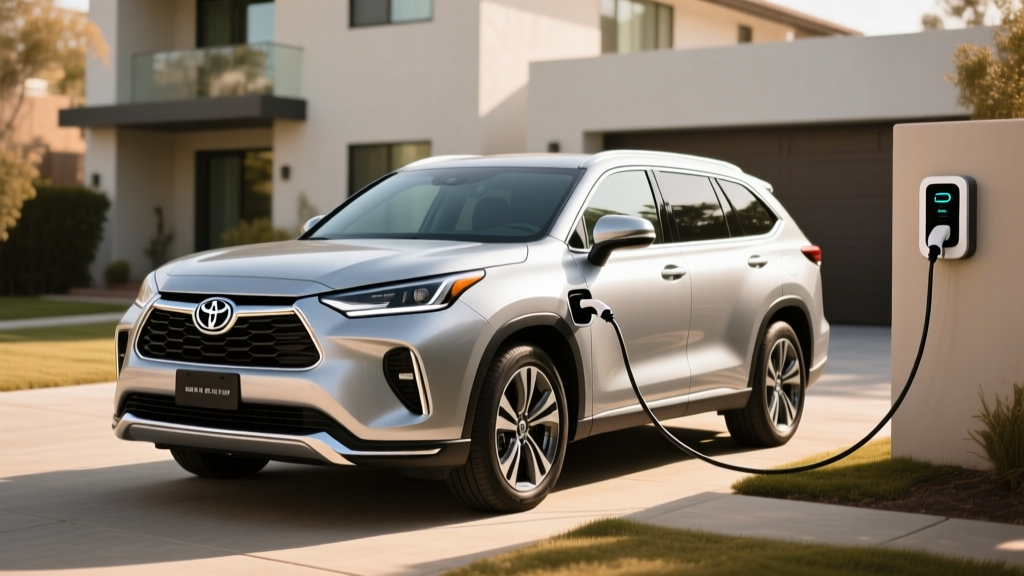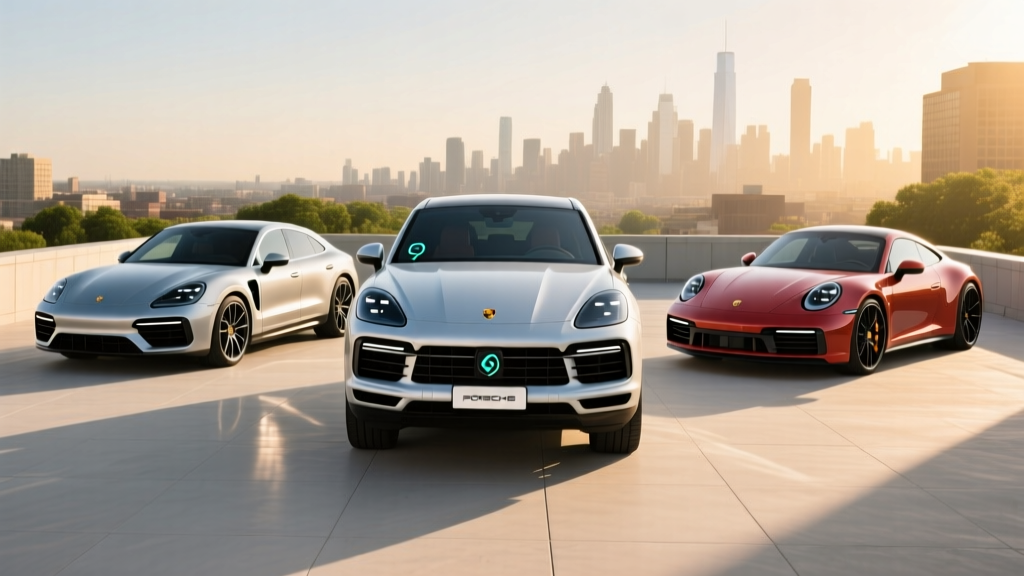
Porsche's 2026 lineup now includes three distinct hybrid strategies: a luxury-SUV plug-in, a performance-sedan plug-in, and the first hybrid 911. If you're researching Porsche hybrid cars, the decision isn't just which model—it's whether a plug-in hybrid (PHEV), conventional hybrid (HEV), or full battery-electric vehicle (BEV) matches how you actually drive. Below, we break down every current Porsche hybrid with exact EPA figures, battery specs, charging times, real-world expectations, and ownership economics.
HEV vs PHEV vs BEV: Which Porsche Electrified Car Fits You?
Conventional Hybrid (HEV): No plug required. The gasoline engine and regenerative braking charge a small battery. You get incremental MPG gains with zero lifestyle change. Example: 2026 Porsche 911 Carrera T-Hybrid.
Plug-in Hybrid (PHEV): Larger battery you charge from a wall outlet or public charger. Delivers 25–45 miles of pure electric driving before the gas engine kicks in. Examples: Cayenne E-Hybrid, Panamera E-Hybrid.
Battery Electric (BEV): No gas engine. Full electric range (200–300+ mi). Porsche's Taycan and Macan Electric fall here—covered in our BEV reviews, not this guide.
The decision framework is straightforward:
- Choose PHEV if you can charge at home nightly and want electric commutes with gas-engine road-trip flexibility.
- Choose HEV if you want efficiency gains without plugging in and don't need electric-only range.
- Choose BEV if you're ready to go fully electric and have reliable charging access.
2026 Porsche Cayenne E-Hybrid: The Family PHEV SUV
| Spec | Cayenne E-Hybrid | Cayenne S E-Hybrid |
|---|---|---|
| Powertrain | 3.0L V6 turbo + electric motor | 3.0L V6 turbo + electric motor |
| Combined HP | 389 hp | 512 hp |
| 0–60 mph | 5.7 sec | 4.5 sec |
| Battery (usable) | 25.9 kWh (NMC) | 25.9 kWh (NMC) |
| EPA Electric Range | 32 mi | 30 mi |
| Total Combined Range | ~420 mi | ~410 mi |
| EPA Combined MPG (gas) | 21 MPG | 20 MPG |
| MPGe (electric + gas) | 46 MPGe | 44 MPGe |
| Level 2 Charge Rate | 7.2 kW (AC) | 7.2 kW (AC) |
| DC Fast Charge | Not available | Not available |
| 0–100% L2 Charge Time | ~4.0 hours | ~4.0 hours |
| Base MSRP | $95,200 | $108,500 |
The Cayenne E-Hybrid is Porsche's highest-volume hybrid for good reason. The 25.9 kWh battery delivers a realistic 28–32 miles of electric-only driving at city speeds, enough for most daily commutes. Highway electric range drops to roughly 22–25 miles due to aerodynamic drag on the SUV body.
Real-world MPG note: Once the battery depletes, the V6 operates as a conventional hybrid. Expect 20–22 MPG combined in gas-only mode, closely matching the EPA sticker. Owners who charge nightly and commute under 30 miles may use almost no gasoline on weekdays.
Charging reality: The Cayenne E-Hybrid does not support DC fast charging. You're limited to Level 2 (240V) at 7.2 kW. A standard Level 1 (120V) outlet adds roughly 3–4 miles of range per hour—functional for overnight top-ups but slow for a full recharge. Home Level 2 installation typically costs $800–$2,000 depending on electrical panel proximity; consult a licensed electrician for your specific setup.
2026 Porsche Panamera E-Hybrid: The Executive Sedan PHEV
| Spec | Panamera 4 E-Hybrid | Panamera Turbo S E-Hybrid |
|---|---|---|
| Powertrain | 2.9L V6 twin-turbo + e-motor | 4.0L V8 twin-turbo + e-motor |
| Combined HP | 463 hp | 771 hp |
| 0–60 mph | 4.3 sec | 2.8 sec |
| Battery (usable) | 25.9 kWh (NMC) | 25.9 kWh (NMC) |
| EPA Electric Range | 38 mi | 34 mi |
| Total Combined Range | ~450 mi | ~430 mi |
| EPA Combined MPG (gas) | 22 MPG | 18 MPG |
| MPGe (electric + gas) | 50 MPGe | 42 MPGe |
| Level 2 Charge Rate | 7.2 kW (AC) | 7.2 kW (AC) |
| DC Fast Charge | Not available | Not available |
| 0–100% L2 Charge Time | ~4.0 hours | ~4.0 hours |
| Base MSRP | $110,300 | $195,000 |
The Panamera's lower, more aerodynamic sedan body yields better electric range than the Cayenne despite sharing the same 25.9 kWh battery pack. The 4 E-Hybrid achieves an EPA-rated 38 miles electric-only—realistically 33–38 miles in mixed suburban driving, dropping to ~28 miles at sustained 75-mph highway speeds.
The Turbo S E-Hybrid sacrifices a few electric miles for 771 combined horsepower and a 2.8-second 0–60 time, making it one of the quickest production sedans on the road. The trade-off: 18 MPG combined once the battery is depleted, which is expected for a twin-turbo V8 performance sedan.
2026 Porsche 911 Carrera T-Hybrid: The First Hybrid 911
| Spec | 911 Carrera GTS T-Hybrid |
|---|---|
| Powertrain | 3.6L flat-six turbo + e-motor (integrated) |
| Combined HP | 532 hp |
| 0–60 mph | 2.9 sec |
| Battery | 1.9 kWh (high-performance, NMC) |
| Hybrid Type | Performance HEV (not plug-in) |
| EPA Combined MPG | 22 MPG |
| EPA City / Highway | 19 city / 27 hwy |
| Electric-Only Range | Not applicable (no EV mode) |
| Plug-In Charging | Not required / not supported |
| Base MSRP | $164,900 |
The 911 T-Hybrid (T for "Turbo hybrid") is not a fuel-economy play. It's a performance hybrid system borrowed from Porsche's motorsport engineering. The 1.9 kWh battery sits behind the rear seats and powers an electric motor integrated into the turbocharger housing, eliminating turbo lag and providing instant torque fill. There is no plug, no electric-only mode, and no meaningful MPG improvement over the prior non-hybrid GTS.
What this hybrid actually does: The e-motor spools the turbocharger electrically, delivering boost response in milliseconds rather than the 0.5–1.0 second lag of a conventional turbo. The result is a 911 that pulls harder and more linearly from low RPM. Think of it as an electric turbocharger with regenerative braking feeding the small battery.
Since this is a conventional HEV, there's zero lifestyle change: fuel it with premium gas, drive it normally, and let the system manage energy recovery automatically. According to fueleconomy.gov, the EPA rates it at 22 MPG combined—a respectable figure for a 532-hp sports car, but not a Prius rival.
Federal Tax Credit Eligibility for Porsche Hybrids
Under current IRS §30D Clean Vehicle Credit rules, only plug-in hybrids with a battery capacity of at least 7 kWh and meeting critical-mineral and battery-component sourcing requirements qualify for up to $7,500. Here's where each Porsche hybrid stands:
- Cayenne E-Hybrid / Panamera E-Hybrid (PHEV): Both have 25.9 kWh batteries and meet the minimum capacity requirement. However, the Cayenne E-Hybrid base MSRP of $95,200 exceeds the §30D SUV/truck/van cap of $80,000. The Panamera sedan must meet the $55,000 sedan MSRP cap, which it also exceeds at $110,300+. Neither PHEV currently qualifies for the federal credit based on MSRP caps alone.
- 911 T-Hybrid (HEV): Conventional hybrids without plug-in capability do not qualify for §30D. The 1.9 kWh battery is well below the 7 kWh minimum regardless.
- Income caps also apply: Even if a vehicle qualified, buyers must have an adjusted gross income below $150,000 (single) / $300,000 (joint) to claim the credit.
Bottom line: No 2026 Porsche hybrid currently qualifies for the federal §30D tax credit due to MSRP cap exceedance. Some states offer separate incentives for PHEVs—check your state energy office or the AFDC state incentive database for local programs. Always consult a tax professional before making purchase decisions based on credit eligibility.
Real-World Efficiency: What Porsche Hybrid Owners Actually Report
EPA estimates assume specific drive cycles. Here's what to expect in practice:
| Model | EPA Combined | Real-World City | Real-World Highway | Cold-Weather Note |
|---|---|---|---|---|
| Cayenne E-Hybrid (gas mode) | 21 MPG | 22–24 MPG | 19–21 MPG | EV range drops ~20% below 32°F |
| Panamera 4 E-Hybrid (gas mode) | 22 MPG | 23–26 MPG | 20–22 MPG | EV range drops ~20% below 32°F |
| Panamera Turbo S E-Hybrid | 18 MPG | 17–19 MPG | 17–19 MPG | EV range drops ~20% below 32°F |
| 911 GTS T-Hybrid | 22 MPG | 19–21 MPG | 24–27 MPG | Minimal impact (HEV, no EV mode) |
Hybrids and PHEVs typically exceed their EPA city estimates because regenerative braking recovers energy in stop-and-go traffic. Highway driving, by contrast, is where efficiency suffers—especially for the Cayenne SUV with its higher frontal area and drag coefficient. In freezing temperatures, the PHEV battery's usable capacity shrinks due to reduced lithium-ion mobility, cutting electric-only range by roughly 15–25%. The 911 T-Hybrid, lacking an EV mode, is largely unaffected by cold weather since its small battery is used for performance boost, not propulsion.
Charging Setup for Porsche PHEVs: What You Need at Home
Both the Cayenne and Panamera E-Hybrid use a J1772 connector for Level 2 AC charging at a maximum rate of 7.2 kW. Neither supports DC fast charging—a deliberate Porsche engineering choice prioritizing battery longevity and packaging over rapid-charging capability. For context, 7.2 kW is sufficient to fully recharge the 25.9 kWh pack in roughly 4 hours from a dedicated Level 2 home station.
Home charging cost estimate: A full charge from 0–100% uses approximately 26 kWh of electricity. At the U.S. average residential rate of ~$0.17/kWh, that's roughly $4.42 per full charge, or about $0.14 per electric mile—significantly cheaper than premium gasoline at $4.50/gallon yielding 20 MPG ($0.23/mile).
Home installation considerations: A Level 2 charger (such as the Porsche Mobile Charger Connect or a third-party unit like ChargePoint Home Flex) requires a 240V circuit, typically NEMA 14-50 or hardwired. Installation costs range from $500 (simple outlet near the panel) to $2,500+ (panel upgrade, long conduit runs). Always hire a licensed electrician for the final installation and permit.
Who Should Buy a Porsche Hybrid vs a Full EV or Gas Car?
Choose a Porsche PHEV (Cayenne/Panamera E-Hybrid) If:
- You can charge at home nightly (Level 2 recommended)
- Your daily commute is under 35 miles round-trip
- You take regular road trips where charging infrastructure is uncertain
- You want electric daily driving without full BEV range commitment
- You value Porsche build quality and driving dynamics in a hybrid package
Choose the 911 T-Hybrid (HEV) If:
- You want a 911 with the latest performance technology
- You don't want to plug in or change any driving habits
- Turbo-lag elimination matters more than fuel economy
- You're upgrading from a previous-gen 911 GTS and want the performance delta
Choose a full BEV (Porsche Taycan / Macan Electric) if: You have reliable home charging, drive under 250 miles daily, want the lowest per-mile energy cost, and are ready to commit to electric-only driving. The Taycan offers up to 318 miles EPA range and 320 kW DC fast charging—capabilities no PHEV can match for long-distance electric travel.
Stick with a gas-only Porsche if: You lack home charging access, frequently drive in extreme cold, prioritize lowest upfront cost, or own a model with proven long-term reliability data you trust.
Reliability and Long-Term Ownership Costs
Porsche's hybrid systems have been in production since 2010 (Cayenne S Hybrid) and the E-Hybrid PHEV architecture since 2014. The current fourth-generation E-Hybrid system (introduced for the 2024 Cayenne, updated through 2026) uses a more compact, integrated e-motor and a higher-capacity battery than prior generations.
Reliability track record: Porsche PHEVs have demonstrated moderate-to-good reliability in owner surveys. The primary concern across the industry for PHEVs is the complexity of managing two complete powertrains (gas engine + electric motor + battery + power electronics). However, Porsche's 8-year/100,000-mile hybrid battery warranty provides substantial protection. For reference, the IIHS and NHTSA have not flagged systematic hybrid-battery failures in recent Porsche models.
Five-year estimated ownership cost comparison (Cayenne E-Hybrid vs gas Cayenne):
- Purchase price premium for E-Hybrid: ~$8,000–$10,000 over equivalent gas model
- Fuel savings (charging nightly, 12,000 mi/yr): ~$1,200–$1,800/year
- Net 5-year fuel savings: ~$6,000–$9,000
- Maintenance: PHEVs require both gas-engine and EV-system maintenance; brake wear is reduced due to regen
- Insurance: Typically 5–10% higher for PHEV trims due to repair-cost complexity
The PHEV premium pays for itself in fuel savings within 5–7 years for high-mileage commuters who charge regularly. If you never plug in, the E-Hybrid operates as a heavy conventional hybrid and will deliver worse fuel economy than the lighter gas-only Cayenne due to the added battery weight.
Frequently Asked Questions
How many MPG does a Porsche hybrid get?
The 2026 Cayenne E-Hybrid achieves 21 MPG combined (gas mode) and 46 MPGe when including electric driving. The Panamera 4 E-Hybrid delivers 22 MPG combined / 50 MPGe. The 911 GTS T-Hybrid gets 22 MPG combined. Real-world city MPG often exceeds EPA estimates by 1–4 MPG thanks to regenerative braking, while highway MPG tends to run 1–2 MPG below the sticker.
How far can a Porsche PHEV go on electric only?
The Cayenne E-Hybrid achieves an EPA-rated 32 miles electric-only. The Panamera 4 E-Hybrid manages 38 miles. Real-world electric range depends heavily on speed, temperature, and terrain: expect 28–32 miles in the Cayenne and 33–38 miles in the Panamera during suburban driving, dropping to ~22–28 miles at sustained highway speeds and 15–25% less in sub-freezing temperatures.
Does any Porsche hybrid qualify for the federal tax credit?
No. Under current IRS §30D rules, the Cayenne E-Hybrid exceeds the $80,000 MSRP cap for SUVs, and the Panamera E-Hybrid exceeds the $55,000 cap for sedans. The 911 T-Hybrid is a conventional HEV and does not meet the minimum 7 kWh battery requirement. Some state-level incentives may apply—check the AFDC database for your jurisdiction.
Is the Porsche hybrid battery reliable and what does replacement cost?
Porsche covers the PHEV battery for 8 years or 100,000 miles. Historical degradation data from earlier E-Hybrid generations suggests 90%+ capacity retention at 60,000 miles with normal use. Out-of-warranty replacement for the 25.9 kWh pack is estimated at $12,000–$18,000. The 911 T-Hybrid's smaller 1.9 kWh performance battery carries similar warranty coverage but is subject to different duty cycles.
Can I DC fast charge a Porsche PHEV?
No. Neither the Cayenne nor Panamera E-Hybrid supports DC fast charging. Maximum charge rate is 7.2 kW on Level 2 AC, taking approximately 4 hours for a full 0–100% charge. This is adequate for overnight home charging but means you cannot rapid-charge on road trips—you'll rely on the gasoline engine for extended driving.
Hybrid vs PHEV vs EV — which Porsche fits me?
If you can charge at home and commute under 35 miles, a PHEV (Cayenne/Panamera E-Hybrid) gives you electric daily driving with gas-engine flexibility for road trips. If you want zero charging hassle and value performance over efficiency, the 911 T-Hybrid (HEV) requires no lifestyle change. If you're ready to go fully electric with 250+ miles of range and DC fast charging, look at the Porsche Taycan or Macan Electric (BEV).