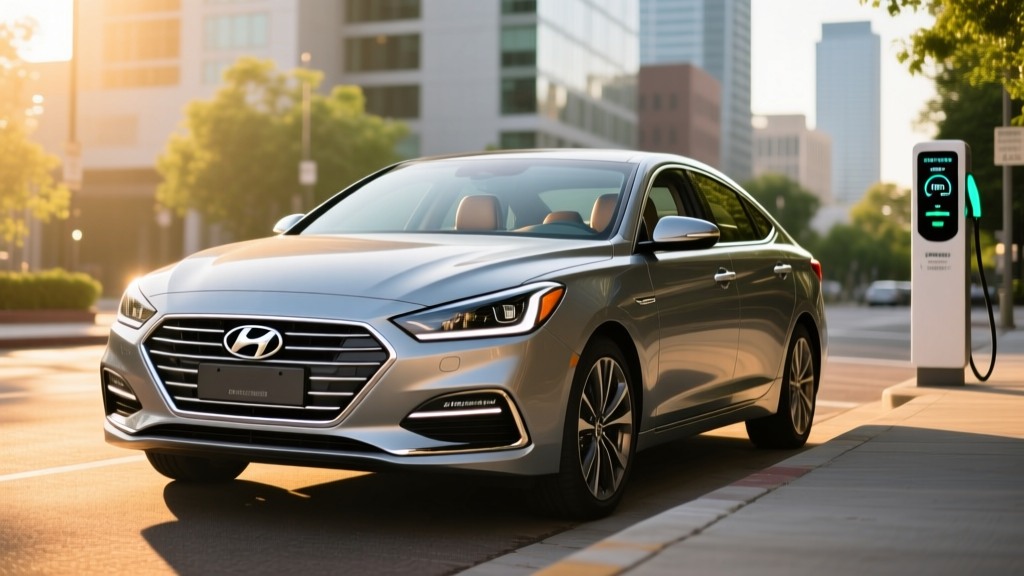
The 2018 Hyundai Sonata Hybrid occupies a specific niche in the used-car market: a midsize sedan that delivers genuine fuel savings without requiring a plug, a charging routine, or a steep learning curve. If you are shopping for a budget-friendly hybrid in 2026, this generation of Sonata offers a compelling blend of comfort, space, and efficiency — but understanding exactly what you are getting (and what it costs to maintain) is critical before signing the paperwork.
This guide breaks down the 2018 Hyundai Sonata Hybrid's EPA fuel economy, real-world MPG expectations, powertrain specifications, hybrid battery longevity, and ownership costs so you can make an informed purchase decision.
HEV vs PHEV: Which 2018 Sonata Hybrid Are You Looking At?
Hyundai sold two electrified Sonata variants for the 2018 model year, and confusing them is one of the most common mistakes used-car shoppers make. Here is the clear distinction:
| Feature | Sonata Hybrid (HEV) | Sonata Plug-In Hybrid (PHEV) |
|---|---|---|
| Requires Plugging In? | No — self-charging via regenerative braking and engine | Yes — plug in to access electric-only driving |
| EPA Combined MPG | 39 MPG (combined) | 40 MPG (gas-only, battery depleted) |
| Electric-Only Range | N/A — electric motor assists only at low speeds | 27 miles (EPA estimated) |
| Battery Capacity | 1.62 kWh (lithium-ion polymer) | 9.8 kWh (lithium-ion polymer) |
| Combined Horsepower | 193 HP (net system) | 202 HP (net system) |
| DC Fast Charging | No | No — Level 1 and Level 2 only |
| 2018 Original MSRP (Base) | $25,650 | $35,450 |
The conventional hybrid (HEV) is the far more common variant on the used market. The Plug-In Hybrid (PHEV) was sold in much lower volumes and commands a premium. For this review, we focus primarily on the HEV, with PHEV specifics called out where relevant.
Fuel Economy: EPA Ratings vs Real-World MPG
The 2018 Hyundai Sonata Hybrid's 2.0-liter four-cylinder engine pairs with a 38-kW electric motor and a 6-speed automatic transmission — not a CVT, which sets it apart from competitors like the Toyota Camry Hybrid and Ford Fusion Hybrid.
| Driving Condition | EPA Estimated MPG | Real-World Expectation |
|---|---|---|
| City | 39 MPG | 38–42 MPG (hybrids often exceed EPA in stop-and-go) |
| Highway | 43 MPG | 37–41 MPG (aerodynamic drag and sustained speeds reduce advantage) |
| Combined | 39 MPG | 36–41 MPG depending on driving mix |
According to fueleconomy.gov, the 2018 Sonata Hybrid achieves 39 city / 43 highway / 39 combined. In practice, owners who do a majority of city driving often report matching or slightly exceeding the EPA city figure thanks to aggressive regenerative braking and frequent engine-off coasting. Highway-heavy commuters should expect numbers closer to 37–40 MPG, as the hybrid system provides less benefit at sustained high speeds.
Real-World MPG Tip: The Sonata Hybrid's Active Air Flap system and available solar roof panel (Limited trim only) contribute marginal efficiency gains. The solar panel adds roughly 2 miles of equivalent range per day of full sun — helpful, but not a game-changer for overall fuel economy.
Powertrain Specs: Engine, Motor, and Total Output
The 2018 Sonata Hybrid uses Hyundai's TMED (Transmission-Mounted Electrical Device) architecture, which places the electric motor between the engine and transmission rather than replacing the transmission entirely. This gives the car a more traditional driving feel compared to the rubber-band sensation of CVT-equipped hybrids.
| Specification | 2018 Sonata Hybrid (HEV) |
|---|---|
| Engine | 2.0L GDI 4-cylinder (154 HP, 140 lb-ft) |
| Electric Motor | 38 kW / 51 HP, 151 lb-ft torque |
| Net System Horsepower | 193 HP |
| Transmission | 6-speed automatic |
| Hybrid Battery | 1.62 kWh lithium-ion polymer |
| 0–60 MPH | ~8.3 seconds (estimated) |
| Drivetrain | Front-wheel drive |
| Curb Weight | ~3,496 lbs |
Acceleration is adequate for daily commuting and highway merging, though it won't feel quick by modern EV standards. The 6-speed automatic avoids the drone of a CVT under hard acceleration, which many buyers appreciate. Regenerative braking is progressive and adjustable via steering-wheel paddles, allowing you to maximize energy recapture in stop-and-go traffic.
PHEV Deep Dive: Electric-Only Range and Charging
If you are specifically looking at the 2018 Sonata Plug-In Hybrid, the electric-only capability is its defining feature.
| Specification | 2018 Sonata PHEV |
|---|---|
| Electric-Only Range (EPA) | 27 miles |
| Total Combined Range | ~590 miles (electric + gas tank) |
| Battery Capacity | 9.8 kWh (usable ~8.9 kWh) |
| MPGe (Electric Mode) | 99 MPGe combined |
| Level 1 Charging (120V) | ~9 hours (0–100%) |
| Level 2 Charging (240V, 3.3 kW) | ~3 hours (0–100%) |
| DC Fast Charging | Not supported |
The 27-mile electric-only range is sufficient for short commutes and local errands. Once the battery depletes, the car operates as a conventional hybrid with 40 MPG combined. Charging is limited to Level 2 at 3.3 kW — there is no DC fast-charge capability, which is standard for PHEVs of this era. For a full breakdown of Level 1 vs Level 2 charging speeds and costs, see our charging guides.
On a used PHEV, verify battery health before purchase. A 2018 model is now 8 years old, and while Hyundai's hybrid battery warranty is generous (see below), degradation of 10–15% in capacity is typical for lithium-ion polymer cells of this age, which would reduce electric-only range to roughly 23–24 miles.
Battery Longevity, Warranty, and Replacement Cost
Hybrid battery lifespan is the number-one concern for used hybrid buyers — and it should be. Here is what you need to know about the 2018 Sonata Hybrid's battery.
Hyundai Hybrid Battery Warranty: 10 years / 100,000 miles (whichever comes first) for the original owner. For second and subsequent owners, the warranty transfers but is reduced to 10 years / 100,000 miles from the original in-service date in most states. In CARB states (California, New York, and others that follow California emissions standards), the hybrid battery warranty extends to 15 years / 150,000 miles.
Since the 2018 model year is now 8 years old, most original-owner warranties are nearing expiration in 2026, while second-owner warranties in non-CARB states may have already lapsed depending on mileage. If you are purchasing from the original owner with under 100,000 miles, confirm warranty transferability with Hyundai before finalizing the sale.
Battery replacement cost: If the hybrid battery fails out of warranty, expect to pay between $2,000 and $4,000 for a replacement, depending on whether you use a new OEM unit, a refurbished pack, or an aftermarket option. Independent hybrid specialists often offer refurbished batteries at the lower end of that range. The smaller 1.62 kWh HEV battery is less expensive to replace than the 9.8 kWh PHEV pack, which can approach $5,000+ for a new OEM unit.
Real-world data suggests that Hyundai's lithium-ion polymer hybrid batteries hold up well. Many 2011–2015 Sonata Hybrids (the previous generation) are still running on original batteries at 150,000+ miles. The 2018 model benefits from improved thermal management, making premature failure unlikely under normal use.
Used Pricing and Tax Credit Eligibility in 2026
As of early 2026, the 2018 Hyundai Sonata Hybrid trades on the used market in the following ranges:
| Trim | Used Price Range (2026) | Typical Mileage |
|---|---|---|
| Hybrid SE | $11,000 – $14,500 | 70,000 – 110,000 miles |
| Hybrid Limited | $14,000 – $18,500 | 55,000 – 95,000 miles |
| Plug-In Hybrid | $13,500 – $17,500 | 60,000 – 100,000 miles |
Federal tax credit status: The 2018 Sonata Hybrid (HEV) does not qualify for the IRS §30D federal clean vehicle credit — that credit applies only to plug-in electric vehicles (BEVs and PHEVs) meeting specific battery sourcing, MSRP, and buyer income requirements.
The 2018 Sonata Plug-In Hybrid originally qualified for up to $4,543 in federal tax credits when new. However, under current IRS rules, the §30D credit for used PHEVs and BEVs is capped at $4,000 or 30% of the sale price (whichever is lower) and applies only to vehicles sold by a licensed dealer for $25,000 or less. Since most 2018 Sonata PHEVs sell well under $25,000, the used-EV credit may apply — but only if the vehicle meets battery component and critical mineral sourcing requirements that were not in place when the car was built. Consult the IRS used clean vehicle credit page and a tax professional to verify eligibility for a specific VIN.
State incentives: Some states offer additional rebates or HOV lane access for used hybrids and PHEVs. Check your state's DMV or energy office for current programs, as these vary widely and change frequently.
Who Should Buy the 2018 Sonata Hybrid vs an EV or Gas Car?
Choose the 2018 Sonata Hybrid (HEV) if:
- You want 38–43 MPG without changing your fueling habits
- You lack access to home or workplace charging for a plug-in vehicle
- Your budget is under $18,000 and you need a reliable daily driver
- You drive a mix of city and highway and want consistent efficiency
- You prefer a traditional driving feel (6-speed automatic, no CVT drone)
Choose the 2018 Sonata Plug-In Hybrid if:
- Your daily commute is under 27 miles round-trip and you can charge at home
- You want electric-only driving for errands but gas flexibility for road trips
- You can verify remaining battery warranty and health before purchase
Choose a full EV (like a used Chevrolet Bolt or Nissan Leaf) if:
- You have reliable Level 2 home charging and want zero tailpipe emissions
- Your daily driving is under 200 miles and you rarely take long road trips
- You want lower per-mile fuel costs and minimal drivetrain maintenance
Stick with a gas-only car if:
- You drive mostly highway miles at high speeds (hybrid advantage diminishes)
- Your budget is under $10,000 and hybrid premiums don't pencil out
- You plan to keep the car under 2 years (hybrid premium may not be recouped in fuel savings)
Pros and Cons at a Glance
Pros
- Strong EPA fuel economy (39 combined) with real-world city MPG often exceeding the sticker
- 6-speed automatic transmission — no CVT drone or rubber-band feel
- Spacious midsize cabin with comfortable ride quality
- Generous hybrid battery warranty (10yr/100k mi, extended in CARB states)
- Available features: heated/cooled seats, panoramic sunroof, Infinity audio, blind-spot monitoring
- Limited trim solar roof panel adds novelty and marginal efficiency
Cons
- Acceleration is modest (~8.3 sec 0–60) — not a quick car
- Infotainment system feels dated by 2026 standards (no wireless CarPlay on most trims)
- Hybrid battery replacement cost ($2,000–$4,000) is a real risk on high-mileage examples
- PHEV variant has limited electric-only range (27 mi) and slow Level 2 charging (3.3 kW)
- No DC fast charging on either variant
- Hyundai brand depreciation means lower resale value than a comparable Toyota Camry Hybrid
Frequently Asked Questions
How many MPG does the 2018 Hyundai Sonata Hybrid get?
The EPA rates the 2018 Sonata Hybrid at 39 city / 43 highway / 39 combined MPG. In real-world driving, city-heavy commuters often see 38–42 MPG, while highway-heavy drivers should expect 37–40 MPG. The hybrid system is most effective in stop-and-go traffic where regenerative braking and engine-off coasting maximize efficiency.
How far can the 2018 Sonata Plug-In Hybrid go on electric only?
The EPA rates the 2018 Sonata PHEV at 27 miles of electric-only range on a full charge. On a used example with an 8-year-old battery, expect roughly 23–25 miles of real-world electric range depending on temperature and driving style. Once the battery depletes, the car operates as a standard hybrid at 40 MPG combined.
Hybrid vs PHEV vs EV — which fits me best?
A conventional hybrid (HEV) like the Sonata Hybrid is ideal if you want fuel savings without plugging in. A PHEV makes sense if you can charge at home and your daily commute is under 30 miles. A full EV is the best choice if you have reliable home charging, drive under 200 miles daily, and want the lowest per-mile operating cost. Each step up in electrification requires more infrastructure but delivers greater fuel-cost savings.
Is the 2018 Sonata Hybrid reliable, and what does a battery replacement cost?
The 2018 Sonata Hybrid has average-to-good reliability ratings. Hyundai's hybrid battery warranty covers 10 years/100,000 miles for the original owner (and transfers to second owners at the same terms from the original in-service date in most states). If the battery fails out of warranty, replacement costs range from $2,000–$4,000 for the HEV and up to $5,000+ for the PHEV. Independent hybrid shops often offer refurbished batteries at lower cost.
Does the 2018 Sonata Hybrid qualify for any tax credit?
The conventional Sonata Hybrid (HEV) does not qualify for any federal tax credit — it is not a plug-in vehicle. The Sonata Plug-In Hybrid may qualify for the IRS used clean vehicle credit (up to $4,000 or 30% of sale price) if purchased from a licensed dealer for under $25,000, but battery sourcing requirements may disqualify older models. Always verify eligibility with the IRS and a tax professional before relying on a credit.
Does the 2018 Sonata Hybrid need to be plugged in?
No. The conventional Sonata Hybrid (HEV) charges its own battery through regenerative braking and the gasoline engine. You never plug it in. Only the Sonata Plug-In Hybrid (PHEV) variant requires plugging in to access its 27-mile electric-only range. If you see a Sonata Hybrid for sale without a charge port, it is the HEV — and that is perfectly normal.
How does the Sonata Hybrid compare to the Toyota Camry Hybrid?
The 2018 Toyota Camry Hybrid achieves 52 MPG combined (LE trim) — significantly more than the Sonata's 39 MPG. However, the Camry Hybrid typically commands a $3,000–$5,000 premium on the used market. The Sonata Hybrid offers a more traditional driving feel (6-speed automatic vs CVT) and often includes more standard features at a lower price. If maximum fuel economy is your priority, the Camry wins. If value and driving dynamics matter more, the Sonata is the stronger pick.
The 2018 Hyundai Sonata Hybrid remains a practical, comfortable, and efficient choice in the 2026 used-car market. It won't match the fuel economy of a Toyota Camry Hybrid or the zero-emission appeal of a full EV, but it offers a well-rounded package for buyers who want real-world fuel savings without the complexity of plug-in ownership. Verify the battery warranty status, check for service records, and budget for a potential battery replacement if you are buying a high-mileage example — and this sedan should deliver reliable, efficient transportation for years to come.