Quick Verdict: A Pioneering PHEV That Still Makes Sense on the Used Market
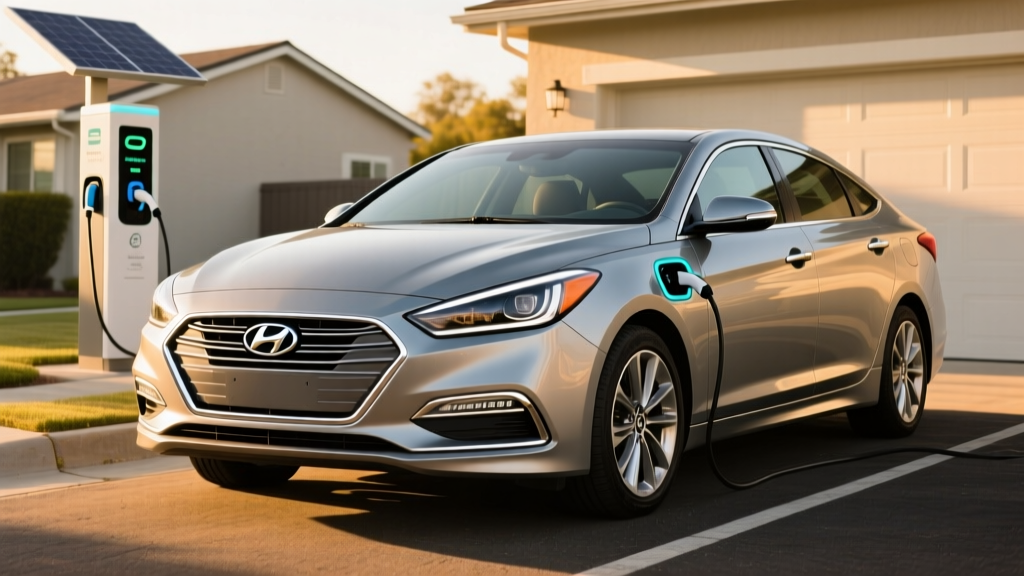
The 2016 Hyundai Sonata Plug-In Hybrid was one of the first mainstream midsize sedans to offer genuine electric-only commuting paired with a gasoline fallback. Nearly a decade later, it remains a compelling used-car proposition for buyers who want electric daily driving without range anxiety — provided the high-voltage battery checks out. With an EPA-rated 27 miles of electric range, 99 MPGe in charge-depleting mode, and a combined 202 horsepower from its 2.0L engine and electric motor, the Sonata PHEV still holds its own against newer plug-in hybrids in real-world usability.
This guide covers everything a 2026 used-car buyer needs: exact efficiency figures, battery health expectations, charging logistics, reliability data, and how this discontinued model stacks up against the HEV/PHEV/EV decision framework.
| Specification | Value |
|---|---|
| Powertrain | 2.0L GDI 4-cyl + 50 kW electric motor |
| Combined Horsepower | 202 hp |
| Transmission | 6-speed automatic |
| Battery (usable) | 9.8 kWh lithium-polymer |
| EPA Electric Range | 27 miles |
| EPA MPGe (electric mode) | 99 MPGe combined |
| EPA MPG (gas-only, combined) | 39 MPG combined |
| Total Combined Range | ~590 miles |
| Level 2 Charge Time (full) | ~2.5 hours at 3.3 kW |
| DC Fast Charging | Not supported |
| 0-60 mph | ~8.4 seconds |
| Original MSRP (base) | $34,600 |
| Original Federal Tax Credit | $4,583 (§30D, now expired for used buyers) |
Understanding the Difference: HEV vs. PHEV in the Sonata Lineup
Hyundai sold the 2016 Sonata in two electrified variants, and confusing them is a common mistake among used shoppers:
| Attribute | Sonata Hybrid (HEV) | Sonata Plug-In Hybrid (PHEV) |
|---|---|---|
| Plugs in to charge? | No — charges via engine and regen | Yes — 120V or 240V outlet |
| Battery size | 1.62 kWh | 9.8 kWh |
| Electric-only driving | Minimal (low-speed assist only) | 27 miles EPA at up to 75 mph |
| EPA Combined MPG | 40 MPG | 39 MPG (gas) / 99 MPGe (electric) |
| Engine | 2.0L GDI + 38 kW motor | 2.0L GDI + 50 kW motor |
| Combined HP | 193 hp | 202 hp |
| Trunk space | 13.3 cu ft | 9.9 cu ft (battery intrusion) |
| Original MSRP | ~$26,000 | ~$34,600 |
The HEV is the right pick if you cannot charge at home or work. The PHEV only unlocks its efficiency advantage when you plug in regularly — driving it without charging wastes its potential and yields worse fuel economy than the lighter HEV due to the extra battery mass.
Fuel Economy: EPA Numbers vs. Real-World MPG
| Mode | City | Highway | Combined |
|---|---|---|---|
| Charge-Depleting (Electric + Gas) | — | — | 99 MPGe |
| Charge-Sustaining (Gas Only) | 38 MPG | 40 MPG | 39 MPG |
Real-world expectations: According to fueleconomy.gov, owners of the 2016 Sonata PHEV report averaging around 37-42 MPG in mixed driving once the battery is depleted. In city-heavy commuting where regenerative braking recaptures energy frequently, some drivers see 41-44 MPG in gas mode — hybrids tend to exceed EPA estimates in stop-and-go traffic. Highway cruising at 75+ mph will drop gas-mode economy closer to 35-37 MPG.
Electric-mode efficiency is rated at 99 MPGe combined. In practice, expect roughly 2.5 to 3.0 miles per kWh of battery capacity, meaning a full charge delivers 24-27 real-world electric miles in moderate temperatures. Cold weather (below 30°F) can reduce electric range by 20-30% due to cabin heating demands and reduced battery efficiency.
Electric-Only Range and Charging: What 9.8 kWh Gets You
The Sonata PHEV's 9.8 kWh lithium-polymer battery delivers an EPA-rated 27 miles of electric-only range. In real-world commuting at moderate speeds and temperatures, expect 22-27 miles. Aggressive acceleration, highway speeds above 65 mph, or winter conditions will push that toward 18-22 miles.
Charging logistics:
- Level 1 (120V household outlet): The included portable cord charges at approximately 1.4 kW, taking about 5 hours for a full charge. This is sufficient for overnight replenishment if your daily commute is under 25 miles.
- Level 2 (240V): At 3.3 kW, a full charge takes roughly 2.5 hours. A basic Level 2 home charger costs $300-$600 for the unit plus $400-$1,200 for professional installation, depending on your electrical panel's proximity to the parking location.
- DC Fast Charging: Not supported. The Sonata PHEV uses a standard J1772 connector and cannot accept DC rapid charges. This is typical for PHEVs of this era — the battery is too small to justify DC hardware.
Powertrain Performance: 202 HP from Engine and Motor
The 2016 Sonata PHEV pairs a 2.0-liter GDI four-cylinder engine (154 hp, 140 lb-ft) with a 50 kW (67 hp) permanent-magnet synchronous electric motor integrated into the transmission. Combined system output is 202 horsepower and 271 lb-ft of torque.
The 6-speed automatic transmission is a conventional torque-converter unit — not the CVT or dual-clutch setups found in some competitors. This gives the Sonata PHEV a more natural driving feel, though it sacrifices a fraction of efficiency compared to a CVT. Acceleration to 60 mph takes approximately 8.4 seconds, which is adequate for merging and passing but not quick by modern EV standards.
Four driving modes are available:
- EV Mode: Pure electric driving up to 75 mph (battery permitting)
- HEV Mode: Standard hybrid operation, blending engine and motor
- Charge Mode: Engine runs to recharge the battery while driving
Reliability, Battery Longevity, and Replacement Cost
Long-term reliability: The Sonata PHEV's lithium-polymer battery chemistry has proven durable. Hyundai's thermal management system (active liquid cooling) helps mitigate degradation. Based on owner reports and fleet data, expect 8-12% capacity loss over 8-10 years of normal use. A 2016 model with 80,000 miles might now deliver 22-24 electric miles instead of the original 27 — still functional for short commutes.
Battery replacement cost: If the high-voltage battery fails outside warranty, a refurbished replacement typically costs $2,500-$4,500 including labor at an independent hybrid specialist. A new OEM battery from Hyundai (if still available for this discontinued model) could exceed $6,000 installed. Third-party refurbishers and salvage yards offer lower-cost options. Always request a battery health report (state of health / SoH percentage) before purchasing a used PHEV.
The conventional 12V auxiliary battery is a separate maintenance item and typically needs replacement every 4-5 years — standard for any vehicle.
Used Pricing in 2026 and Tax Credit Status
The 2016 Sonata Plug-In Hybrid originally carried an MSRP of $34,600 (base) to $38,600 (Limited trim). In the 2026 used market, expect to pay:
- 70,000-90,000 miles: $10,000-$13,000
- 50,000-70,000 miles: $13,000-$16,000
- Under 50,000 miles (rare): $16,000-$19,000
Federal tax credit status: The original $4,583 §30D new-vehicle credit is no longer available. Under current IRS rules, the Used Clean Vehicle Credit (§25E) offers up to $4,000 or 30% of the sale price (whichever is less) for qualified used EVs and PHEVs. However, eligibility requires:
- Sale price of $25,000 or less (the Sonata PHEV qualifies at current used prices)
- Buyer income below $75,000 (single) / $150,000 (joint)
- Vehicle must be at least two model years old (qualifies)
- Must purchase from a licensed dealer (private-party sales excluded)
- Must have a minimum 4 kWh battery (the 9.8 kWh pack qualifies)
Always confirm current-year eligibility on irs.gov or with a tax professional before relying on this credit.
Who Should Buy the 2016 Sonata PHEV — and Who Shouldn't
Choose the 2016 Sonata PHEV if:
- Your daily commute is under 25 miles round-trip and you can charge at home (Level 1 is sufficient)
- You want electric commuting with the flexibility for longer road trips without charging-infrastructure dependence
- You find one with verified battery health (SoH above 85%) at a fair used price
- You value a spacious midsize sedan with comfortable highway manners
- You may qualify for the §25E used-clean-vehicle credit (up to $4,000)
Look elsewhere if:
- You cannot charge at home or at work — buy the Sonata HEV instead and save weight and money
- You need cargo space — the 9.9 cu ft trunk is significantly smaller than the gas Sonata's 16.3 cu ft
- You want modern ADAS features — the 2016 model lacks adaptive cruise, lane-keeping, and automatic emergency braking as standard
- Your commute exceeds 30 miles one-way — a newer PHEV with 35-45 miles of range (like a 2024+ Tucson PHEV or Toyota Prius Prime) would serve better
Pros
- Genuine 22-27 mile electric range covers most commutes
- Smooth, natural powertrain feel (6-speed auto, no CVT drone)
- 39 MPG gas mode is respectable for a midsize sedan
- Comfortable ride quality and spacious rear seat
- Low used-market pricing in 2026
- May qualify for up to $4,000 used EV tax credit
Cons
- Trunk reduced to 9.9 cu ft due to battery
- No DC fast charging
- Outdated infotainment (small screen, no wireless CarPlay)
- Limited ADAS suite by 2026 standards
- Battery warranty likely expired
- Discontinued model — parts availability may narrow over time
Frequently Asked Questions
How many MPG does the 2016 Sonata Plug-In Hybrid get?
The EPA rates it at 99 MPGe combined in electric mode and 39 MPG combined (38 city / 40 highway) when running on gasoline alone. Real-world owners report 37-42 MPG in mixed driving once the battery is depleted, with city driving often yielding better results due to regenerative braking.
How far can the 2016 Sonata PHEV go on electric only?
The EPA rates it at 27 miles of electric-only range. In real-world conditions, expect 22-27 miles in moderate weather and 18-22 miles in freezing temperatures or at sustained highway speeds. The electric motor can propel the car up to 75 mph without engaging the gasoline engine.
Should I buy this PHEV, a regular hybrid, or a full EV?
If you can charge at home and your commute is under 25 miles, the PHEV gives you near-EV daily driving with gas-engine backup for road trips. If you cannot charge at home, the conventional Sonata Hybrid (40 MPG combined) is lighter, cheaper, and avoids the trunk-space penalty. A full EV (like a used Bolt or Leaf) makes sense only if you have reliable charging access and don't need long-range flexibility.
Is the 2016 Sonata PHEV reliable, and what does a battery replacement cost?
Hyundai's lithium-polymer battery and hybrid powertrain have a solid reliability record. Expect 8-12% battery degradation over 10 years. A replacement battery (refurbished) costs $2,500-$4,500 installed; a new OEM unit could exceed $6,000. Always check battery state of health before purchasing.
Does the 2016 Sonata Plug-In Hybrid qualify for any tax credit in 2026?
The original new-vehicle §30D credit is gone. However, under the §25E Used Clean Vehicle Credit, you may qualify for up to $4,000 (or 30% of sale price) if you buy from a dealer, the sale price is under $25,000, and your income falls below IRS thresholds ($75K single / $150K joint). Verify current rules at irs.gov before purchase.
Can the 2016 Sonata PHEV DC fast charge?
No. It only supports Level 1 (120V, ~1.4 kW) and Level 2 (240V, 3.3 kW) charging via a J1772 connector. A full Level 2 charge takes about 2.5 hours. This is typical for PHEVs — the small battery doesn't justify DC fast-charge hardware.
What is the total driving range?
With a full battery and a full 15.3-gallon fuel tank, total combined range is approximately 590 miles — enough for any road trip without range anxiety.