Quick Verdict: A Pioneer That Shows Its Age
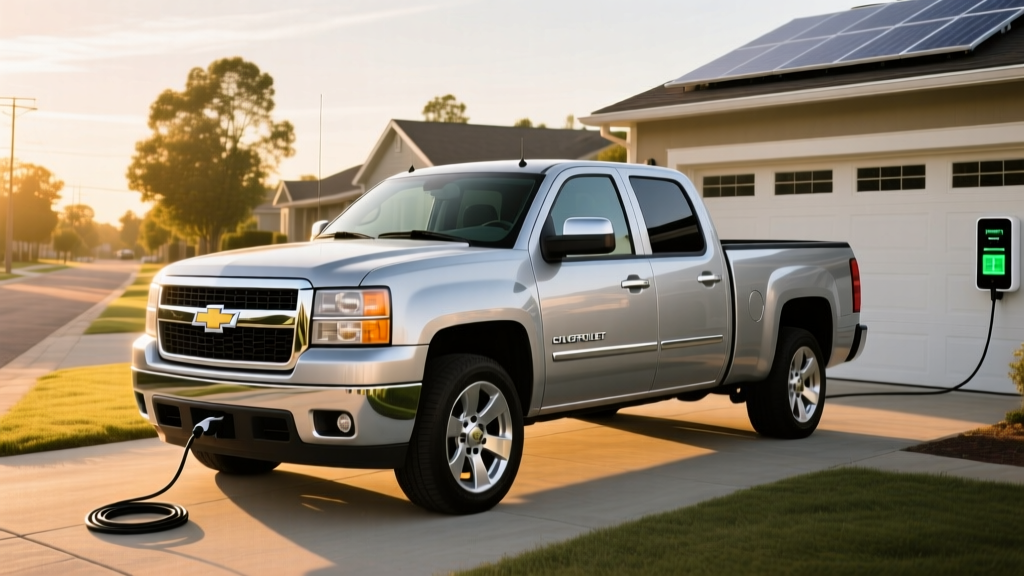
The 2010 Chevrolet Silverado Hybrid was one of the first full-size pickup trucks to pair a V8 with an electric assist system — a bold experiment from GM's two-mode hybrid partnership with Chrysler and BMW. In 2026, it remains a curiosity on the used market: a heavy, body-on-frame truck that sips slightly less fuel than its gas-only sibling but carries the risk of an aging high-voltage battery. If you're considering one as a budget-friendly work truck with a marginal efficiency bump, this guide covers exactly what you're getting.
Spec Overview: 2010 Silverado Hybrid at a Glance
| Specification | Value |
|---|---|
| Powertrain | 6.0L V8 + two electric motors (Two-Mode Hybrid) |
| Combined Horsepower | 379 hp (net system) |
| Engine Output | 332 hp @ 5,100 rpm / 367 lb-ft torque |
| Electric Motor Output | Two 60-kW motors integrated in transmission |
| Hybrid Battery | ~1.8 kWh nickel-metal hydride (NiMH) |
| Transmission | 2-mode CVT (electronically variable) |
| Drivetrain | RWD or 4WD |
| EPA Fuel Economy (2WD) | 21 city / 22 highway / 21 combined MPG |
| EPA Fuel Economy (4WD) | 20 city / 20 highway / 20 combined MPG |
| Towing Capacity | 5,800 lbs (2WD) / 5,700 lbs (4WD) |
| Payload | ~1,300 lbs |
| Original MSRP (2010) | ~$41,000–$44,000 (depending on trim/config) |
| 2026 Used Market Price | ~$6,000–$12,000 (varies by mileage and condition) |
| Hybrid Battery Warranty (Original) | 8 years / 100,000 miles |
Sources: EPA fueleconomy.gov, GM archival specifications.
Fuel Economy: Real-World MPG vs. EPA Sticker
The 2010 Silverado Hybrid's EPA ratings — 21/22/21 MPG (city/highway/combined) for two-wheel drive — were genuinely impressive for a full-size V8 truck in 2010. The gas-only 2010 Silverado 1500 with the 5.3L V8 managed just 15/21/17 MPG by comparison, meaning the hybrid delivered roughly a 24% improvement in combined driving.
| Configuration | City MPG | Highway MPG | Combined MPG |
|---|---|---|---|
| Silverado Hybrid 2WD | 21 | 22 | 21 |
| Silverado Hybrid 4WD | 20 | 20 | 20 |
| Silverado 1500 Gas 5.3L V8 2WD (2010) | 15 | 21 | 17 |
| Silverado 1500 Gas 5.3L V8 4WD (2010) | 15 | 21 | 17 |
Real-World Expectations in 2026
Two-mode hybrids like this one actually tend to deliver their best fuel economy in mixed city driving, where the electric motors do the most work during low-speed acceleration and stop-and-go traffic. Highway driving at 70+ MPH relies predominantly on the 6.0L V8, so highway gains over the gas model are modest.
Owner reports on forums and fueleconomy.gov user data cluster around 18–21 MPG combined for real-world driving. If the hybrid battery has degraded significantly — likely on a 16-year-old vehicle with the original pack — expect figures to drop toward the gas-only baseline of 15–17 MPG, because the system can no longer rely on electric assist.
How the Two-Mode Hybrid System Works
The Silverado Hybrid uses GM's Two-Mode Hybrid system, co-developed with Chrysler (for the Aspen Hybrid) and BMW (for the X6 ActiveHybrid). It's fundamentally different from the single-mode systems in a Toyota Prius or Ford Fusion Hybrid.
Mode 1 (Low-speed / city): At low speeds, the truck can move under electric power alone for very short distances (roughly 1–2 miles at under 25 MPH), though this isn't a formal "EV mode" — it's a byproduct of the system blending engine and motor torque. The engine shuts off at stops, and regenerative braking recaptures energy.
Mode 2 (High-load / highway): Under heavy acceleration, towing, or highway speeds, the system locks into a fixed-gear mechanical path where the V8 does most of the work, with the electric motors providing supplemental torque. This prevents the efficiency losses typical of CVTs under load.
The two 60-kW electric motors are housed inside the transmission, and the ~1.8 kWh NiMH battery pack sits under the rear seats. This is a very small battery by modern standards — for comparison, a 2026 Toyota RAV4 PHEV carries an 18.1 kWh lithium-ion pack — but it was state-of-the-art for a full-size truck in 2010.
HEV vs. PHEV vs. EV: Which Truck Fits You?
Buyers researching the 2010 Silverado Hybrid are often weighing it against other electrified trucks. Here's how the categories break down:
Conventional Hybrid (HEV)
Example: 2010 Silverado Hybrid, 2026 Ford F-150 PowerBoost Hybrid
- No plug-in required
- Small battery (~1.5–2 kWh)
- Modest MPG gains (15–25% over gas)
- No electric-only range
- No federal tax credit
Plug-in Hybrid (PHEV)
Example: 2026 Ford F-150 Lightning (EREV concept), upcoming Ramcharger
- Plugs in to charge
- Larger battery (15–40 kWh)
- 20–50 miles electric-only range
- Gas engine for extended range
- May qualify for §30D tax credit (up to $7,500)
Battery Electric (BEV)
Example: 2026 Ford F-150 Lightning, Chevy Silverado EV, Rivian R1T
- Plugs in; no gas engine
- Large battery (100–200+ kWh)
- 230–400+ miles range
- Zero tailpipe emissions
- Eligible for §30D credit (up to $7,500, income/MSRP caps apply)
- Choose the 2010 Silverado Hybrid if: You need a cheap V8 truck for light work, want marginally better fuel economy than a gas truck, and don't have access to charging.
- Choose a modern PHEV truck if: You have home charging, a short commute (under 40 miles), and want electric daily driving with gas-engine backup for road trips.
- Choose a BEV truck if: You have reliable Level 2 home charging, mostly drive under 250 miles/day, want maximum torque and lowest operating cost, and can absorb a higher purchase price.
Reliability, Battery Lifespan, and Replacement Cost
This is the critical question for any 16-year-old hybrid. The 2010 Silverado Hybrid's NiMH battery was covered by GM's original warranty of 8 years / 100,000 miles — standard for hybrid components at the time. That warranty expired no later than 2018, meaning every surviving example is now out of factory hybrid coverage.
- Original warranty: 8 years / 100,000 miles (expired)
- Expected NiMH battery lifespan: 10–15 years / 150,000–200,000 miles before significant degradation
- Replacement cost (2026): $2,500–$4,500 for a refurbished or aftermarket NiMH pack, plus $500–$1,000 labor
- GM dealer OEM replacement: $4,000–$6,000+ if still available (parts scarcity is a growing issue)
Common Failure Points
Beyond the hybrid battery, the 2010 Silverado Hybrid shares many components with the standard GMT900-platform Silverado 1500. Known issues include:
- Hybrid battery degradation: The most expensive risk. NiMH cells degrade with age and heat. A degraded pack reduces MPG gains and may trigger a check-engine light.
- Transmission (2-mode CVT): Complex and expensive to repair. Fewer shops are familiar with this specific unit compared to a standard 6-speed automatic.
- Active Fuel Management (AFM): The 6.0L V8 uses cylinder deactivation, which has known issues with lifter failure on GM's Vortec engines.
- Standard Silverado concerns: Rust on rocker panels, power window regulator failures, and dash cracking — all common GMT900 issues.
The two-mode hybrid transmission is the wildcard. If it fails, replacement costs can exceed $5,000–$7,000, and sourcing a rebuilt unit is increasingly difficult given the low production volume of these trucks (roughly 5,000–10,000 units sold across the 2009–2013 model years).
Tax Credits and Incentives: What Applies in 2026?
The 2010 Silverado Hybrid does not qualify for any current federal tax credit. Here's why:
- The IRS §30D Clean Vehicle Credit (up to $7,500) applies only to new qualifying plug-in electric vehicles or fuel-cell vehicles purchased new. Conventional hybrids (HEVs) have never qualified.
- The Used Clean Vehicle Credit (up to $4,000 under §25E) applies only to used plug-in EVs and PHEVs — not conventional hybrids.
- The original hybrid tax credit that existed circa 2006–2010 (under the Energy Policy Act of 2005) was a phase-out credit specific to GM hybrids that expired long ago and applied only to the original purchaser.
Bottom line: there is no federal or typical state incentive available for purchasing a 2010 Silverado Hybrid in 2026. You're buying it purely as a used vehicle with no tax benefit.
Pros and Cons: The Honest Assessment
Pros
- ~24% better combined MPG than gas Silverado 1500
- Strong 379 hp system output; adequate towing
- No plug-in required; fuel and go
- Cheap entry price on the used market ($6K–$12K)
- Regenerative braking extends brake life
- Auto stop-start reduces idle fuel waste
Cons
- Hybrid battery is 16 years old — replacement likely needed
- 2-mode transmission is complex and costly to repair
- No tax credits or incentives available
- MPG gains disappear if battery is degraded
- Low production volume = scarce parts and specialist knowledge
- Still only 20–21 MPG combined even when working perfectly
- Outdated interior, safety tech, and infotainment vs. 2026 trucks
Frequently Asked Questions
How many MPG does the 2010 Silverado Hybrid get?
The EPA rates the 2WD model at 21 city / 22 highway / 21 combined MPG, and the 4WD model at 20/20/20 MPG. In real-world driving with a healthy battery, owners report 18–21 MPG combined. With a degraded hybrid battery, expect 15–18 MPG — closer to the gas-only model.
Can the 2010 Silverado Hybrid drive on electric power only?
Only at very low speeds (under ~25 MPH) for roughly 1–2 miles. It is not a plug-in hybrid and has no meaningful electric-only range. The system uses electric assist to supplement the V8, not replace it.
Does the 2010 Silverado Hybrid qualify for any tax credit?
No. The IRS §30D and §25E credits apply only to plug-in electric vehicles. Conventional hybrids have no current federal tax incentive. The original GM hybrid credit from the mid-2000s expired and applied only to original purchasers.
How much does it cost to replace the hybrid battery?
Expect $2,500–$4,500 for an aftermarket or refurbished NiMH pack, plus $500–$1,000 in labor. OEM GM replacements may cost $4,000–$6,000+ if available. Given the truck's used value of $6,000–$12,000, a battery replacement can represent 25–75% of the vehicle's worth — factor this into your purchase decision.
Is the 2010 Silverado Hybrid reliable?
The underlying GMT900 Silverado platform is generally robust, but the hybrid-specific components — the NiMH battery and the two-mode CVT transmission — are aging, complex, and expensive to repair. Reliability in 2026 depends heavily on whether these components have been serviced or replaced. A pre-purchase inspection by a technician familiar with GM's two-mode hybrid system is strongly recommended.
How does it compare to a modern hybrid truck?
The 2026 Ford F-150 PowerBoost Hybrid achieves an EPA-estimated 24–25 MPG combined with a 3.5L twin-turbo V6, delivers 430 hp, tows over 11,000 lbs, and comes with a full warranty and modern safety tech. It starts around $55,000 new. The 2010 Silverado Hybrid is a budget option for buyers who can't stretch to a modern truck and accept the reliability risk.
Should I buy a 2010 Silverado Hybrid or a regular gas Silverado?
If the hybrid battery and transmission are confirmed healthy (or recently replaced), the hybrid's MPG advantage saves roughly $300–$500/year in fuel versus the gas model at 15,000 miles/year and $3.50/gallon. But if the battery needs replacement, the $3,000+ cost erases roughly 6–10 years of fuel savings. Unless you get a documented battery replacement or a deep discount, a well-maintained gas Silverado 1500 may be the lower-risk choice.