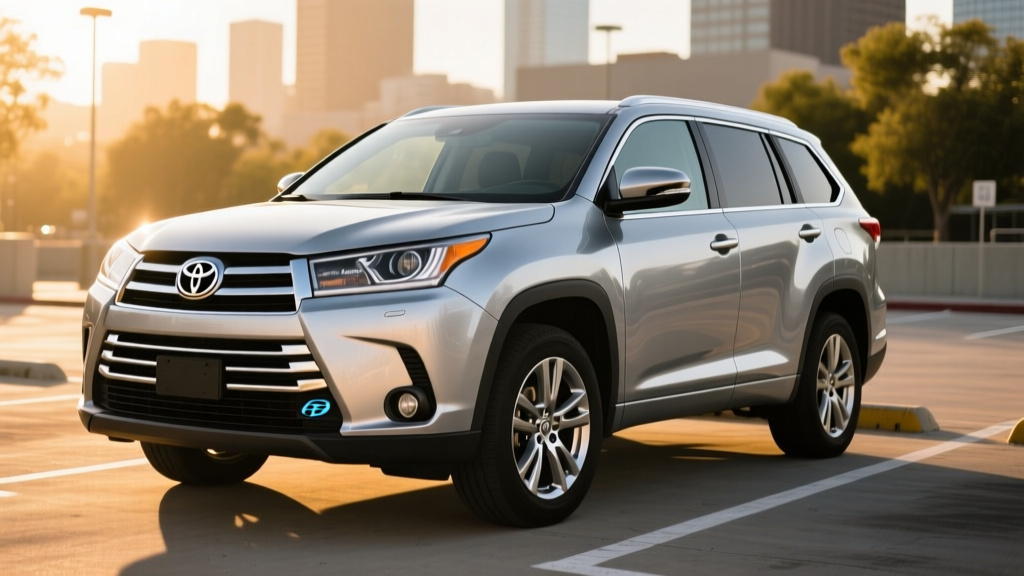
If you're searching for a 2015 Toyota hybrid SUV, you're almost certainly looking at the used market — specifically the third-generation Toyota Highlander Hybrid. Toyota discontinued the Highlander Hybrid in the U.S. after the 2022 model year (replaced by the Grand Highlander Hybrid), making the 2015 model year a popular target for budget-conscious buyers who want three-row SUV practicality without the fuel cost of a conventional V6.
The 2015 Highlander Hybrid pairs a 3.5-liter V6 with Toyota's proven hybrid synergy drive system. It requires no plug-in charging, delivers strong city fuel economy, and carries Toyota's reputation for long-term durability. But with these vehicles now crossing the 10-year mark, battery health and replacement costs become critical buying considerations.
This guide breaks down the exact EPA fuel economy figures, real-world MPG expectations, hybrid battery warranty status, powertrain specs, and whether this 11-year-old hybrid SUV still makes financial sense in 2026.
What Exactly Is the 2015 Toyota Highlander Hybrid?
The 2015 Highlander Hybrid is a conventional hybrid electric vehicle (HEV) — not a plug-in hybrid (PHEV) and not a battery electric vehicle (BEV). This distinction matters because many used-car shoppers conflate these powertrain types.
HEV vs. PHEV vs. BEV: Quick Breakdown
| Powertrain | Plug-In Required? | Electric-Only Range | 2015 Toyota Example |
|---|---|---|---|
| HEV (Conventional Hybrid) | No — charges via regenerative braking and engine | Less than 1 mile at very low speeds | Highlander Hybrid |
| PHEV (Plug-In Hybrid) | Yes — plug into Level 1 or Level 2 charger | Typically 20–45 miles | RAV4 Prime (2021+) |
| BEV (Battery Electric) | Yes — requires charging for all driving | 200–400+ miles | bZ4X (2023+) |
The 2015 Highlander Hybrid never plugs in. Its small nickel-metal hydride (NiMH) traction battery charges itself through regenerative braking and the gasoline engine. You simply fuel it like any conventional vehicle and benefit from improved city efficiency.
Toyota did not offer a plug-in hybrid SUV in 2015. The RAV4 Prime (PHEV) didn't arrive until 2021, and the Prius Prime was the only Toyota PHEV available that era. If you want a 2015 Toyota hybrid SUV, the Highlander Hybrid is your only option.
Fuel Economy: EPA Ratings vs. Real-World MPG
The 2015 Highlander Hybrid carries an EPA rating of 28 MPG city, 28 MPG highway, and 28 MPG combined. That's a flat rating across all driving conditions — unusual for hybrids, which typically favor city driving due to frequent regenerative braking opportunities.
| Driving Condition | EPA Rating | Real-World Expectation |
|---|---|---|
| City | 28 MPG | 27–30 MPG |
| Highway | 28 MPG | 25–27 MPG |
| Combined | 28 MPG | 26–28 MPG |
Real-world context: Hybrid SUVs typically exceed their EPA city estimates because stop-and-go traffic maximizes regenerative braking. However, the Highlander Hybrid's relatively heavy curb weight (~4,700 lbs) and older-generation hybrid system mean the gains are modest. In mixed suburban driving with moderate stops, expect 27–29 MPG. Sustained highway driving at 75+ MPH will drop efficiency to the mid-20s as aerodynamic drag dominates and the electric motor provides less assistance.
For comparison, the 2015 Highlander with the conventional 3.5L V6 and 6-speed automatic achieves 18 city / 25 highway / 21 combined. The hybrid's 33% improvement in combined fuel economy translates to roughly $400–$600 in annual fuel savings at current gas prices (assuming 15,000 miles/year and $3.50/gallon), according to fueleconomy.gov.
Powertrain Specs and Performance
The 2015 Highlander Hybrid uses Toyota's Hybrid Synergy Drive system with a naturally aspirated 3.5-liter V6 engine paired with two electric motor-generators and an electronically controlled continuously variable transmission (eCVT).
| Specification | Value |
|---|---|
| Engine | 3.5L V6 (2GR-FXE, Atkinson cycle) |
| Engine Horsepower | 236 HP @ 5,800 RPM |
| Combined System Output | 280 HP |
| Electric Motors | Front: 123 kW / Rear: 50 kW |
| Transmission | eCVT (planetary gearset) |
| Drivetrain | AWD (electronic on-demand rear motor) |
| 0–60 MPH | ~7.8 seconds (estimated) |
| Towing Capacity | 3,500 lbs |
| Curb Weight | ~4,717 lbs |
| Traction Battery | NiMH, ~1.9 kWh (total capacity) |
| Seating | 7 passengers (3 rows) |
The AWD system is worth noting: the rear axle is driven exclusively by a 50 kW electric motor — there's no mechanical driveshaft connecting the front and rear. This "eAWD" system engages the rear motor on-demand during acceleration or low-traction conditions. It's effective for light snow and rain but not designed for serious off-road use.
Acceleration is adequate for a three-row family hauler. The 280 combined HP provides confident highway merging, though the eCVT's drone under hard acceleration is a common complaint. The hybrid system is tuned for efficiency, not performance — this is not a sporty SUV.
Hybrid Battery Lifespan, Warranty, and Replacement Cost
This is the single most important consideration when buying a 2015 Highlander Hybrid in 2026. These vehicles are now 11 years old, and the hybrid battery is the most expensive component unique to the hybrid powertrain.
Toyota Hybrid Battery Warranty (2015 Model Year)
- Original warranty: 8 years / 100,000 miles (10 years / 150,000 miles in CARB states including California, New York, Massachusetts, and others)
- Warranty status in 2026: EXPIRED for all 2015 models based on age (8-year minimum expired in 2023)
- Battery chemistry: Nickel-Metal Hydride (NiMH)
- Typical NiMH lifespan: 150,000–200,000 miles before significant degradation
How long do Toyota hybrid batteries actually last? Toyota's NiMH batteries have proven remarkably durable. Data from fleet operators and long-term owners shows the Highlander Hybrid battery commonly lasts 150,000–200,000 miles before requiring replacement. Some units exceed 250,000 miles with gradual capacity loss. The key failure mode is individual cell degradation within the battery pack, which reduces available capacity and triggers a hybrid system warning light.
Replacement cost in 2026:
- New OEM battery (Toyota dealer): $3,000–$4,500 installed
- Refurbished/reconditioned battery: $1,500–$2,500 installed
- Individual cell replacement (specialty hybrid shops): $800–$1,500
If you're buying a 2015 Highlander Hybrid with 120,000+ miles, budget $2,000–$4,000 for a potential battery replacement within your ownership period. Many used examples still have healthy original batteries, but a pre-purchase hybrid battery health check (available at Toyota dealers and independent hybrid specialists) is strongly recommended. Ask for a battery voltage test and individual module resistance readings.
2015 Highlander Hybrid Trim Levels and Used Pricing
The 2015 Highlander Hybrid was offered in two trims: Limited and Limited Platinum. There was no base or LE hybrid trim — Toyota positioned the hybrid exclusively at the top of the lineup.
| Trim | Original MSRP (2015) | Estimated Used Price (2026) | Key Features |
|---|---|---|---|
| Limited | $47,730 | $16,000–$22,000 | Leather, navigation, 3rd row, power liftgate, blind spot monitor |
| Limited Platinum | $50,725 | $18,000–$25,000 | Adds panoramic sunroof, adaptive cruise, pre-collision system, lane departure alert |
Prices vary significantly based on mileage, condition, battery health, and regional demand. Hybrid SUVs hold value well in markets with high fuel costs and eco-conscious buyers (West Coast, Northeast). Expect to pay a $1,500–$3,000 premium over an equivalently equipped gas-only Highlander.
Tax Credits and Incentives for Used Hybrid SUVs
The 2015 Highlander Hybrid does not qualify for the federal §30D New Clean Vehicle Credit — that credit applies only to new vehicle purchases. However, there's a relevant incentive for used buyers:
- Used Clean Vehicle Credit (§25E): Up to $4,000 (30% of sale price, capped at $4,000) for eligible used EVs and PHEVs purchased from a dealer. However, conventional HEVs like the Highlander Hybrid do NOT qualify. The §25E credit requires the vehicle to have at least 4 kWh of battery capacity and be capable of external charging — criteria the Highlander Hybrid doesn't meet.
- State incentives: A handful of states offer rebates or HOV lane access for used hybrids, but most have shifted focus to PHEVs and BEVs. Check your state's energy office for current programs.
- No federal tax credit is available for the 2015 Highlander Hybrid under current IRS rules. See IRS.gov for the latest eligibility criteria.
The lack of tax incentives is a meaningful cost disadvantage versus used PHEVs and BEVs, which can qualify for up to $4,000 under §25E. Factor this into your total cost comparison.
Reliability and Common Issues
The 2015 Highlander Hybrid benefits from Toyota's strong reliability reputation, and the hybrid system itself is one of the most proven in the industry. The eCVT transmission (planetary gearset) has no clutches, belts, or bands to wear out and is essentially bulletproof. However, a 2015 vehicle will have age-related maintenance needs:
- Hybrid battery: As discussed, potential $2,000–$4,500 replacement as it ages past 150K miles
- Hybrid inverter coolant pump: Known failure point on this generation; replacement ~$400–$700
- Brake actuator: The regenerative braking system uses an electro-hydraulic actuator that can fail around 100K–150K miles; $1,200–$1,800 replacement
- 12V auxiliary battery: Standard replacement item every 4–5 years; use an AGM battery for hybrid compatibility (~$200)
- Standard maintenance: Oil changes (0W-20 synthetic), coolant flushes, transmission fluid (Toyota WS ATF), spark plugs at 120K miles
The NHTSA safety ratings gave the 2015 Highlander 5 stars overall. The Limited Platinum trim's Toyota Safety Sense features (pre-collision, lane departure) were ahead of their time for 2015, though they're basic compared to 2026 ADAS standards.
Highlander Hybrid vs. RAV4 Hybrid vs. Going Full EV
If you're considering a 2015 Toyota hybrid SUV, you're likely cross-shopping a few options. Here's how the Highlander Hybrid stacks up against alternatives:
Choose the 2015 Highlander Hybrid If:
- You need 3-row seating for 7 passengers
- You want AWD without the fuel penalty of a conventional V6 SUV
- You prefer not to plug in and want simple "fill and go" operation
- Towing 3,500 lbs is a requirement
- Your daily driving is city-heavy (where hybrids shine)
Consider Alternatives If:
- You only need 2 rows — a used RAV4 Hybrid (2016+) gets 32–34 MPG combined
- You have home charging and want 30+ miles of electric-only driving — look at a used RAV4 Prime (2021+, 42 mi EV range)
- You want to qualify for the $4,000 used-EV tax credit — you'll need a PHEV or BEV
- Your budget allows $30K+ — a newer hybrid or PHEV will have a fresher battery and modern safety tech
- You drive mostly highway — a diesel or efficient gas SUV may match the hybrid's highway MPG
The full EV question: If you have reliable home Level 2 charging and your daily driving is under 250 miles, a used BEV like the Hyundai Ioniq 5 or Tesla Model Y eliminates fuel costs entirely and requires far less maintenance (no oil changes, no hybrid battery concerns). However, for families who regularly road-trip, tow, or lack home charging access, the Highlander Hybrid remains a pragmatic choice with zero charging infrastructure dependency.
Frequently Asked Questions
How many MPG does the 2015 Toyota Highlander Hybrid get?
The EPA rates it at 28 MPG city, 28 highway, and 28 combined. Real-world driving typically yields 26–28 MPG combined, with city driving sometimes reaching 29–30 MPG and sustained highway cruising dropping to 25–27 MPG.
Does the 2015 Highlander Hybrid need to be plugged in?
No. It is a conventional hybrid (HEV), not a plug-in hybrid. The battery charges through regenerative braking and the gasoline engine. You never plug it in — just fill it with regular unleaded fuel.
How far can the 2015 Highlander Hybrid drive on electric power alone?
Less than 1 mile at very low speeds (under 25 MPH). The hybrid system uses the electric motor to assist the gas engine and enable brief EV-only creeping, but it is not designed for meaningful electric-only driving. If you want 30+ miles of EV range, you need a PHEV like the RAV4 Prime.
Is the 2015 Highlander Hybrid reliable?
Yes, with caveats. The hybrid powertrain (engine, eCVT, motors) is proven and durable well past 200,000 miles. The main risk is the hybrid battery, which may need replacement after 150K+ miles at a cost of $2,000–$4,500. The brake actuator and inverter coolant pump are known wear items. A pre-purchase inspection at a hybrid specialist is recommended.
What does it cost to replace the hybrid battery?
A new OEM battery from Toyota costs $3,000–$4,500 installed. Refurbished batteries run $1,500–$2,500. Individual cell replacement at a hybrid specialty shop can cost $800–$1,500. Most original batteries last 150,000–200,000 miles.
Does the 2015 Highlander Hybrid qualify for any tax credit?
No. The federal §30D credit applies only to new vehicles, and the §25E used-vehicle credit requires a plug-in vehicle (PHEV or BEV). The Highlander Hybrid is a conventional HEV and does not qualify for any federal tax incentive. Some states may offer minor incentives for used hybrids — check your state's energy office.
How does the 2015 Highlander Hybrid compare to a full EV for a family?
The Highlander Hybrid wins on flexibility — no charging needed, 3,500-lb towing, 400+ mile total range, and quick refueling. A full EV like a used Model Y wins on operating cost (electricity is cheaper than gas, minimal maintenance) and qualifies for the $4,000 used-EV tax credit. If you can charge at home and rarely tow or road-trip beyond 250 miles, a BEV likely saves more money long-term.
Should I buy a 2015 Highlander Hybrid in 2026?
It can be a smart buy if you find one under $20,000 with under 130,000 miles and a verified healthy hybrid battery. Budget an additional $2,000–$3,000 as a battery replacement reserve. If the price approaches $25,000, you're better served by a newer RAV4 Hybrid or a used PHEV that qualifies for tax incentives.