Quick Verdict: The Efficiency Champion of the Midsize Sedan Segment
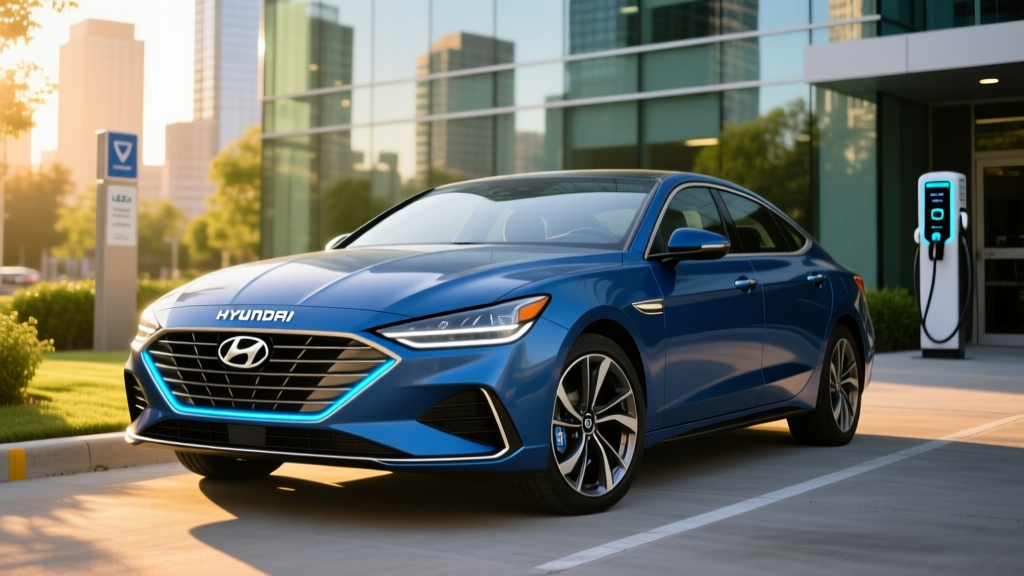
The 2026 Hyundai Sonata Hybrid Blue occupies a precise niche: maximum fuel economy without the complexity, cost, or charging dependency of a plug-in hybrid or full electric vehicle. With an EPA-estimated 47 MPG combined, it undercuts nearly every midsize sedan competitor on fuel cost while avoiding the range-anxiety calculus that still accompanies EV ownership for apartment dwellers and road-trippers alike.
This is a conventional hybrid (HEV) — not a plug-in. You never plug it in. The 1.6-liter turbocharged engine and electric motor work in tandem, recapturing energy through regenerative braking and optimizing power delivery automatically. If you're searching for the "Hyundai Sonata Hybrid Blue" specifically, you're looking at the efficiency-optimized Blue trim that prioritizes fuel economy over the sportier N Line variant.
| Specification | 2026 Sonata Hybrid Blue |
|---|---|
| EPA Combined MPG | 47 MPG |
| EPA City / Highway | 48 city / 45 highway |
| Powertrain | 1.6L Turbo I4 + Electric Motor |
| Combined Horsepower | 192 hp |
| Transmission | 6-Speed Automatic |
| Battery Type | Lithium-ion Polymer (~1.6 kWh) |
| Base MSRP | $30,250 |
| Battery Warranty | 10 years / 100,000 miles |
Fuel Economy: EPA Numbers vs Real-World Driving
The EPA rates the 2026 Sonata Hybrid Blue at 48 MPG city, 45 MPG highway, and 47 MPG combined. These are not optimistic estimates — they reflect the hybrid system's strength in stop-and-go urban driving where regenerative braking recaptures energy that conventional cars waste as heat.
| Driving Scenario | EPA Estimate | Real-World Expectation |
|---|---|---|
| City (mixed stop-and-go) | 48 MPG | 48-52 MPG (hybrids often exceed EPA in city) |
| Highway (70 mph cruise) | 45 MPG | 42-45 MPG (less regen benefit at steady speed) |
| Combined | 47 MPG | 45-49 MPG depending on route mix |
| Cold Weather (below 32°F) | N/A | 40-44 MPG (engine runs more for cabin heat) |
According to fueleconomy.gov, real-world owner reports for recent Sonata Hybrid models cluster between 44-50 MPG, with city-heavy commuters frequently exceeding the EPA city estimate. This is the hybrid advantage: unlike EVs, which lose range in cold weather and highway driving, hybrids often perform better than their sticker in urban conditions.
At 12,000 miles per year and $3.50/gallon fuel, the Sonata Hybrid Blue costs approximately $894 annually in gasoline — roughly $400 less than a comparable 30 MPG gas-only midsize sedan.
HEV vs PHEV vs EV: Which Powertrain Fits Your Life?
The Sonata lineup includes both the conventional Hybrid (HEV) reviewed here and a Plug-in Hybrid variant (PHEV) sold in select markets. Hyundai also offers the all-electric Ioniq 6 for buyers ready to commit to full electrification. Here's how they differ:
| Feature | Sonata Hybrid (HEV) | Sonata PHEV (if available) | Ioniq 6 (BEV) |
|---|---|---|---|
| Plug-in Required? | No | Yes (optional) | Yes (mandatory) |
| Electric-Only Range | ~1 mile (low-speed) | ~28 miles | 361 miles (EPA) |
| Total Range | ~600 miles | ~500 miles | 361 miles |
| Fuel/Energy Cost per Mile | ~$0.07 | ~$0.05 (electric) / $0.08 (gas) | ~$0.04 (electric) |
| Home Charging Needed? | No | Recommended | Essential |
| Federal Tax Credit | None | Up to $3,750 (§30D) | Up to $7,500 (§30D) |
| Best For | No home charging, road trips | Short commutes + home charging | Home charging + mostly <300mi trips |
Choose the Sonata Hybrid (HEV) if: You lack reliable home charging access, frequently drive beyond 300 miles without stopping, want minimal behavioral change from your current gas car, or prioritize lowest upfront cost.
Choose a PHEV if: Your daily commute is under 30 miles round-trip, you can install a Level 2 charger at home, and you want electric-only driving for daily errands while retaining gas flexibility for road trips.
Choose a full EV if: You have home charging, your typical trips stay within 300 miles (or you're comfortable with DC fast-charging stops), and you want the lowest per-mile energy cost and zero tailpipe emissions.
Powertrain: How the Hybrid System Delivers 192 HP and 47 MPG
The Sonata Hybrid Blue pairs a 1.6-liter turbocharged four-cylinder engine (producing 150 hp on its own) with a 39 kW electric motor integrated into the transmission. Combined output is 192 horsepower — adequate for confident highway merging and passing, though not sporty. The 0-60 mph time sits around 8.0 seconds, which is typical for efficiency-focused midsize sedans.
Unlike Toyota's planetary-gear hybrid system (used in the Camry Hybrid), Hyundai uses a traditional 6-speed automatic transmission with the electric motor sandwiched between engine and gearbox. This creates a more familiar driving feel — no rubber-band CVT sensation — at a slight cost to ultimate efficiency. The tradeoff suits drivers who prioritize driving engagement over squeezing out the last 2 MPG.
The hybrid battery is a lithium-ion polymer pack with approximately 1.6 kWh of capacity. This is far smaller than a PHEV or EV battery (which range from 13 kWh to 100+ kWh), but it's sufficient for regenerative braking capture, electric-only creeping in traffic, and assisting the gas engine during acceleration. The small battery also means minimal weight penalty and no cargo-space compromise.
Pricing, Trims, and Tax Credit Reality
The 2026 Hyundai Sonata Hybrid Blue starts at approximately $30,250 MSRP (including destination). Higher trims like the SEL and Limited add features like leather seats, panoramic sunroof, and advanced driver assistance, pushing the price toward $36,000-$38,000.
Federal Tax Credit: The conventional Sonata Hybrid (HEV) does not qualify for the IRS §30D Clean Vehicle Credit. That credit applies only to plug-in hybrids (PHEVs) and battery electric vehicles (BEVs) meeting battery-sourcing and critical-mineral requirements, MSRP caps ($55,000 for sedans), and buyer income limits ($150,000 single / $300,000 joint). See current rules at irs.gov.
State Incentives: Some states offer rebates for conventional hybrids, though most incentive programs have shifted toward PHEVs and BEVs. Check your state energy office or AFDC state incentive database for local programs.
Without a federal tax credit, the Sonata Hybrid Blue's value proposition rests on fuel savings and low total cost of ownership rather than purchase-price subsidies. Over five years and 60,000 miles, the fuel savings versus a 30 MPG gas sedan amount to roughly $2,000-$2,500 (depending on local gas prices), partially offsetting the hybrid's higher upfront cost.
Battery Longevity: Warranty, Replacement Cost, and Reliability
Hybrid battery anxiety is understandable — replacement costs are real, and early-generation hybrids from the 2000s did experience premature battery failures. But modern lithium-ion hybrid batteries have proven remarkably durable, and Hyundai backs the Sonata Hybrid's battery with one of the industry's strongest warranties.
Hyundai Hybrid Battery Warranty: 10 years or 100,000 miles (whichever comes first), covering capacity loss below 70% of original specification. This applies to the original owner; subsequent owners receive 10 years/100,000 miles from the vehicle's original in-service date.
Hybrid System Warranty: 10 years / 100,000 miles on all hybrid-specific components including the electric motor, inverter, and related electronics.
Real-World Longevity: Hyundai's hybrid systems in the Sonata and Ioniq Hybrid have demonstrated low failure rates in owner surveys. Taxi and rideshare fleets using Hyundai hybrids regularly exceed 150,000 miles on original batteries. Unlike early nickel-metal-hydride packs, modern lithium-ion polymer batteries degrade gradually rather than failing catastrophically.
Out-of-Warranty Replacement Cost: If the hybrid battery fails after the warranty period, expect $2,500-$4,000 for a replacement pack plus labor. This is far less than EV battery replacement ($10,000-$20,000+) because the hybrid pack is small (~1.6 kWh vs 77+ kWh in an EV).
For context, the hybrid battery in a 2026 Sonata is subjected to far less stress than an EV battery. It never deep-cycles (draining from 100% to near-zero); instead, it operates in a narrow state-of-charge window optimized for longevity. This is why hybrid batteries routinely outlast their warranty periods with minimal degradation.
Pros, Cons, and the Bottom Line
Pros
- 47 MPG combined exceeds most midsize competitors
- No plug-in charging required — zero behavior change from gas cars
- 600+ mile total range eliminates refueling stops on road trips
- 10-year / 100,000-mile hybrid battery warranty
- Familiar 6-speed automatic (no CVT drone)
- Lower upfront cost than PHEV or EV alternatives
Cons
- No federal tax credit (HEV ineligible for §30D)
- Electric-only capability limited to low-speed creeping
- 192 hp adequate but not quick (8.0 sec 0-60)
- Highway MPG (45) trails city MPG (48) — less benefit on long commutes
- Hybrid premium over gas-only Sonata (~$3,000 more)
The 2026 Hyundai Sonata Hybrid Blue is the rational choice for drivers who want maximum fuel efficiency without the infrastructure dependency of a plug-in vehicle. It's ideal for apartment dwellers without charging access, frequent road-trippers who can't plan around DC fast-charger locations, and cost-conscious buyers who want hybrid savings without paying the PHEV or EV premium.
If you have home charging and a short commute, a PHEV or EV will deliver lower per-mile energy costs and (for EVs) access to the $7,500 federal tax credit. But if your lifestyle demands flexibility, the Sonata Hybrid Blue delivers 47 MPG with zero compromise on range, refueling convenience, or driving familiarity.
Frequently Asked Questions
How many MPG does the Hyundai Sonata Hybrid Blue get?
The EPA rates the 2026 Sonata Hybrid Blue at 48 MPG city, 45 MPG highway, and 47 MPG combined. Real-world owners typically see 44-50 MPG depending on driving mix, with city-heavy routes often exceeding the EPA city estimate thanks to regenerative braking.
Does the Sonata Hybrid need to be plugged in?
No. The Sonata Hybrid (HEV) is a conventional hybrid that charges its small battery through regenerative braking and the gas engine. You never plug it in. This differs from the Sonata Plug-in Hybrid (PHEV), which can be plugged in for ~28 miles of electric-only range but is sold separately.
Is the hybrid battery reliable and what does replacement cost?
Hyundai's hybrid batteries have demonstrated strong reliability, with many exceeding 150,000 miles without failure. The battery is warrantied for 10 years / 100,000 miles. Out-of-warranty replacement costs $2,500-$4,000 — far less than EV battery replacement due to the small (~1.6 kWh) pack size.
Does the Sonata Hybrid qualify for any tax credit?
The conventional Sonata Hybrid (HEV) does not qualify for the federal §30D Clean Vehicle Credit, which is reserved for PHEVs and BEVs. Some states offer hybrid rebates, but most incentive programs now prioritize plug-in vehicles. Check AFDC for state-specific programs.
How does the Sonata Hybrid compare to the Toyota Camry Hybrid?
The 2026 Toyota Camry Hybrid (LE trim) is rated at 52 MPG combined versus the Sonata Hybrid Blue's 47 MPG. The Camry uses a CVT transmission (smoother but less engaging) while the Sonata uses a 6-speed automatic. The Camry Hybrid starts around $29,500, making it slightly cheaper with better EPA fuel economy, though real-world results narrow the gap. Both carry 10-year hybrid battery warranties.
Should I buy the Sonata Hybrid, a PHEV, or a full EV?
Choose the Sonata Hybrid (HEV) if you lack home charging or frequently drive 300+ miles. Choose a PHEV if your commute is under 30 miles and you have home charging. Choose a full EV (like the Ioniq 6) if you have home charging, mostly drive under 300 miles, and want the lowest per-mile energy cost plus access to the $7,500 federal tax credit.