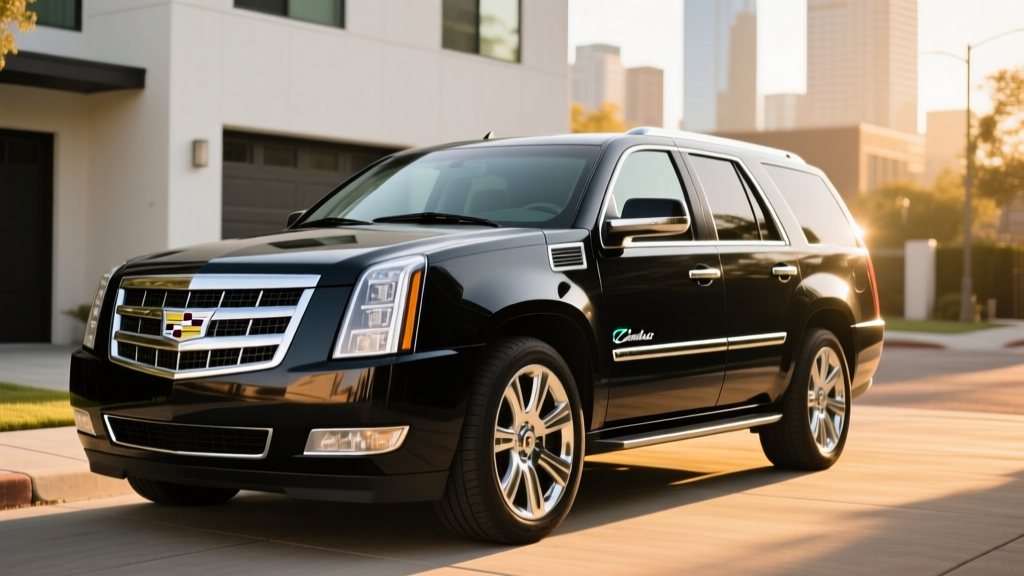
The 2009 Cadillac Escalade Hybrid was an anomaly when it debuted: a three-row luxury SUV with a two-mode hybrid system bolted to a 6.0L V8, promising V6-like fuel economy from a 5,800-pound vehicle. More than 15 years later, it remains one of the few hybrid full-size SUVs ever produced and a curiosity on the used market. If you're researching the 2009 Cadillac Escalade Hybrid as a potential purchase or just want to understand what this early hybrid powertrain delivers, this guide breaks down the real numbers — MPG, battery health, ownership costs, and how it stacks up against modern electrified alternatives.
HEV vs PHEV: What the Escalade Hybrid Actually Is
Before diving into specs, it's critical to understand what you're looking at. The 2009 Escalade Hybrid is a conventional hybrid (HEV), not a plug-in hybrid (PHEV). That distinction changes everything about how you own and drive it.
| Feature | HEV (2009 Escalade Hybrid) | PHEV (e.g., modern plug-in SUV) | Full EV (BEV) |
|---|---|---|---|
| Plugs in to charge? | No — charges via regenerative braking and engine | Yes — external charging required for EV range | Yes — only way to charge |
| Electric-only driving | Minimal (low-speed creep, ~1 mile) | Typically 20–50 miles | 200–400+ miles |
| Battery size | ~1.8 kWh (NiMH) | 10–30 kWh (Li-ion) | 60–120+ kWh (Li-ion) |
| Fuel source | Gasoline only | Gasoline + electricity | Electricity only |
| Tax credit eligible? | No | Up to $7,500 (§30D, if eligible) | Up to $7,500 (§30D, if eligible) |
The Escalade's hybrid system never needs to be plugged in. It recovers energy during braking and deceleration, stores it in a nickel-metal hydride (NiMH) battery pack under the rear cargo floor, and deploys electric motor assist during acceleration and low-speed driving. You fuel it like any other gas vehicle — the hybrid system simply makes that fuel go further.
Fuel Economy: EPA Ratings and Real-World MPG
The headline number for the 2009 Escalade Hybrid is its EPA fuel economy rating, which was genuinely impressive for a body-on-frame luxury SUV of its era.
| Driving Cycle | EPA Rating | Real-World Expectation |
|---|---|---|
| City | 20 MPG | 18–21 MPG |
| Highway | 21 MPG | 19–22 MPG |
| Combined | 20 MPG | 18–21 MPG |
For context, the non-hybrid 2009 Escalade with the 6.2L V8 was rated at 12 city / 18 highway / 14 combined (4WD). The hybrid's 20 MPG combined represents roughly a 43% improvement over the standard model in combined driving. According to fueleconomy.gov, the hybrid's annual fuel cost was estimated around $2,950 (based on 15,000 miles/year at $3.50/gallon), versus over $4,200 for the conventional V8 Escalade.
Why City MPG Doesn't Blow Away Highway MPG
Most modern hybrids (like the Toyota RAV4 Hybrid) achieve significantly higher city MPG than highway because regenerative braking recaptures energy in stop-and-go traffic. The Escalade's two-mode hybrid system does provide city benefits, but the vehicle's massive aerodynamic profile, 5,840-pound curb weight, and tall 6.0L V8 limit those gains. The city and highway numbers are unusually close — just 1 MPG apart — which is atypical for hybrids but reflects the physics of moving this much mass.
Real-World Owner Reports
Owner-reported data on fuel economy trackers suggests most drivers see 18–20 MPG in mixed driving. Highway-heavy commutes at 70+ MPH can drop to 17–18 MPG due to aerodynamic drag. City-heavy routes with frequent stops tend to stay near the 20–21 MPG mark. Expect a 440–460 mile total range from the 26-gallon fuel tank.
Powertrain: The Two-Mode Hybrid System Explained
The 2009 Escalade Hybrid uses GM's Two-Mode Hybrid system, co-developed with BMW and Chrysler (DaimlerChrysler at the time). It's fundamentally different from the simpler single-mode systems in a Prius or Camry Hybrid.
| Specification | Detail |
|---|---|
| Engine | 6.0L V8 (Vortec), cylinder deactivation (Active Fuel Management) |
| Engine horsepower | 332 HP @ 5,100 RPM |
| Electric motors | Two 60 kW motors integrated in transmission |
| Combined system output | 379 HP |
| Transmission | Electrically Variable Transmission (EVT) — 2 modes + 4 fixed gears |
| Battery pack | ~1.8 kWh NiMH (300V nominal) |
| Drivetrain | 4WD (standard on Hybrid trim) |
| 0-60 MPH | ~8.0 seconds (estimated) |
| Towing capacity | 5,600 lbs |
| Curb weight | ~5,840 lbs |
The "two-mode" designation refers to how the system operates across speed ranges:
- Mode 1 (low speed / city): The vehicle can launch on electric power alone at very low speeds, with the engine shutting off at stops. One motor acts as a generator, the other drives the wheels. This is where the hybrid delivers its biggest efficiency gains.
- Mode 2 (high speed / highway): The system engages fixed mechanical gear ratios, with electric motors providing assist during acceleration. This prevents the efficiency losses that single-mode CVTs experience at highway speeds.
The 6.0L V8 also features Active Fuel Management (cylinder deactivation), which shuts down four cylinders under light-load cruising. Combined with the hybrid system, this allows the engine to operate in V4 mode more frequently than in the non-hybrid Escalade.
Battery Health, Warranty, and Replacement Cost
The NiMH battery pack is the single biggest concern for anyone buying a 2009 Escalade Hybrid today. These packs are now 16+ years old, and NiMH chemistry degrades with time and heat cycles even more than with mileage.
| Battery Detail | Specification |
|---|---|
| Original warranty | 8 years / 100,000 miles (hybrid components) |
| Warranty status in 2026 | Expired for all 2009 models |
| Battery chemistry | Nickel-Metal Hydride (NiMH) |
| Estimated replacement cost | $3,000–$5,500 (remanufactured or new-old-stock) |
| Common failure symptoms | Reduced MPG, hybrid system warning light, limited electric assist |
What Happens When the Hybrid Battery Fails?
Unlike a full EV, a failed hybrid battery in the Escalade doesn't strand you. The vehicle can still drive on the gasoline engine alone, but you'll lose most of the fuel economy benefit (dropping to roughly 14–16 MPG, closer to the non-hybrid), and the vehicle may enter a reduced-power limp mode. You'll also see a "Service Hybrid System" message on the dash.
Replacement options in 2026 include:
- GM dealer replacement: Rarely stocked; expect $4,500–$5,500 if available.
- Aftermarket/remanufactured pack: $3,000–$4,000 from hybrid battery specialists. Several companies rebuild NiMH packs with new cells.
- Individual module replacement: The pack contains 30 NiMH modules. If only a few have failed, some hybrid shops can replace individual modules for $800–$1,500 — though this is a temporary fix if the rest of the pack is aged.
Pre-Purchase Battery Check
If you're evaluating a used 2009 Escalade Hybrid, ask a hybrid-experienced mechanic to perform a battery load test and check the State of Health (SoH) via the OBD-II port. Look for voltage delta between modules — a spread greater than 0.3V under load suggests cell imbalance and impending failure.
Pricing, Tax Credits, and Ownership Costs
The 2009 Escalade Hybrid originally carried an MSRP of approximately $71,000–$74,000 depending on options. In today's used market, examples typically sell for $8,000–$16,000 depending on mileage, condition, and battery health.
Tax Credit Eligibility
The 2009 Escalade Hybrid does not qualify for any federal tax credit under current IRS §30D rules. The federal hybrid tax credit that existed for this vehicle (up to $2,200) expired in 2010 and was only available to original purchasers. Used vehicle credits under §25E (up to $4,000) apply only to used EVs and PHEVs with at least 4 miles of electric-only range — the Escalade Hybrid's minimal EV capability disqualifies it. Check IRS.gov for current rules.
Annual Operating Cost Estimate
At 20 MPG combined, 15,000 miles/year, and $3.50/gallon:
- Annual fuel cost: ~$2,625
- Insurance: ~$1,800–$2,400/year (varies by state and driver)
- Maintenance: ~$800–$1,200/year (higher than average due to age and complexity)
- Total annual operating cost: ~$5,200–$6,200
For comparison, a 2026 Toyota Grand Highlander Hybrid (35 MPG combined) would cost roughly $1,500/year in fuel for the same mileage — about $1,100 less annually in fuel alone.
Pros and Cons of the 2009 Escalade Hybrid Today
Pros
- Significantly better MPG than the non-hybrid Escalade (20 vs. 14 combined)
- 379 HP combined output provides confident acceleration and highway merging
- Genuine three-row seating with adult-sized third row
- 5,600-lb towing capacity retained despite hybrid system
- Can still be driven with a failed hybrid battery (reduced efficiency)
- Low used-market entry price ($8K–$16K)
Cons
- Hybrid battery is 16+ years old — replacement likely needed if not already done
- No electric-only range of practical use
- No federal or state tax credit available
- Outdated infotainment, no modern ADAS features (no automatic emergency braking, lane-keep)
- High curb weight hurts handling and tire wear
- NiMH battery chemistry less durable long-term than modern Li-ion
- Hybrid-specific repair shops are becoming harder to find
Who Should Buy This — And Who Should Look Elsewhere
The 2009 Escalade Hybrid occupies a narrow niche in 2026. Here's a practical decision framework:
Choose the 2009 Escalade Hybrid if:
- You need a body-on-frame, three-row SUV with towing capability
- You want better fuel economy than a conventional Escalade or Tahoe but can't afford a modern hybrid SUV
- You have access to a hybrid-experienced mechanic in your area
- You're comfortable with the risk of a $3,000–$5,500 battery replacement
- You drive mostly city/suburban routes where the hybrid system provides the most benefit
Choose a modern hybrid SUV instead (e.g., 2026 Toyota Grand Highlander Hybrid, Kia Sorento Hybrid) if:
- You want a full factory warranty and modern safety features
- You prioritize fuel economy (modern midsize hybrids achieve 35–40 MPG combined)
- You want current infotainment, Apple CarPlay/Android Auto, and ADAS
- You don't need body-on-frame towing capacity
Choose a PHEV (e.g., 2026 Jeep Grand Cherokee 4xe, Hyundai Tucson PHEV) if:
- You have home charging and a short commute (20–40 miles) you want to drive on electricity
- You want to qualify for the §30D federal tax credit (up to $7,500, subject to MSRP caps, income limits, and battery sourcing rules)
- You still want a gas engine for road trips
Choose a full EV (e.g., 2026 Rivian R1S, Tesla Model X) if:
- You have reliable home Level 2 charging
- You want the lowest per-mile energy cost and zero tailpipe emissions
- You can absorb higher upfront cost for long-term operating savings
Frequently Asked Questions
How many MPG does the 2009 Cadillac Escalade Hybrid get?
The EPA rates the 2009 Escalade Hybrid at 20 city / 21 highway / 20 combined MPG. Real-world driving typically yields 18–21 MPG depending on driving style, speed, and terrain. This is roughly 43% better than the non-hybrid 4WD Escalade's 14 MPG combined.
Can the 2009 Escalade Hybrid drive on electric power only?
Technically yes, but only at very low speeds (under ~25 MPH) for extremely short distances (roughly one mile or less). It has no meaningful electric-only range. This is a conventional hybrid — it cannot be plugged in and does not function as an EV for any practical commute distance.
Is the 2009 Escalade Hybrid reliable?
The 6.0L V8 engine and the GM two-mode transmission are generally robust. The primary reliability concern is the aging NiMH hybrid battery pack. At 16+ years old, most original packs have either failed or been replaced. Other common issues include power-folding mirror failures, air suspension leaks (if equipped), and standard high-mileage wear items. The hybrid system itself (motors, power electronics) has proven durable, but the battery is a wear item.
What does it cost to replace the hybrid battery?
Expect to pay $3,000–$5,500 for a replacement NiMH battery pack, depending on whether you source a remanufactured unit from an aftermarket hybrid specialist or an OEM-equivalent from a dealer. Individual module replacement can cost $800–$1,500 but may not provide long-term reliability if the remaining modules are similarly aged.
Does the 2009 Escalade Hybrid qualify for any tax credit?
No. The original federal hybrid tax credit for this vehicle (up to $2,200) expired in 2010 and applied only to original purchasers. The current §30D clean vehicle credit and the §25E used EV credit do not apply to conventional hybrids with no meaningful electric-only range. See IRS.gov for current eligibility rules.
How does it compare to a modern hybrid SUV?
A 2026 Toyota Grand Highlander Hybrid achieves 35–36 MPG combined — nearly double the Escalade Hybrid's 20 MPG — while offering three-row seating, modern ADAS, and a full factory warranty. However, the Grand Highlander is a unibody crossover with a 5,000-lb tow rating versus the Escalade's body-on-frame construction and 5,600-lb capacity. If you need truck-based capability, the Escalade Hybrid still has few direct competitors even today.
Is the two-mode hybrid transmission reliable?
The EVT two-mode transmission (GM RPO ML55) has a solid track record for durability. It uses a planetary gearset with integrated electric motors rather than traditional clutch packs or bands, which reduces wear points. Most reported transmission issues on high-mileage examples relate to fluid degradation rather than mechanical failure. A transmission fluid drain-and-fill (not flush) every 50,000 miles is recommended.
Final Assessment: A Niche Classic Hybrid
The 2009 Cadillac Escalade Hybrid was ahead of its time in concept but limited by the battery technology of its era. In 2026, it's a used-vehicle proposition that demands careful evaluation — specifically of the hybrid battery's condition. If the pack has been recently replaced or tests healthy, and you need a full-size, body-on-frame SUV with better fuel economy than the standard V8 models, it remains a capable vehicle at an accessible price point. But buyers prioritizing efficiency, modern safety tech, warranty coverage, or tax incentives will find far better options among current-generation hybrids, PHEVs, and EVs. According to NHTSA, the 2009 Escalade earned 4 stars for frontal crash and 5 stars for side crash — respectable for its era but lacking the automatic emergency braking and collision-avoidance systems standard on virtually every 2026 vehicle.