Quick Verdict: A Pioneer That Still Delivers Real-World Efficiency
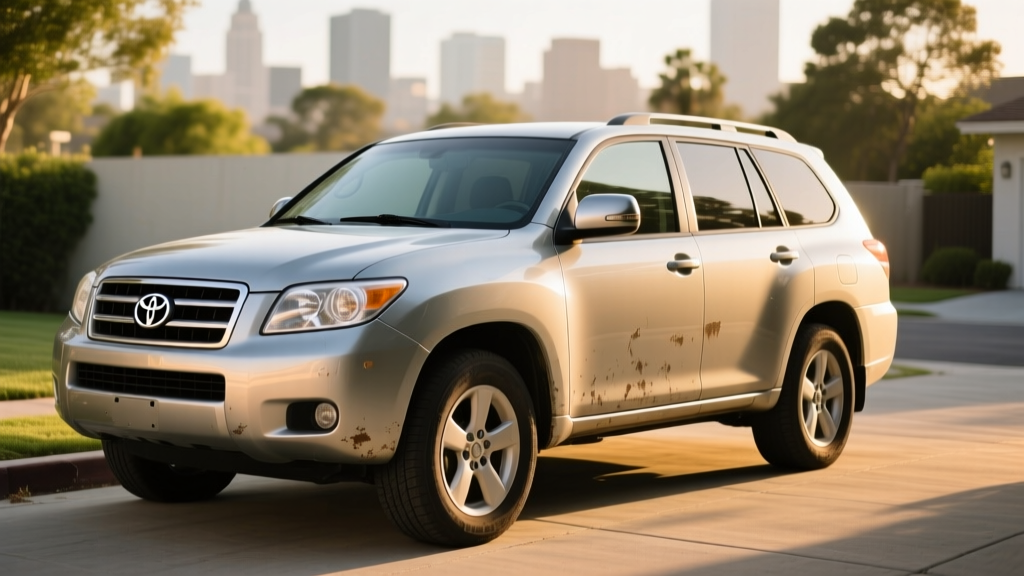
The 2007 Toyota Highlander Hybrid was one of the first mainstream three-row hybrid SUVs to reach the U.S. market, pairing a 3.3-liter V6 with Toyota's Hybrid Synergy Drive system. Nearly two decades later, it remains a case study in hybrid longevity. If you're researching this model on the used market — or already own one and wondering about remaining battery life — this guide covers every number that matters: EPA and real-world MPG, battery degradation expectations, replacement costs, and how it stacks up against modern hybrids and EVs in 2026.
First, a critical clarification: the 2007 Highlander Hybrid is a conventional hybrid (HEV), not a plug-in hybrid (PHEV). It has no plug, no electric-only driving range, and requires no behavioral change from a standard gas car. You simply fuel it and drive. This distinction matters because buyers sometimes confuse early Toyota hybrids with newer plug-in models like the RAV4 Prime or Prius Prime.
HEV vs PHEV vs EV: Where the 2007 Highlander Fits
| Feature | 2007 Highlander Hybrid (HEV) | Modern PHEV (e.g., 2026 RAV4 Prime) | Modern BEV (e.g., 2026 Ioniq 5) |
|---|---|---|---|
| Plug-in charging | No | Yes (Level 1/2) | Yes (Level 1/2/DC) |
| Electric-only range | 0 miles | ~42 miles | ~300 miles |
| Fuel/energy source | Gasoline only | Gasoline + grid electricity | Grid electricity only |
| Battery size | ~1.9 kWh (NiMH) | ~18.1 kWh (Li-ion) | ~77.4 kWh (Li-ion) |
| Federal tax credit (new) | None (expired) | Up to $7,500 (§30D) | Up to $7,500 (§30D) |
| Used EV credit (§25E) | Not eligible | Not eligible | Up to $4,000 |
The 2007 Highlander Hybrid sits at the simplest end of the electrification spectrum. It uses a small nickel-metal hydride (NiMH) battery pack that recharges through regenerative braking and the gasoline engine — no plug, no home charger, no public charging network dependency. For buyers who lack home charging access or who frequently drive in rural areas with sparse charging infrastructure, this simplicity is a feature, not a limitation.
Fuel Economy: EPA Numbers vs Real-World MPG
The EPA rated the 2007 Highlander Hybrid at the following fuel economy figures:
| Driving Cycle | EPA MPG |
|---|---|
| City | 31 MPG |
| Highway | 27 MPG |
| Combined | 29 MPG |
These numbers were impressive for a 4,500-pound, three-row SUV in 2007, when the average midsize SUV returned roughly 18-20 MPG combined. The hybrid system's advantage is most pronounced in city driving, where regenerative braking recovers energy and the electric motor handles low-speed propulsion, shutting off the V6 at stops.
Real-World MPG: What Owners Actually Report
Owner-reported data on platforms like Fuelly and Edmunds consistently shows real-world combined MPG in the 24-28 MPG range, with city driving sometimes reaching 29-30 MPG and highway cruising dropping to 24-26 MPG. This pattern — city MPG exceeding highway MPG — is characteristic of Toyota's Hybrid Synergy Drive system and is the opposite of conventional gas vehicles.
Several factors compress real-world efficiency below the EPA sticker:
- Battery age: A 17-19 year old NiMH pack will have degraded, reducing the electric motor's assist capability and forcing the V6 to work harder. Expect a 2-4 MPG penalty on original batteries.
- Highway speed: At 75-80 MPH, aerodynamic drag dominates and the hybrid system offers minimal benefit over a conventional powertrain.
- Cold weather: NiMH batteries lose efficiency below 40°F, and the engine runs more frequently to maintain cabin heat. Winter MPG can drop to 22-24 combined.
- Tire and maintenance condition: Underinflated tires, old spark plugs, and dirty air filters compound efficiency losses on any high-mileage vehicle.
Powertrain Specs: V6 + Electric Motor
| Specification | 2007 Highlander Hybrid |
|---|---|
| Engine | 3.3L V6 (3MZ-FE) |
| Engine horsepower | 208 HP @ 5,600 RPM |
| Electric motor | Front + rear (e-CVT AWD-i) |
| Combined net horsepower | 270 HP |
| Transmission | e-CVT (planetary gearset) |
| Drivetrain | AWD (electric rear axle, no mechanical driveshaft) |
| Battery type | NiMH (Nickel-Metal Hydride) |
| Battery capacity | ~1.9 kWh (nominal) |
| 0-60 MPH | ~7.3 seconds |
| Towing capacity | 3,500 lbs |
| Curb weight | ~4,505 lbs |
The 2007 Highlander Hybrid uses Toyota's AWD-i system, which is notable because the rear wheels are driven entirely by a separate electric motor — there is no mechanical connection (driveshaft) between the front engine and the rear axle. This means the rear motor provides on-demand all-wheel drive only when the system detects slip or during acceleration from a stop. It's effective for light snow and rain but not a substitute for a dedicated off-road AWD system with a locking center differential.
The combined 270 HP output made this one of the quicker midsize SUVs of its era, and the e-CVT planetary gearset delivers smooth, stepless acceleration without the hunting behavior of conventional CVTs. This transmission design has proven extremely durable, with very few reported failures even at 200,000+ miles.
Battery Life, Degradation, and Replacement Cost
How Long Do These NiMH Batteries Actually Last?
NiMH battery packs in Toyota hybrids of this era are remarkably durable but not immortal. Based on owner surveys, mechanic reports, and salvage-yard data:
- Typical lifespan: 150,000 to 200,000 miles, or 12-18 years, whichever comes first.
- Failure mode: Individual cells within the pack degrade unevenly. The pack doesn't "die" suddenly — instead, the system detects cell imbalance and triggers a hybrid system warning light, reducing electric motor assist and dropping fuel economy by 3-6 MPG.
- Warning signs: Check hybrid system light, reduced MPG, battery state-of-charge gauge fluctuating wildly, fan noise from the rear battery cooling vent.
Battery Replacement Options and Costs (2026 Pricing)
| Option | Cost Range | Warranty | Notes |
|---|---|---|---|
| New OEM Toyota battery | $3,000 - $4,000 (installed) | 3 years / 36,000 miles | Dealership only; part may be limited-supply for this model year |
| Remanufactured battery (e.g., Green Bean, Dorman) | $1,500 - $2,500 (installed) | Limited lifetime (varies by supplier) | Rebalanced cells with replacements; most popular choice for this vehicle's age |
| Used/salvage yard battery | $400 - $800 (part only) | 30-90 days typical | Highest risk; cell condition unknown; installation extra ($300-$500) |
| Individual cell replacement (DIY/specialist) | $200 - $600 | None to 1 year | Requires diagnostic scan tool to identify bad cells; viable if only 1-2 cells are degraded |
For a 2007 model now worth roughly $5,000-$9,000 depending on condition and mileage, a new OEM battery rarely makes financial sense. The remanufactured route is the pragmatic choice — companies like Green Bean Battery offer lifetime warranties and mobile installation in many metro areas. Many owners report 80,000+ additional miles on remanufactured packs.
Reliability and Common Issues Beyond the Battery
The 2007 Highlander Hybrid benefits from Toyota's peak reliability era. The 3MZ-FE V6 engine is rated for 250,000+ miles with basic maintenance. The e-CVT transmission has no belts, clutches, or torque converter to wear out — it's a set of planetary gears that essentially lasts the life of the vehicle. NHTSA records show relatively few complaints for this model year compared to contemporaries.
Known issues to inspect on a used example:
- Inverter coolant pump: The hybrid system inverter has its own electric coolant pump. Failure triggers a hybrid system warning and can overheat the power electronics. Replacement: $600-$900.
- Brake actuator: The regenerative braking system uses an electric brake actuator that can develop issues above 150,000 miles. Symptoms include a firm brake pedal and ABS warning light. Replacement: $1,200-$1,800.
- Rack and pinion steering: Some owners report power steering fluid leaks from the rack around 120,000-150,000 miles.
- Rust: In salt-belt states, inspect subframe mounting points, exhaust hangers, and rear suspension components.
Pricing, Tax Credits, and Ownership Economics in 2026
The 2007 Highlander Hybrid originally carried an MSRP of approximately $38,000-$42,000 depending on trim and options. In today's used market (early 2026), clean examples trade in the following ranges:
| Condition / Mileage | Approximate Price |
|---|---|
| Excellent, under 100K miles | $8,000 - $11,000 |
| Good, 100K-150K miles | $5,500 - $8,000 |
| Fair, 150K-200K+ miles | $3,500 - $5,500 |
Tax Credit Eligibility
The 2007 Highlander Hybrid does not qualify for any current federal tax credit:
- The IRS §30D new clean vehicle credit applies only to new vehicles meeting current battery sourcing and MSRP/income requirements.
- The §25E used clean vehicle credit (up to $4,000) applies only to used BEVs and PHEVs with a battery capacity of at least 7 kWh — the Highlander Hybrid's ~1.9 kWh NiMH pack does not qualify.
- Toyota's hybrid tax credit for this model expired in 2007-2008 when the brand hit its original credit cap.
In short: no federal incentives apply. Some states may offer minimal registration fee breaks for hybrid vehicles, but these are typically $50-$100 and not purchase incentives. Check your state's DMV for specifics.
Annual Operating Cost Estimate
At 26 MPG real-world combined and $3.40/gallon national average (2026), driving 12,000 miles per year costs approximately $1,569 in fuel. For comparison, a 2026 gas-only midsize SUV averaging 22 MPG combined would cost roughly $1,855 — a difference of about $286/year in the hybrid's favor. That savings is real but modest, and it takes years to recoup even a remanufactured battery replacement cost.
Who Should Buy the 2007 Highlander Hybrid — and Who Shouldn't
Pros
- Proven powertrain with 200K+ mile potential
- No plug needed — zero charging infrastructure dependency
- AWD via electric rear axle (no mechanical complexity)
- 270 HP combined — quicker than most 2007 midsize SUVs
- 3,500-lb towing capacity with hybrid efficiency
- Low purchase price on used market
Cons
- Battery replacement likely needed if original pack is still in service
- No federal tax credit eligibility
- Outdated infotainment (no Bluetooth audio streaming, no backup camera standard)
- Real-world highway MPG (24-26) trails modern hybrids significantly
- NiMH battery less efficient in extreme cold vs modern Li-ion systems
- No eligibility for HOV lane access in most states (expired)
Decision Framework
Choose the 2007 Highlander Hybrid if: You need a cheap, reliable three-row AWD SUV, lack home charging access, drive mostly in the city (where hybrid efficiency shines), and are prepared for a potential $1,500-$2,500 battery replacement within your ownership period.
Choose a modern PHEV (e.g., 2026 RAV4 Prime, Grand Highlander Hybrid) if: You have Level 2 home charging, want 30-40+ miles of electric-only commuting, want current safety tech (automatic emergency braking, lane keeping), and can absorb a $40,000-$55,000 purchase price.
Choose a full EV (e.g., 2026 Ioniq 5, Model Y) if: You have reliable home charging, drive under 300 miles daily, want zero tailpipe emissions, and want the lowest per-mile energy cost (~$0.04-$0.06/mile at home vs $0.13/mile for the Highlander Hybrid).
Frequently Asked Questions
How many MPG does the 2007 Highlander Hybrid get?
The EPA rates it at 31 city / 27 highway / 29 combined. Real-world owners typically see 24-28 MPG combined, with city driving favoring the higher end and highway cruising the lower end. A degraded battery can reduce these figures by 2-4 MPG.
Does the 2007 Highlander Hybrid need to be plugged in?
No. It is a conventional hybrid (HEV), not a plug-in hybrid. The battery recharges through regenerative braking and the gasoline engine. You fuel it exactly like a standard gas car — there is no plug, no charging port, and no electric-only driving mode.
How much does it cost to replace the hybrid battery?
A remanufactured battery (the most common choice for a vehicle of this age) costs $1,500-$2,500 installed. A new OEM Toyota battery runs $3,000-$4,000 but is rarely justified on a vehicle of this value. Used/salvage batteries are $400-$800 plus installation but carry significant risk.
Is the 2007 Highlander Hybrid reliable?
Yes, with caveats. The V6 engine, e-CVT transmission, and hybrid system electronics are among the most durable Toyota has produced. The main liability is the aging NiMH battery pack, which is likely at or past its service life if original. The inverter coolant pump and brake actuator are secondary items to budget for above 150,000 miles.
Does it qualify for any tax credit in 2026?
No. The original federal hybrid tax credit for this model expired in 2007-2008. The current §30D new vehicle credit and §25E used vehicle credit do not apply because the battery capacity (~1.9 kWh) is below the 7 kWh minimum threshold, and the vehicle is far too old for new-vehicle incentives.
How does it compare to a modern hybrid like the 2026 Highlander Hybrid?
The 2026 Highlander Hybrid (4th generation) uses a 2.5L 4-cylinder hybrid system rated at 35-36 MPG combined — roughly 25% more efficient than the 2007 model. It also features a Li-ion battery with better cold-weather performance, modern ADAS (Toyota Safety Sense 3.0), and a starting MSRP around $42,000. If budget allows, the generational leap in efficiency and safety is substantial.
Can I tow with the 2007 Highlander Hybrid?
Yes. Toyota rates it for 3,500 lbs of towing capacity with the factory tow package. The hybrid system actually assists with low-speed trailer maneuvering via electric motor torque. However, towing will reduce fuel economy to approximately 18-21 MPG and places additional thermal load on the hybrid battery cooling system — avoid sustained towing in extreme heat if the battery is aged.