Compact SUV buyers eyeing electrification without the plug-in commitment keep landing on the same question: what kind of real-world fuel economy does the Hyundai Tucson Hybrid actually deliver? The answer depends on whether you're looking at the conventional hybrid (HEV) or the plug-in hybrid (PHEV) variant — two very different powertrains sharing one nameplate. This guide dissects the 2026 Hyundai Tucson Hybrid MPG figures, electric-only range for the PHEV, ownership costs, and which version fits your driving pattern.
2026 Hyundai Tucson Hybrid MPG: EPA Ratings vs. Real-World
The 2026 Hyundai Tucson Hybrid (HEV) pairs a turbocharged 1.6-liter four-cylinder engine with an electric motor for a combined system output of 232 horsepower and 271 lb-ft of torque. Power is routed through a 6-speed automatic transmission to standard all-wheel drive.
| Trim | City MPG | Highway MPG | Combined MPG |
|---|---|---|---|
| SEL Convenience AWD | 37 | 36 | 37 |
| Limited AWD | 35 | 35 | 35 |
The slight MPG difference between trims stems from the Limited's larger 19-inch alloy wheels and additional weight from premium features. According to fueleconomy.gov, the SEL Convenience trim's 37 MPG combined ranks among the best in the compact hybrid SUV segment.
Real-World MPG Expectations
Hybrids typically exceed their EPA city ratings in stop-and-go traffic because regenerative braking recovers energy that gas-only vehicles waste as heat. In our experience and owner-reported data:
- City driving: 38–41 MPG (regen-heavy routes can push above EPA)
- Highway cruising (70+ mph): 32–35 MPG (aerodynamic drag reduces hybrid advantage)
- Cold weather (below 32°F): 30–33 MPG combined (engine runs more to heat cabin and warm the battery)
- Mixed daily driving: 35–38 MPG combined
Hyundai Tucson PHEV: Electric-Only Range and Combined MPGe
The Tucson Plug-in Hybrid (PHEV) is a fundamentally different proposition. It carries a 13.8 kWh lithium-ion polymer battery (usable capacity approximately 11.2 kWh) and a more powerful electric motor, yielding a combined system output of 270 horsepower and 271 lb-ft of torque.
| Spec | Value |
|---|---|
| EPA Electric-Only Range | 33 miles |
| Total Combined Range | ~420 miles |
| Combined MPGe (electric + gas) | 80 MPGe |
| Gas-Only MPG (after battery depletes) | 35 MPG combined |
| Battery Capacity | 13.8 kWh (gross) / ~11.2 kWh (usable) |
| Onboard Charger (Level 2) | 7.2 kW |
| Level 2 Charge Time (0–100%) | ~2 hours |
| DC Fast Charging | Not available |
| Combined Horsepower | 270 hp |
| 0–60 mph | ~7.1 seconds |
The 33-mile electric-only range is the PHEV's headline figure. For commuters with a sub-30-mile round trip and access to a Level 2 home charger, this means weeks or months between gas station visits. Once the battery depletes, the Tucson PHEV operates as a conventional hybrid, returning a respectable 35 MPG combined — only marginally below the HEV due to the PHEV's ~300-lb weight penalty from the larger battery.
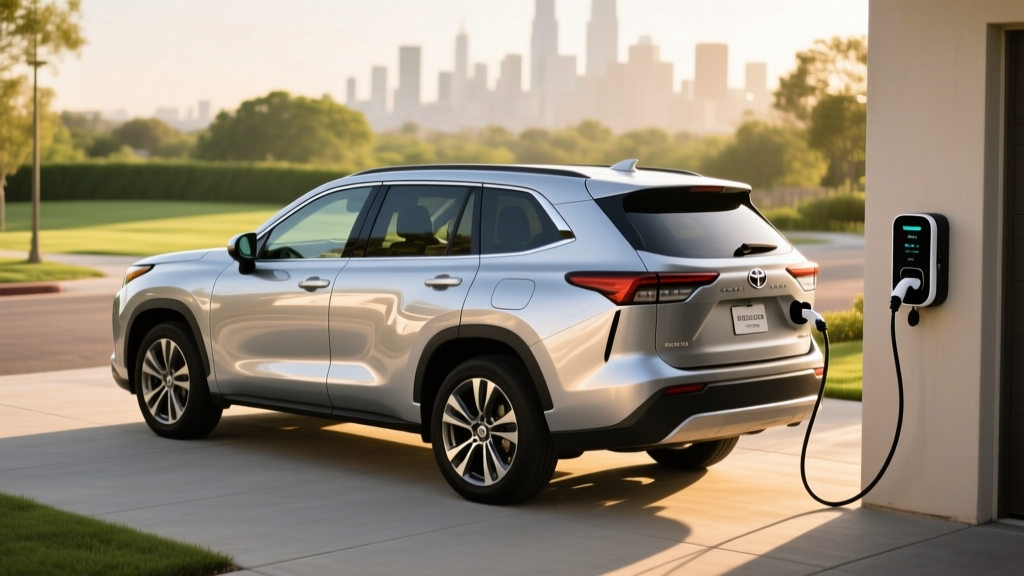
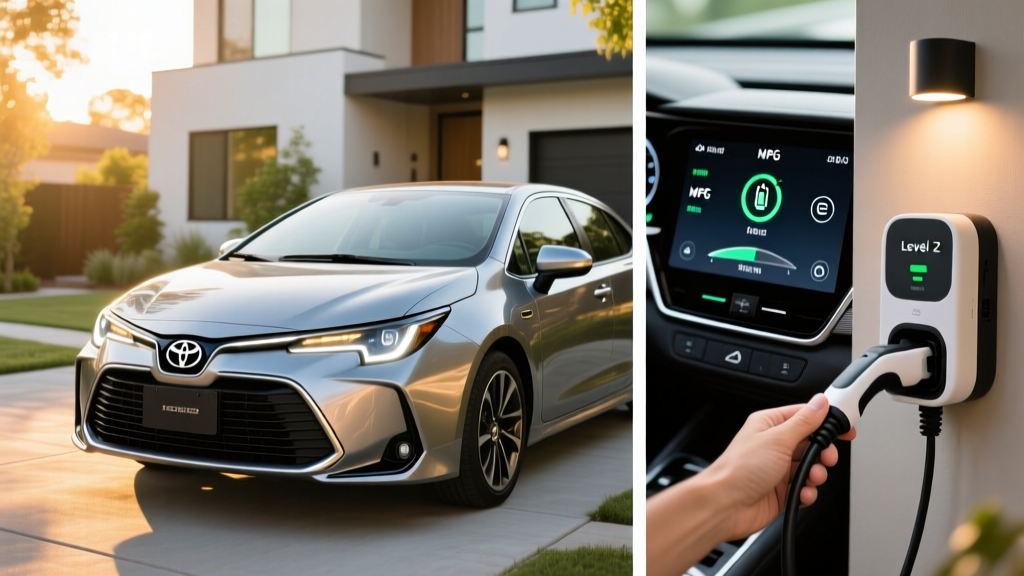
Charging is straightforward: a standard 120V household outlet (Level 1) replenishes the battery in roughly 10–12 hours, while a 240V Level 2 home charger at 7.2 kW fills it in about 2 hours. The Tucson PHEV does not support DC fast charging — a deliberate choice by Hyundai to keep cost and weight down, and reasonable given the small battery size.
HEV vs. PHEV vs. Full EV: Which Tucson Fits Your Life?
The naming overlap between the Tucson Hybrid and Tucson Plug-in Hybrid trips up many shoppers. Here's a clear breakdown of how each electrified Tucson variant — plus a full battery-electric comparison — stacks up for different ownership scenarios.
| Factor | Tucson HEV | Tucson PHEV | Full EV (Ioniq 5) |
|---|---|---|---|
| Needs a plug? | No | Yes (for EV range) | Yes |
| Home charging required? | No | Strongly recommended | Essential |
| EPA Combined MPG / MPGe | 35–37 MPG | 80 MPGe / 35 MPG gas | 114 MPGe |
| Electric-only range | 0 miles | 33 miles | ~303 miles |
| Upfront cost (base MSRP) | ~$34,500 | ~$40,500 | ~$42,500 |
| Federal tax credit (§30D) | Not eligible | Up to $7,500* | Up to $7,500* |
| Best for | No home charging access; want simplicity | Short commute + home charging + road trips | Home charging + mostly under 250 mi/day |
The decision framework is practical:
- Choose the HEV if you can't install a home charger, live in an apartment, or want a no-behavior-change fuel-economy upgrade over a gas-only Tucson (26 MPG combined).
- Choose the PHEV if you have a garage or driveway for a Level 2 charger, your daily commute is under 35 miles round-trip, and you still want gas-engine flexibility for long road trips.
- Choose a full EV if you have reliable home charging, rarely exceed 250 miles in a day, and want the lowest per-mile operating cost with zero tailpipe emissions.
2026 Tucson Hybrid Pricing and Federal Tax Credit Eligibility
Hyundai's 2026 Tucson Hybrid pricing starts around $34,500 MSRP for the SEL Convenience trim and climbs to approximately $39,500 for the Limited. The Tucson PHEV starts at roughly $40,500 (SEL Convenience) and tops out near $46,000 (Limited).
Federal Tax Credit (§30D) — Key Rules for 2026
- Tucson HEV: Not eligible for the §30D new clean vehicle credit. Conventional hybrids do not qualify — only PHEVs and BEVs with sufficient battery capacity do.
- Tucson PHEV: May qualify for up to $7,500, but eligibility depends on multiple conditions per IRS §30D rules:
- — Buyer AGI must not exceed $150,000 (single) / $300,000 (joint)
- — Vehicle MSRP must be under $80,000 (SUVs/vans) — Tucson PHEV qualifies
- — Battery critical minerals and components must meet North American sourcing thresholds (phased requirements tighten annually through 2032)
- — Credit can be applied at point of sale (dealer transfer) starting 2024, reducing your purchase price directly
A critical caveat: battery sourcing requirements under the Inflation Reduction Act have tightened each year. Some PHEVs that qualified in 2024 may see reduced credit amounts in 2026 if their supply chains haven't adapted. Always verify current eligibility with your dealer and a tax professional before relying on the credit in your purchase math.
Battery Warranty, Reliability, and Replacement Costs
Hybrid battery longevity is the single most common concern among first-time hybrid buyers — and it's the area where Hyundai offers one of the strongest protections in the industry.
Hyundai Hybrid/PHEV Battery Warranty
| Hybrid Battery Warranty | 10 years / 100,000 miles (original owner) |
| Hybrid System Components | 10 years / 100,000 miles |
| Powertrain Warranty | 10 years / 100,000 miles |
| New Vehicle Limited Warranty | 5 years / 60,000 miles |
| Capacity Retention Threshold | Typically 70% of original capacity before warranty claim triggers |
Hyundai's 10-year/100,000-mile hybrid battery warranty is transferable to a second owner at a reduced 5-year/60,000-mile term. In practice, modern lithium-ion hybrid batteries rarely require full replacement within the warranty period. The Tucson's hybrid system uses a relatively small battery (1.49 kWh for the HEV, 13.8 kWh for the PHEV) that operates in a narrow state-of-charge window — typically between 30% and 80% — which dramatically reduces degradation compared to full EVs that regularly cycle from 10% to 90%.
If a replacement is needed out of warranty, expect the following approximate costs:
- Tucson HEV battery pack: $2,000–$3,500 (parts and labor)
- Tucson PHEV battery pack: $5,000–$8,000 (parts and labor)
For context, IIHS has historically rated the Tucson as a Top Safety Pick, and Hyundai's hybrid powertrain has demonstrated strong reliability across model years. The brand's hybrid system, now in its second generation in the Tucson, uses a proven parallel-hybrid architecture with fewer failure points than early-generation systems.
Powertrain Deep Dive: What Makes the Tucson Hybrid Tick
Both the HEV and PHEV versions of the Tucson share Hyundai's Smartstream G1.6 Turbo Hybrid powertrain, but the electric motor output and battery capacity differ significantly.
| Component | HEV | PHEV |
|---|---|---|
| Engine | 1.6L turbo I-4 | 1.6L turbo I-4 |
| Engine HP | 178 hp | 178 hp |
| Electric Motor HP | 64 hp (47 kW) | 100 hp (74 kW) |
| Combined System HP | 232 hp | 270 hp |
| Combined Torque | 271 lb-ft | 271 lb-ft |
| Transmission | 6-speed automatic | 6-speed automatic |
| Drivetrain | AWD (HTRAC) | AWD (HTRAC) |
| Battery (kWh) | 1.49 kWh | 13.8 kWh |
| Curb Weight (approx.) | ~3,800 lbs | ~4,100 lbs |
The HEV's 232 combined horsepower provides confident highway merging and passing. The PHEV's additional 38 hp — courtesy of the larger electric motor — shaves about a second off the 0–60 mph time and makes electric-only driving feel genuinely adequate for suburban speeds up to about 55 mph.
Who Should Buy the Tucson Hybrid (and Who Shouldn't)
Pros — Tucson Hybrid (HEV)
- 37 MPG combined (SEL) — 42% better than gas Tucson
- No plug-in required — zero behavior change from gas car
- Standard AWD with HTRAC system
- 10-year/100,000-mile hybrid battery warranty
- Strong real-world city MPG (often exceeds EPA)
- Competitive cargo space: 38.7 cu ft (rear seats up)
Cons — Tucson Hybrid (HEV)
- No federal tax credit eligibility
- Highway MPG drops to 35–36 (less hybrid advantage at speed)
- Higher base price than gas-only Tucson (~$5,000 premium)
- 6-speed automatic feels less refined than e-CVT competitors
- No DC fast charging (PHEV only — and PHEV lacks it too)
Pros — Tucson PHEV
- 33-mile electric-only range covers most commutes
- Up to $7,500 federal tax credit (if sourcing rules met)
- 270 hp — quickest Tucson variant
- 80 MPGe when battery is charged
- Still gets 35 MPG as a hybrid after battery depletes
- No range anxiety for road trips
Cons — Tucson PHEV
- $6,000+ premium over HEV
- Requires home Level 2 charger for full value
- ~300 lbs heavier than HEV
- Only 33 miles electric — short for extended EV-mode trips
- No DC fast charging capability
- Tax credit eligibility uncertain year-to-year
Frequently Asked Questions
How many MPG does the 2026 Hyundai Tucson Hybrid get?
The 2026 Tucson Hybrid achieves an EPA-estimated 37 city / 36 highway / 37 combined MPG in the SEL Convenience trim, and 35/35/35 MPG in the Limited trim. In real-world city driving with frequent stops, owners commonly report 38–41 MPG thanks to regenerative braking. Highway cruising at 75+ mph typically yields 32–35 MPG.
How far can the Tucson PHEV go on electric power alone?
The 2026 Tucson PHEV has an EPA-rated 33 miles of electric-only range. This is sufficient for most daily commutes. Electric-only top speed is approximately 84 mph. After the battery depletes, the vehicle seamlessly transitions to hybrid mode, delivering 35 MPG combined for extended driving.
Does the Tucson Hybrid need to be plugged in?
No. The Tucson Hybrid (HEV) charges its 1.49 kWh battery entirely through regenerative braking and the gasoline engine. You never plug it in. The Tucson Plug-in Hybrid (PHEV), however, should be plugged into a Level 2 home charger nightly to capture its full 33-mile electric range and 80 MPGe rating.
Does the Hyundai Tucson Hybrid qualify for a tax credit?
The conventional Tucson Hybrid (HEV) does not qualify for the federal §30D clean vehicle credit — only plug-in hybrids and full EVs are eligible. The Tucson PHEV may qualify for up to $7,500, subject to buyer income limits ($150K single / $300K joint AGI), MSRP caps ($80K for SUVs), and battery critical-mineral sourcing requirements. Rules evolve annually; verify at irs.gov before purchasing.
Is the Tucson Hybrid battery reliable and what does replacement cost?
Hyundai's hybrid batteries are covered by a 10-year/100,000-mile warranty. The Tucson's hybrid system keeps the battery in a narrow charge window (roughly 30–80% SoC), which minimizes degradation. Out-of-warranty replacement costs approximately $2,000–$3,500 for the HEV and $5,000–$8,000 for the PHEV. Most hybrid batteries last well beyond 150,000 miles with minimal capacity loss.
Is the Tucson Hybrid better than a full EV like the Ioniq 5?
It depends on your charging access and driving patterns. The Tucson Hybrid wins for buyers without home charging, apartment dwellers, or those who regularly drive 400+ miles between stops. A full EV like the Hyundai Ioniq 5 wins on per-mile fuel cost (electricity is cheaper than gas), lower maintenance, and zero tailpipe emissions — but requires reliable home or workplace charging and planning for long road trips.