Quick Verdict: The Pioneer That Still Commutes
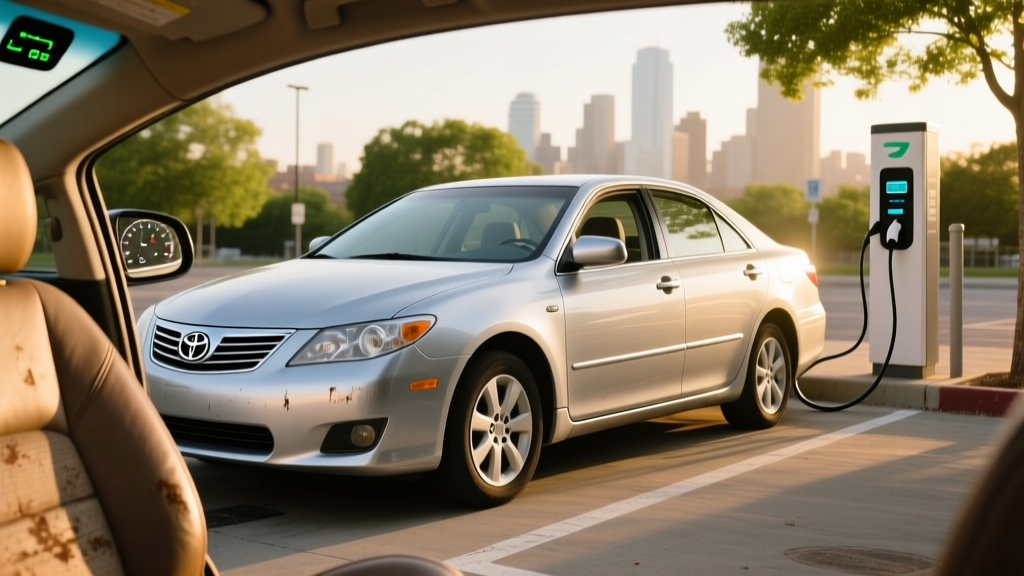
The 2007 Toyota Camry Hybrid was only the second mainstream midsize sedan to pair a gasoline engine with a hybrid electric powertrain, arriving just as fuel prices began their historic climb. Nearly two decades later, this first-generation HEV remains a case study in Toyota's hybrid reliability — and a reminder of how far electrified powertrains have come. With an EPA-rated 33 city / 34 highway / 34 combined MPG, the 2007 Camry Hybrid still delivers real-world fuel economy that rivals many 2026 non-hybrid compacts. But prospective used buyers need to understand what they're signing up for: aging nickel-metal hydride (NiMH) battery packs, zero electric-only driving, and no federal tax credit eligibility.
This is a conventional hybrid (HEV), not a plug-in hybrid (PHEV). You never plug it in. The car recovers energy through regenerative braking and its gasoline engine to keep the small traction battery charged. If you're searching for "camry hybrid 2007" information, this guide covers every number that matters for a purchase decision today.
2007 Camry Hybrid: Full Powertrain Specifications
| Specification | Value |
|---|---|
| Powertrain Type | Conventional Hybrid (HEV) — series/parallel |
| Gasoline Engine | 2.4L inline-4 (2AZ-FXE), Atkinson cycle |
| Engine Horsepower | 147 HP @ 6,000 RPM |
| Electric Motor | Permanent-magnet synchronous, 40 HP (30 kW) |
| Combined Net Horsepower | 192 HP |
| Transmission | eCVT (planetary gearset, no fixed gears) |
| Traction Battery | NiMH, ~1.6 kWh total capacity (usable fraction far smaller) |
| Battery Location | Behind rear seat, trunk-mounted |
| Plug-In Charging | No — HEV only, self-charging via regen and engine |
| EPA Fuel Economy | 33 city / 34 highway / 34 combined MPG |
| Fuel Tank Capacity | 17.2 gallons |
| Total Driving Range | ~585 miles (EPA combined) |
| 0–60 MPH | ~7.3 seconds (Car and Driver tested) |
| Drivetrain | Front-wheel drive |
| Curb Weight | ~3,680 lbs |
| Original MSRP (2007) | $29,720 (single trim) |
| Current Used Price Range (2026) | $3,500 – $7,000 depending on mileage/condition |
The 2.4-liter Atkinson-cycle engine sacrifices some low-end torque for thermal efficiency — the hallmark of Toyota's Hybrid Synergy Drive system. The eCVT is not a belt-driven CVT like those found in Nissan or Subaru vehicles; it's a planetary gearset that blends engine and motor power with no belts or pulleys to wear out. This design is a major reason these powertrains routinely exceed 200,000 miles.
Fuel Economy: EPA Numbers vs. Real-World MPG
| Driving Scenario | EPA Rating | Real-World Expectation |
|---|---|---|
| City | 33 MPG | 30–35 MPG (hybrids often match or exceed EPA city) |
| Highway | 34 MPG | 29–33 MPG (less regen benefit at sustained speed) |
| Combined | 34 MPG | 30–34 MPG |
| Cold Weather (below 30°F) | N/A | 26–30 MPG (engine runs more for cabin heat) |
Conventional hybrids like this Camry tend to perform better relative to their EPA ratings in city driving than highway driving. Regenerative braking recaptures energy during stop-and-go traffic, and the electric motor handles low-speed launches where gasoline engines are least efficient. On the highway, the 2.4L engine does most of the work alone, and the hybrid advantage narrows.
According to fueleconomy.gov, owner-reported fuel economy for the 2007 Camry Hybrid clusters around 31–33 MPG combined — closely tracking the EPA estimate. This is a vehicle where the sticker number is honest, unlike many early EVs whose range estimates proved optimistic.
For context, a 2026 Toyota Camry LE (gas-only, 2.5L) achieves 28 city / 39 highway / 32 combined MPG per the EPA. The hybrid's advantage is most pronounced in city driving, where it delivers roughly 18% better fuel economy than its gas counterpart from the same era.
Hybrid Battery: Lifespan, Warranty, and Replacement Cost
The 2007 Camry Hybrid uses a nickel-metal hydride (NiMH) battery pack — not the lithium-ion chemistry found in modern EVs and PHEVs. NiMH is less energy-dense but was the proven, durable choice for early hybrids. Toyota's hybrid battery management system keeps the pack in a narrow state-of-charge window (roughly 40–80%), which dramatically reduces degradation compared to fully cycling the battery.
Real-world battery lifespan: Data from owner communities and repair shops indicates the original NiMH pack in a 2007 Camry Hybrid typically lasts 150,000–200,000 miles or 12–18 years before significant capacity loss triggers a check-engine light or noticeable fuel-economy decline. Many examples have exceeded 250,000 miles on the original pack, but this is the exception, not the expectation.
Battery replacement cost in 2026:
- OEM new pack (Toyota dealer): $2,500–$3,800 including labor
- Refurbished/reconditioned pack: $1,200–$2,000 including labor
- Individual module replacement: $500–$900 (if only specific cells have failed — requires diagnostic testing)
- Junkyard/salvage pack: $300–$600 plus labor (risky; unknown remaining life)
The most cost-effective path for a 2007 model in 2026 is typically a refurbished pack from a reputable hybrid specialist. Companies like Green Bean Battery and Dorman offer reconditioned NiMH packs with 1–3 year warranties. Given the vehicle's current market value of $3,500–$7,000, a $3,800 OEM replacement rarely makes financial sense unless the car is otherwise in excellent condition with low mileage.
Signs of hybrid battery degradation include: reduced fuel economy (dropping below 28 MPG consistently), the engine running more frequently at stops, a dashboard warning light, and reduced regenerative braking feel. A hybrid battery diagnostic scan (~$100–$150 at an independent shop) can measure individual module voltages and identify whether the full pack needs replacement or just specific modules.
HEV vs PHEV vs Full EV: Which Powertrain Fits You?
| Factor | 2007 Camry Hybrid (HEV) | 2026 RAV4 Prime (PHEV) | 2026 Tesla Model 3 (BEV) |
|---|---|---|---|
| Plug-In Required? | No | Optional (maximizes savings) | Yes — mandatory |
| Electric-Only Range | 0 miles | 42 miles | 341 miles (EPA) |
| Total Range | ~585 miles | ~600 miles combined | 341 miles |
| Combined MPG / MPGe | 34 MPG | 94 MPGe (electric) / 38 MPG (gas) | 132 MPGe |
| Fuel Cost per Mile | ~$0.10 (at $3.40/gal) | ~$0.04 (electric) / $0.10 (gas) | ~$0.04 (at $0.14/kWh) |
| Federal Tax Credit | None (used, expired) | Up to $7,500 (§30D, if eligible) | Up to $7,500 (§30D, if eligible) |
| Used Purchase Price (2026) | $3,500–$7,000 | $38,000–$48,000 (new) | $38,990+ (new) |
| Maintenance Complexity | Low — proven powertrain | Moderate — dual systems | Low — no engine/oil/transmission |
- Your budget is under $7,000 and you need reliable daily transportation
- You have no access to home or workplace charging (apartment, street parking)
- You drive 10,000–15,000 miles per year in mixed city/highway conditions
- You want the lowest possible upfront cost with no plug-in infrastructure needed
- You can charge at home (Level 1 or Level 2) and your commute is under 40 miles
- You want electric-only daily driving with gas-engine flexibility for road trips
- You qualify for the §30D federal tax credit (up to $7,500, subject to income, MSRP, and battery-sourcing requirements)
- You have reliable home Level 2 charging
- Your daily driving is under 250 miles and you road-trip infrequently
- You want the lowest per-mile fuel cost and minimal maintenance long-term
Tax Credit Eligibility: What You Need to Know
The 2007 Camry Hybrid does not qualify for any current federal tax credit. The original hybrid vehicle tax credit that applied to early HEVs like this Camry was phased out for Toyota in 2007 after the company hit the 60,000-unit manufacturer cap. Even if it hadn't phased out, the current IRS §30D Clean Vehicle Credit applies only to new plug-in vehicles (PHEVs and BEVs) with sufficient battery capacity — conventional hybrids are excluded entirely.
For used buyers considering a newer plug-in alternative, the Used Clean Vehicle Credit (§25E) offers up to $4,000 (30% of sale price, capped) for qualifying pre-owned PHEVs and BEVs purchased from a dealer, subject to:
- Sale price at or below $25,000
- Buyer income limits: $75,000 single / $150,000 married filing jointly
- Vehicle must be at least 2 model years old
- Must be purchased from a licensed dealer (private-party sales excluded)
A used 2018–2021 Prius Prime (PHEV) purchased from a dealer for under $25,000 could potentially qualify — making it a dramatically more economical choice than the 2007 Camry Hybrid when factoring in both the credit and ongoing fuel savings. Consult a tax professional before relying on credit eligibility, as rules are subject to legislative change.
Ownership Practicalities: Maintenance, Insurance, and Daily Use
Maintenance advantages: The Hybrid Synergy Drive system eliminates the traditional starter motor, alternator, and accessory drive belt — all common failure points in gas-only vehicles. The eCVT has no clutch packs or torque converter to wear. Brake pad life is typically extended to 80,000–100,000+ miles thanks to regenerative braking handling most deceleration. Oil changes follow the standard 5,000-mile interval with conventional 0W-20 or 5W-30 oil.
Known issues beyond the battery: The 2007 Camry Hybrid's inverter coolant pump has a known failure mode that can trigger a warning light; replacement runs $300–$500. The electric power steering rack can develop issues above 150,000 miles ($800–$1,200 replacement). The ABS actuator, shared with other Toyota models of this era, has been subject to extended warranty campaigns — check NHTSA for open recalls on any specific VIN via nhtsa.gov/recalls.
Insurance costs: Expect standard midsize-sedan insurance rates. The hybrid designation does not significantly increase premiums for a vehicle of this age and value. Average annual insurance for a 2007 Camry Hybrid runs $900–$1,400 depending on driver profile and state, per industry averages.
Trunk space penalty: The NiMH battery pack sits behind the rear seat, reducing trunk volume to approximately 10.6 cubic feet (versus 15.1 cu ft in the gas Camry). The rear seats do not fold down in the hybrid model, limiting cargo flexibility. This is a meaningful tradeoff if you regularly haul large items.
Pros and Cons: The Honest Assessment
Pros
- Proven, durable Hybrid Synergy Drive powertrain
- 34 MPG combined — still competitive in 2026
- No plug-in infrastructure needed
- eCVT design avoids belt/pulley CVT failures
- Strong regenerative braking extends brake life
- Low purchase price ($3,500–$7,000 used)
- Toyota parts availability remains excellent
Cons
- NiMH battery nearing end-of-life at this age
- Battery replacement ($1,200–$3,800) may exceed vehicle value
- Trunk space reduced to 10.6 cu ft; no folding rear seats
- No federal or state tax credit eligibility
- Zero electric-only driving capability
- Dated safety tech (no standard ESC, no pre-collision)
- Highway MPG advantage minimal vs modern gas sedans
Frequently Asked Questions
How many MPG does the 2007 Camry Hybrid actually get?
The EPA rates it at 33 city / 34 highway / 34 combined MPG. Real-world owner reports on fueleconomy.gov average 31–33 MPG combined. In predominantly city driving with frequent stops, some owners report 35+ MPG. Highway-only driving at 75+ MPH may drop to 28–30 MPG. Cold weather reduces economy by roughly 10–15% due to increased engine runtime for cabin heating.
Can I drive the 2007 Camry Hybrid on electric power only?
No. This is a conventional hybrid (HEV), not a plug-in. The electric motor assists the gasoline engine and can propel the car at very low speeds (under ~25 MPH) for brief distances, but the engine is always available and the battery is too small (~1.6 kWh total) for meaningful electric-only driving. If electric-only range matters to you, look at a PHEV like the Prius Prime (25 miles EV) or a full BEV.
Is the 2007 Camry Hybrid reliable?
The powertrain itself — engine, electric motor, and eCVT — is among the most reliable Toyota has ever built. The primary reliability concern in 2026 is the age of the NiMH traction battery. At 19 years old, any original battery is operating on borrowed time. If the battery has been replaced (document it before buying), the car can reliably deliver another 50,000–100,000 miles. Other wear items (inverter coolant pump, power steering rack) are manageable at typical independent-shop rates.
What does it cost to replace the hybrid battery?
A new OEM battery from a Toyota dealer runs $2,500–$3,800 installed. A refurbished pack from a hybrid specialist costs $1,200–$2,000 installed and typically carries a 1–3 year warranty. Individual module replacement (when only a few cells fail) can cost $500–$900. Given the car's $3,500–$7,000 market value, a refurbished pack is the economically rational choice.
Does the 2007 Camry Hybrid qualify for any tax credit?
No. The original hybrid tax credit for Toyota vehicles phased out in 2007 after Toyota reached the 60,000-unit cap. Current federal credits (§30D for new, §25E for used) apply only to plug-in vehicles (PHEVs and BEVs) — conventional hybrids like this Camry are not eligible for any federal purchase incentive.
Should I buy a 2007 Camry Hybrid or a newer used Prius?
A 2012–2015 Prius (third generation) typically delivers 48–50 MPG combined, has a more modern interior, and costs $7,000–$12,000 used. If your budget allows, the Prius is the stronger value proposition — better fuel economy, more cargo versatility (hatchback), and a younger battery. The 2007 Camry Hybrid makes sense only if your budget is strictly under $7,000 and you prefer a traditional sedan ride and interior over the Prius's polarizing design.
Sources: EPA Fuel Economy — 2007 Toyota Camry Hybrid, IRS Clean Vehicle Credits, NHTSA Recalls Lookup.