The phrase "effects of hybrid" ownership covers a lot of ground — from the fuel you save at the pump to the long-term reliability of a high-voltage battery sitting under your back seat. With hybrid and plug-in hybrid sales surging through 2025 and into 2026, buyers want hard data, not marketing promises. This guide dissects the measurable effects of choosing a hybrid (HEV) or plug-in hybrid (PHEV) over a conventional gas car or a full battery-electric vehicle, using current EPA figures, IRS tax-credit rules, and real-world driving observations.
HEV vs PHEV: Two Very Different Hybrid Effects
Before measuring outcomes, you need the definitions straight. Conflating these two categories is the single most common mistake in hybrid shopping.
| Attribute | Conventional Hybrid (HEV) | Plug-In Hybrid (PHEV) |
|---|---|---|
| Plug-in charging required? | No — charges via regenerative braking and engine | Yes — plug in to unlock electric-only driving |
| Electric-only range | 0 miles (motor assists engine only) | Typically 25–50 miles on battery alone |
| Battery size | ~1.0–1.6 kWh (small, self-charging) | ~13–25 kWh usable |
| Fueling | Gasoline only | Gasoline + electricity |
| Federal tax credit (§30D) | Not eligible | Up to $7,500 if battery sourcing, MSRP, and income rules met |
| Best for | Drivers without home/workplace charging access | Drivers with home charging and short commutes |
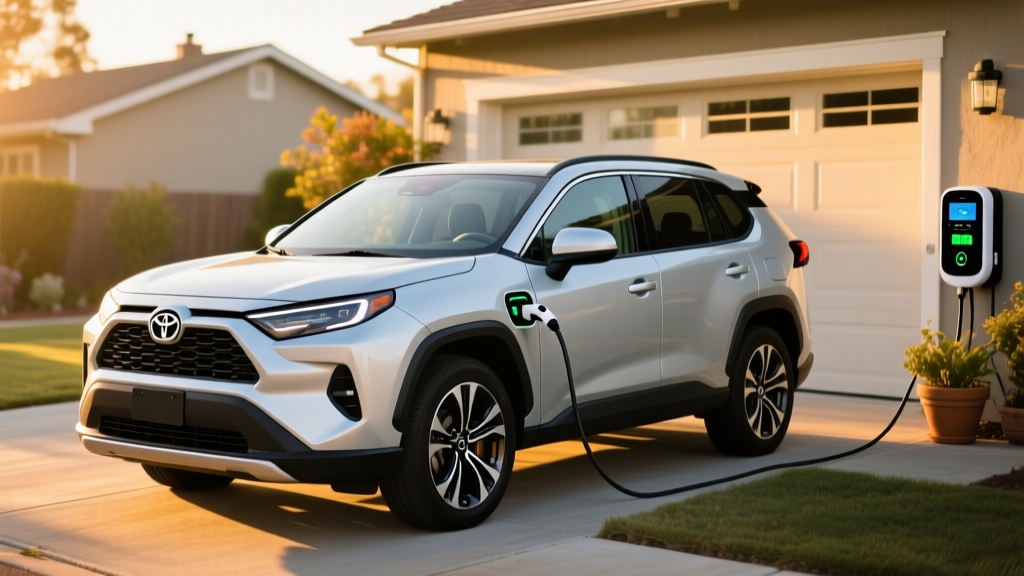
A conventional hybrid like the 2026 Toyota Prius never needs a plug. It captures energy from braking and the gasoline engine to recharge its small battery, then uses that energy to assist acceleration and enable brief low-speed electric creep. A PHEV like the 2026 Toyota RAV4 Prime operates as a short-range EV for daily errands, then seamlessly switches to hybrid mode once the battery depletes — eliminating range anxiety entirely.
How Many MPG Does a Hybrid Get? EPA and Real-World Numbers
Fuel economy is the most quantifiable effect of hybrid ownership. Here's what the EPA publishes for several benchmark 2026 models, alongside real-world observations from mixed driving.
| Model (2026) | Type | EPA City | EPA Highway | EPA Combined | Real-World Combined (observed) |
|---|---|---|---|---|---|
| Toyota Prius LE | HEV | 57 MPG | 56 MPG | 57 MPG | 52–60 MPG |
| Hyundai Elantra Hybrid | HEV | 53 MPG | 56 MPG | 54 MPG | 49–56 MPG |
| Honda Accord Hybrid | HEV | 51 MPG | 44 MPG | 48 MPG | 43–50 MPG |
| Toyota RAV4 Hybrid | HEV | 41 MPG | 38 MPG | 40 MPG | 35–42 MPG |
| Toyota RAV4 Prime | PHEV | 42 MPG (hybrid mode) / 94 MPGe (EV mode) | 39 MPG / 84 MPGe | 40 MPG / 94 MPGe | 38–44 MPG (hybrid); 35–42 mi EV range |
| Jeep Wrangler 4xe | PHEV | N/A (20 MPG hybrid) / 49 MPGe | N/A (20 MPG) / 47 MPGe | 20 MPG / 49 MPGe | 18–22 MPG hybrid; 22–25 mi EV |
Sources: fueleconomy.gov (EPA). Real-world figures reflect mixed city/highway driving at moderate temperatures.
One of the more interesting effects of hybrid powertrains is that city MPG often exceeds highway MPG — the opposite of a conventional gas car. That's because hybrids recapture braking energy in stop-and-go traffic and can shut off the engine at idle. If your commute is mostly urban, a hybrid's advantage over a gas car is at its maximum. On long highway cruises at 75+ mph, the efficiency gap narrows because there's less braking to recapture and aerodynamic drag dominates.
PHEV Electric-Only Range: The Commute Effect
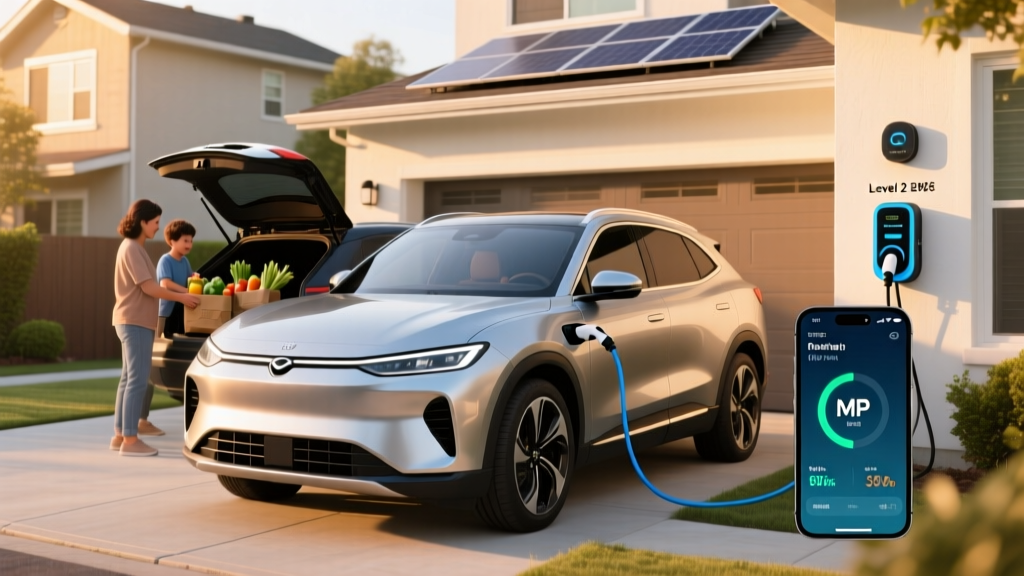
For PHEV owners who charge at home nightly, the most dramatic effect is rarely visiting a gas station during the work week. Here's the electric-only range for popular 2026 PHEVs:
| 2026 PHEV Model | Battery (usable kWh) | EPA Electric Range | Total Range (EV + gas) | DC Fast Charge? | Level 2 Charge Time (0–100%) |
|---|---|---|---|---|---|
| Toyota RAV4 Prime | 14.9 kWh | 42 miles | ~600 miles | No | ~2.5 hours (240V, 6.6 kW) |
| Toyota Prius Prime | 10.9 kWh | 44 miles | ~630 miles | No | ~4 hours (240V, 3.5 kW) |
| Hyundai Tucson PHEV | 11.2 kWh | 33 miles | ~440 miles | No | ~2 hours (240V, 7.2 kW) |
| Jeep Wrangler 4xe | 15.3 kWh | 22 miles | ~370 miles | No | ~2 hours (240V, 7.2 kW) |
| Chrysler Pacifica PHEV | 13.0 kWh | 32 miles | ~520 miles | No | ~2 hours (240V, 6.6 kW) |
A critical note: nearly no PHEVs offer DC fast charging. Their batteries are too small to justify the hardware cost and weight, and a Level 2 home charge replenishes them fully in 2–4 hours — fast enough for overnight use. If you need rapid road-trip charging, you're looking at a full BEV, not a PHEV.
Real-world electric range in a PHEV varies with temperature and driving style. Expect the EPA sticker range to drop 15–25% in freezing weather (below 32°F) due to cabin heating demands and reduced battery efficiency. Aggressive acceleration also eats into EV range faster than the EPA test cycle assumes.
Powertrain Specs: What's Under the Hood
Hybrids pair an internal combustion engine with one or more electric motors. The combined output often exceeds what the gas engine alone could produce — a performance effect buyers frequently overlook.
| 2026 Model | Engine | Motor(s) | Combined HP | 0–60 mph | Drivetrain |
|---|---|---|---|---|---|
| Toyota Prius | 2.0L 4-cyl | 2 permanent magnet | 196 HP | 7.2 sec | FWD (AWD avail.) |
| Toyota RAV4 Hybrid | 2.5L 4-cyl | 3 (front + rear for AWD) | 219 HP | 7.4 sec | AWD (e-AWD) |
| Toyota RAV4 Prime (PHEV) | 2.5L 4-cyl | 3 (front + rear) | 302 HP | 5.7 sec | AWD |
| Honda Accord Hybrid | 2.0L 4-cyl | 2 | 204 HP | 7.0 sec | FWD |
| Hyundai Tucson PHEV | 1.6L turbo 4-cyl | 1 | 261 HP | 7.1 sec | AWD |
The RAV4 Prime's 302 combined horsepower is a striking example of the "hybrid boost" effect — the larger PHEV battery can dump current to the motors more aggressively than a small HEV battery, producing sports-SUV acceleration from a family crossover. That's a tangible benefit beyond fuel savings.
Tax Credits and Pricing: The Financial Effects
Conventional hybrids (HEVs) do not qualify for the federal §30D clean vehicle tax credit — that credit applies only to plug-in vehicles (PHEVs and BEVs) with qualifying battery sourcing. However, qualifying PHEVs can access up to $7,500 under current 2026 IRS rules, provided all eligibility criteria are met.
§30D Federal Tax Credit Checklist for PHEVs (2026)
- MSRP cap: Vans/SUVs/pickups ≤ $80,000; sedans ≤ $55,000
- Buyer income cap (modified AGI): $300,000 joint / $225,000 head of household / $150,000 single
- Battery sourcing: Critical minerals and battery components must meet phased-in domestic/free-trade-partner thresholds — percentages increase annually per IRS §30D rules
- Point-of-sale transfer: As of 2024+, eligible buyers can transfer the credit to the dealer for an immediate price reduction at purchase
- Assembly: Final assembly must occur in North America
State incentives vary by jurisdiction. Check your state energy office or afdc.energy.gov for local rebates. Consult a tax professional for personal eligibility.
Sample 2026 PHEV Pricing
| Model | Base MSRP | Est. After Max §30D Credit | Credit Eligibility (2026) |
|---|---|---|---|
| Toyota Prius Prime SE | $34,195 | ~$26,695 | Eligible (verify sourcing) |
| Toyota RAV4 Prime SE | $44,985 | ~$37,485 | Eligible (verify sourcing) |
| Hyundai Tucson PHEV SEL | $39,775 | ~$32,275 | Partial credit likely |
| Jeep Wrangler 4xe Sport S | $51,795 | ~$44,295 | Eligible (verify sourcing) |
MSRP figures from manufacturer press sites. Credit eligibility depends on battery mineral/component sourcing at time of purchase — confirm with dealer and IRS guidance.
Battery Reliability, Warranty, and Replacement Costs
Battery longevity is the top concern for hybrid shoppers — and the data is reassuring. Modern hybrid batteries are engineered to last the life of the vehicle with minimal degradation, because HEV batteries operate in a narrow state-of-charge window (typically 40–80%) that dramatically reduces stress on the cells.
Hybrid Battery Warranty Summary (2026 Models)
| Manufacturer | Hybrid Battery Warranty | Capacity Retention Threshold |
|---|---|---|
| Toyota / Lexus | 10 years / 150,000 miles | Below ~60% of original capacity |
| Honda | 8 years / 100,000 miles (10 yr / 150k in CARB states) | Significant degradation per warranty terms |
| Hyundai / Kia | 10 years / 100,000 miles | Below ~70% of original capacity |
| Ford | 8 years / 100,000 miles | Below ~70% of original capacity |
Real-world failure data backs up these warranties. Toyota's hybrid Synergy Drive system, now in its fifth generation, has demonstrated exceptional longevity — Consumer Reports and taxi fleet data have documented Prius models exceeding 200,000 miles on the original hybrid battery. When failures do occur outside warranty, replacement costs for HEV batteries typically range from $2,000 to $4,000 (parts and labor), while PHEV battery replacements run $5,000 to $9,000 due to the larger pack size. Refurbished and aftermarket options are increasingly available at lower cost.
For context, a conventional gas car's transmission replacement can cost $3,000–$7,000, and timing chain or head gasket repairs routinely exceed $2,000. Hybrids eliminate several wear items: there's no traditional starter motor (the hybrid motor starts the engine), regenerative braking reduces brake pad wear significantly, and the engine runs fewer total hours because it shuts off at stops and during EV-only operation.
Hybrid vs PHEV vs Full EV: Which Fits Your Life?
The Decision Framework
Choose a conventional hybrid (HEV) if:
- You lack access to home or workplace charging (apartment, street parking)
- You want maximum fuel efficiency with zero behavior change — just fill up with gas as usual
- Your budget is tighter and you don't want to pay the PHEV premium ($3,000–$8,000 more than HEV equivalent)
- You drive a lot of highway miles where the hybrid advantage is smaller but still meaningful
Choose a plug-in hybrid (PHEV) if:
- You can install a Level 2 charger at home (or have reliable workplace charging)
- Your daily round-trip commute is under 40 miles — you'll rarely burn gas on weekdays
- You take occasional long road trips and don't want to plan around DC fast chargers
- You qualify for the §30D tax credit, which can offset the PHEV price premium
Choose a full battery-electric vehicle (BEV) if:
- You have reliable home charging and your daily driving is under 250 miles
- You want to eliminate gasoline entirely and minimize maintenance (no oil changes, no engine)
- You're willing to plan road-trip charging stops around DC fast-charger networks
- You want the maximum federal tax credit and lowest per-mile fuel cost
The honest truth: for a two-car household, a PHEV for the commuter and a HEV or gas car for the long-trip vehicle is often the most pragmatic setup. For a one-car household, a PHEV offers the best of both worlds — electric commuting without road-trip compromise.
Total Cost of Ownership: The 5-Year Effect
Fuel savings are the most visible effect, but total cost of ownership (TCO) factors in purchase price, fuel/energy, maintenance, insurance, and depreciation. Here's a representative comparison for a driver covering 15,000 miles/year with a 30-mile daily commute:
| Cost Category (5 years) | Gas Sedan ($28K, 30 MPG) | HEV Sedan ($30K, 55 MPG) | PHEV Sedan ($34K, 44 mi EV + 52 MPG hybrid) |
|---|---|---|---|
| Purchase price (after credits) | $28,000 | $30,000 | $27,500 (est. after §30D) |
| Fuel / electricity | $9,375 ($3.50/gal) | $5,114 ($3.50/gal) | $2,800 (mix of electricity + gas) |
| Maintenance (oil, brakes, etc.) | $3,500 | $2,500 | $2,200 |
| Insurance (est. average) | $7,500 | $7,800 | $8,000 |
| Estimated depreciation | $12,000 | $13,000 | $14,500 |
| 5-Year Total | $60,375 | $58,414 | $55,000 |
Assumes $3.50/gal gasoline, $0.15/kWh electricity, 15K mi/yr, 70% of PHEV miles on electricity. Insurance and depreciation are estimates based on industry averages. Actual costs vary by region, driving habits, and trim.
The PHEV's advantage is most pronounced when daily driving stays within electric range and home electricity rates are low. The HEV wins for buyers who can't charge at home but still want a substantial fuel-cost reduction. Both beat the gas car over five years, though the gap narrows if gas prices fall below $3.00/gal.
Hybrid (HEV) Pros & Cons
Pros:
- No charging infrastructure needed
- 40–57 MPG combined in real-world driving
- Lower maintenance than gas-only (less brake wear, no starter motor)
- Proven long-term reliability (200K+ mi documented)
- Modest price premium over gas equivalent ($1,500–$3,000)
Cons:
- No federal tax credit
- No electric-only driving — always burns some gasoline
- Highway MPG advantage is smaller than city MPG advantage
- Less performance boost compared to PHEV (smaller battery/motor contribution)
Plug-In Hybrid (PHEV) Pros & Cons
Pros:
- 25–44 miles of gas-free electric commuting
- Eligible for up to $7,500 federal tax credit (if sourcing rules met)
- 300+ combined HP in some models (RAV4 Prime: 302 HP)
- No range anxiety — gas engine for road trips
- Lowest TCO for home-chargers with short commutes
Cons:
- Requires home/workplace charging to realize EV benefits
- $3,000–$8,000 price premium over HEV equivalent
- No DC fast charging — Level 2 only
- Heavier than HEV (larger battery) — slightly lower MPG once battery depletes
- EV range drops 15–25% in freezing temperatures
Frequently Asked Questions
How many MPG does a hybrid really get in the real world?
Most hybrids match or slightly exceed their EPA combined rating in city-heavy driving, because regenerative braking and engine shut-off maximize efficiency in traffic. On sustained highway drives at 75+ mph, expect 3–5 MPG below the EPA combined figure. The 2026 Toyota Prius LE, rated at 57 MPG combined, routinely returns 52–60 MPG in owner-reported mixed driving, per fueleconomy.gov user estimates.
How far can a PHEV go on electric only?
Current 2026 PHEVs offer 22–44 miles of EPA-rated electric range. The Toyota Prius Prime leads sedans at 44 miles; the RAV4 Prime delivers 42 miles in an SUV form factor. Real-world EV range drops to roughly 30–35 miles in freezing weather or at sustained highway speeds above 65 mph. For commutes under 30 miles round-trip with nightly home charging, most PHEV owners report using gasoline only on weekend road trips.
Is a hybrid reliable, and what does battery replacement cost?
Hybrid reliability is among the highest in the auto industry, based on decades of fleet and consumer data. Toyota's hybrid system has been in continuous production since 1997 with iterative improvements. Hybrid battery replacement costs $2,000–$4,000 for HEVs and $5,000–$9,000 for PHEVs, but failures before 150,000 miles are uncommon. All major manufacturers warranty hybrid batteries for at least 8 years/100,000 miles, with Toyota and Hyundai extending to 10 years/150,000 and 10 years/100,000 miles respectively.
Does a hybrid qualify for any tax credit?
Conventional hybrids (HEVs) do not qualify for the federal §30D clean vehicle credit. Only plug-in vehicles (PHEVs and BEVs) are eligible, and only if they meet battery-sourcing, MSRP, buyer-income, and North American assembly requirements. Some states offer additional rebates for PHEVs — check afdc.energy.gov for state-specific programs. A tax professional can confirm personal eligibility.
Hybrid vs PHEV vs EV — which should I buy?
If you can't charge at home, choose an HEV. If you can charge at home and commute under 40 miles daily, a PHEV offers the lowest operating cost without road-trip compromise. If you can charge at home, drive under 250 miles daily, and want to eliminate gasoline entirely, a full BEV delivers the lowest fuel and maintenance costs. The PHEV is the pragmatic middle ground for one-car households that need flexibility.
Do hybrids cost more to insure?
Hybrids typically carry a modest insurance premium of 3–8% over their gas-only equivalents, reflecting higher repair costs for the hybrid system and slightly higher vehicle values. PHEVs may see a 5–10% premium. However, these differences are often offset by the fuel savings within the first year of ownership.
The effects of hybrid ownership in 2026 are measurable and significant: 40–57 MPG for HEVs, 22–44 miles of electric commuting for PHEVs, proven battery longevity backed by decade-long warranties, and — for qualifying PHEV buyers — up to $7,500 in federal tax credits. The right choice depends on your charging access, commute distance, and budget. What's clear from the data is that hybrids have moved from niche to mainstream, with reliability and cost-of-ownership numbers that now rival or beat conventional gas cars across the board.