If you've been browsing dealership lots or car-review sites lately, you've probably noticed a growing category sitting between traditional hybrids and full battery-electric vehicles. It's called a plug-in hybrid electric vehicle, or PHEV — and for many buyers in 2026, it represents the most practical bridge between gasoline convenience and electric efficiency. But what exactly separates a PHEV from the conventional hybrid (HEV) you've seen on the road for two decades? And how does it compare to going full EV?
This guide answers those questions with hard numbers — EPA MPG figures, electric-only range, battery capacity in kWh, real-world efficiency data, pricing, and federal tax credit eligibility under current IRS §30D rules. No marketing fluff, just the data you need to decide which electrified powertrain fits your life.
The Short Answer: What's a Plug-In Hybrid?
A plug-in hybrid (PHEV) is a vehicle with both a gasoline engine and a larger-than-normal battery pack that you can recharge by plugging into an external power source — a standard 120V wall outlet, a 240V Level 2 home charger, or, on some models, a public DC fast charger. That bigger battery (typically 12–25 kWh usable) gives a PHEV between 25 and 50+ miles of electric-only driving before the gas engine kicks in. Once the battery depletes, the car operates as a conventional hybrid, blending engine and regenerative braking to maintain efficiency.
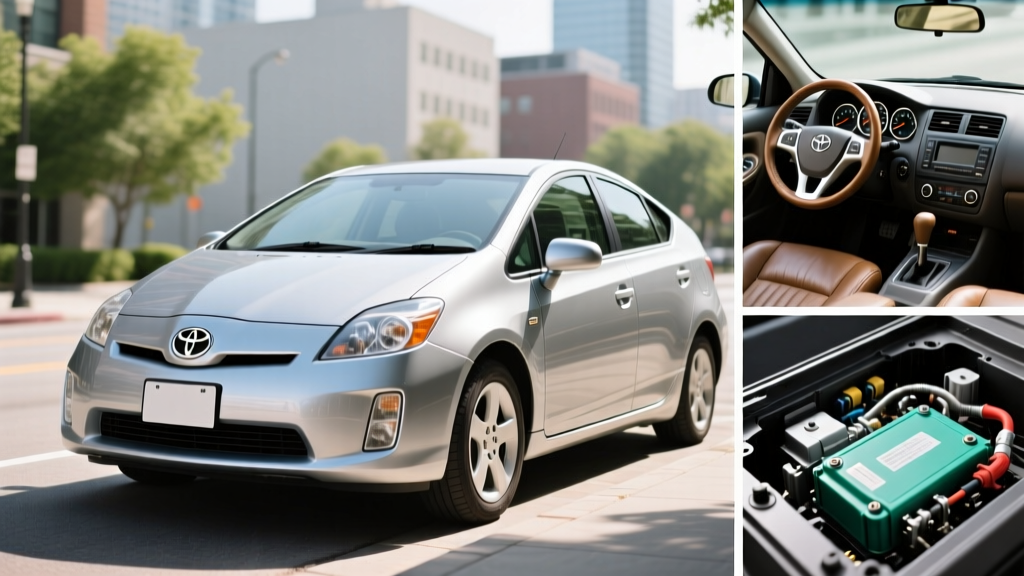
A conventional hybrid (HEV), by contrast, has a much smaller battery (usually 1–2 kWh) that charges only through regenerative braking and the engine. You never plug it in. It can't drive on electric power alone for more than a mile or two at low speeds. Think of the Toyota Prius HEV: outstanding MPG, but zero plug-in capability.
HEV vs PHEV at a Glance
| Feature | Conventional Hybrid (HEV) | Plug-In Hybrid (PHEV) |
|---|---|---|
| Plug in to charge? | No | Yes |
| Battery size | ~1–2 kWh | ~12–25 kWh |
| Electric-only range | 0–1 mi (low speed) | 25–50+ mi |
| Gas engine? | Yes | Yes |
| Federal tax credit | No | Up to $7,500 (if eligible) |
| Example | Toyota Prius HEV | Toyota RAV4 Prime |
How PHEVs Actually Work: The Two Modes
Understanding a PHEV means understanding its two operating modes:
Charge-Depleting (CD) Mode — Electric Driving: When the battery is charged, the PHEV runs on electric power alone. The gasoline engine stays off unless you demand hard acceleration or the battery runs low. During this phase, efficiency is measured in MPGe (miles per gallon equivalent) and kWh/100mi. A typical 2026 PHEV achieves 80–110 MPGe combined in electric mode.
Charge-Sustaining (CS) Mode — Hybrid Driving: Once the battery drops to its minimum state of charge (the "buffer" — usually 15–20% remaining), the gasoline engine takes over as the primary power source, assisted by regenerative braking. In this mode, the car behaves like a conventional hybrid. Efficiency drops to a standard MPG figure — typically 35–45 MPG combined depending on the model.
The total combined range (electric + gasoline) for most PHEVs falls between 400 and 600 miles, eliminating any range anxiety on road trips. You get the best of both worlds: silent, cheap electric commuting during the week and unlimited gasoline range on weekends.
Real-World MPG and Electric Range: What to Expect
EPA estimates are a starting point, not a guarantee. Here's how three popular 2026 PHEVs stack up with both sticker numbers and real-world expectations:
| 2026 Model | Battery (kWh) | EV Range (EPA) | Combined MPG (CS) | Combined MPGe (CD) | Total Range |
|---|---|---|---|---|---|
| Toyota RAV4 Prime | 18.1 | 42 mi | 38 MPG | 94 MPGe | ~600 mi |
| Hyundai Tucson PHEV | 13.8 | 33 mi | 35 MPG | 80 MPGe | ~430 mi |
| Jeep Wrangler 4xe | 17.3 | 22 mi | 20 MPG | 49 MPGe | ~370 mi |
- Electric range drops 20–35% in cold weather (below 30°F) because the battery is less efficient and cabin heating draws energy.
- Highway driving at 75+ mph reduces EV range more than city driving, since electric motors are most efficient at lower speeds.
- Hybrid-mode MPG often beats EPA in city driving thanks to regenerative braking, but falls short on sustained highway runs.
- Source: EPA Fuel Economy — Plug-In Hybrids
PHEV Charging: Speeds, Times, and Connectors
One of the biggest misconceptions about PHEVs is that they need DC fast charging. Most don't — and here's why the charging picture looks different from a full EV:
| Charging Level | Power (kW) | Time 0–100% (typical PHEV) | Availability |
|---|---|---|---|
| Level 1 (120V household) | ~1.4 kW | 8–14 hours | Any standard outlet |
| Level 2 (240V home/public) | 3.3–7.2 kW | 2–4.5 hours | Home wallbox, public stations |
| DC Fast Charge | 50+ kW | ~25–35 min (0–80%) | Rare — only on select models (e.g., Mitsubishi Outlander PHEV) |
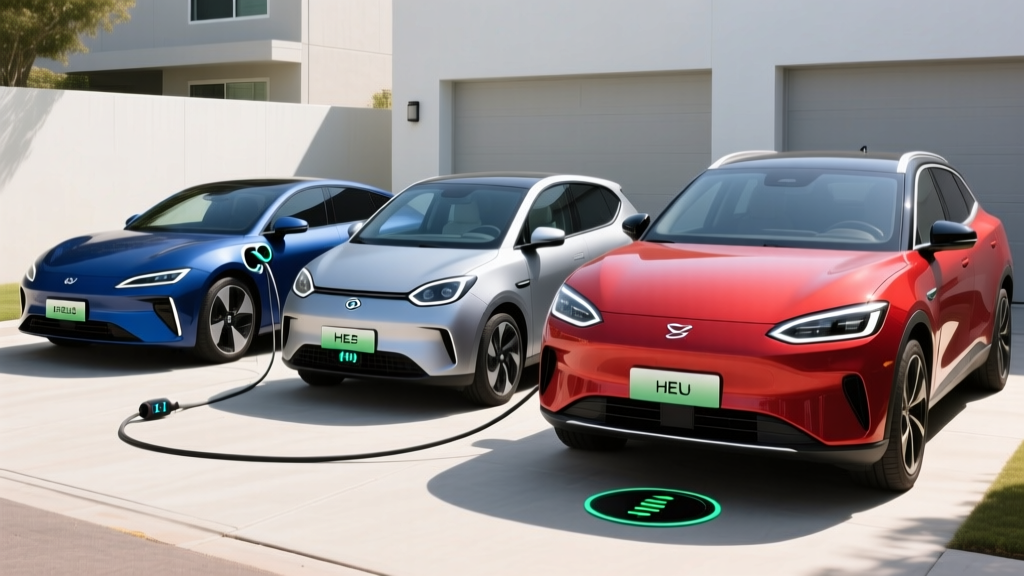
Because PHEV batteries are small (12–25 kWh vs. 60–100+ kWh in a full EV), Level 1 charging overnight is genuinely practical. Plug in at 10 PM, and by 7 AM you'll have a full charge — no special electrical work required. A Level 2 home charger cuts that to 2–4 hours, which matters if you want to top up between an evening commute and a morning departure.
kW vs. kWh reminder: kW (kilowatts) measures the rate of energy flow — like water pressure from a hose. kWh (kilowatt-hours) measures total energy stored — like the size of the bucket. A 7.2 kW Level 2 charger filling an 18 kWh battery takes roughly 2.5 hours (18 ÷ 7.2).
Battery Longevity, Warranty, and Replacement Costs
Hybrid and PHEV batteries are among the most reliable components in modern vehicles, but buyers are right to ask about longevity. Here's what you need to know:
Hybrid/PHEV Battery Warranty — Federal Minimum
Federal law requires all hybrid and PHEV batteries to carry a warranty of at least 8 years / 100,000 miles. In CARB states (California and states adopting California emissions standards), that extends to 10 years / 150,000 miles. Most manufacturers meet or exceed these minimums.
The warranty typically covers the battery if capacity drops below 60–70% of original capacity, though exact thresholds vary by brand.
Real-world degradation data: Studies from fleet operators and owner surveys consistently show that PHEV and HEV batteries lose roughly 1–2% of capacity per year under normal use. A 10-year-old Prius battery, for example, typically retains 80–85% of its original capacity. Catastrophic failure before 150,000 miles is uncommon.
Replacement cost if out of warranty: A PHEV battery replacement typically runs $4,000–$8,000 depending on the model, including parts and labor. HEV batteries are generally cheaper ($2,000–$4,000) due to smaller size. Third-party refurbishment shops now offer rebuilt packs for 30–50% less than OEM pricing.
Pricing and Federal Tax Credit Eligibility
PHEVs command a premium over their gas-only siblings, but federal and state incentives can narrow the gap significantly. Here's a pricing snapshot for three popular 2026 models:
| 2026 Model | Base MSRP | Est. Max §30D Credit | Effective Price (if eligible) |
|---|---|---|---|
| Toyota RAV4 Prime SE | $44,960 | $7,500 | ~$37,460 |
| Hyundai Tucson PHEV SEL | $39,450 | $3,750–$7,500* | ~$31,950–$35,700 |
| Chrysler Pacifica PHEV | $51,495 | $7,500 | ~$43,995 |
*Credit amount varies by battery sourcing and critical-mineral compliance. Hyundai Tucson PHEV eligibility depends on specific trim and battery component sourcing for the 2026 model year.
IRS §30D Tax Credit Requirements (2026)
To claim the federal plug-in vehicle tax credit, you must meet all of the following:
- Vehicle MSRP cap: Vans, SUVs, and pickups ≤ $80,000; sedans and other body styles ≤ $55,000
- Buyer income cap: Modified AGI ≤ $150,000 (single), $225,000 (head of household), $300,000 (married filing jointly)
- Battery sourcing: Minimum percentage of critical minerals and battery components must be sourced from the U.S. or FTA-partner countries (percentages increase annually)
- Point-of-sale transfer: As of 2024, you can transfer the credit to the dealer at purchase, reducing your out-of-pocket cost immediately — you don't have to wait until tax filing
- Final assembly: Vehicle must undergo final assembly in North America
Source: IRS — Clean Vehicle Credits. Eligibility changes frequently; confirm with a tax professional before purchasing.
PHEV vs HEV vs Full EV: Which One Fits You?
This is the decision that matters most. Each powertrain type solves a different set of constraints:
Choose a PHEV If:
- Your daily commute is under 40 miles round-trip and you can charge at home overnight
- You take road trips of 300+ miles several times a year and don't want to plan around chargers
- You live in an apartment or area with limited public charging infrastructure
- You want to drive electric most days but keep gasoline as a backup
Choose a Full EV (BEV) If:
- You have reliable home Level 2 charging and your daily driving is under 250 miles
- You want the lowest per-mile fuel cost and zero tailpipe emissions
- You want to minimize maintenance (no oil changes, no spark plugs, fewer moving parts)
- You're comfortable with route-planning on longer road trips
Choose a Conventional Hybrid (HEV) If:
- You cannot charge at home or at work — no garage, no outlet access
- You want better MPG than a gas car without changing any habits
- You want the lowest purchase price among electrified options
- You drive mostly in stop-and-go city traffic where regenerative braking shines
PHEV Advantages
- 25–50 mi electric commuting = pennies per mile
- No range anxiety — gas tank for long trips
- Eligible for up to $7,500 federal tax credit
- Smaller battery = lower manufacturing footprint
- Regenerative braking extends brake life
PHEV Trade-Offs
- Higher upfront cost than HEV or gas equivalent
- Two powertrains to maintain (engine + electric motor)
- Electric range drops significantly in cold weather
- Heavier than HEV due to larger battery
- Must plug in regularly to realize full savings — if you don't, you're just carrying dead weight
Powertrain Specs: What's Under the Hood
PHEVs pair a gasoline engine with one or more electric motors. Combined output often significantly exceeds the gas-only version of the same vehicle. Here's a representative breakdown:
| 2026 Model | Engine | Electric Motor | Combined HP | 0–60 mph |
|---|---|---|---|---|
| Toyota RAV4 Prime | 2.5L 4-cyl | Front + rear motors | 302 hp | 5.7 sec |
| Hyundai Tucson PHEV | 1.6L turbo 4-cyl | Single front motor | 261 hp | 7.1 sec |
| BMW X5 xDrive50e | 3.0L turbo I6 | Integrated motor | 483 hp | 4.6 sec |
Notice that combined horsepower often dwarfs the gas-only version. The RAV4 Prime's 302 hp makes it the quickest RAV4 Toyota sells — faster than the gas Turbo model. That instant electric torque, combined with standard all-wheel drive from the rear motor, is a PHEV bonus many buyers don't anticipate.
Frequently Asked Questions
Do I have to plug in a PHEV, or does it charge itself?
You don't have to plug it in — the car will run perfectly fine as a conventional hybrid if you never plug it in. However, you'll miss the entire point of the larger battery. Without plugging in, you're carrying 300–500 lbs of battery weight you never use, which actually reduces your MPG compared to a lighter HEV. To capture the fuel savings, plan to plug in at least nightly.
How much does it cost to charge a PHEV at home?
A typical PHEV battery holds 15–20 kWh. At the U.S. average electricity rate of ~$0.17/kWh (per EIA data), a full charge costs roughly $2.55–$3.40. That gives you 30–40 miles of driving — equivalent to about $0.08–$0.11 per mile. Compare that to gasoline at $3.50/gal in a 30 MPG car: about $0.12/mile. The savings compound over thousands of commute miles.
Can a PHEV tow as much as the gas version?
It depends on the model. Some PHEVs match or slightly exceed gas towing ratings thanks to instant electric torque (the RAV4 Prime tows 2,500 lbs, same as the gas AWD model). Others, like certain minivan PHEVs, may have reduced ratings due to the added battery weight. Always check the specific model's owner's manual for the rated towing capacity.
Are PHEV batteries reliable long-term?
Yes. Data from fleet operators and long-term owner surveys shows that modern lithium-ion PHEV batteries degrade slowly — typically 1–2% per year. With an 8–10 year / 100,000–150,000 mile federal warranty, most buyers will never face an out-of-pocket battery replacement. When they do, third-party refurbishment has driven costs well below OEM pricing.
Does a PHEV qualify for HOV lane access?
In many states, yes — but rules vary significantly by jurisdiction and change frequently. California, for example, has issued Clean Air Vehicle decals for qualifying PHEVs, but the program has caps and expiration dates. Check your state's DMV or department of transportation for current rules before counting on HOV access in your purchase decision.
What happens if the battery dies completely on the highway?
Nothing catastrophic. The PHEV's battery management system maintains a buffer (usually 15–20% of total capacity) that's never truly depleted. Even when the dashboard shows "0 miles EV range," the car seamlessly operates in hybrid mode using the gasoline engine. You'll simply continue driving on gas as you would in any conventional hybrid.
The Bottom Line: Who Should Buy a PHEV?
A plug-in hybrid makes the most sense for a specific buyer profile: someone with home charging access, a daily commute under 40 miles, and regular longer trips where EV charging infrastructure is sparse or inconvenient. If that describes you, a PHEV lets you drive on cheap electricity 80% of the time while keeping the freedom to fill up with gas and go anywhere.
If you can charge at home and rarely drive more than 250 miles in a day, a full EV will save you more money and eliminate engine maintenance entirely. If you can't charge at all, a conventional hybrid delivers strong MPG without any lifestyle change.
The PHEV isn't the perfect solution for everyone — but for the right buyer in 2026, it's the most pragmatic electrified vehicle on the market.