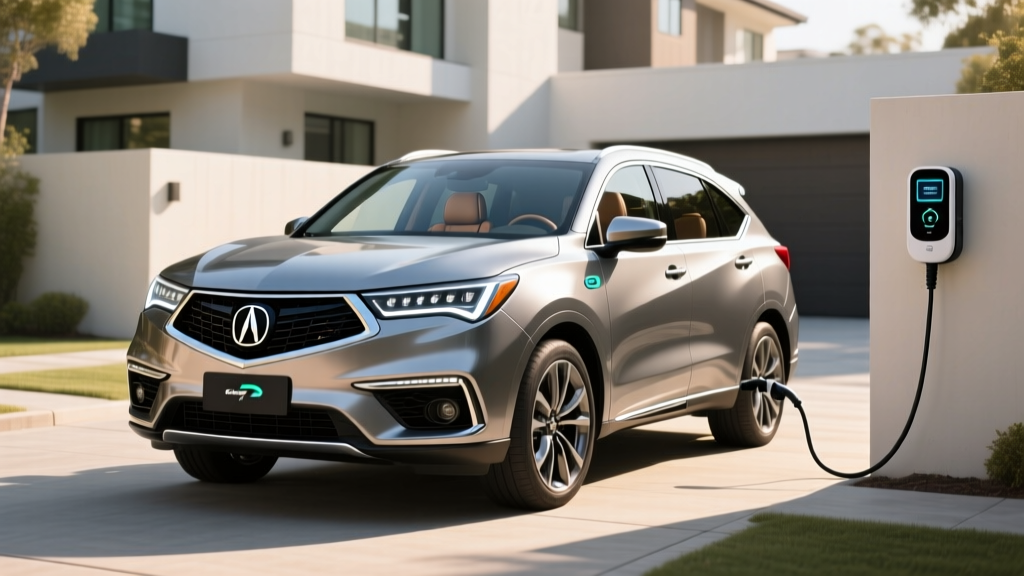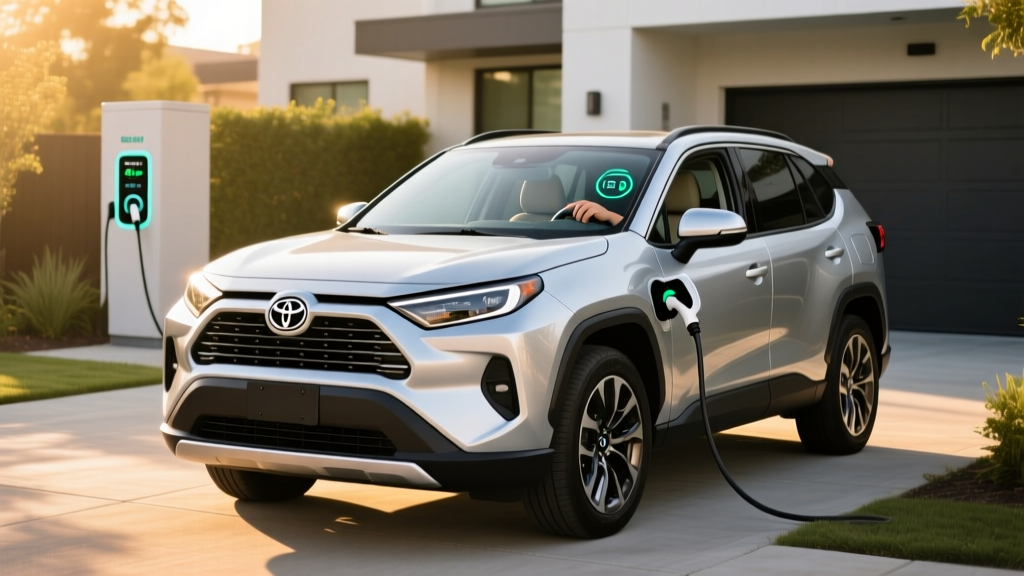
If you've been researching electrified vehicles, you've likely encountered the acronym PHEV and wondered how it differs from the conventional hybrid your neighbor drives. A plug-in hybrid electric vehicle (PHEV) bridges the gap between a standard gas-electric hybrid and a fully electric car: it carries a larger battery you can charge from a wall outlet, giving you 20–50 miles of pure electric driving before the gasoline engine seamlessly takes over for hundreds of additional miles.
For buyers in 2026 who want electric commuting without range anxiety on road trips, the PHEV remains one of the most practical electrified choices available. This guide breaks down exactly how PHEVs work, what they cost, how they compare to conventional hybrids and full EVs, and whether one fits your driving life.
What Is a PHEV Car, Exactly?
A PHEV pairs a gasoline engine with an electric motor and a battery pack significantly larger than what you'd find in a conventional hybrid (HEV). The defining feature: you can plug it in. Charge it overnight on a standard 120V outlet or a 240V Level 2 home charger, and you'll wake up to a full battery capable of handling most daily commutes on electricity alone.
Once that battery depletes — typically after 25 to 50 miles depending on the model — the vehicle automatically switches to hybrid mode. The gasoline engine fires up, the electric motor assists, and you drive it like any conventional hybrid, refueling at any gas station. There is no range anxiety because the gas tank provides 300–500+ additional miles of range.
HEV vs. PHEV: The Core Difference
| Feature | Conventional Hybrid (HEV) | Plug-In Hybrid (PHEV) |
|---|---|---|
| Plugs in to charge? | No — charges via regenerative braking and engine | Yes — via Level 1 (120V) or Level 2 (240V) |
| Battery size | 0.5–2.0 kWh | 10–25 kWh (typically) |
| Electric-only range | 0 miles (electric assist only) | 20–50 miles |
| Can drive on electricity alone? | Only at very low speeds, briefly | Yes, at full highway speeds |
| Federal tax credit eligible? | No | Yes — up to $7,500 (see rules below) |
| Example (2026) | Toyota Camry Hybrid (52 MPG combined) | Toyota RAV4 Prime (42 mi EV, 94 MPGe) |
Bottom line: A conventional hybrid never plugs in and has no meaningful electric-only range. A PHEV gives you real electric driving for daily commutes plus a gas engine for longer trips.
How Far Can a PHEV Go on Electric Only?
Electric-only range is the single most important PHEV spec for daily usability. In the 2026 model year, PHEVs span a meaningful range:
- Compact sedans and crossovers: 25–35 miles (e.g., Hyundai Tucson PHEV: ~33 miles)
- Midsize SUVs: 35–45 miles (e.g., Toyota RAV4 Prime: 42 miles; Jeep Wrangler 4xe: ~22 miles)
- Luxury/large PHEVs: 40–50+ miles (e.g., BMW X5 xDrive50e: ~38 miles; Volvo XC60 Recharge: ~35 miles)
The EPA rates PHEV electric range through standardized testing, and most models deliver close to their sticker number in moderate city driving at 30–45 mph. However, expect a 10–20% reduction in cold weather (below 40°F) due to cabin heating demands and reduced battery efficiency. Highway-speed electric driving (70+ mph) also consumes the battery faster than the EPA city cycle suggests.
Once the battery depletes, total combined range (electric + gasoline) typically reaches 400–550 miles, comparable to or exceeding most conventional vehicles.
PHEV Fuel Economy: MPG and MPGe Explained
PHEVs have two fuel-economy ratings, and understanding both is essential:
- MPGe (miles per gallon equivalent): Measures efficiency while running on electricity. It converts kWh of electrical energy into a gasoline-equivalent figure. A PHEV might rate 85–105 MPGe.
- Charge-depleted MPG: Once the battery is empty and the car operates as a conventional hybrid, you get a standard MPG rating — typically 35–50 MPG combined depending on the model.
| Model | EV Range | MPGe (EV Mode) | MPG (Hybrid Mode) | Combined Range |
|---|---|---|---|---|
| Toyota RAV4 Prime | 42 mi | 94 MPGe | 38 MPG | ~600 mi |
| Hyundai Tucson PHEV | 33 mi | 80 MPGe | 35 MPG | ~440 mi |
| Chrysler Pacifica PHEV | 32 mi | 82 MPGe | 30 MPG | ~520 mi |
| Ford Escape PHEV | 37 mi | 105 MPGe | 40 MPG | ~520 mi |
| Jeep Wrangler 4xe | 22 mi | 49 MPGe | 20 MPG | ~370 mi |
Source: fueleconomy.gov (EPA estimates). Real-world results vary with temperature, terrain, and driving style.
Real-world MPG vs. EPA: PHEVs in hybrid mode often exceed their EPA city MPG in stop-and-go traffic because regenerative braking recaptures more energy at lower speeds. Highway hybrid-mode MPG tends to run closer to or slightly below the EPA estimate. If you rarely charge the battery and drive mostly highway miles, expect hybrid-mode fuel economy to land at the lower end of the EPA range.
PHEV Battery, Charging, and Powertrain Specs
The battery in a typical 2026 PHEV ranges from 10 to 25 kWh (kilowatt-hours — the unit of energy capacity, not to be confused with kW, which measures power or charge rate). For context, a full EV battery runs 60–100 kWh, so the PHEV battery is a fraction of the size. Most PHEV batteries use NMC (nickel manganese cobalt) chemistry, chosen for its higher energy density in the limited space available.
Charging a PHEV: What You Need to Know
| Charge Level | Power | Full Charge Time (typical) | Notes |
|---|---|---|---|
| Level 1 (120V household outlet) | ~1.4 kW | 8–14 hours | Sufficient for overnight; included with most PHEVs |
| Level 2 (240V home/public) | 3.3–7.2 kW | 2–5 hours | Recommended for daily use; requires 240V outlet or hardwired charger |
| DC Fast Charge | Varies (50 kW+) | 25–40 min (to 80%) | Most PHEVs do NOT support DC fast charging. A few exceptions exist (e.g., Mitsubishi Outlander PHEV). Check before you buy. |
Critical detail: The vast majority of PHEVs cannot use DC fast chargers. Their onboard chargers max out at 3.3 to 7.2 kW on Level 2. This is intentional — the smaller battery doesn't need fast charging for daily use. Plan to charge at home or at work; don't expect to top up quickly at an Electrify America or Tesla Supercharger station.
Powertrain Output
PHEVs combine a gasoline engine (typically a 1.5L–2.5L four-cylinder) with one or two electric motors. Combined system horsepower ranges from roughly 180 HP (compact models) to 360+ HP (performance-oriented PHEVs like the RAV4 Prime at 302 HP or the BMW X5 xDrive50e at 483 HP). The electric motor delivers instant torque, making PHEVs feel noticeably quicker off the line than their gas-only counterparts.
PHEV Pricing, Tax Credits, and Ownership Costs
PHEVs carry a price premium over conventional hybrids — typically $4,000 to $8,000 more for equivalent trim levels — due to the larger battery, onboard charger, and more complex powertrain. Base MSRPs in 2026 generally fall between $34,000 and $55,000 for mainstream models, with luxury PHEVs reaching $65,000+.
Federal Tax Credit for PHEVs (§30D)
PHEVs can qualify for the federal §30D Clean Vehicle Credit, but the rules are strict and not every PHEV qualifies. The credit amount depends on battery capacity and critical-mineral/battery-component sourcing requirements. Here's the eligibility framework as of 2026:
- Battery capacity: Must be at least 7 kWh (most PHEVs meet this)
- MSRP cap: Vans, SUVs, and pickup trucks: ≤$80,000; sedans: ≤$55,000
- Buyer income cap: Modified AGI ≤$150,000 (single), ≤$225,000 (head of household), ≤$300,000 (joint)
- Critical minerals requirement: A percentage of battery minerals must be sourced from the U.S. or FTA partners (phases up annually)
- Battery component sourcing: Components must be manufactured or assembled in North America (phases up annually; foreign entity of concern restrictions apply)
- Point-of-sale transfer: Eligible buyers can transfer the credit to the dealer at purchase, reducing the upfront price directly
The credit ranges from $3,751 to $7,500 depending on how many sourcing requirements the vehicle meets. Many popular PHEVs — including the RAV4 Prime and Escape PHEV — have qualified for partial or full credits in recent years, but sourcing requirements tighten each year. Always verify current eligibility on the IRS website or with your tax professional before relying on the credit in your purchase decision.
State incentives may also apply. States like California, Colorado, and New York offer additional rebates or HOV lane access for PHEVs. Check your state's energy office or the AFDC incentive database for specifics.
Reliability, Battery Lifespan, and Warranty
Battery longevity is the top concern for PHEV shoppers, and the data is reassuring. PHEV batteries undergo shallower charge-discharge cycles than full EV batteries (you're using 15 kWh instead of 80+), which reduces wear. Major manufacturers provide robust hybrid battery warranties:
PHEV Battery Warranty Standards (2026)
- Federal minimum: 8 years / 100,000 miles for emissions-related components (includes hybrid battery in many states)
- Toyota/Lexus: 10 years / 150,000 miles on hybrid battery
- Hyundai/Kia: 10 years / 100,000 miles on hybrid/EV battery
- Ford: 8 years / 100,000 miles on hybrid battery components
- BMW/Volvo: 8 years / 100,000 miles (or 70% capacity retention threshold)
Warranty typically covers battery capacity falling below 60–70% of original capacity. In practice, most PHEV batteries retain 85–90%+ capacity after 100,000 miles based on fleet data.
Battery replacement cost if out of warranty: typically $4,000 to $8,000 for mainstream PHEVs, depending on battery size and labor. This is less than full EV battery replacement because the packs are smaller. Third-party rebuild services are emerging as a lower-cost alternative ($2,500–$4,500).
Overall PHEV reliability has been strong. Consumer Reports and J.D. Power data show that Toyota, Lexus, and Hyundai PHEVs rank among the most reliable electrified vehicles. The added complexity of a dual powertrain (engine + motor + larger battery) has not translated into significantly higher failure rates in models now in their second or third generation.
Hybrid vs. PHEV vs. Full EV: Which Should You Choose?
The right choice depends on your driving patterns, charging access, and budget. Here's a practical decision framework:
Choose Based on Your Situation
Choose a conventional hybrid (HEV) if:
- You cannot charge at home or work (apartment, street parking, no outlet access)
- Your budget is tighter and you want the lowest purchase price
- You want maximum simplicity — no plugs, no charging habits to manage
- You drive mostly highway miles where hybrid MPG advantage is smaller
Choose a PHEV if:
- You can charge at home (even a standard 120V outlet works for overnight)
- Your daily commute is under 40 miles round-trip
- You take road trips several times a year and don't want to plan around charging stations
- You want to reduce gas consumption dramatically without going fully electric
- You live in an area with limited public DC fast-charging infrastructure
Choose a full EV (BEV) if:
- You have reliable home Level 2 charging
- Your daily driving is under 250 miles (well within any modern EV's range)
- You want the lowest per-mile fuel cost and minimal maintenance
- You want to eliminate gas entirely and reduce tailpipe emissions to zero
- You're comfortable with road-trip charging planning (or rarely drive 300+ miles in a day)
2026 PHEV Models Worth Considering
Top PHEV Picks — Pros
- Toyota RAV4 Prime: 42 mi EV range, 302 HP, AWD standard, strong resale value
- Ford Escape PHEV: 37 mi EV range, 105 MPGe, lowest starting price in segment
- Hyundai Tucson PHEV: 33 mi EV range, AWD, generous warranty, comfortable ride
- Chrysler Pacifica PHEV: Only PHEV minivan, 32 mi EV range, family hauler
- Jeep Wrangler 4xe: Off-road capable PHEV, unique in the market
PHEV Trade-Offs — Cons
- Higher purchase price than equivalent HEV or gas models
- Most cannot DC fast charge — home charging is essential
- Cargo space sometimes reduced vs. non-PHEV versions (battery placement)
- Two systems to maintain (engine oil changes + EV components)
- Tax credit eligibility uncertain — sourcing rules tighten yearly
- Resale value less predictable than proven HEVs or popular BEVs
Frequently Asked Questions
How many MPG does a PHEV get?
In hybrid mode (battery depleted), most 2026 PHEVs deliver 30–50 MPG combined depending on the model — similar to a conventional hybrid of the same size. In electric mode, they rate 80–105 MPGe. Your actual fuel consumption depends heavily on how often you charge. If you charge nightly and commute 25 miles, you may use almost no gasoline on weekdays.
How far can a PHEV go on electric only?
Most 2026 PHEVs offer 25–45 miles of EPA-rated electric range. The Toyota RAV4 Prime leads mainstream models at 42 miles. Real-world range drops 10–20% in cold weather or sustained highway driving above 65 mph. Once depleted, the gas engine provides 300–500+ additional miles.
Do I need to charge a PHEV every day?
You don't have to — the car works perfectly fine as a conventional hybrid if you never plug it in. But to capture the fuel-cost savings and electric-driving benefit, daily charging (or charging whenever you're parked at home) is ideal. A standard 120V outlet provides enough charge overnight for most daily commutes.
Is a PHEV reliable? What about battery replacement cost?
PHEV reliability is generally strong, especially from Toyota, Hyundai, and Ford, which are now on second- or third-generation PHEV systems. Hybrid batteries carry 8–10 year / 100,000–150,000 mile warranties. Out-of-warranty replacement runs $4,000–$8,000 — less than a full EV battery due to the smaller pack size.
Does a PHEV qualify for a tax credit?
Some PHEVs qualify for the federal §30D Clean Vehicle Credit (up to $7,500), but eligibility depends on MSRP caps, buyer income limits, and battery-sourcing requirements that tighten annually. Always check the IRS Clean Vehicle Credit page for current eligibility. State incentives may also apply — check the AFDC state incentive database.
Can a PHEV use DC fast chargers?
Most PHEVs cannot use DC fast chargers. They charge exclusively via Level 1 (120V) or Level 2 (240V) AC charging. A few exceptions exist — the Mitsubishi Outlander PHEV has offered DC fast charging capability — but plan on home and workplace charging as your primary fueling method.
What happens if I never plug in my PHEV?
The vehicle operates as a conventional hybrid. You'll get hybrid-mode MPG (30–50 combined) and lose the electric-range benefit. You're also carrying extra battery weight you never use, so a conventional hybrid (HEV) would be a more cost-effective choice if you truly cannot or will not charge.