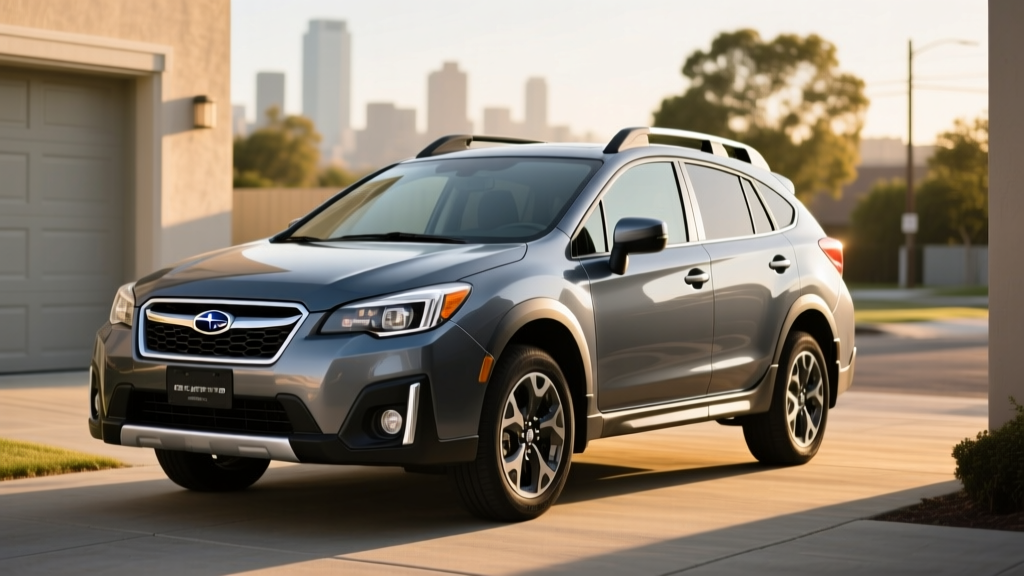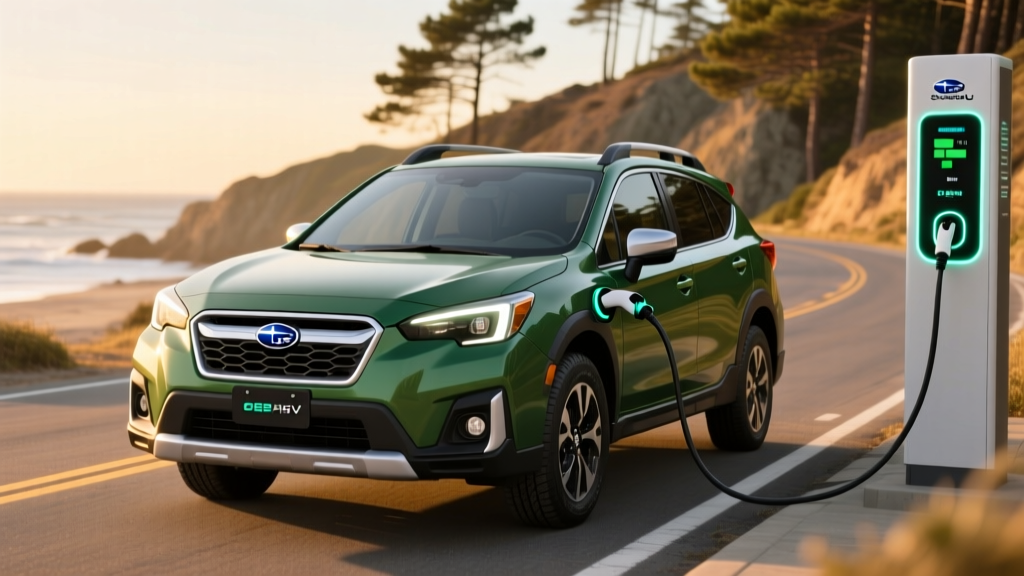
If you've been searching for a Subaru plug-in hybrid, you've likely discovered that Subaru's electrification strategy moves at its own pace. For 2026, the automaker continues to offer a plug-in hybrid variant of its best-selling compact crossover, the Crosstrek, while leaning heavily into its conventional hybrid lineup across the Forester, Outback, and Crosstrek nameplates. This guide breaks down exactly what Subaru's plug-in hybrid technology delivers — and where a conventional Subaru hybrid or a full battery-electric vehicle might serve you better.
Subaru's Electrified Lineup: HEV vs PHEV Explained
Before diving into specs, it's critical to understand the distinction between Subaru's two hybrid approaches, because they serve very different use cases and have different ownership requirements.
| Feature | Subaru HEV (Conventional Hybrid) | Subaru PHEV (Plug-In Hybrid) |
|---|---|---|
| Plug-in charging required? | No — charges via regenerative braking and engine | Yes — plugs into Level 1 or Level 2 charger |
| Battery size | ~1.1 kWh (small buffer) | ~18.1 kWh usable (larger traction pack) |
| Electric-only driving | Minimal (low-speed assist only) | Up to ~17 miles EPA on battery alone |
| Primary fuel | Gasoline (motor supplements) | Electricity first, gasoline for longer trips |
| Ideal owner | No home charging; wants better MPG | Has home charging; short daily commute |
The conventional Subaru hybrids (available on the 2026 Crosstrek Hybrid, Forester Hybrid, and Outback Hybrid) never need to be plugged in. Their small batteries capture energy from braking and the engine, providing electric motor assist that boosts fuel economy — typically by 3–6 MPG combined over the gas-only version. These are "self-charging" in the marketing sense: you just fill up with gas and drive.
The Subaru plug-in hybrid — specifically the Crosstrek PHEV — is a different animal. It carries a substantially larger battery that you charge from a wall outlet or dedicated charger, enabling genuine electric-only driving for short trips before the gasoline engine takes over. Think of it as a short-range EV that carries a gas engine as a safety net.
Crosstrek PHEV: Electric Range, Battery, and Charging Specs
The 2026 Subaru Crosstrek Plug-In Hybrid carries forward the powertrain architecture Subaru refined over the previous generation. Here are the critical numbers:
| Specification | 2026 Subaru Crosstrek PHEV |
|---|---|
| Battery capacity (usable) | ~18.1 kWh (lithium-ion) |
| EPA electric-only range | ~17 miles |
| EPA total combined range | ~430 miles (electric + gas) |
| EPA MPGe (electric mode) | ~90 MPGe combined |
| EPA MPG (gas hybrid mode) | ~35 MPG combined |
| Combined system horsepower | 219 hp (2.0L flat-4 + electric motors) |
| Level 1 charging (120V) | ~5 hours (0–100%) |
| Level 2 charging (240V) | ~2.5 hours (0–100%) |
| DC fast charging | Not supported |
| Charge port | J1772 (Level 1/2) |
| Drivetrain | Symmetrical AWD (standard) |
A few things to unpack here. First, the 17-mile EPA electric range is modest by current PHEV standards. Competitors like the Toyota RAV4 Prime (42 miles) and the Hyundai Tucson PHEV (33 miles) offer substantially more electric-only distance. That said, 17 miles covers many daily commutes and errand loops, especially in suburban or rural settings where Subaru buyers tend to live.
Second, the lack of DC fast charging is typical for PHEVs in this class — the battery is small enough that Level 2 replenishes it fully in about 2.5 hours, which is adequate for overnight or workplace charging. But it means you can't top up quickly at a public fast-charging station during a road trip.
Real-World Range Note: The 17-mile EPA electric estimate assumes moderate temperatures and mixed driving. In cold weather (below 40°F), expect electric range to drop to roughly 12–14 miles due to cabin heating demands and reduced battery efficiency. Highway-only driving at 70+ mph will similarly reduce electric range to around 13–15 miles. In gas-hybrid mode, real-world highway MPG tends to land around 32–33 MPG, slightly below the 35 MPG combined EPA figure.
Fuel Economy Breakdown: How Many MPG Does the Subaru Plug-In Hybrid Get?
This is where PHEV math gets nuanced, because your actual fuel consumption depends entirely on how much you drive on electricity versus gasoline.
| Driving Scenario | Fuel Economy | Notes |
|---|---|---|
| Electric-only (charged daily) | 90 MPGe combined | Zero gasoline used within ~17-mi trips |
| Hybrid mode (battery depleted) | 35 MPG combined (EPA) | 33 city / 36 highway estimated |
| Real-world hybrid highway | ~32–33 MPG | AWD + boxer engine + roof rails add drag |
| 2026 Crosstrek (gas-only base) | 29 MPG combined | For comparison baseline |
| 2026 Crosstrek Hybrid (HEV) | ~36 MPG combined | Self-charging, no plug needed |
If your daily driving stays under 17 miles and you charge every night, you could go weeks without visiting a gas station. Subaru's PHEV essentially functions as a short-range EV for daily use, with the 2.0-liter flat-four engine providing seamless backup for longer trips — no range anxiety, no trip planning around chargers.
However, if you regularly drive 40+ miles per day and rarely charge, the PHEV operates as a conventional hybrid once the battery is depleted, delivering around 35 MPG. That's still respectable and meaningfully better than the gas-only Crosstrek's 29 MPG combined, but it's roughly on par with the conventional Crosstrek HEV — without the PHEV's price premium making financial sense unless you're capturing electricity savings.
Powertrain and Performance
The Crosstrek PHEV pairs Subaru's 2.0-liter horizontally opposed (boxer) four-cylinder engine with two electric motors integrated into the drivetrain. The combined system output is 219 horsepower — a substantial bump over the gas-only Crosstrek's 152 hp (base 2.0L) or 182 hp (2.5L). This makes the PHEV the quickest Crosstrek variant, with 0–60 mph times in the mid-7-second range.
Subaru's symmetrical all-wheel drive is standard, as you'd expect. The electric motors provide instant torque at low speeds, making the PHEV feel notably more responsive in city driving and on-ramp merges than its gas-only sibling. The CVT (continuously variable transmission) keeps things smooth if occasionally drone-y under hard acceleration — a characteristic shared with most Subaru models.
One practical advantage of the PHEV's larger battery: it enables more aggressive regenerative braking, which Subaru tunes to offer a near-one-pedal driving feel in EV mode. It won't bring you to a complete stop like some full EVs, but it reduces brake wear significantly in stop-and-go traffic.
Pricing, Trims, and Tax Credit Eligibility
The 2026 Subaru Crosstrek PHEV starts at approximately $36,995 MSRP (before destination), which places it roughly $8,000–$10,000 above the base gas-only Crosstrek and about $4,000–$5,000 above the conventional Crosstrek Hybrid.
Subaru typically offers the PHEV in a single well-equipped trim that includes features like the EyeSight driver-assistance suite, an 11.6-inch touchscreen, heated seats, and the Starlink connected services package. Options are limited to packages (e.g., moonroof, upgraded audio) rather than standalone additions.
Federal Tax Credit: Does the Subaru PHEV Qualify?
Under current IRS §30D Clean Vehicle Credit rules, the Subaru Crosstrek PHEV faces a challenging eligibility landscape for 2026:
- Battery capacity requirement: The PHEV's ~18.1 kWh battery meets the minimum 7 kWh threshold for PHEVs ✓
- MSRP cap: Must be under $80,000 for SUVs/vans/pickups or $55,000 for sedans — the Crosstrek PHEV qualifies as an SUV under the $80K cap ✓
- Buyer income limits: Modified AGI must not exceed $150,000 (single) / $300,000 (joint) ✓ (buyer-dependent)
- Critical minerals & battery component sourcing: These requirements phase in progressively through 2026 and require specific percentages of battery components and critical minerals to be sourced from the US or FTA partners. Subaru's supply chain sourcing determines eligibility — verify current-year status on the IRS qualified vehicle list before purchasing ⚠
- Point-of-sale transfer: If eligible, the credit (up to $7,500) can be transferred to the dealer at purchase, reducing your out-of-pocket cost immediately
Critical caveat: Battery sourcing and critical mineral requirements have tightened significantly. Many PHEVs from Japanese and Korean automakers have lost partial or full credit eligibility as these rules phase in. Before committing to a purchase, check the current IRS qualified vehicles list and confirm with your dealer. Tax credit eligibility can change mid-year — do not assume the credit applies without verification. Consult a tax professional for your specific situation.
Some states offer additional rebates or incentives for PHEVs (California's CVRP, Colorado's state credit, etc.), but these vary widely by jurisdiction. Check your state's energy office or DMV for current programs.
Battery Warranty, Reliability, and Replacement Cost
Subaru backs the Crosstrek PHEV's high-voltage battery with an 8-year / 100,000-mile warranty (10 years / 150,000 miles in California Air Resources Board states, which include CA, CO, CT, ME, MA, NJ, NY, OR, RI, VT, and WA). This warranty covers defects and capacity loss below a specified threshold — typically around 60–70% of original capacity, though the exact retention floor should be confirmed in your owner's manual.
Subaru PHEV Battery Warranty Summary:
• Standard: 8 years / 100,000 miles
• CARB states: 10 years / 150,000 miles
• Coverage: Defects + capacity loss below threshold
• Hybrid system components (inverter, motor): 8 years / 100,000 miles
Regarding reliability: Subaru's hybrid system has proven durable in real-world use. The PHEV architecture shares components with Toyota's hybrid synergy drive (a legacy of the Toyota-Subaru partnership), and Toyota's hybrid batteries have demonstrated exceptional longevity — routinely lasting 150,000–200,000+ miles before significant degradation. Subaru's track record with its hybrid Crosstrek and other hybridized models has been broadly positive, with no widespread battery failure reports.
If replacement is needed out of warranty, expect a PHEV battery replacement to cost between $6,000 and $9,000 (parts and labor) at a Subaru dealer. This is a significant expense, but it's worth noting that most hybrid batteries outlast the typical ownership period. The conventional HEV battery (much smaller, ~1.1 kWh) is considerably cheaper to replace — typically $2,000–$3,500 — and lasts just as long.
For reliability ratings, Subaru consistently earns above-average marks from Consumer Reports and J.D. Power for its hybrid models, though the Crosstrek PHEV's limited production volume means fewer data points than mass-market competitors. The NHTSA safety database and IIHS ratings for the Crosstrek platform are strong — the gas Crosstrek typically earns Top Safety Pick status, and the PHEV shares the same structure.
Subaru Plug-In Hybrid vs Conventional Hybrid vs Full EV: Which Fits You?
Choosing between Subaru's electrified options — or stepping up to a full battery-electric vehicle — comes down to your daily driving pattern, charging access, and budget.
Choose the Subaru Crosstrek PHEV if:
- You can charge at home (garage or driveway with a 120V or 240V outlet)
- Your daily driving is under 20 miles round-trip
- You regularly take longer road trips and don't want to plan around public chargers
- You want AWD and Subaru's safety reputation with some electric driving
- You live in a rural or suburban area with limited public charging infrastructure
Choose the Subaru Crosstrek Hybrid (HEV) if:
- You cannot charge at home (apartment, street parking, no outlet access)
- You want better MPG without any behavior change — just fill up and drive
- You want a lower purchase price (~$4,000–$5,000 less than the PHEV)
- Your daily mileage is high (40+ miles), making the PHEV's small electric range less impactful
Choose a full EV (e.g., Hyundai Ioniq 5, Tesla Model Y, Subaru Solterra) if:
- You can install a Level 2 home charger
- You want zero gasoline use and minimal maintenance (no oil changes, fewer moving parts)
- Your daily driving is under 250 miles and you can plan road trips around DC fast charging
- You want access to the full $7,500 federal tax credit (subject to sourcing eligibility)
- Lower per-mile fuel cost is a priority (electricity typically costs the equivalent of $1.00–$1.50/gallon)
Pros and Cons of the Subaru Crosstrek PHEV
Pros
- Standard AWD — rare in the PHEV segment
- 219 hp makes it the most powerful Crosstrek variant
- 17 miles of electric-only driving covers many daily commutes
- No range anxiety — gas engine provides 430+ total miles
- EyeSight safety suite standard
- Proven hybrid reliability (Toyota-derived components)
- Strong resale value typical of Subaru products
Cons
- 17-mile electric range trails RAV4 Prime (42 mi) and Tucson PHEV (33 mi)
- No DC fast charging capability
- Price premium over gas and HEV variants is substantial
- Federal tax credit eligibility uncertain due to sourcing rules
- Cargo space slightly reduced vs gas Crosstrek (battery packaging)
- CVT drone under hard acceleration
- Limited trim availability — typically one loaded configuration
Frequently Asked Questions
How many MPG does the Subaru plug-in hybrid get?
The 2026 Subaru Crosstrek PHEV achieves an EPA-estimated 35 MPG combined when operating in hybrid mode (after the battery is depleted). In electric-only mode, it earns approximately 90 MPGe combined. Real-world highway driving in hybrid mode typically yields 32–33 MPG.
How far can the Subaru Crosstrek PHEV go on electric only?
The EPA rates the Crosstrek PHEV at approximately 17 miles of electric-only range. In cold weather or at highway speeds, expect this to drop to 12–15 miles. While modest compared to segment leaders, it covers many daily commutes when charged nightly.
Do I have to plug in the Subaru hybrid?
Only the PHEV (plug-in hybrid) variant requires plugging in to access its electric-only range. The conventional Subaru Crosstrek Hybrid (HEV) never needs to be plugged in — it charges its small battery through regenerative braking and the gasoline engine. If you see "Subaru Hybrid" without "Plug-In" or "PHEV" in the name, it does not require charging.
Is the Subaru plug-in hybrid reliable? What does a battery replacement cost?
Subaru's hybrid system uses Toyota-derived components with a strong track record for longevity. The high-voltage battery is warrantied for 8 years/100,000 miles (10 years/150,000 miles in CARB states). Out-of-warranty battery replacement runs approximately $6,000–$9,000, though most hybrid batteries last well beyond 150,000 miles.
Does the Subaru Crosstrek PHEV qualify for the federal tax credit?
Eligibility depends on current-year IRS §30D rules, including battery sourcing and critical mineral requirements that have tightened through 2026. The Crosstrek PHEV meets the battery capacity and MSRP thresholds, but component sourcing may limit or eliminate the credit. Always verify on the IRS qualified vehicles list before purchasing, and consult a tax professional.
Can I charge the Crosstrek PHEV at a DC fast charger?
No. The Crosstrek PHEV supports Level 1 (120V, ~5 hours) and Level 2 (240V, ~2.5 hours) charging via a J1772 connector only. DC fast charging is not supported, which is typical for PHEVs with smaller batteries.
Should I buy the Subaru PHEV or the Solterra (full EV)?
If you can charge at home and your daily driving is predictable and under 220 miles, the Subaru Solterra (or its twin, the Toyota bZ4X) offers ~228 miles of EPA range, zero gasoline use, and lower per-mile fuel costs. But if you take frequent long road trips, live in a charging-desert area, or need the confidence of a gas backup, the Crosstrek PHEV is the more flexible choice. The PHEV also costs less upfront and doesn't depend on public charging infrastructure.
Bottom Line: Who Should Buy the Subaru Plug-In Hybrid?
The 2026 Subaru Crosstrek PHEV occupies a specific niche: it's the right vehicle for Subaru loyalists who want to reduce gasoline consumption on daily commutes but aren't ready to commit to a full EV. The standard AWD, strong safety ratings, and 430+ mile total range make it a practical choice for the brand's core audience — outdoor-oriented drivers in regions where public charging infrastructure remains sparse.
Its 17-mile electric range is the clear limitation. If your commute exceeds that, you'll spend most of your miles in hybrid mode, and the conventional Crosstrek Hybrid (HEV) delivers similar gas-only MPG at a lower price point without needing a charger. But if your daily loop fits within that electric envelope and you charge nightly, the PHEV can dramatically cut your fuel bill while eliminating range anxiety entirely.
Before purchasing, verify federal tax credit eligibility for the current model year, confirm your home charging setup (even a standard 120V outlet works for overnight charging), and compare the PHEV's total cost of ownership against both the conventional hybrid and a full EV over your expected ownership period. The math favors the PHEV most clearly when electricity is cheap, gas is expensive, and your daily miles stay low.