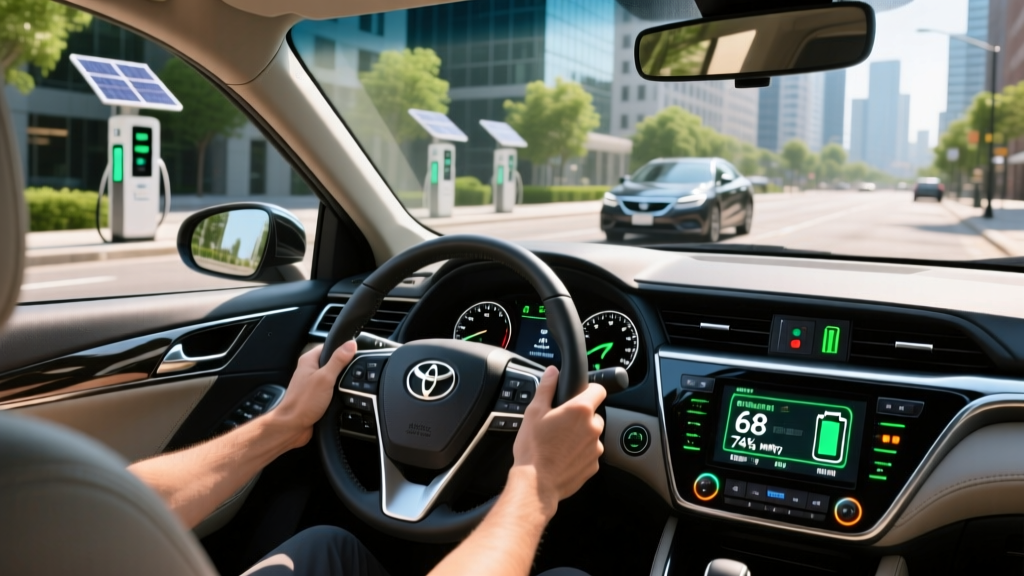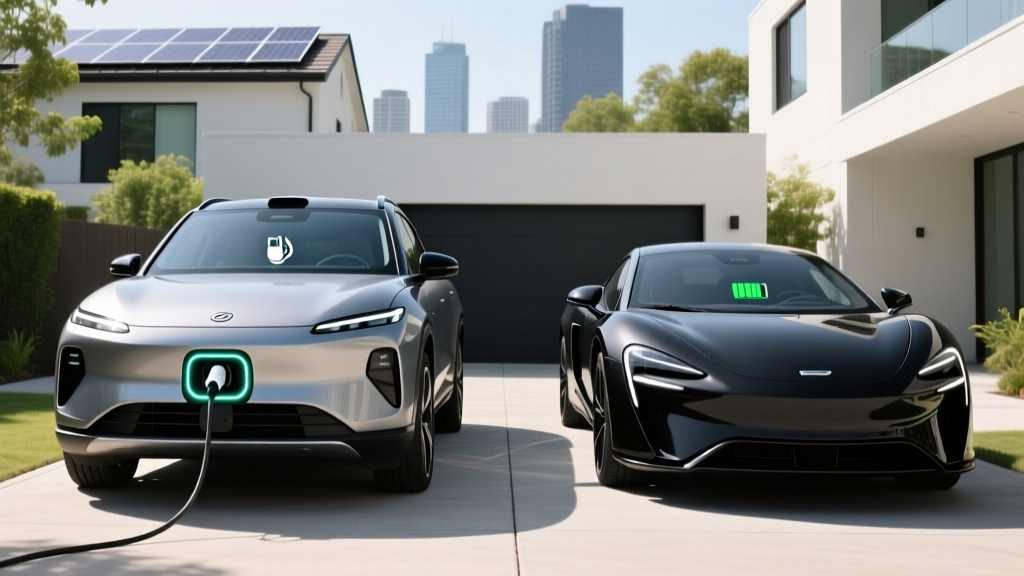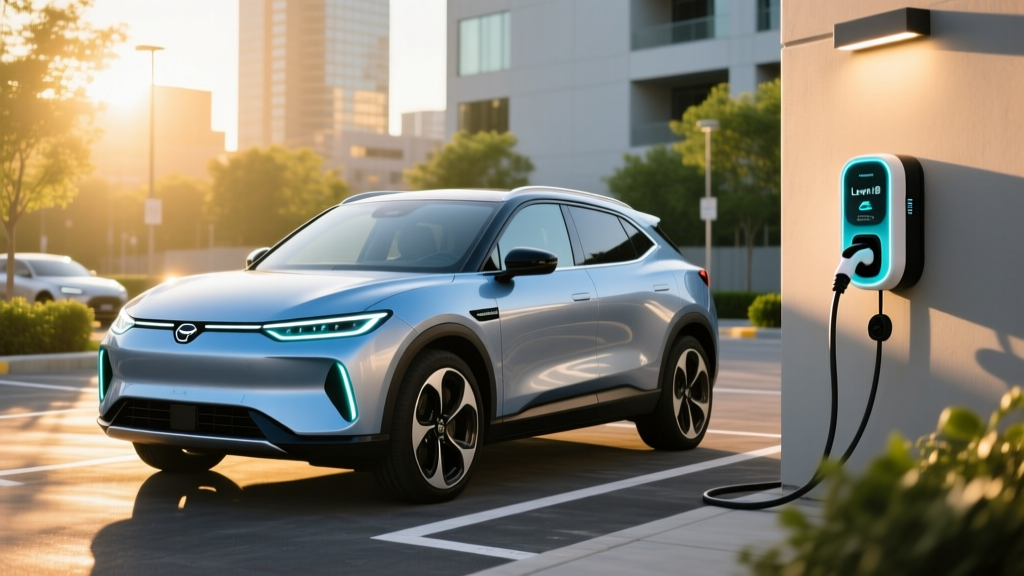
What Is a Hybrid Plug-In, Exactly?
A plug-in hybrid electric vehicle (PHEV) sits between a conventional hybrid (HEV) and a full battery-electric vehicle (BEV). It pairs a gasoline engine with a larger battery pack and one or more electric motors that you can recharge by plugging into an external power source — a Level 1 wall outlet, a Level 2 home charger, or, on some models, a public DC fast charger. The defining trait: a PHEV can drive on electricity alone for a meaningful distance before the gasoline engine turns on.
That distinguishes it from a conventional hybrid like the Toyota Prius HEV, which uses regenerative braking and the engine to keep a small battery topped up but never plugs in. It also separates it from a BEV like the Tesla Model Y, which has no gasoline engine at all.
HEV vs PHEV vs BEV at a Glance
| Attribute | HEV (Conventional Hybrid) | PHEV (Plug-In Hybrid) | BEV (Battery Electric) |
|---|---|---|---|
| Plugs in? | No | Yes | Yes |
| Electric-only range | ~1 mi at low speed | 20–45 mi typical (2026 models) | 230–400+ mi |
| Battery size | 1–2 kWh | 13–25 kWh | 60–120+ kWh |
| Gasoline engine? | Yes | Yes | No |
| Federal tax credit (§30D) | No | Up to $7,500 (eligibility varies) | Up to $7,500 (eligibility varies) |
| Tailpipe emissions (EV mode) | Minimal | Zero | Zero |
If you've been searching for what is hybrid plug in technology and whether it's worth the premium over a standard hybrid, the answer depends on three things: your daily commute distance, your access to charging at home or work, and how often you take long road trips.
How Far Can a PHEV Go on Electric Only?
Electric-only range is the single most important PHEV spec. For 2026 model-year PHEVs sold in the US, the EPA-rated electric range spans roughly 20 to 45 miles. A few standouts push past 40 miles.
- Toyota RAV4 Prime (2026): 42 miles EPA electric-only, 18.1 kWh battery
- Hyundai Tucson PHEV (2026): 33 miles EPA electric-only, 13.8 kWh battery
- Jeep Wrangler 4xe (2026): 22 miles EPA electric-only, 17.3 kWh battery
- BMW X5 xDrive50e (2026): 38 miles EPA electric-only, 25.7 kWh battery
- Toyota Prius Prime (2026): 44 miles EPA electric-only (SE trim), 13.6 kWh battery
Once the battery depletes to its buffer threshold (usually around 10–15% state of charge, reserved to protect battery health), the gasoline engine starts and the car operates as a conventional hybrid. Total combined range — electric plus a full tank of gas — typically lands between 400 and 550 miles, eliminating the range anxiety some drivers feel with a pure BEV.
Real-World Electric Range vs. EPA Sticker
EPA electric-range figures assume moderate temperatures and mixed driving. In practice, expect 85–95% of the sticker number in mild weather with city driving (regen braking helps). Highway-only trips at 75+ mph can drop electric range by 15–25%. In freezing weather (below 32°F / 0°C), cabin heating and battery chemistry reduce usable electric range by 20–35%. A RAV4 Prime rated at 42 miles might deliver 28–32 electric miles on a cold January highway commute.
Fuel Economy: MPG in Charge-Sustaining (Hybrid) Mode
After the battery is exhausted, a PHEV operates like a conventional hybrid. This "charge-sustaining" MPG matters because it determines your fuel cost on road trips and any driving beyond your electric range.
| 2026 PHEV Model | City MPG (CS) | Highway MPG (CS) | Combined MPG (CS) | Combined MPGe (EV Mode) |
|---|---|---|---|---|
| Toyota Prius Prime SE | 52 | 48 | 50 | 127 MPGe |
| Toyota RAV4 Prime | 40 | 36 | 38 | 94 MPGe |
| Hyundai Tucson PHEV | 35 | 33 | 34 | 80 MPGe |
| Jeep Wrangler 4xe | 20 | 20 | 20 | 49 MPGe |
| BMW X5 xDrive50e | 23 | 25 | 24 | 56 MPGe |
MPGe explained: Miles Per Gallon-equivalent converts electricity consumption into the energy equivalent of a gallon of gasoline (33.7 kWh = 1 gallon). A 127 MPGe rating means the Prius Prime uses electricity as efficiently as a car getting 127 MPG would use gasoline. Source: fueleconomy.gov.
Real-World MPG vs. EPA: Hybrids Often Beat the Sticker in Town
Unlike gasoline cars, hybrids and PHEVs in charge-sustaining mode often exceed their EPA city rating because regenerative braking recovers energy in stop-and-go traffic. Owners of the Prius Prime routinely report 54–58 MPG in city driving. Highway MPG, however, tends to fall slightly below the EPA number — aerodynamic drag dominates at speed, and regen has less energy to recapture. On a 70-mph interstate run, expect the RAV4 Prime to deliver 33–35 MPG, not 36.
Powertrain, Battery, and Charging Specs
PHEV powertrains combine a turbocharged or naturally aspirated gasoline engine with one or two electric motors. Combined output ranges from ~180 hp in compact models to 500+ hp in performance-oriented SUVs.
| Model | Engine + Motors | Combined HP | Battery (kWh) | 0–60 mph | DC Fast Charge? |
|---|---|---|---|---|---|
| Prius Prime SE | 2.0L I4 + 2 motors | 220 hp | 13.6 kWh (NMC) | 6.6 sec | No (Level 2 only) |
| RAV4 Prime | 2.5L I4 + 3 motors (AWD) | 302 hp | 18.1 kWh (NMC) | 5.7 sec | No (Level 2 only) |
| Tucson PHEV | 1.6L turbo I4 + 1 motor | 261 hp | 13.8 kWh (NMC) | 7.1 sec | No (Level 2 only) |
| Wrangler 4xe | 2.0L turbo I4 + 2 motors | 375 hp | 17.3 kWh (NMC) | 6.0 sec | No (Level 2 only) |
| BMW X5 xDrive50e | 3.0L turbo I6 + 1 motor | 483 hp | 25.7 kWh (NMC) | 4.6 sec | Yes (up to ~50 kW) |
Charging Times and Connector Reality
Most 2026 PHEVs charge via a J1772 connector (Level 1 and Level 2 AC). Charging speeds are modest compared to BEVs because the batteries are smaller:
- Level 1 (120V household outlet): ~1.4 kW. A 13.6 kWh Prius Prime battery charges from empty to full in roughly 10 hours — fine for overnight if you drive less than your electric range daily.
- Level 2 (240V home charger, 16–32A): 3.3–7.2 kW. Most PHEVs top out at 3.3–3.6 kW onboard charging, meaning a full charge takes 3.5–5 hours regardless of how powerful your Level 2 unit is. The onboard charger is the bottleneck, not the wall unit.
- DC fast charging: Very few PHEVs support DC fast charging. The BMW X5 xDrive50e is a notable exception, accepting up to ~50 kW via CCS (10–80% in approximately 25 minutes). For most PHEVs, public fast chargers are irrelevant — you'll charge at home or at work.
kW vs kWh reminder: kW (kilowatts) measures charging power — the speed of energy flow. kWh (kilowatt-hours) measures battery energy capacity — how much the tank holds. A 3.3 kW charger filling a 13.6 kWh battery takes roughly 4 hours (13.6 ÷ 3.3 ≈ 4.1).
Pricing and Federal Tax Credit Eligibility
PHEVs carry a price premium over their conventional hybrid siblings — typically $3,000–$7,000 more — due to the larger battery, more powerful electric motor, and onboard charging hardware. Here's where the 2026 lineup sits:
- Prius Prime SE: ~$33,445 MSRP
- RAV4 Prime SE: ~$44,560 MSRP
- Tucson PHEV SEL: ~$39,990 MSRP
- Wrangler 4xe Willys: ~$50,895 MSRP
- BMW X5 xDrive50e: ~$72,500 MSRP
Does a PHEV Qualify for the Federal Tax Credit?
Some do, but the rules under IRS §30D are strict and have narrowed significantly since the Inflation Reduction Act. For 2026, eligibility depends on:
- Battery capacity: Must be at least 7 kWh (most PHEVs qualify here).
- MSRP caps: Vans, SUVs, and trucks ≤ $80,000; sedans ≤ $55,000.
- Buyer income limits: Modified AGI ≤ $150,000 (single), $225,000 (head of household), $300,000 (joint).
- Critical minerals & battery component sourcing: Increasingly strict percentages must be sourced from the US or free-trade-agreement countries. This requirement eliminates several models that previously qualified.
- Final assembly: Must occur in North America.
- Point-of-sale transfer: You can apply the credit as an immediate dealer discount rather than waiting for tax filing.
As of early 2026, the RAV4 Prime and Wrangler 4xe have faced partial or full credit loss due to battery-sourcing rules. The Prius Prime, assembled in Japan, does not qualify for the §30D new-vehicle credit. Always verify current eligibility at fueleconomy.gov and consult a tax professional — rules shift and individual circumstances vary. Some states (California, Colorado, New York, and others) offer additional rebates of $1,000–$4,000 for PHEVs.
Battery Longevity, Warranty, and Replacement Cost
PHEV Battery Warranty — What's Covered
Federal law mandates that hybrid and PHEV battery packs carry a minimum warranty of 8 years / 100,000 miles. In California Air Resources Board (CARB) states, that extends to 10 years / 150,000 miles. Most manufacturers match or exceed these minimums:
- Toyota: 10 years / 150,000 miles (all states, for 2026 models)
- Hyundai/Kia: 10 years / 100,000 miles
- BMW: 8 years / 80,000 miles
- Stellantis (Jeep): 8 years / 100,000 miles
Warranties cover capacity loss below a defined threshold — typically 60–70% of original capacity. Normal gradual degradation above that threshold is not covered.
Real-World Degradation and Replacement Costs
PHEV batteries experience less stress than BEV batteries because the usable window is smaller (the car's software reserves a larger top and bottom buffer). Real-world data from early Prius Plug-In owners (2012–2015 vintage) shows approximately 10–15% capacity loss after 100,000 miles and 8–10 years. For a PHEV with 25 miles of original electric range, that translates to roughly 21–22 miles after a decade.
If a battery does need replacement out of warranty, expect:
- Prius Prime: $3,000–$4,500 (battery pack) plus ~$500–$800 labor
- RAV4 Prime: $4,500–$6,500 plus labor
- Larger luxury PHEVs: $8,000–$14,000
These costs have declined as battery manufacturing scales, but they remain a factor for out-of-warranty ownership. Third-party remanufactured packs are increasingly available at 30–50% lower cost.
PHEV vs HEV vs BEV: Which Should You Choose?
Choose a PHEV If:
- Your daily round-trip commute is under 40 miles and you can charge at home overnight.
- You take road trips several times a year and don't want to plan around charging stations.
- You live in an apartment or area where reliable public charging is scarce, but you can install a 120V or 240V outlet at home.
- You want to drive on electricity daily but aren't ready to commit to a full BEV.
Choose a Conventional HEV If:
- You cannot plug in at home or work (no garage, no outlet access).
- Your budget is tighter and you want the lowest purchase price with strong MPG.
- You don't want to think about charging at all.
Choose a Full BEV If:
- You can install Level 2 home charging and your daily driving is under 250 miles.
- You want zero tailpipe emissions and the lowest per-mile energy cost.
- You want to minimize maintenance (no oil changes, no engine, fewer moving parts).
PHEV Pros
- Daily electric commuting with gas-engine backup for long trips
- No range anxiety — total range often exceeds 500 miles
- Smaller battery means lower upfront cost than a comparable BEV
- Strong MPG even when battery is depleted
- Available on popular body styles (compact SUVs, minivans, off-roaders)
PHEV Cons
- $3,000–$7,000 premium over the HEV version
- Maintenance complexity: you maintain both an engine and an EV powertrain
- Electric range is short — if you don't plug in daily, you're carrying dead battery weight
- Most cannot DC fast charge, limiting public charging usefulness
- Tax credit eligibility is uncertain and model-dependent for 2026
Reliability: What the Data Shows
PHEV reliability has improved substantially. Toyota's hybrid synergy drive system, now in its fifth generation, is among the most proven electrified powertrains in the world — the Prius platform has accumulated billions of real-world miles since 1997. Consumer Reports and J.D. Power data consistently rank Toyota and Lexus hybrids near the top for long-term dependability.
The main reliability concern unique to PHEVs is the added complexity of a clutch or transfer case that blends electric and gas power. Hyundai/Kia's PHEV systems have drawn some complaints for rough engine-on transitions in early model years, though 2024+ revisions have improved this. European PHEVs (BMW, Volvo, Mercedes) tend to have higher maintenance costs once out of warranty.
For safety ratings, check NHTSA and IIHS — many PHEV variants share crash-test results with their non-plug-in siblings.
Frequently Asked Questions
How many MPG does a PHEV get?
In charge-sustaining (hybrid) mode after the battery is depleted, 2026 PHEVs range from about 20 MPG combined (Wrangler 4xe) to 50 MPG combined (Prius Prime). In electric mode, efficiency is measured in MPGe, with the Prius Prime reaching 127 MPGe. Real-world city MPG often exceeds the EPA sticker thanks to regenerative braking.
How far can a PHEV go on electric only?
Between 20 and 45 miles for current US-market PHEVs, depending on the model and battery size. The Prius Prime SE leads at 44 miles EPA. Cold weather and sustained highway speeds reduce this by 15–35%.
Do I have to plug in a PHEV?
No. A PHEV will operate as a conventional hybrid if you never plug it in. However, you'll miss the entire point of the larger battery and electric motor, and your fuel cost will be essentially the same as owning the HEV version — which costs less upfront. Plugging in daily is what makes the PHEV premium worthwhile.
Is a PHEV battery expensive to replace?
Out of warranty, replacement runs $3,000–$6,500 for mainstream models and $8,000–$14,000 for luxury PHEVs. However, PHEV batteries are designed with conservative charge buffers and typically show only 10–15% degradation after 100,000 miles. Most owners never replace the battery. Federal warranty minimums require 8 years / 100,000 miles of coverage.
Does a PHEV qualify for the $7,500 federal tax credit?
Some do, but eligibility is model-specific and subject to IRS §30D rules including battery-sourcing requirements, MSRP caps, buyer income limits, and North American final assembly. Several popular PHEVs have lost partial or full credit eligibility as sourcing rules tightened through 2025–2026. Always check the latest list at fueleconomy.gov before purchasing and consult a tax professional.
Can I use a public fast charger with a PHEV?
Generally, no. Most PHEVs only accept Level 2 AC charging (up to ~7.2 kW) via a J1772 connector. The BMW X5 xDrive50e is a rare exception, supporting DC fast charging at ~50 kW. For daily use, PHEV charging happens at home overnight — public infrastructure is largely irrelevant to PHEV ownership.
What happens when a PHEV battery runs out of charge?
The gasoline engine starts seamlessly and the vehicle operates as a conventional hybrid. You'll notice a slight change in sound and a drop in acceleration responsiveness, but the transition is designed to be nearly imperceptible. Total range on a full tank plus full battery typically exceeds 400 miles.