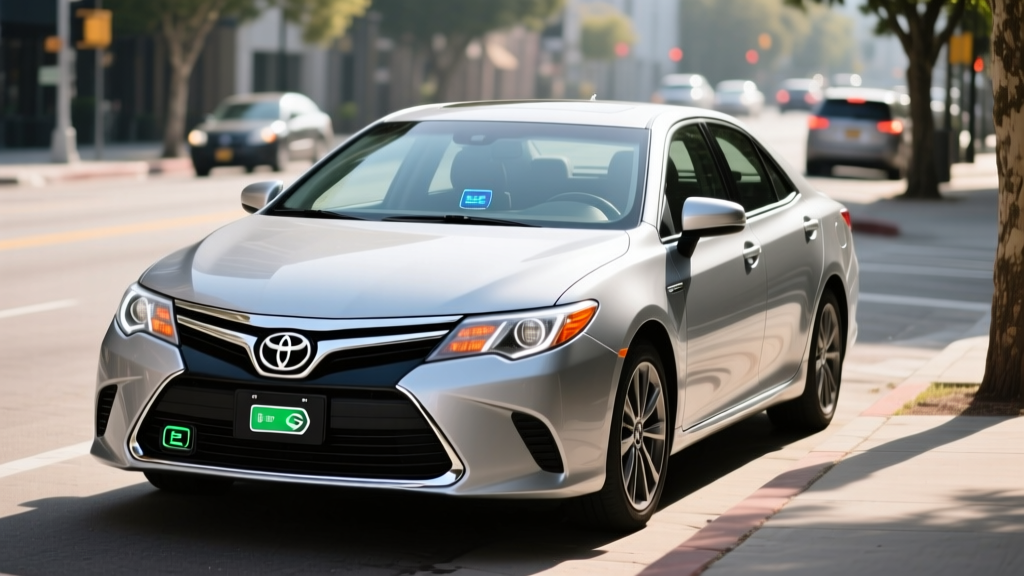
Quick Verdict: Is the 2015 Camry Hybrid XLE Still Worth Buying in 2026?
The 2015 Toyota Camry Hybrid XLE occupies a specific niche in the used-car market: a midsize sedan that delivers genuine fuel savings without requiring a plug, a charging routine, or any behavioral change from the driver. In 2026, used examples typically trade between $9,000 and $15,000 depending on mileage and condition — positioning this HEV (conventional hybrid) against newer gas-only sedans and early plug-in hybrids.
Here's what you need to know before signing the paperwork: the EPA-rated fuel economy, what you'll actually see at the pump, the state of the hybrid battery after a decade of service, and whether this car still makes financial sense compared to a modern PHEV or full EV.
2015 Camry Hybrid XLE: Core Specifications at a Glance
| Specification | Value |
|---|---|
| Powertrain Type | Conventional Hybrid (HEV) — no plug |
| Engine | 2.5L 4-cylinder Atkinson cycle + electric motor |
| Combined System Horsepower | 200 hp net |
| Transmission | eCVT (planetary gearset, not belt-driven) |
| Hybrid Battery | 1.6 kWh (usable ~1.0 kWh), Nickel-Metal Hydride (NiMH) |
| EPA Fuel Economy | 40 city / 38 highway / 40 combined MPG |
| Fuel Tank Capacity | 17.2 gallons |
| Total Driving Range | ~688 miles (EPA combined) |
| 0-60 mph | ~7.6 seconds |
| Original MSRP (XLE trim) | ~$31,870 (2015) |
| Typical Used Price (2026) | $9,000 – $15,000 |
| Hybrid Battery Warranty (Original) | 8 years / 100,000 miles (10 yr/150k in CARB states) |
Fuel Economy: EPA Ratings vs. What You'll Actually Get
The 2015 Camry Hybrid XLE carries an EPA rating of 40 MPG city, 38 MPG highway, and 40 MPG combined. But as with most Toyota hybrids, the real-world picture diverges from the sticker in predictable ways.
| Driving Scenario | Expected MPG | Notes |
|---|---|---|
| City / Stop-and-go | 41 – 45 MPG | Hybrids excel here; regen braking and electric-only low-speed driving boost efficiency above EPA |
| Suburban mixed driving | 38 – 42 MPG | Closest to EPA combined; this is what most owners report |
| Highway (70-80 mph) | 34 – 37 MPG | Aerodynamic drag dominates; electric motor assists less at sustained high speed |
| Cold weather (below 32°F) | 33 – 36 MPG | Engine runs more often for cabin heat; battery efficiency drops in cold |
| Hot weather with A/C | 36 – 39 MPG | Modest impact; electric A/C compressor is more efficient than belt-driven |
The key insight for hybrid buyers: unlike gas-only cars, the Camry Hybrid actually exceeds its EPA city rating in real stop-and-go traffic. This is because the electric motor handles low-speed propulsion, regenerative braking recaptures energy normally lost as heat, and the engine shuts off at stops. If your commute is mostly urban, expect 42+ MPG regularly.
However, highway-heavy drivers will see numbers closer to 35 MPG — still excellent for a midsize sedan, but not the 40 MPG sticker figure. Cold-weather penalties are real but moderate compared to full EVs, which can lose 20-30% of range in freezing temperatures.
HEV vs. PHEV vs. EV: Where Does the Camry Hybrid Fit?
Understanding the distinction matters for your wallet and daily routine.
| Factor | HEV (2015 Camry Hybrid) | PHEV (e.g., Prius Prime) | BEV (e.g., Tesla Model 3) |
|---|---|---|---|
| Plug-in charging required? | No — self-charging via regen & engine | Yes — for electric-only range | Yes — sole energy source |
| Electric-only range | ~1 mile at low speed | 25-44 miles (model dependent) | 250-350+ miles |
| Total range | ~688 miles | 400-600+ miles (electric + gas) | 250-350+ miles |
| Fuel cost per mile (2026 avg) | ~$0.085 (at $3.40/gal, 40 MPG) | ~$0.04 electric / $0.085 gas | ~$0.04 (at $0.14/kWh) |
| Home charging needed? | No | Recommended for max savings | Essential |
| Federal tax credit (2026) | None | Up to $7,500 (if eligible) | Up to $7,500 (if eligible) |
| Upfront cost (used/new) | $9k-$15k (used) | $28k-$38k (new) | $30k-$50k+ |
Choose the 2015 Camry Hybrid XLE if: You want lower fuel costs without changing your fueling routine. You don't have reliable access to home or workplace charging. You want a proven, low-risk used car with strong reliability data. Your budget is under $15,000.
Choose a PHEV if: You can charge at home and want 25-44 miles of electric-only commuting, but still need gas-engine range for road trips. You qualify for the federal tax credit and want a newer vehicle with a warranty.
Choose a full EV if: You have home charging, your daily driving is under 200 miles, you want minimal maintenance, and you're ready for a higher upfront cost in exchange for the lowest per-mile energy cost.
Hybrid Battery Health: Lifespan, Degradation, and Replacement Cost
Original Hybrid Battery Warranty: 8 years / 100,000 miles (10 years / 150,000 miles in California and states that follow CARB emissions standards). By 2026, most 2015 Camry Hybrids are beyond the standard warranty period unless they were originally sold in a CARB state and remain under 150,000 miles.
The 2015 Camry Hybrid uses a Nickel-Metal Hydride (NiMH) battery pack with a total capacity of approximately 1.6 kWh (about 1.0 kWh usable). This is a fundamentally different chemistry and purpose than the lithium-ion packs in modern EVs — the hybrid battery is not designed for long electric-only driving, but rather for brief assist bursts, regenerative energy capture, and smooth stop-start operation.
Battery Degradation Reality After 10+ Years
Toyota's NiMH hybrid batteries have proven remarkably durable in real-world use. Data from fleet operators, taxi services, and long-term owners shows:
- Typical degradation at 150,000 miles: 10-20% capacity loss — mostly unnoticeable to the driver because the hybrid system adapts
- Failure rate before 200,000 miles: Estimated below 5% based on long-term reliability surveys
- Common failure mode: Individual cell imbalance rather than total pack failure — often repairable by replacing specific modules
Battery Replacement Cost (2026 Estimates)
| Replacement Option | Cost Range | Warranty |
|---|---|---|
| New OEM Toyota battery (dealer) | $3,500 – $4,500 (parts + labor) | 3 years / 36,000 miles |
| Remanufactured battery (e.g., GreenTech, Dorman) | $1,800 – $2,800 (parts + labor) | 1-3 years depending on supplier |
| Used/salvage battery (from wrecked Camry) | $800 – $1,500 (parts + labor) | None / seller-dependent |
| Individual module replacement (specialist shop) | $500 – $1,200 | Varies |
Key buying tip: Before purchasing a used 2015 Camry Hybrid, ask a Toyota dealer or qualified hybrid specialist to run a hybrid battery health check. The car's onboard diagnostic system can report battery block voltage variance — a key indicator of cell health. If all blocks are within 0.2V of each other under load, the battery is in good condition. Wider variance signals impending module failure.
Powertrain and Driving Experience
The 2015 Camry Hybrid XLE pairs a 2.5-liter Atkinson-cycle four-cylinder engine (156 hp on its own) with an electric motor (105 kW / 141 hp). The combined net output is 200 horsepower, delivered through Toyota's eCVT — a planetary gearset that seamlessly blends engine and motor power without the rubber-band feel of a traditional belt-driven CVT.
Acceleration to 60 mph takes approximately 7.6 seconds. This is adequate for highway merging and confident passing, though it won't feel sporty. The XLE trim adds a softer suspension tune, leather-trimmed seats, dual-zone automatic climate control, and Toyota's Entune infotainment system with a 6.1-inch touchscreen.
One notable driving characteristic: the transition between electric-only and engine power is among the smoothest in the hybrid segment. At low speeds and gentle acceleration, the car operates on electric power alone. The engine engages seamlessly when more power is needed or when the battery state of charge drops. Most drivers won't notice the transitions without watching the energy flow display.
What the XLE Trim Adds Over LE
The XLE was the premium Hybrid trim in 2015, adding over the base Hybrid LE:
- SofTex (synthetic leather) or available genuine leather seating surfaces
- Power-adjustable front passenger seat
- Auto-dimming rearview mirror with HomeLink
- Smart Key system with push-button start on all doors
- Blind Spot Monitor with Rear Cross-Traffic Alert (available option)
- 17-inch alloy wheels (vs. 16-inch on LE)
Pricing, Tax Credits, and Total Cost of Ownership
Let's address the tax credit question directly: the 2015 Camry Hybrid does not qualify for the federal §30D Clean Vehicle tax credit. This credit applies only to plug-in electric vehicles (PHEVs and BEVs) that meet specific battery capacity, critical mineral sourcing, MSRP cap, and buyer income requirements as defined by the IRS. Conventional hybrids (HEVs) like this Camry have never been eligible for the §30D credit.
Some states previously offered small hybrid rebates (typically $500-$1,500), but most of these programs have been discontinued or redirected toward plug-in vehicles. Check your state's current energy office or DMV website for any remaining incentives, but don't count on them.
5-Year Cost of Ownership Estimate (2026 Purchase)
| Cost Category | 2015 Camry Hybrid XLE | Comparable Gas Sedan (e.g., 2015 Camry LE 4-cyl) |
|---|---|---|
| Purchase price (typical) | $12,000 | $10,000 |
| Fuel (15,000 mi/yr, $3.40/gal avg) | $6,375 (40 MPG) | $8,947 (28 MPG) |
| Insurance (avg) | $5,500 | $5,200 |
| Maintenance (5 yr) | $2,800 | $3,200 |
| Potential hybrid battery replacement | $2,000 (budget reserve) | $0 |
| 5-Year Total | $28,675 | $27,347 |
The hybrid's fuel savings of roughly $2,572 over five years partially offset its higher purchase price. If you drive more than 15,000 miles per year or face higher gas prices in your region, the math tilts further in the hybrid's favor. The critical variable is battery health — if the original battery lasts to 200,000+ miles (which many do), the hybrid wins on cost. If it needs replacement, the savings narrow significantly.
Reliability and Safety Record
Toyota's hybrid synergy drive system in the 2015 Camry has an outstanding reliability track record. The eCVT transmission, which uses a planetary gearset with no belts, clutches, or torque converter, is widely regarded as one of the most durable transmissions in any vehicle. NHTSA gave the 2015 Camry a 5-star overall safety rating, and the IIHS named it a Top Safety Pick+.
Common Issues to Watch For
- 12V auxiliary battery: Like all cars, the 12V battery (separate from the hybrid battery) will need replacement every 4-6 years. A dead 12V battery will prevent the car from starting even if the hybrid battery is fully charged.
- Brake actuator: Some 2015 Camry Hybrids have experienced brake booster pump issues. Toyota issued a warranty enhancement for certain model years. Check for any open recalls or service campaigns at a Toyota dealer.
- Inverter coolant pump: Rare but documented failures. Listen for unusual whining from the engine bay and check for coolant leaks near the inverter.
- Standard wear items: Suspension bushings, wheel bearings, and A/C compressor follow normal 10-year wear patterns unrelated to the hybrid system.
Pre-Purchase Checklist for Used 2015 Camry Hybrid XLE Buyers
Before committing to a specific vehicle, run through these hybrid-specific checks:
- Hybrid battery health scan: Have a Toyota dealer or hybrid specialist pull the battery block voltage data. All blocks within 0.2V = healthy.
- Check for open recalls: Enter the VIN at NHTSA.gov/recalls to verify all safety recalls have been performed.
- Verify maintenance history: The hybrid system requires no special maintenance, but the engine still needs regular oil changes (0W-20 synthetic), coolant flushes, and inverter coolant checks.
- Test the regenerative braking: During a test drive, note whether the transition from regenerative braking to friction braking feels smooth. Grabbing or pulsing can indicate brake actuator issues.
- Confirm CARB state warranty status: If the car was originally sold in California, Connecticut, Maine, Maryland, Massachusetts, New Jersey, New York, Oregon, Rhode Island, or Vermont, the hybrid battery warranty extends to 10 years/150,000 miles — potentially still in effect for low-mileage examples.
- Check the hybrid system warning light: If the dashboard shows a "Check Hybrid System" message, walk away or negotiate a significant price reduction to cover diagnostics and potential battery replacement.
Frequently Asked Questions
How many MPG does the 2015 Camry Hybrid XLE get in real-world driving?
The EPA rates it at 40 city / 38 highway / 40 combined MPG. In real-world use, city drivers often see 41-45 MPG thanks to regenerative braking and electric-only low-speed operation. Highway driving at 70-80 mph typically yields 34-37 MPG. Cold weather can drop combined figures to 33-36 MPG. The combined real-world average for most owners is 38-41 MPG.
Does the 2015 Camry Hybrid need to be plugged in to charge?
No. The 2015 Camry Hybrid is a conventional hybrid (HEV), not a plug-in hybrid (PHEV). The small 1.6 kWh battery charges itself through regenerative braking and the gasoline engine. You fuel it exactly like a normal gas car — there is no plug, no charging cable, and no electric-only commuting range to worry about.
How long will the hybrid battery last, and what does replacement cost?
Toyota's NiMH hybrid batteries commonly last 150,000-200,000+ miles with 10-20% capacity loss. Failure before 200,000 miles is uncommon (estimated below 5%). If replacement is needed, expect $3,500-$4,500 for a new OEM battery at a dealer, $1,800-$2,800 for a remanufactured unit, or $500-$1,200 for individual module replacement at a specialist shop. The original warranty was 8 years/100,000 miles (10 years/150,000 miles in CARB states).
Does the 2015 Camry Hybrid qualify for any federal tax credit?
No. The federal §30D Clean Vehicle tax credit applies only to plug-in vehicles (PHEVs and BEVs) that meet battery sourcing, MSRP, and income requirements. Conventional hybrids like the Camry Hybrid have never been eligible. Some states may offer minimal incentives, but most hybrid rebate programs have ended. Check your state's energy office for current programs.
Should I buy a 2015 Camry Hybrid or a newer PHEV like the Prius Prime?
It depends on your budget, charging access, and driving pattern. The 2015 Camry Hybrid at $9,000-$15,000 is ideal if you lack home charging, want a low-risk used purchase, and prioritize proven reliability over technology. A newer PHEV like the Prius Prime offers 25-44 miles of electric-only range, potential federal tax credits (up to $7,500 for eligible buyers), and a full warranty — but at a significantly higher purchase price ($28,000-$38,000). If you can charge at home and drive under 40 miles daily, a PHEV will save more on fuel. If you can't charge at home or your budget is under $15,000, the Camry Hybrid remains a strong choice.
What is the difference between the Hybrid LE and Hybrid XLE trims?
The XLE adds SofTex or leather seating, a power passenger seat, auto-dimming rearview mirror, Smart Key on all doors, 17-inch alloy wheels, and available Blind Spot Monitor. The mechanical powertrain, fuel economy, and battery are identical between LE and XLE. The XLE's premium features add comfort but not efficiency.
Is the 2015 Camry Hybrid XLE reliable compared to the gas-only Camry?
Yes — the hybrid version is at least as reliable as the gas-only Camry, and in some respects more so. The eCVT transmission has fewer wear components than a conventional automatic (no torque converter, no clutch packs, no belt). The regenerative braking system reduces wear on the friction brake pads, which often last 80,000-100,000+ miles. The main additional risk is hybrid battery replacement, but Toyota's NiMH packs have proven exceptionally durable in long-term use.
Pros
- Real-world 38-45 MPG with no plug-in required
- Proven NiMH battery durability (150k-200k+ miles typical)
- eCVT is one of the most durable transmissions ever built
- 5-star NHTSA safety rating, IIHS Top Safety Pick+
- Low maintenance costs (brakes last 80k+ miles thanks to regen)
- Comfortable XLE interior with premium features at used-car prices
Cons
- No federal tax credit eligibility (HEV, not PHEV)
- Hybrid battery out of warranty on most examples — replacement risk is buyer's
- Highway MPG drops to 34-37 (less impressive than city efficiency)
- Modest 200 hp — adequate but not quick
- 2015 Entune infotainment feels dated by 2026 standards
- No DC fast charging capability (not applicable — this is an HEV)