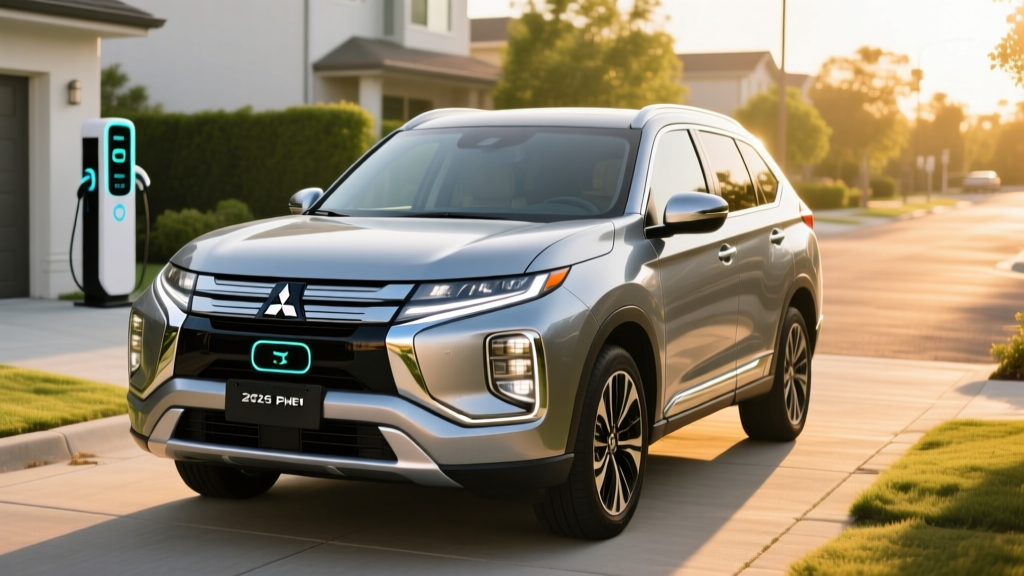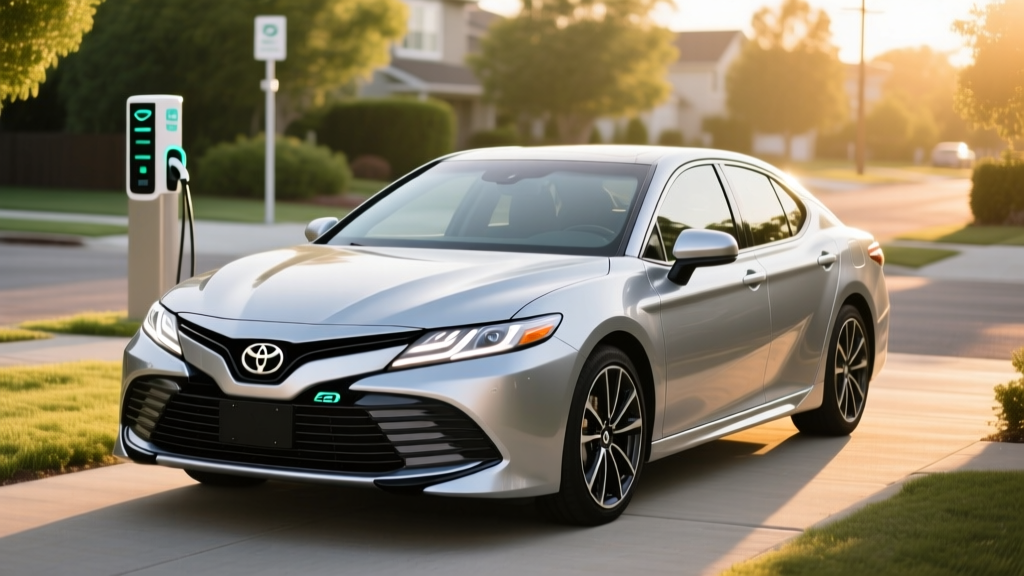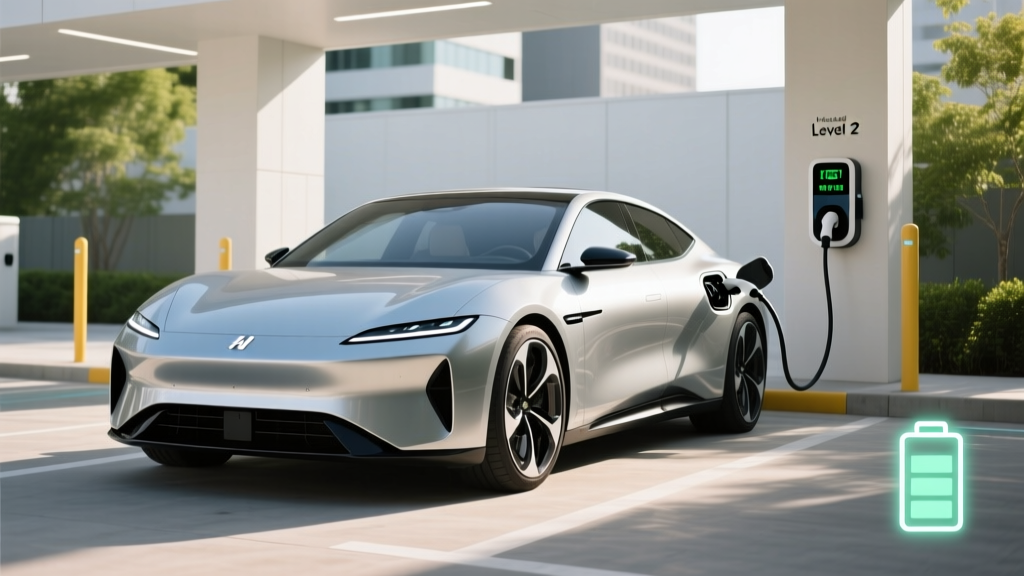
What Does PHEV Stand For? The Short Answer
PHEV stands for Plug-in Hybrid Electric Vehicle. It is a car or SUV that pairs a conventional gasoline engine with a larger-than-normal battery pack and one or more electric motors — and crucially, you can plug it in to recharge that battery from an external power source. Unlike a standard hybrid, a PHEV can drive a meaningful distance on electricity alone before the gas engine ever turns on.
If you've been cross-shopping vehicles and keep seeing badges like "PHEV," "Plug-In Hybrid," or "Prime" (Toyota's branding), this is what they all refer to. The plug-in hybrid segment has expanded significantly through the 2025 and 2026 model years, with offerings from Toyota, Hyundai, Kia, Jeep, Chrysler, BMW, Volvo, and others spanning compact crossovers to full-size SUVs.
This guide explains exactly how PHEVs work, how they differ from conventional hybrids (HEVs) and full battery-electric vehicles (BEVs), what real-world efficiency looks like, and whether a PHEV is the right electrified vehicle for your situation in 2026.
HEV vs. PHEV vs. BEV: What's the Actual Difference?
The three main categories of electrified vehicles get confused constantly. Here is the precise distinction, because it affects everything from fuel cost to tax-credit eligibility:
| Feature | HEV (Hybrid) | PHEV (Plug-In Hybrid) | BEV (Battery Electric) |
|---|---|---|---|
| Plugs in to charge? | No | Yes | Yes |
| Gasoline engine? | Yes | Yes | No |
| Electric-only range | ~1 mile or less | 20–50 miles typical | 200–400+ miles |
| Battery size (usable) | 1–2 kWh | 12–25 kWh | 60–100+ kWh |
| Refueling | Gas station only | Gas station + plug-in | Charging only |
| Federal tax credit (§30D) | No | Up to $7,500 (varies) | Up to $7,500 (varies) |
| Best for | No charging access | Short commutes + road trips | Home charging + no gas |
A conventional hybrid (HEV) — think Toyota Prius, Honda CR-V Hybrid — uses regenerative braking and engine assist to keep a small battery charged. You never plug it in. You simply fill up at a gas station and enjoy better MPG than a comparable gas-only car.
A plug-in hybrid (PHEV) takes that concept further. It carries a much larger battery (typically 12–25 kWh usable) that you charge by plugging into a wall outlet or Level 2 charger. That battery powers an electric motor capable of driving the vehicle 20–50 miles without burning a drop of gasoline. Once the electric range is depleted, the vehicle seamlessly transitions into hybrid mode and operates like a conventional HEV.
A battery-electric vehicle (BEV) has no gasoline engine at all. It runs entirely on its large battery pack (60–100+ kWh) and must be recharged from an external source.
How PHEV Powertrains Work: Engine, Motor, and Battery
A modern PHEV powertrain integrates three primary components:
- Gasoline engine: Typically a 1.5L to 2.5L four-cylinder (some luxury models use a 3.0L inline-six). It drives the wheels directly and/or acts as a generator.
- Electric motor(s): One or more motors producing 80–200+ horsepower, drawing from the high-voltage battery. In many PHEVs, the motor is integrated into the transmission (e.g., Hyundai/Kia's 6-speed automatic with an integrated motor, or Toyota's e-CVT transaxle).
- High-voltage battery pack: Lithium-ion, typically NMC (nickel-manganese-cobalt) chemistry, ranging from about 13 kWh to 25 kWh of usable capacity. This is the energy reservoir that enables electric-only driving.
Combined system output varies widely. A 2026 Toyota RAV4 Prime produces 302 combined horsepower. A Hyundai Tucson PHEV delivers 261 hp. A BMW X5 xDrive50e pushes 483 hp. The electric motor provides instant torque from a stop, which is why PHEVs often feel more responsive than their gas-only siblings in city driving.
| Model | Engine | Combined HP | Battery (usable kWh) | EPA Electric Range | 0–60 mph |
|---|---|---|---|---|---|
| Toyota RAV4 Prime | 2.5L I4 | 302 hp | 18.1 kWh | 42 miles | 5.7 sec |
| Hyundai Tucson PHEV | 1.6L turbo I4 | 261 hp | 13.8 kWh | 33 miles | 7.1 sec |
| Kia Sportage PHEV | 1.6L turbo I4 | 261 hp | 13.8 kWh | 34 miles | 7.4 sec |
| Jeep Wrangler 4xe | 2.0L turbo I4 | 375 hp | 17.3 kWh | 22 miles | 6.0 sec |
| Chrysler Pacifica PHEV | 3.6L V6 | 260 hp | 16.0 kWh | 32 miles | 7.1 sec |
| BMW X5 xDrive50e | 3.0L turbo I6 | 483 hp | 25.7 kWh | 38 miles | 4.6 sec |
Source: Manufacturer specifications and fueleconomy.gov (EPA). Electric range and performance figures are for 2025–2026 model years where available.
Fuel Economy: EPA MPG and Real-World Expectations
PHEV fuel economy is measured two ways, and both matter:
- MPGe (miles per gallon equivalent): This measures efficiency when the battery is charged and you're driving in electric mode. It converts electricity consumption into a gasoline-equivalent figure. A RAV4 Prime, for example, earns 94 MPGe combined.
- MPG (charge-sustaining): Once the battery is depleted and the gas engine takes over, this is your conventional fuel economy. The RAV4 Prime returns about 38 MPG combined in this mode.
| Model | MPGe (Electric Mode) | MPG City | MPG Highway | MPG Combined (Gas) | Total Range (mi) |
|---|---|---|---|---|---|
| Toyota RAV4 Prime | 94 MPGe | 40 | 36 | 38 | ~600 |
| Hyundai Tucson PHEV | 80 MPGe | 38 | 35 | 35 | ~430 |
| Kia Sportage PHEV | 84 MPGe | 38 | 35 | 35 | ~440 |
| Jeep Wrangler 4xe | 49 MPGe | 20 | 20 | 20 | ~370 |
| Chrysler Pacifica PHEV | 82 MPGe | 30 | 27 | 30 | ~520 |
| BMW X5 xDrive50e | 56 MPGe | 22 | 24 | 22 | ~460 |
Source: fueleconomy.gov. Real-world MPG may vary based on driving style, climate, and terrain.
Real-world vs. EPA reality check: Hybrids and PHEVs frequently exceed their EPA city MPG estimates because regenerative braking recaptures energy in stop-and-go traffic — exactly where gas engines are least efficient. On the highway, however, expect 2–5 MPG below the EPA highway figure at sustained 75–80 mph speeds, especially in cold weather or with a loaded vehicle. In our experience, a RAV4 Prime driven gently around town can touch 42–44 MPG in charge-sustaining mode, while highway cruising at 80 mph yields closer to 33–35 MPG.
If you charge nightly and your commute falls within the electric-only range, your gasoline consumption may approach zero for daily driving. Many PHEV owners report using a tank of gas every 6–8 weeks for local errands and commutes, then filling up normally on road trips.
Charging a PHEV: What You Need to Know
Unlike a BEV, PHEV charging is straightforward and low-stress because the battery is small. Here is what to expect:
- Level 1 (120V household outlet): A standard wall outlet delivers about 1.2–1.4 kW. Most PHEV batteries will fully charge overnight in 8–14 hours. For a 13.8 kWh Tucson PHEV, that's roughly 10–12 hours from empty. This is perfectly adequate for nightly top-ups.
- Level 2 (240V home charger): A Level 2 station at 3.3–7.2 kW will charge most PHEVs in 2–4 hours. This is ideal if you want to charge during a workday or between errands.
- DC fast charging: Most PHEVs do not support DC fast charging. The Mitsubishi Outlander PHEV is a notable exception, offering CHAdeMO DC fast charging (though at modest speeds around 22 kW). The vast majority of PHEVs — including Toyota, Hyundai, Kia, Jeep, and BMW models — are limited to Level 2 AC charging at best. This is intentional: the battery is small enough that overnight Level 1 charging suffices, and adding DC fast-charge hardware would increase cost and weight.
PHEV Battery Warranty: What's Covered
Federal law mandates that hybrid and PHEV battery packs carry a minimum warranty of 8 years or 100,000 miles (10 years/150,000 miles in California Air Resources Board states including CA, CO, CT, ME, MD, MA, NJ, NY, OR, RI, VT, and WA). This warranty covers battery capacity falling below a defined threshold — typically 60–70% of original capacity — as well as defects in the battery management system, power electronics, and electric motor(s).
In practice, PHEV battery degradation is minimal. Because the battery is relatively small and the vehicle's thermal management system keeps it within safe temperature ranges, most PHEV batteries lose only 5–10% of capacity over the first 100,000 miles. Replacement cost, if needed out of warranty, ranges from approximately $3,000 to $8,000 depending on the model — significantly less than a BEV battery replacement.
Federal Tax Credits for PHEVs in 2026
Under IRS §30D, plug-in hybrids may qualify for the federal clean vehicle credit — up to $7,500 — but eligibility depends on a complex set of requirements that change periodically. Here is the current framework for 2026:
- Battery capacity: The vehicle must have a battery of at least 7 kWh. Most current PHEVs meet this threshold.
- MSRP caps: Vans, SUVs, and pickups: $80,000 max. Sedans and other vehicles: $55,000 max.
- Buyer income limits: Modified adjusted gross income (MAGI) cannot exceed $300,000 (joint filers), $225,000 (head of household), or $150,000 (single filers).
- Final assembly: The vehicle must undergo final assembly in North America.
- Battery sourcing: The credit is split into two halves — $3,750 for critical-mineral sourcing and $3,750 for battery-component manufacturing. Vehicles with battery components from a "foreign entity of concern" (FEOC) may lose one or both halves. This requirement has tightened significantly since 2024.
- Point-of-sale transfer: Since 2024, you can transfer the credit to the dealer at purchase, reducing the sale price directly rather than waiting to claim it on your tax return.
Which PHEVs qualify in 2026? The list shifts as manufacturers adjust supply chains. As of early 2026, models like the Chrysler Pacifica PHEV, select Jeep Wrangler 4xe configurations, and certain Ford Escape PHEV trims have appeared on the eligible list, while some Asian-brand PHEVs have lost partial or full credit eligibility due to battery-sourcing rules. Always verify current eligibility on fueleconomy.gov and consult a tax professional before relying on the credit for your purchase decision.
Note: Conventional hybrids (HEVs) do not qualify for the §30D federal tax credit. That credit is exclusively for plug-in vehicles (PHEVs and BEVs).
Who Should Choose a PHEV vs. a Hybrid or Full EV?
The PHEV is not the best choice for everyone. It occupies a specific niche, and understanding whether you fall into that niche is the key to a satisfying purchase.
PHEV Advantages
- Electric-only commuting eliminates daily gasoline use for short trips
- No range anxiety — the gas engine provides 300–600+ total miles of range
- Lower fuel cost than a gas car if you charge regularly
- Potential federal tax credit up to $7,500 (eligibility varies)
- Regenerative braking extends brake pad life
- Instant electric torque improves city drivability
PHEV Limitations
- Higher purchase price than equivalent HEV or gas model ($3,000–$8,000 premium)
- Must plug in regularly to realize fuel savings — if you never charge, it's just a heavy hybrid
- Most lack DC fast charging, limiting long-trip electric driving
- Added weight from battery and motor slightly reduces handling agility
- Cargo space may be reduced due to battery placement
- Tax credit eligibility is complex and may not apply to your chosen model
Decision Framework: Which Electrified Vehicle Fits You?
Choose a conventional HEV if: You have no access to home or workplace charging, you want maximum simplicity, and your priority is lower fuel cost without any behavioral change. A Toyota Prius (57 MPG combined) or Honda CR-V Hybrid (40 MPG combined) delivers excellent efficiency with zero plug-in hassle.
Choose a PHEV if: You can charge at home (even a standard 120V outlet works), your daily commute is under 30–40 miles round trip, and you also take regular road trips where you don't want to plan around charging stations. A PHEV gives you EV-like daily driving with gas-car road-trip freedom.
Choose a BEV if: You have reliable home Level 2 charging, your daily driving is within the vehicle's range, you want zero tailpipe emissions and minimal maintenance, and you're comfortable planning longer road trips around DC fast-charging stops. Models like the Hyundai Ioniq 5 (310+ miles EPA) or Tesla Model Y (300+ miles) offer compelling all-electric ownership.
PHEV Reliability and Long-Term Ownership Costs
Reliability is a top concern for hybrid and PHEV buyers, and the data is largely reassuring. Toyota's hybrid synergy drive system has been in production since 1997 (Prius), and the company's PHEV variants share much of that proven architecture. Hyundai/Kia's PHEV powertrains, while newer, have shown solid reliability in early model years, backed by a 10-year/100,000-mile powertrain warranty.
Key reliability considerations:
- Hybrid battery longevity: Modern PHEV batteries are designed for 150,000–200,000+ miles of service. Early Toyota Prius batteries routinely exceeded 200,000 miles before significant degradation. The smaller battery in a PHEV is less stressed than a BEV battery because it operates in a narrower state-of-charge window, which reduces wear.
- Brake wear: Regenerative braking significantly reduces friction-brake usage. Many hybrid owners report original brake pads lasting 80,000–120,000 miles.
- Maintenance: PHEVs still require oil changes, coolant service, and transmission fluid maintenance for the gasoline engine — typically at the same intervals as the gas-only equivalent. However, the electric drivetrain adds virtually no maintenance.
- Insurance: PHEVs can carry slightly higher insurance premiums than gas equivalents (typically 5–15% more) due to higher repair costs for the high-voltage system. Shop quotes before purchasing.
Frequently Asked Questions
What does PHEV stand for in cars?
PHEV stands for Plug-in Hybrid Electric Vehicle. It refers to a vehicle that combines a gasoline engine with a rechargeable battery pack large enough to drive 20–50 miles on electricity alone. Unlike a standard hybrid, you plug a PHEV into an external power source to recharge the battery.
How many MPG does a PHEV get?
In charge-sustaining (gas-only) mode, most PHEVs achieve 30–40 MPG combined, depending on the model. In electric mode, they earn 50–94 MPGe. The Toyota RAV4 Prime leads the mainstream segment at 38 MPG combined on gas and 94 MPGe on electricity. Real-world city MPG often exceeds the EPA estimate thanks to regenerative braking, while highway MPG may fall 2–5 MPG below the sticker at sustained high speeds.
How far can a PHEV go on electric only?
Current 2025–2026 PHEVs offer 20–50 miles of EPA-rated electric-only range. The Toyota RAV4 Prime leads at 42 miles. The BMW X5 xDrive50e achieves 38 miles. The Hyundai Tucson PHEV and Kia Sportage PHEV deliver 33–34 miles. The Jeep Wrangler 4xe offers 22 miles. Real-world electric range depends on temperature (expect 15–25% reduction below freezing), speed (highway driving depletes the battery faster), and terrain (hills increase consumption).
Do PHEVs qualify for a federal tax credit?
Some do, but eligibility under IRS §30D depends on battery sourcing, final assembly location, MSRP caps, and buyer income limits. The maximum credit is $7,500, but many PHEVs qualify for only $3,750 or none at all due to battery-component or critical-mineral sourcing restrictions. Always check the current eligible vehicle list on fueleconomy.gov before purchasing. Conventional hybrids (HEVs) never qualify for this credit.
Is a PHEV battery expensive to replace?
Out-of-warranty PHEV battery replacement typically costs $3,000–$8,000 depending on the model, significantly less than a BEV battery replacement ($10,000–$20,000+). However, most PHEV batteries are covered by an 8-year/100,000-mile federal emissions warranty (10 years/150,000 miles in CARB states), and real-world data suggests these batteries routinely last 150,000–200,000+ miles before significant capacity loss.
Can I charge a PHEV on a regular household outlet?
Yes. Because PHEV batteries are relatively small (12–25 kWh), a standard 120V Level 1 outlet will fully charge most PHEVs overnight in 8–14 hours. This is one of the PHEV's biggest practical advantages over a BEV — you don't need to invest in a 240V Level 2 home charger to make daily electric driving work, though a Level 2 station will cut charge time to 2–4 hours.
What happens if I never plug in my PHEV?
The vehicle will still operate normally as a conventional hybrid, using the gasoline engine and regenerative braking to manage the battery. However, you'll miss out on the primary benefit — electric-only driving — and your fuel economy will be roughly equivalent to (or slightly worse than) a dedicated HEV due to the added weight of the larger battery. A PHEV that's never plugged in is essentially a more expensive hybrid.
Hybrid vs. PHEV vs. EV — which should I buy?
If you have no charging access and want simplicity, choose a conventional HEV. If you can charge at home and your commute is under 40 miles but you also take road trips, a PHEV is the sweet spot. If you have reliable home charging, want zero gas use, and are comfortable with DC fast-charging on road trips, a BEV offers the lowest operating cost and maintenance burden. There is no universally "best" option — it depends on your charging access, driving patterns, and budget.