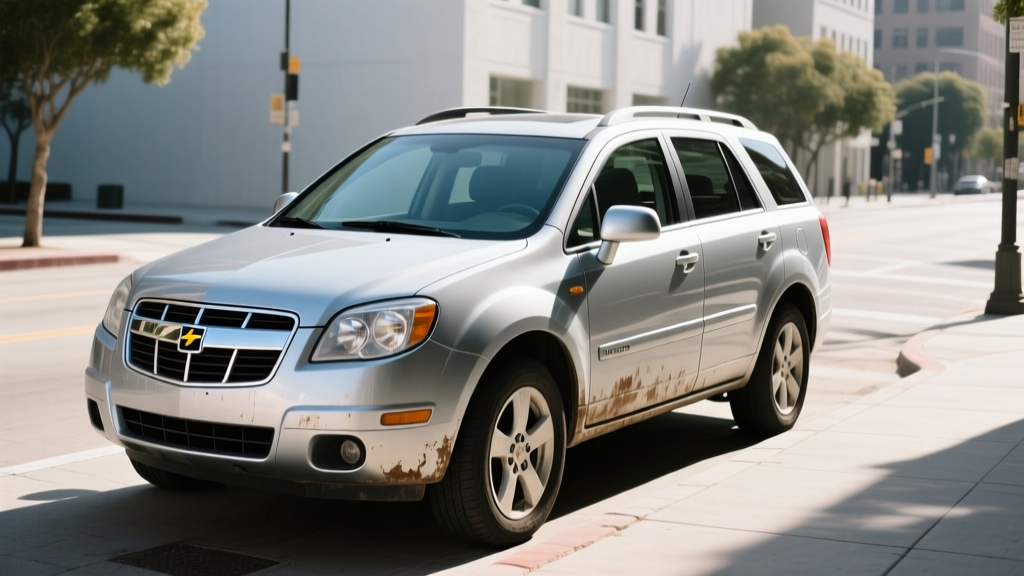
The 2007 Saturn Vue Hybrid occupies an unusual place in automotive history: it was General Motors' first foray into hybrid SUVs, and it did so with a system so mild it barely qualifies as a hybrid by today's standards. With the Saturn brand discontinued since 2010, the 2007 Vue Hybrid is now strictly a used-market proposition — but buyers still search for it by name, often wondering whether its fuel-economy claims hold up nearly two decades later and what battery replacement looks like on a vehicle this old.
This guide breaks down exactly what the 2007 Saturn Vue Green Line (GM's hybrid branding at the time) delivers in MPG, how its belt-alternator-starter mild-hybrid system actually works, what reliability and battery costs look like in 2026, and whether this aging crossover still has a role to play — or if a modern hybrid, PHEV, or full EV is a smarter move.
What Kind of Hybrid Is the 2007 Saturn Vue?
The 2007 Saturn Vue Hybrid — officially marketed as the Vue Green Line — is a conventional mild hybrid (HEV). It is not a plug-in hybrid (PHEV), and it cannot drive on electric power alone. It does not have a charging port, and you never plug it in. The battery recharges solely through regenerative braking and the gasoline engine.
HEV vs. PHEV — Quick Distinction
Conventional Hybrid (HEV): Small battery (typically under 2 kWh), recharged by the engine and regen braking. No plug. Modest fuel-economy gains. The 2007 Vue Green Line falls here.
Plug-in Hybrid (PHEV): Larger battery (typically 10–25 kWh), charges via a plug, delivers 20–50 miles of electric-only driving before the gas engine kicks in. Examples: Toyota RAV4 Prime, Chrysler Pacifica Hybrid.
Full EV (BEV): No gasoline engine. Battery sizes from 50–120+ kWh. Ranges of 200–400+ miles. Must be plugged in to recharge.
The Vue Green Line's system was GM's "belt alternator starter" (BAS) mild-hybrid architecture. A small electric motor-generator connected to the engine's accessory belt provided auto stop-start functionality, a modest torque assist during acceleration, and regenerative braking. It could not propel the vehicle on electric power alone — not even at low speeds. This is a critical distinction, because some used buyers confuse the Green Line badge with a full hybrid system like Toyota's Hybrid Synergy Drive.
Fuel Economy: EPA MPG and Real-World Expectations
The headline number for the 2007 Saturn Vue Green Line was its EPA-estimated fuel economy, which represented a meaningful improvement over the standard gasoline Vue. Here is the exact breakdown from fueleconomy.gov:
| Metric | 2007 Vue Green Line (Hybrid) | 2007 Vue FWD (Gas 2.4L) |
|---|---|---|
| City MPG | 27 MPG | 22 MPG |
| Highway MPG | 32 MPG | 27 MPG |
| Combined MPG | 29 MPG | 24 MPG |
Real-world caveat: The EPA's 27/32/29 figures were impressive for a compact SUV in 2007, but real-world results depend heavily on driving conditions. The BAS system's primary advantage is city driving — frequent stops let the auto stop-start and regenerative braking shine. Owners reporting on fuel-tracking platforms typically saw 24–28 MPG combined in mixed driving. Highway-heavy commutes at sustained speeds reduce the hybrid system's benefit, where you might see figures closer to 28–30 MPG — still better than the gas model, but not transformative.
For context, a 2026 Toyota RAV4 Hybrid achieves an EPA-estimated 39 MPG combined, and the RAV4 Prime PHEV delivers 42 miles of electric-only range plus 38 MPG in hybrid mode. The efficiency gap between 2007 mild-hybrid tech and modern full-hybrid systems is substantial.
Powertrain and Performance Specs
| Specification | 2007 Saturn Vue Green Line |
|---|---|
| Engine | 2.4L inline-4 (Ecotec LE5) |
| Engine Horsepower | 170 HP @ 6,200 RPM |
| Electric Motor | Belt-alternator-starter (BAS), ~5 kW |
| Combined System Output | ~170 HP (motor provides torque assist, not additive peak HP) |
| Transmission | 4-speed automatic |
| Drivetrain | Front-wheel drive (FWD only) |
| Hybrid Battery | 36V NiMH (nickel-metal hydride), ~0.5 kWh |
| 0–60 MPH (est.) | ~10.5 seconds |
| Towing Capacity | Not rated for towing (hybrid system) |
| Plug-In Capable? | No — conventional HEV only |
| Electric-Only Range | 0 miles (cannot drive on electric alone) |
The 2.4-liter Ecotec four-cylinder was adequate for daily commuting but unremarkable in performance. The BAS motor-generator's primary contribution was smoothing out the stop-start experience and providing a small torque nudge during initial acceleration. This was not a performance hybrid — it was an efficiency play, and a modest one at that.
One practical limitation worth noting: the Green Line was only offered with front-wheel drive. If you need AWD for snow or rough roads, this model won't work.
Battery Life, Reliability, and Replacement Cost
Original Hybrid Battery Warranty
GM originally warranted the 2007 Vue Green Line's hybrid battery and related components for 8 years / 100,000 miles. That warranty has long expired on every surviving example. Any battery failure in 2026 is entirely the owner's financial responsibility.
The Vue Green Line uses a 36-volt nickel-metal hydride (NiMH) battery pack — a chemistry that was already aging in 2007 (Toyota had moved to higher-voltage systems years earlier). NiMH batteries are generally robust but do degrade over time, losing capacity and reducing the effectiveness of the stop-start and regen systems.
Expected lifespan: NiMH packs in mild-hybrid applications typically last 120,000–180,000 miles before noticeable degradation. Given the 2007 model year, any surviving Vue Green Line is now 19 years old. If the original battery has never been replaced, expect diminished hybrid functionality — the stop-start may engage less frequently, and fuel economy will drift closer to the non-hybrid gas model's numbers.
Battery replacement cost: A replacement 36V NiMH battery pack for the Vue Green Line typically runs $1,500–$3,000 for a refurbished or aftermarket unit, plus $300–$600 in labor. New OEM packs are largely unavailable since Saturn was discontinued in 2010. Several third-party hybrid battery rebuilders offer reconditioned packs, but availability is inconsistent. Given that a clean 2007 Vue Green Line trades for roughly $3,000–$5,500 on the used market in 2026, a battery replacement can represent 30–60% of the vehicle's value — a critical factor in the buy-or-pass calculus.
General reliability: The 2.4L Ecotec engine is reasonably durable, though it's known for timing-chain wear at higher mileages and occasional oil consumption. The 4-speed automatic is simple and generally reliable. The hybrid system adds relatively little complexity compared to a full hybrid like the Toyota Prius, which paradoxically means fewer hybrid-specific failure points — but also means the efficiency gains are smaller to begin with.
Pricing, Tax Credits, and Used Market Value
The 2007 Saturn Vue Green Line originally carried an MSRP of approximately $24,795 (including destination). In 2026, used-market values range from roughly $3,000 to $5,500 depending on mileage, condition, and battery health.
Tax credit eligibility: The 2007 Vue Green Line does not qualify for the current federal §30D new clean vehicle credit — that credit applies only to new vehicles meeting battery-sourcing, MSRP, and buyer-income requirements under current IRS rules. It also does not qualify for the Used Clean Vehicle Credit (up to $4,000 under §25E), because that credit requires the vehicle to be a plug-in electric vehicle (BEV or PHEV) or a fuel-cell vehicle — conventional hybrids like the Vue Green Line are excluded.
Some states offered hybrid purchase incentives in 2007, but virtually all of those programs have expired or shifted to plug-in vehicles. Check your state's current energy office or DMV for any active programs, but do not count on any credit or rebate for this purchase.
2007 Saturn Vue Green Line: Pros and Cons in 2026
Pros
- Better city MPG than the gas-only Vue (27 vs. 22 city)
- Simple mild-hybrid system = fewer complex failure points
- Low used-market entry price ($3,000–$5,500)
- Decent cargo space for a compact SUV (approx. 64 cu ft with rear seats folded)
- No plug-in charging required — works like a normal gas car
Cons
- Mild hybrid system offers minimal real-world efficiency gains over modern standards
- 36V NiMH battery is obsolete tech — replacement parts scarce
- No electric-only driving capability whatsoever
- FWD only — no AWD option
- Saturn brand discontinued — dealer network gone, parts sourcing harder
- 4-speed automatic feels dated; no modern safety or infotainment tech
- No federal or state tax credit eligibility
- Battery replacement can cost 30–60% of vehicle value
Hybrid vs. PHEV vs. EV: What Should You Actually Buy in 2026?
If you're researching the 2007 Saturn Vue Green Line, you're likely weighing an affordable hybrid against other electrified options. Here's a practical decision framework based on how you drive:
Choose a used conventional hybrid (HEV) like this Vue if: You want a cheap, simple vehicle with slightly better fuel economy than a gas car, you don't have access to home or workplace charging, and you're comfortable with an aging vehicle that may need a $2,000+ battery replacement. Realistically, a used Toyota Prius (2010–2015) or a used Honda Civic Hybrid will deliver better MPG (40–50 combined), stronger parts availability, and a more robust hybrid system for a similar used price.
Choose a PHEV (e.g., Toyota RAV4 Prime, Hyundai Tucson PHEV) if: You can charge at home (even a standard 120V outlet works overnight), you want 30–45 miles of electric-only commuting, and you still need a gas engine for longer road trips. PHEVs deliver the best of both worlds — but new models start around $35,000–$45,000, and used PHEVs from 2018+ typically run $20,000–$30,000.
Choose a full EV (BEV) if: You have reliable home charging (Level 2 recommended), your daily driving is under 200 miles, and you want the lowest per-mile fuel cost and minimal maintenance. A used Chevrolet Bolt EV (2017–2023) can be found for $12,000–$18,000 and may still qualify for the up-to-$4,000 used EV tax credit under §25E if purchased from a dealer and meeting income requirements.
The Honest Verdict on the 2007 Vue Green Line
This vehicle made sense in 2007 as an entry point into hybrid technology for Saturn buyers who wanted something different from a Prius. In 2026, its mild-hybrid system is thoroughly outclassed. A used Toyota Prius, Honda Insight, or even a conventional gas-efficient compact car will match or beat its real-world MPG with better reliability, parts availability, and resale value. The Vue Green Line is best suited for buyers who find an exceptionally low-mileage, well-maintained example with a recently replaced battery — and even then, only if the price is right and you understand you're buying a discontinued-brand vehicle with limited support infrastructure.
How the 2007 Vue Green Line Compares to Modern Hybrids
| Vehicle | Type | Combined MPG / MPGe | EV Range | Est. Used Price (2026) |
|---|---|---|---|---|
| 2007 Saturn Vue Green Line | Mild HEV | 29 MPG | 0 mi | $3,000–$5,500 |
| 2013 Toyota Prius | Full HEV | 50 MPG | 0 mi | $7,000–$11,000 |
| 2021 Toyota RAV4 Prime | PHEV | 94 MPGe / 38 MPG (hybrid) | 42 mi | $28,000–$35,000 |
| 2020 Chevrolet Bolt EV | BEV | 118 MPGe | 259 mi | $13,000–$18,000 |
The efficiency gap is stark. Toyota's full-hybrid system in the Prius nearly doubles the Vue Green Line's combined MPG, while offering proven reliability and widely available replacement parts. The RAV4 Prime, though far more expensive, eliminates gasoline entirely for most daily commutes.
Frequently Asked Questions
How many MPG does the 2007 Saturn Vue Hybrid get?
The EPA rates the 2007 Saturn Vue Green Line at 27 city / 32 highway / 29 combined MPG. Real-world owners typically report 24–28 MPG combined depending on driving mix and battery health. Highway-heavy driving narrows the gap with the non-hybrid gas model.
Can the 2007 Saturn Vue Hybrid drive on electric power alone?
No. The Vue Green Line is a mild hybrid with a belt-alternator-starter system. It cannot propel the vehicle on electric power alone — not even at low speeds. The electric motor only assists the gas engine during acceleration and enables auto stop-start at idle. It has zero miles of electric-only range.
Is the 2007 Saturn Vue Hybrid reliable?
The underlying 2.4L Ecotec engine and 4-speed automatic are reasonably reliable with proper maintenance, though timing-chain wear and oil consumption are known issues at higher mileages. The mild-hybrid system adds minimal complexity. The biggest reliability concern in 2026 is the aging 36V NiMH battery — original packs are near or past their expected lifespan, and replacement parts are increasingly scarce since Saturn was discontinued in 2010.
What does it cost to replace the hybrid battery?
Expect to pay $1,500–$3,000 for a refurbished or aftermarket 36V NiMH battery pack, plus $300–$600 in labor. New OEM packs are generally unavailable. Given the vehicle's used-market value of $3,000–$5,500, battery replacement can represent a significant percentage of the car's worth.
Does the 2007 Saturn Vue Hybrid qualify for any tax credit?
No. The federal §30D new vehicle credit and the §25E used clean vehicle credit both require plug-in electric vehicles (BEVs or PHEVs). The Vue Green Line is a conventional mild hybrid with no plug-in capability, so it is ineligible for any current federal EV tax credit. Some states may offer minimal incentives for used hybrid purchases, but these are rare — check your state energy office for specifics.
Should I buy the 2007 Saturn Vue Hybrid or a used Toyota Prius instead?
For most buyers, a used Toyota Prius (2010–2015 generation) is the stronger choice. The Prius delivers roughly 50 MPG combined (vs. the Vue's 29), has a vastly more robust hybrid system, enjoys excellent parts availability, and benefits from Toyota's ongoing dealer support. The Prius also holds its value better. The Vue Green Line only makes sense if you find one at an exceptionally low price with a recently replaced battery and you specifically need a compact SUV body style rather than a hatchback.
Is the 2007 Vue Green Line a good first hybrid to buy?
It's a low-risk entry price-wise, but the discontinued brand, aging battery technology, and modest efficiency gains make it a weak choice compared to widely supported alternatives. If budget is the primary constraint and you need an SUV, a used Ford Escape Hybrid (2010–2012) offers a full hybrid system with 30+ MPG and better parts availability.
Sources: fueleconomy.gov (EPA fuel-economy data), IRS.gov (§30D and §25E credit rules). Used pricing estimates based on major listing aggregators as of early 2026. Always verify current tax-credit eligibility with a tax professional before purchasing.