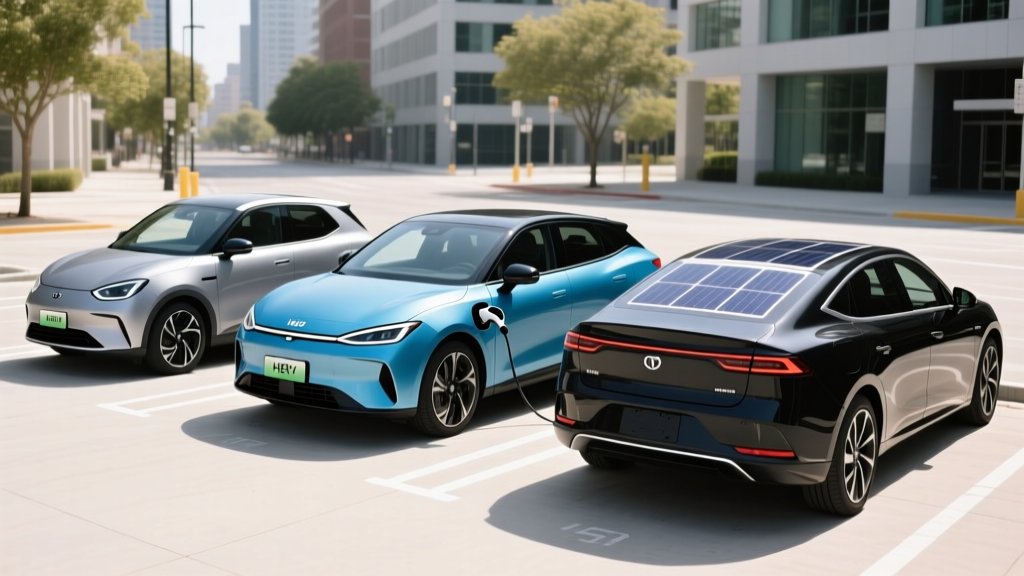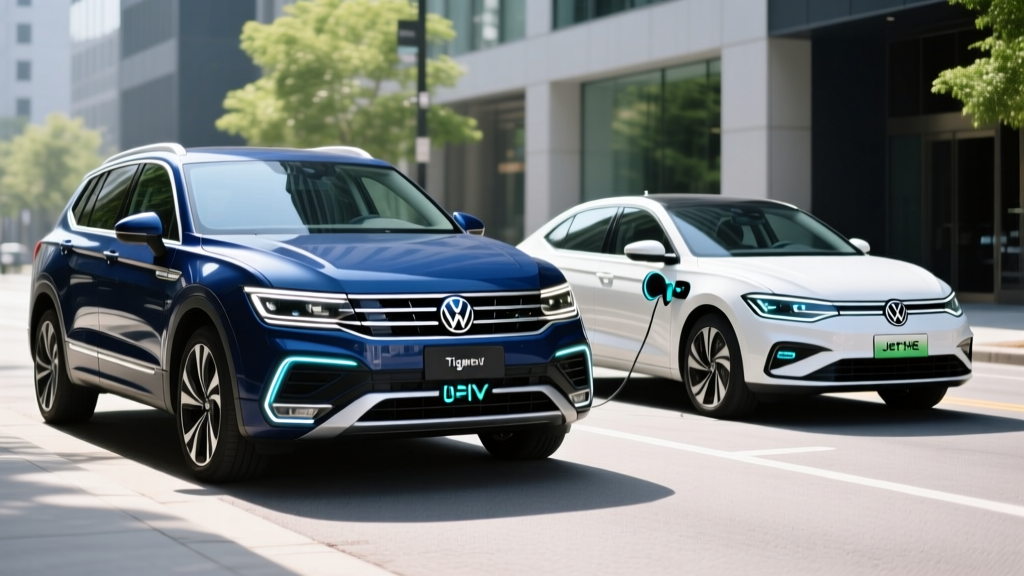
Volkswagen's electrification story in the U.S. has been dominated by the ID.4 and upcoming ID.7, but for buyers not ready to commit to a full battery-electric vehicle, the automaker's hybrid offerings deserve a closer look. The 2026 Volkswagen hybrid auto lineup centers on two key vehicles: the newly redesigned Tiguan eHybrid (PHEV) and the Jetta hybrid powertrain option. This guide breaks down exactly what each delivers in MPG, electric-only range, charging capability, and ownership cost — so you can decide whether a VW hybrid fits your garage or whether a full EV or conventional gas car makes more sense.
HEV vs PHEV: Which Volkswagen Hybrid Type Are You Looking At?
Conventional Hybrid (HEV) — Jetta
A standard hybrid pairs a gasoline engine with a small electric motor and a compact battery (typically under 2 kWh). You never plug it in. The battery recharges through regenerative braking and the engine. The result is better fuel economy — especially in stop-and-go city driving — with zero change to your refueling habits.
Plug-In Hybrid (PHEV) — Tiguan eHybrid
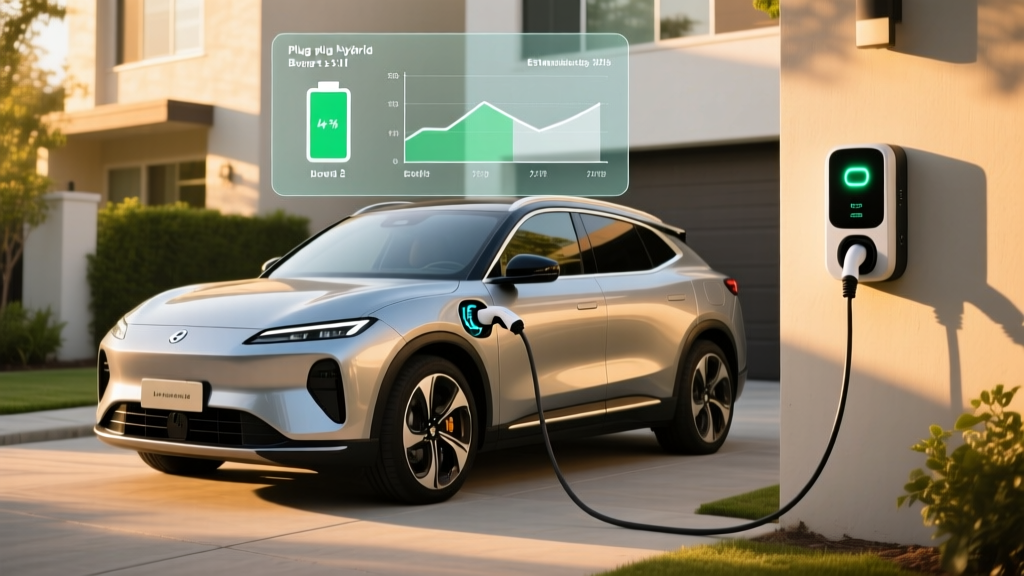
A plug-in hybrid carries a substantially larger battery (14–20+ kWh) and a more powerful electric motor. You plug it in to unlock 30–40+ miles of electric-only driving. Once the battery depletes, it operates as a conventional hybrid. If you can charge at home daily, a PHEV effectively functions as an EV for commutes with a gas engine for road trips.
For 2026, Volkswagen's U.S. hybrid strategy splits along these lines: the Jetta serves budget-conscious commuters wanting maximum MPG without lifestyle change, while the Tiguan eHybrid targets families who want electric daily driving without range anxiety on longer trips.
2026 Volkswagen Tiguan eHybrid: PHEV Specs and Real-World Range
The 2026 Tiguan eHybrid arrives as part of the third-generation Tiguan redesign, built on VW's MQB Evo platform. It pairs a 1.5-liter turbocharged four-cylinder engine with an electric motor integrated into the six-speed DSG automatic transmission.
| Specification | Value |
|---|---|
| Combined Horsepower | 245 hp (engine + motor) |
| Engine | 1.5L turbo I-4 |
| Electric Motor Output | ~115 hp (85 kW) |
| Battery Capacity (usable) | 19.7 kWh (NMC lithium-ion) |
| EPA Electric-Only Range | ~38 miles (estimated) |
| Total Combined Range | ~450 miles (gas + electric) |
| EPA Combined MPG (hybrid mode) | ~36 MPG combined (estimated) |
| MPGe (electric mode) | ~95 MPGe (estimated) |
| Level 2 Charging (AC) | 3.6 kW onboard charger |
| Level 2 Charge Time (0–100%) | ~5.5 hours |
| DC Fast Charging | Not available |
| 0–60 mph | ~7.5 seconds |
| Drivetrain | Front-wheel drive (FWD) |
| Starting MSRP | $39,990 (SE R-Line eHybrid, est.) |
Real-World Electric Range vs. EPA Estimate
The EPA-estimated ~38 miles of electric-only range assumes moderate temperatures and mixed driving. In real-world conditions:
- City commuting (55°F, flat terrain): Expect 35–40 miles — PHEVs excel here thanks to regen braking.
- Highway (70 mph sustained): Expect 28–32 miles. The electric motor works harder at speed, and the smaller battery depletes faster.
- Cold weather (below 32°F): Expect 22–28 miles. Battery chemistry loses efficiency, and cabin heating draws heavily from the pack unless the Tiguan eHybrid includes a heat pump (check your trim's equipment list).
Bottom line: if your round-trip commute is under 30 miles and you charge nightly at home, you'll rarely visit a gas station on weekdays.
Charging the Tiguan eHybrid at Home
The Tiguan eHybrid uses a standard J1772 connector for Level 2 AC charging. With its 3.6 kW onboard charger, a full charge from empty takes roughly 5.5 hours on a 240V Level 2 home charger. On a standard 120V household outlet (Level 1), expect around 10–12 hours — sufficient for overnight topping if your daily electric miles are modest.
Critical note: The Tiguan eHybrid does not support DC fast charging. This is typical for most PHEVs in this class, as the smaller battery and lower charge rate make DC infrastructure unnecessary for the use case. You won't be pulling into Electrify America stations for a quick top-up.
2026 Volkswagen Jetta Hybrid: Conventional HEV Fuel Economy
The Jetta hybrid powertrain remains one of VW's most fuel-efficient offerings for the U.S. market. Unlike the Tiguan eHybrid, the Jetta hybrid is a conventional HEV — no plug, no electric-only range claims. It uses a turbocharged engine paired with a compact electric motor and a small lithium-ion battery positioned to preserve trunk space.
| Driving Condition | EPA MPG | Real-World Expectation |
|---|---|---|
| City | ~44 MPG | 46–50 MPG (hybrids often beat EPA in city due to regen braking and low-speed electric assist) |
| Highway | ~38 MPG | 36–40 MPG (less electric assist benefit at sustained speed) |
| Combined | ~41 MPG | 40–45 MPG depending on driving mix |
Compared to the gas-only Jetta (approximately 30 MPG combined), the hybrid variant delivers roughly a 35% improvement in fuel economy — translating to around $400–$600 in annual fuel savings for a driver covering 15,000 miles per year at $3.50/gallon.
Jetta Hybrid Powertrain
The system pairs a 1.5L turbocharged four-cylinder with an integrated electric motor, producing a combined output of approximately 170 hp. Power routes through a DSG automatic transmission to the front wheels. The 0–60 mph time sits around 8.2 seconds — adequate for merging and passing, if not sporty.
Battery Warranty, Lifespan, and Replacement Cost
Volkswagen Hybrid Battery Warranty
Volkswagen covers the high-voltage hybrid battery in both the Tiguan eHybrid and Jetta hybrid under its 8-year/100,000-mile warranty (whichever comes first), consistent with federal requirements for emission-related hybrid components. In California Air Resources Board (CARB) states, coverage may extend to 10 years/150,000 miles under PZEV/AT-PZEV provisions.
The warranty covers battery capacity loss below a defined threshold (typically 70% of original capacity) as well as defects in the battery management system, cooling system, and related power electronics.
How Long Will the Battery Actually Last?
Modern lithium-ion hybrid batteries are engineered for the life of the vehicle. Based on industry-wide degradation data from sources like fueleconomy.gov and long-term fleet studies:
- HEV batteries (Jetta): The small battery undergoes shallow charge-discharge cycles, which dramatically extends lifespan. Many Toyota and Honda hybrid batteries last 150,000–200,000+ miles with minimal degradation. VW's lithium-ion pack should follow a similar trajectory.
- PHEV batteries (Tiguan eHybrid): The larger battery undergoes deeper cycles but benefits from active thermal management. Expect 12–15 years of usable life before capacity drops meaningfully below the warranty threshold.
Battery Replacement Cost
If replacement is needed outside warranty:
- Jetta HEV battery: $2,000–$3,500 (smaller pack, simpler replacement)
- Tiguan eHybrid PHEV battery: $6,000–$9,000 (larger 19.7 kWh pack, more labor-intensive)
These are rough industry estimates; VW dealer pricing may vary. However, out-of-warranty hybrid battery failure remains statistically uncommon in vehicles under 150,000 miles with proper maintenance.
Pricing, Trims, and Tax Credit Eligibility
2026 Tiguan eHybrid Pricing
| Trim | MSRP (est.) |
|---|---|
| SE R-Line eHybrid | $39,990 |
| SEL Premium R-Line eHybrid | $44,490 |
2026 Jetta Hybrid Pricing
| Trim | MSRP (est.) |
|---|---|
| SE Hybrid | $28,990 |
| SEL Hybrid | $32,490 |
Federal Tax Credit — Does a VW Hybrid Qualify?
- Conventional HEV (Jetta Hybrid): Does not qualify for the federal §30D Clean Vehicle Credit. The IRS restricts this credit to plug-in vehicles with a battery capacity of at least 7 kWh. Conventional hybrids are ineligible.
- PHEV (Tiguan eHybrid): May qualify for up to $7,500 under the §30D credit, but eligibility depends on several conditions per IRS rules:
- MSRP cap: SUVs must be under $80,000 — the Tiguan eHybrid clears this easily.
- Buyer income cap: AGI must not exceed $150,000 (single), $225,000 (head of household), or $300,000 (joint).
- Battery sourcing: Critical minerals and battery components must meet phased-in domestic/FtA-sourcing percentages that tighten annually. For 2026, verify the Tiguan eHybrid's battery sourcing compliance on the IRS eligible vehicle list at the time of purchase.
- Point-of-sale transfer: You can transfer the credit to the dealer for an immediate price reduction rather than claiming it on your tax return.
Important: Tax credit eligibility rules change frequently, and battery sourcing compliance can shift between model years. Always verify current eligibility on IRS.gov or consult a tax professional before purchasing.
Reliability: What We Know About VW Hybrids
Volkswagen's hybrid powertrains are relatively new to the U.S. market compared to Toyota's two-decade head start. However, the MQB-platform components have been in use in European-market VW hybrids (Golf GTE, Passat GTE) for multiple generations, providing a meaningful reliability track record.
Key reliability considerations:
- DSG transmission: VW's dual-clutch automatic has improved substantially since early-generation complaints. The hybrid-integrated DSG in the Tiguan eHybrid is a newer design with fewer friction-wear concerns.
- Turbo engine longevity: The 1.5L TSI engine is widely used across VW's global lineup and has proven durable with regular maintenance (synthetic oil changes at recommended intervals).
- Electronics: VW's infotainment and driver-assist systems have drawn mixed reviews from owners. Expect occasional software updates via OTA or dealer visits.
For reliability ratings, check IIHS for crash-test performance and Consumer Reports for predicted reliability scores as they become available for the 2026 models.
Hybrid vs PHEV vs EV: Which Volkswagen Is Right for You?
Choose the Jetta Hybrid (HEV) if:
- You want maximum MPG without changing your refueling habits at all.
- You lack access to home or workplace charging.
- Your budget is under $33,000 and you want low cost of ownership.
- You drive a mix of city and highway with no single dominant pattern.
Choose the Tiguan eHybrid (PHEV) if:
- You can charge at home nightly (Level 2 recommended).
- Your daily commute is under 35 miles round-trip.
- You want an SUV with family cargo space and the option for electric-only weekday driving.
- You take road trips where full EV range would cause anxiety.
- You may qualify for the §30D federal tax credit, reducing effective price by up to $7,500.
Choose a Full EV (ID.4) if:
- You want zero gasoline expenses and zero tailpipe emissions.
- You have reliable home charging and access to DC fast-charging corridors for road trips.
- You drive under 250 miles per day and can plan charging stops on longer trips.
- You want the lowest per-mile fuel cost and minimal drivetrain maintenance.
Pros and Cons at a Glance
Pros
- Tiguan eHybrid: ~38 miles electric-only range covers most commutes; 245 hp is genuinely quick for a compact SUV; eligible for potential $7,500 federal credit; family-friendly cargo space.
- Jetta Hybrid: 41+ MPG combined with no plug-in required; lower starting price; proven hybrid fuel savings in city driving; low maintenance cost.
- Both: 8-year/100,000-mile battery warranty; VW's widespread dealer network for service; DSG transmissions deliver crisp acceleration.
Cons
- Tiguan eHybrid: No DC fast charging; 3.6 kW onboard charger is slow compared to competitors; FWD only (no AWD eHybrid for U.S.); estimated MSRP above $39K before credit.
- Jetta Hybrid: No federal tax credit eligibility; limited electric-only assist (not a plug-in); VW hybrid track record in U.S. is shorter than Toyota/Honda.
- Both: VW infotainment can lag behind competitors; real-world highway MPG may fall slightly below EPA estimates.
Frequently Asked Questions
How many MPG does the Volkswagen Tiguan eHybrid get?
Once the battery is depleted and the Tiguan eHybrid operates as a conventional hybrid, expect approximately 36 MPG combined (EPA estimated). In electric-only mode, it achieves roughly 95 MPGe. Your real-world numbers will vary based on how often you charge and your driving mix — frequent chargers who stay within the 38-mile electric range will use very little gasoline at all.
How far can the Tiguan eHybrid go on electric only?
The EPA-estimated electric-only range is approximately 38 miles on a full charge. In real-world driving, expect 28–40 miles depending on temperature, terrain, and speed. Cold weather and sustained highway speeds reduce range the most.
Do I need to plug in the Jetta Hybrid?
No. The Jetta Hybrid is a conventional HEV. It charges its small battery through regenerative braking and the gasoline engine. You simply fill it with gas like any other car and enjoy improved fuel economy automatically.
Is the Volkswagen hybrid battery reliable, and what does replacement cost?
VW covers the hybrid battery for 8 years/100,000 miles (10 years/150,000 miles in CARB states). Based on industry data, modern lithium-ion hybrid batteries commonly last 150,000+ miles. Out-of-warranty replacement runs $2,000–$3,500 for the Jetta HEV and $6,000–$9,000 for the Tiguan PHEV.
Does the Volkswagen Tiguan eHybrid qualify for a tax credit?
The Tiguan eHybrid may qualify for up to $7,500 under the federal §30D Clean Vehicle Credit, subject to buyer income limits, MSRP caps, and battery-sourcing requirements that change annually. The Jetta Hybrid (conventional HEV) does not qualify. Verify current eligibility at IRS.gov before purchasing.
Can the Tiguan eHybrid charge at public DC fast chargers?
No. The Tiguan eHybrid only supports AC charging (Level 1 at 120V or Level 2 at 240V via J1772 connector) at up to 3.6 kW. This is standard for most PHEVs, as the smaller battery doesn't require DC fast-charging infrastructure.
Hybrid vs PHEV vs EV — which Volkswagen should I buy?
If you can't charge at home, choose the Jetta Hybrid (HEV). If you can charge at home and commute under 35 miles daily, the Tiguan eHybrid (PHEV) gives you electric weekdays and gas-powered road trips. If you want zero gas and have charging access, the VW ID.4 (full EV, 275-mile EPA range) is the most cost-efficient long-term choice.