Quick Verdict: The 2011 Ford Fusion Hybrid Sedan in 2026
The 2011 Ford Fusion Hybrid sedan was Ford's first serious entry into the midsize hybrid market, and more than a decade later, it remains a surprisingly relevant used-car option for budget-conscious commuters. Built on Ford's second-generation hybrid system (shared with the Mercury Milan Hybrid and Lincoln MKZ Hybrid of the same era), this conventional hybrid (HEV) delivers an EPA-rated 41 MPG city / 36 MPG highway / 39 MPG combined — numbers that still outpace many modern non-hybrid sedans.
If you're shopping the used market in 2026 and want hybrid fuel savings without the complexity of plug-in charging, a well-maintained 2011 Fusion Hybrid can be found for roughly $4,500–$7,500 depending on mileage and condition. The key question for any 15-year-old hybrid is battery health — and that's where this guide gets specific.
| Spec | Value |
|---|---|
| Powertrain Type | Conventional Hybrid (HEV) — no plug |
| Engine | 2.5L Atkinson-cycle I4 |
| Electric Motor | Permanent-magnet AC synchronous |
| Combined Horsepower | 191 hp (net system) |
| Transmission | ECVT (electronic continuously variable) |
| EPA Fuel Economy | 41 city / 36 hwy / 39 combined MPG |
| Hybrid Battery | 1.4 kWh NiMH (nickel-metal hydride) |
| Fuel Tank | 16.5 gallons |
| Total Range (est.) | ~640 miles |
| 0–60 mph | ~8.5 seconds |
| Drivetrain | Front-wheel drive |
| Cargo Volume | 11.8 cu ft (reduced by battery) |
| Curb Weight | ~3,720 lbs |
HEV vs PHEV: Why the 2011 Fusion Hybrid Is a Conventional Hybrid
A common source of confusion for used-car shoppers is the difference between a conventional hybrid (HEV) and a plug-in hybrid (PHEV). The 2011 Ford Fusion Hybrid is a conventional hybrid — it does not plug in, has no electric-only driving range to speak of, and generates all its electricity through regenerative braking and the gasoline engine.
| Feature | HEV (2011 Fusion Hybrid) | PHEV (e.g., Fusion Energi) |
|---|---|---|
| Plug-in Charging | No — self-charging via regen + engine | Yes — plugs into Level 1/2 outlet |
| Battery Size | 1.4 kWh NiMH (small) | 7.6–9 kWh Li-ion (larger) |
| Electric-Only Range | ~1 mile at low speed | 19–26 miles (model dependent) |
| Refueling | Gas station only | Gas station + electrical outlet |
| Best For | Drivers without home charging access | Drivers with home charging + short commutes |
| Federal Tax Credit (new) | None | Up to $3,750 (when new; expired) |
Ford later introduced the Fusion Energi (a PHEV variant) for the 2013 model year, which offered about 21 miles of electric-only range. But for the 2011 model year, only the conventional HEV was available. This matters because you cannot plug in the 2011 Fusion Hybrid — it charges its own small battery automatically while you drive.
Fuel Economy: EPA Ratings vs Real-World MPG
The EPA rates the 2011 Ford Fusion Hybrid at 41 MPG city, 36 MPG highway, and 39 MPG combined, according to fueleconomy.gov. The higher city figure is typical of conventional hybrids, which recapture energy during stop-and-go driving through regenerative braking and rely more heavily on the electric motor at low speeds.
| Driving Condition | EPA MPG | Real-World Expectation |
|---|---|---|
| City | 41 MPG | 38–44 MPG (hybrids often beat EPA in city) |
| Highway | 36 MPG | 33–38 MPG (aerodynamics limit hybrid advantage) |
| Combined | 39 MPG | 36–41 MPG (depends on driving mix) |
Real-world note from owner reports: Many 2011 Fusion Hybrid owners report exceeding the EPA city estimate in warm-weather, stop-and-go commuting — sometimes hitting 43–45 MPG on routes with frequent stops. Highway fuel economy tends to fall slightly below the EPA sticker, especially at sustained speeds above 70 mph, because the hybrid system provides less benefit at constant high speed and the car's aerodynamic profile wasn't optimized for it.
Cold-weather impact: Expect a 5–15% fuel economy drop in winter months (roughly 33–37 MPG combined). The gasoline engine runs more frequently to provide cabin heat and maintain battery temperature, reducing the time the car spends in electric-only mode at low speeds.
Powertrain Deep Dive: Engine, Motor, and How It Works
The 2011 Fusion Hybrid pairs a 2.5-liter Atkinson-cycle inline-4 gasoline engine with a permanent-magnet AC synchronous electric motor, routed through Ford's electronically controlled continuously variable transmission (ECVT). Combined net output is 191 horsepower.
The Atkinson-cycle engine sacrifices some low-end torque for greater thermal efficiency — a hallmark of hybrid powertrains. The electric motor fills in the torque gap, providing responsive acceleration from a stop. The ECVT isn't a traditional belt-and-pulley CVT; it uses a planetary gearset to seamlessly blend power from the engine and motor, which is why the Fusion Hybrid doesn't exhibit the rubber-band acceleration feel associated with some Nissan or Subaru CVTs.
At low speeds and light loads (typically under 47 mph with gentle throttle input), the Fusion Hybrid can operate in electric-only (EV) mode for very short distances — roughly up to a mile on flat ground with a fully charged hybrid battery. This is fundamentally different from a PHEV's 20+ mile electric range. The system automatically switches between EV, engine, and combined modes without driver input.
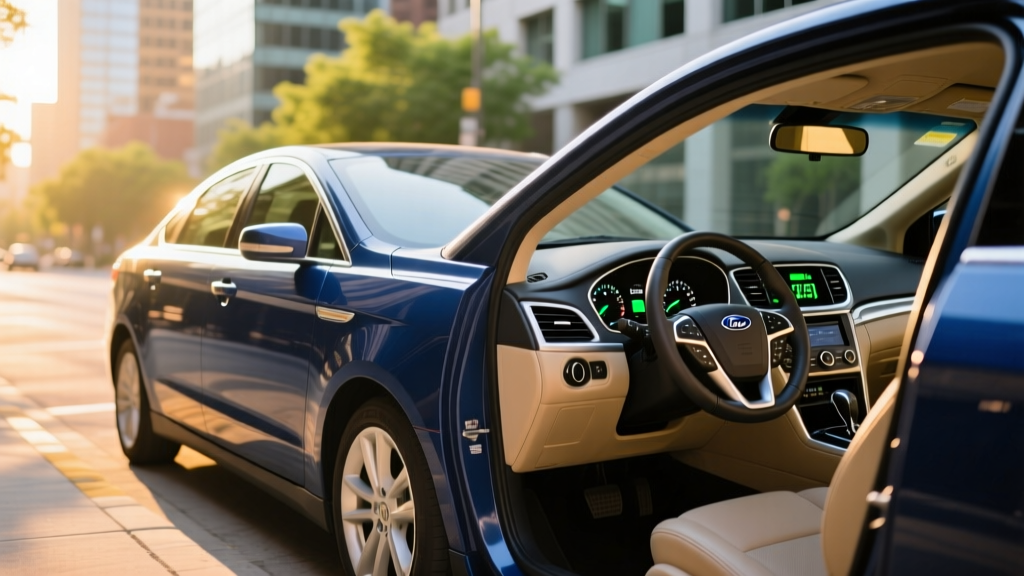
Ford's SmartGauge instrument cluster with EcoGuide was one of the car's standout features in 2011, displaying real-time energy flow, coaching the driver toward more efficient braking and acceleration habits, and showing a post-drive efficiency summary with "leaves" that grow on a virtual tree for efficient driving. It was an early gamification of fuel economy that still works well.
Hybrid Battery Health, Warranty, and Replacement Cost
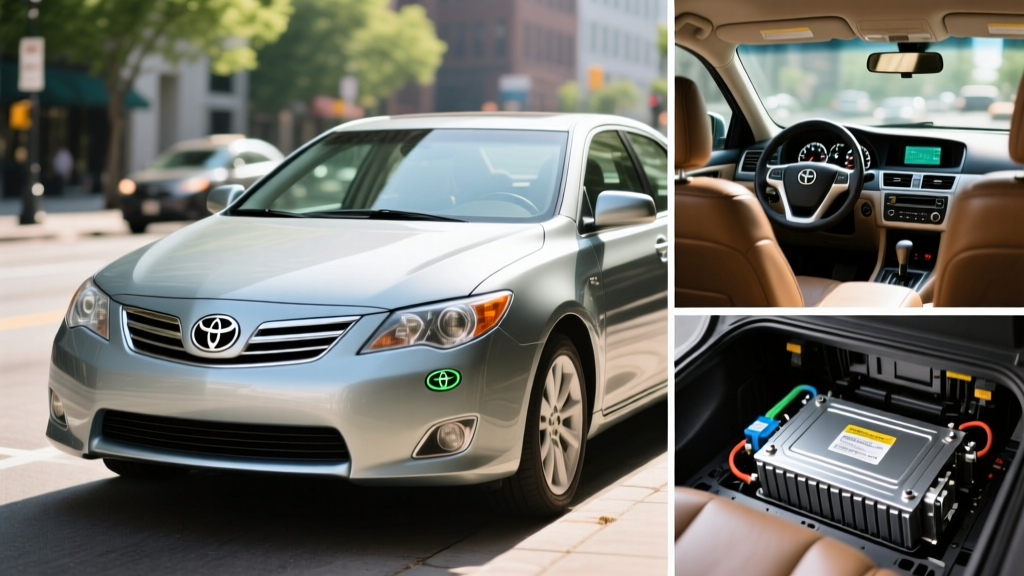
The 2011 Fusion Hybrid uses a 1.4 kWh nickel-metal hydride (NiMH) battery pack located behind the rear seats. This is a small, self-charging battery — not the large lithium-ion packs found in EVs or PHEVs. Its job is to buffer energy from regenerative braking and provide short bursts of electric-only propulsion.
Original Hybrid Battery Warranty
When new, Ford covered the hybrid battery for 8 years / 100,000 miles (extended to 10 years / 150,000 miles in California Air Resources Board (CARB) states including CA, CT, ME, MD, MA, NJ, NY, OR, RI, VT, and WA). By 2026, all original factory warranties on 2011 models have expired unless the battery was replaced under warranty or by a previous owner with an aftermarket warranty.
Battery longevity reality: NiMH hybrid batteries in the 2010–2012 Fusion Hybrid have generally proven durable. Many owners report 150,000–200,000+ miles on the original pack without significant degradation. Unlike EV batteries, the hybrid battery is small and operates within a narrow state-of-charge window (roughly 40–80%), which reduces stress. However, at 15 years old, any original battery is living on borrowed time.
Signs of hybrid battery degradation:
- Noticeable drop in fuel economy (5+ MPG below baseline)
- Engine running more frequently, especially at stops
- Dashboard warnings: "Check Hybrid System" or wrench icon
- Reduced regenerative braking feel
- Rapid state-of-charge swings on the SmartGauge display
Replacement cost (2026 estimates):
- Dealer OEM replacement: $2,500–$3,500 (part + labor)
- Aftermarket/remanufactured pack: $1,200–$2,000 (part + labor at independent shop)
- Individual cell/module repair: $500–$1,000 (specialist hybrid shops can replace failed modules rather than the entire pack)
Before purchasing a used 2011 Fusion Hybrid, request a hybrid battery health report from a Ford dealer or hybrid specialist. A scan tool can read the battery's state of health (SoH), internal resistance, and individual module voltage balance — far more informative than a test drive alone.
Pricing, Ownership Costs, and Tax Credit Status
As a 2026 used-car purchase, the 2011 Ford Fusion Hybrid does not qualify for the federal §30D new clean vehicle tax credit (which applies only to new EVs and PHEVs meeting current battery-sourcing and MSRP requirements per IRS guidelines). It also does not qualify for the used clean vehicle credit (up to $4,000), which requires the vehicle to be a qualified plug-in EV or fuel cell vehicle — conventional hybrids are excluded.
Pros
- Excellent city MPG (38–44 real-world)
- No plug-in charging required — works like a normal car
- Proven, durable NiMH hybrid system
- Comfortable midsize sedan ride quality
- Affordable used pricing ($4,500–$7,500)
- SmartGauge efficiency coaching is genuinely useful
- Lower insurance costs than comparable EVs
Cons
- Trunk space reduced to 11.8 cu ft (battery intrusion)
- No electric-only range for zero-emission driving
- Highway MPG only average for a hybrid (36 EPA)
- Original hybrid battery warranty has expired
- No DC fast charging or plug-in capability
- Dated infotainment (SYNC 1, no Apple CarPlay/Android Auto)
- Potential $1,500–$3,000 battery replacement looming
Total cost of ownership estimate (assuming $6,000 purchase price, 12,000 miles/year, $3.20/gal fuel, 5 years):
- Purchase: $6,000
- Fuel (5 years at ~39 MPG): ~$4,920
- Insurance (avg): ~$4,500
- Maintenance (5 years): ~$2,500
- Potential battery replacement: $1,500–$3,000
- Estimated 5-year total: $19,420–$20,920
Compare this to a similarly aged gas-only 2011 Fusion (roughly 23 city / 34 hwy / 27 combined MPG), which would cost approximately $7,110 in fuel over the same period — about $2,190 more. The hybrid's fuel savings typically offset its higher purchase price within 3–4 years of average driving.
Reliability and Common Issues
The 2011 Fusion Hybrid has a generally solid reliability record. The hybrid powertrain itself — the ECVT, motor, and power electronics — has proven more durable than conventional automatic transmissions in many cases, because the planetary gearset has no clutches, belts, or bands to wear out. According to NHTSA records, the vehicle has no major systemic safety recalls specific to the hybrid system.
Common issues to watch for:
- Hybrid battery degradation (age-related, see above)
- A/C compressor failure — the electric A/C compressor is expensive ($800–$1,200 to replace)
- 12V auxiliary battery — like all cars, the 12V battery dies every 4–6 years; a dead 12V can prevent the hybrid system from starting
- Brake actuator recall — check NHTSA for open recalls on brake system components
- SYNC infotainment glitches — the first-generation SYNC system can freeze or fail to pair phones; an APIM module replacement (~$300–$500) may be needed
The regenerative braking system means the friction brake pads and rotors last significantly longer than on gas-only cars — 80,000–100,000+ miles on original pads is common, since the electric motor handles most deceleration.
Who Should Buy the 2011 Fusion Hybrid vs a PHEV or Full EV?
The decision between a conventional hybrid, PHEV, and full battery-electric vehicle (BEV) comes down to your daily routine, charging access, and budget.
Choose the 2011 Fusion Hybrid (HEV) if:
- You don't have access to home or workplace charging (apartment, street parking)
- Your budget is under $8,000
- You want hybrid fuel savings with zero lifestyle change
- Your commute is mostly city stop-and-go driving
- You want a proven, simple system with low maintenance complexity
Choose a used PHEV (e.g., 2017+ Fusion Energi, Prius Prime) if:
- You have home Level 1 or Level 2 charging
- Your daily commute is under 25 miles round-trip
- You want some electric-only driving for local trips but gas flexibility for road trips
- Your budget is $10,000–$18,000
Choose a full EV (e.g., used Bolt, Leaf, Model 3) if:
- You have reliable home Level 2 charging
- You want zero tailpipe emissions and minimal maintenance
- Your daily driving is under 200 miles with occasional road-trip planning
- Your budget is $12,000+ for a capable used EV
Frequently Asked Questions
How many MPG does the 2011 Ford Fusion Hybrid get?
The EPA rates it at 41 MPG city, 36 MPG highway, and 39 MPG combined. Real-world city driving often yields 38–44 MPG, while highway cruising at 70+ mph may return 33–38 MPG. Cold weather can reduce combined economy by 5–15%.
Does the 2011 Fusion Hybrid need to be plugged in?
No. This is a conventional hybrid (HEV), not a plug-in hybrid. It charges its own battery through regenerative braking and the gasoline engine. You simply fill it with gas like any other car.
How far can it drive on electric power alone?
Only about 1 mile at low speeds (under 47 mph) under ideal conditions. This is not a vehicle designed for meaningful electric-only driving — the small 1.4 kWh NiMH battery is a buffer, not a primary energy source. If you want 20+ miles of electric range, look at a PHEV like the Fusion Energi.
Is the 2011 Fusion Hybrid reliable?
Yes, with caveats. The hybrid powertrain (ECVT, motor, electronics) is generally more durable than conventional automatics. The main risk at this age is hybrid battery degradation. Budget $1,500–$3,000 for a potential battery replacement if the original pack hasn't been changed.
What does a replacement hybrid battery cost?
A dealer OEM replacement runs $2,500–$3,500 installed. Remanufactured aftermarket packs cost $1,200–$2,000 installed at independent shops. Some hybrid specialists offer module-level repair for $500–$1,000, replacing only the failed cells rather than the entire pack.
Does it qualify for any tax credits?
No. As a conventional hybrid purchased used in 2026, the 2011 Fusion Hybrid does not qualify for the federal §30D new clean vehicle credit or the used clean vehicle credit (which applies only to plug-in EVs and fuel cell vehicles). Some states may offer minimal hybrid incentives — check your state's energy office for current programs.
How does the trunk space compare to the gas Fusion?
The hybrid battery pack sits behind the rear seats, reducing trunk volume from 16.5 cu ft (gas model) to 11.8 cu ft. That's a meaningful loss — roughly 28% less cargo space. If you regularly haul large items, this is worth considering.
What should I check before buying a used 2011 Fusion Hybrid?
Request a hybrid battery health scan (SoH percentage, module voltage balance), check for open NHTSA recalls, verify the A/C compressor is functioning, test the regenerative braking feel, and confirm the 12V battery is recent. A pre-purchase inspection at a Ford dealer or hybrid specialist is strongly recommended.