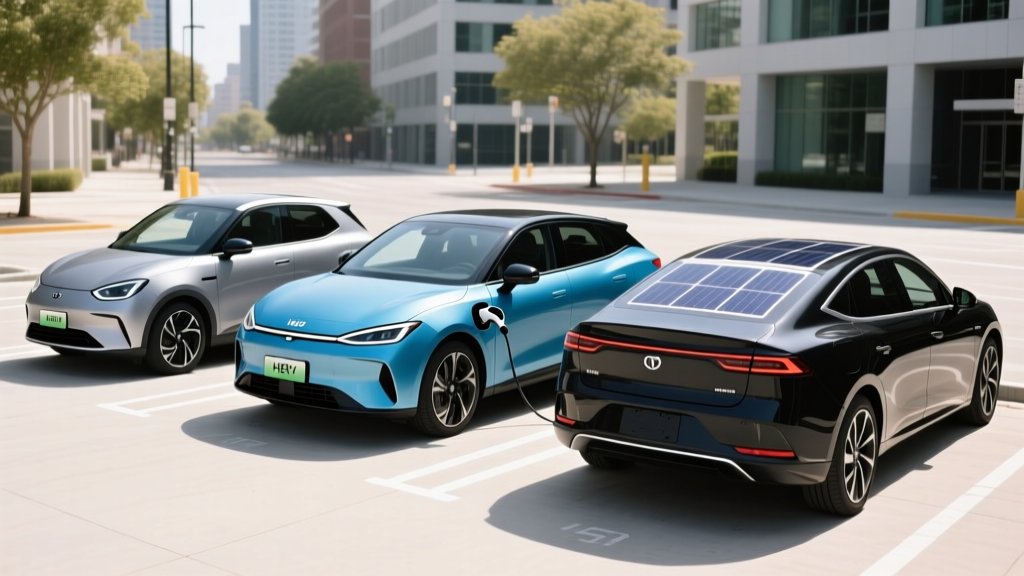
If you're not ready to commit to a fully electric vehicle but want meaningful fuel savings, gas electric hybrid vehicles offer a compelling middle ground. The 2026 lineup spans conventional hybrids (HEVs) that never need plugging in and plug-in hybrids (PHEVs) that deliver 30-40 miles of electric-only driving before the gas engine kicks in. This guide breaks down the real numbers — EPA MPG, battery warranties, charging specs, and total cost — so you can match the right hybrid type to your driving pattern.
HEV vs PHEV: Understanding the Two Hybrid Types
Before comparing specific models, the distinction between conventional hybrids and plug-in hybrids is critical — they serve fundamentally different use cases.
| Feature | Conventional Hybrid (HEV) | Plug-In Hybrid (PHEV) |
|---|---|---|
| Plugs in to charge? | No — charges via regenerative braking and engine | Yes — plug in for full electric range |
| Electric-only range | ~1 mile or less (low-speed assist only) | 25–45 miles (model dependent) |
| Battery size | 1.0–1.6 kWh | 13–20 kWh usable |
| Federal tax credit | Not eligible | Up to $7,500 (subject to §30D rules) |
| Best for | Drivers without home charging access | Drivers with home charging and short commutes |
| Complexity | Lower — no charging equipment needed | Higher — requires Level 1 or Level 2 outlet |
A conventional HEV like the Toyota RAV4 Hybrid captures energy from braking and deceleration to recharge its small battery. A PHEV like the Toyota RAV4 Prime does the same but also accepts grid electricity, giving you a substantial electric-only buffer for daily commuting.
Top 2026 Gas Electric Hybrid Vehicles: MPG and Range Breakdown
Below are EPA figures for some of the most popular hybrid models currently on sale. Real-world results often diverge — particularly in city driving where HEVs tend to exceed their EPA city rating thanks to frequent regenerative braking opportunities.
| Model (2026) | Type | City MPG | Hwy MPG | Combined MPG | EV-Only Range | Total Range |
|---|---|---|---|---|---|---|
| Toyota RAV4 Hybrid | HEV | 41 | 38 | 40 | N/A | ~580 mi |
| Toyota RAV4 Prime (PHEV) | PHEV | 40 MPG / 94 MPGe | 39 | 39 | 42 mi | ~600 mi |
| Honda CR-V Hybrid | HEV | 43 | 36 | 40 | N/A | ~540 mi |
| Toyota Prius | HEV | 57 | 56 | 57 | N/A | ~610 mi |
| Toyota Prius Prime | PHEV | 52 MPG / 127 MPGe | 48 | 52 | 44 mi | ~620 mi |
| Hyundai Tucson PHEV | PHEV | 38 MPG / 80 MPGe | 38 | 38 | 33 mi | ~430 mi |
| Ford Maverick Hybrid | HEV | 42 | 33 | 37 | N/A | ~500 mi |
| Jeep Grand Cherokee 4xe | PHEV | 23 MPG / 56 MPGe | 24 | 23 | 26 mi | ~440 mi |
Source: fueleconomy.gov — EPA estimates. Your actual mileage will vary based on driving style, terrain, climate, and (for PHEVs) how often you charge.
Real-World MPG: What to Actually Expect
Conventional hybrids consistently overperform their EPA city numbers in real-world stop-and-go driving. The Prius and RAV4 Hybrid routinely achieve 2–5 MPG above their EPA city rating in urban environments because regenerative braking recovers more energy with frequent stops. Conversely, highway-only driving tends to yield 3–5 MPG below the EPA combined figure for most hybrids, since the electric motor contributes less at sustained speeds.
For PHEVs, the math depends entirely on your charging habits. A RAV4 Prime owner with a 20-mile round-trip commute who charges nightly may use almost zero gasoline for months. The same vehicle driven 400 miles without charging will average closer to 35–38 MPG — still excellent, but the PHEV premium over the HEV variant becomes harder to justify without regular plug-in use.
Powertrain and Performance Specs
| Model | Engine | Combined HP | 0-60 mph | Drivetrain |
|---|---|---|---|---|
| Toyota RAV4 Hybrid | 2.5L I4 + 3 motors | 219 hp | 7.4 sec | AWD (eAWD) |
| Toyota RAV4 Prime | 2.5L I4 + 2 motors | 302 hp | 5.7 sec | AWD (eAWD) |
| Honda CR-V Hybrid | 2.0L I4 + 2 motors | 204 hp | 7.6 sec | AWD |
| Toyota Prius | 2.0L I4 + motor | 196 hp | 7.0 sec | FWD / AWD avail. |
| Toyota Prius Prime | 2.0L I4 + motor | 220 hp | 6.6 sec | FWD |
| Hyundai Tucson PHEV | 1.6L turbo I4 + motor | 261 hp | 7.1 sec | AWD |
| Ford Maverick Hybrid | 2.5L I4 + motor | 191 hp | 7.7 sec | FWD |
The RAV4 Prime's 302 hp stands out — it's the quickest RAV4 Toyota sells, faster than the gas-only turbo variant. The Prius Prime's redesign also delivered a meaningful power bump, making the 2024+ generation far more engaging than its predecessors.
PHEV Charging: Battery Size, Speed, and Home Setup
For PHEV buyers, charging logistics matter. Here's what you need to know about battery capacity and charge times for the leading plug-in hybrid models:
| Model | Battery (kWh usable) | Level 1 (120V) Charge Time | Level 2 (240V) Charge Time | DC Fast Charge? |
|---|---|---|---|---|
| Toyota RAV4 Prime | 14.9 kWh | ~12 hours | ~2.5 hours (6.6 kW) | No |
| Toyota Prius Prime | 13.6 kWh | ~11 hours | ~4 hours (3.3 kW) | No |
| Hyundai Tucson PHEV | 13.8 kWh | ~11 hours | ~2 hours (7.2 kW) | No |
| Jeep Grand Cherokee 4xe | 17.3 kWh | ~14 hours | ~2 hours (7.4 kW) | No |
Key distinction — kW vs kWh: kWh (kilowatt-hours) measures the battery's energy capacity — think of it as the fuel tank size. kW (kilowatts) measures the rate of energy flow — how fast that tank fills. A 14.9 kWh battery charged at 6.6 kW takes roughly 2.5 hours from empty.
Most PHEVs do not support DC fast charging — their batteries are small enough that Level 2 overnight charging is sufficient. This is actually an advantage for home-charging simplicity: a standard 120V outlet (Level 1) can replenish most PHEV batteries overnight, and a basic Level 2 wallbox (240V) fills them in 2–4 hours. No need for expensive electrical upgrades in most cases.
Pricing, Tax Credits, and Total Cost of Ownership
| Model | Base MSRP (2026) | Federal §30D Credit Eligibility | Est. Price After Credit |
|---|---|---|---|
| Toyota RAV4 Hybrid (LE) | $33,425 | Not eligible (HEV) | $33,425 |
| Toyota RAV4 Prime (SE) | $44,515 | Up to $7,500* | ~$37,015* |
| Honda CR-V Hybrid (Sport) | $36,395 | Not eligible (HEV) | $36,395 |
| Toyota Prius (LE) | $28,545 | Not eligible (HEV) | $28,545 |
| Toyota Prius Prime (SE) | $33,445 | Up to $7,500* | ~$25,945* |
| Hyundai Tucson PHEV (SEL) | $39,725 | Up to $7,500* | ~$32,225* |
| Ford Maverick Hybrid (XL) | $28,990 | Not eligible (HEV) | $28,990 |
*Federal §30D tax credit eligibility is subject to multiple requirements as of 2026: buyer income caps ($150K single / $300K joint modified AGI), MSRP caps ($80K for SUVs/trucks/vans, $55K for sedans), battery critical-mineral and component sourcing thresholds, and North American final assembly. Credits can now be transferred to the dealer as a point-of-sale discount. Always verify your specific eligibility — see IRS §30D guidelines and consult a tax professional.
5-Year Cost Comparison: Hybrid vs Gas vs EV
Assuming 15,000 miles/year, $3.50/gallon gas, and $0.14/kWh electricity:
| Vehicle Type (Example) | Purchase Price | 5-Yr Fuel Cost | 5-Yr Total |
|---|---|---|---|
| Gas SUV (~25 MPG combined) | $32,000 | $10,500 | $42,500 |
| HEV (RAV4 Hybrid, 40 MPG) | $33,425 | $6,563 | $39,988 |
| PHEV (Prius Prime, 50% EV driving) | $25,945* | $3,950 | $29,895 |
| Full EV (Tesla Model Y, 4.0 mi/kWh) | $44,990 | $2,625 | $47,615 |
The PHEV wins on total cost when the federal credit applies and you charge regularly. The HEV offers strong savings without any charging infrastructure. A full EV has the lowest fuel cost but the highest purchase price — and requires reliable charging access.
Battery Reliability, Warranty, and Replacement Costs
Battery longevity is the top concern among hybrid shoppers — and the data is reassuring. Modern hybrid battery packs are designed to last the life of the vehicle.
Hybrid Battery Warranty (2026 Models):
- Toyota: 10 years / 150,000 miles (hybrid battery)
- Honda: 8 years / 100,000 miles (hybrid battery, 10yr/150K in CARB states)
- Hyundai/Kia: 10 years / 100,000 miles (hybrid battery)
- Ford: 8 years / 100,000 miles (hybrid battery)
Warranty typically covers capacity loss below 60–70% of original capacity.
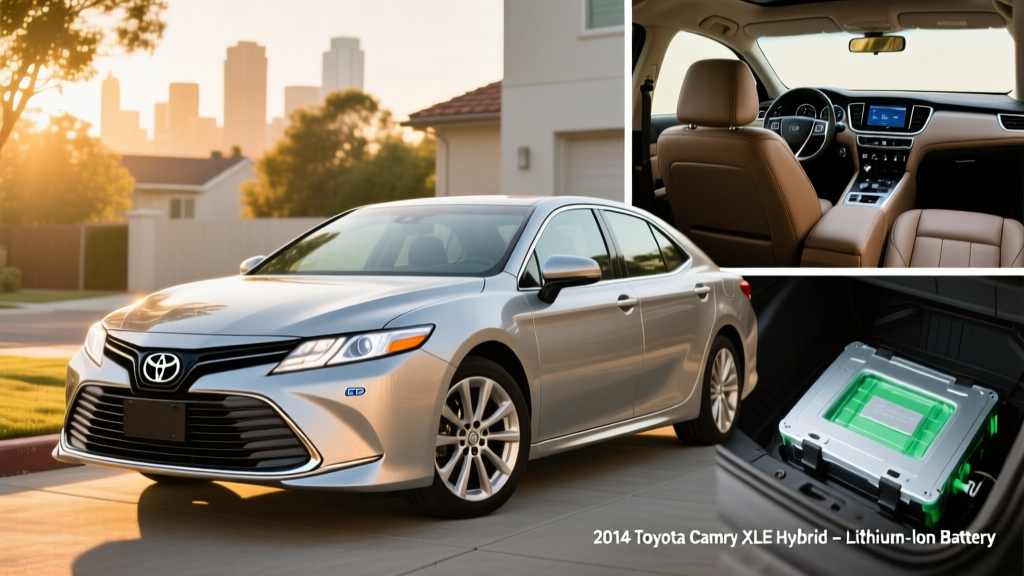
Real-world data from taxi fleets and high-mileage owners shows Toyota's hybrid battery packs regularly exceeding 200,000 miles with minimal degradation. The Prius and RAV4 Hybrid use proven nickel-metal-hydride (NiMH) or lithium-ion packs with conservative thermal management that prioritizes longevity over maximum output.
Battery Replacement Cost If Out of Warranty
If a hybrid battery does fail outside the warranty window, replacement costs have come down significantly:
- Toyota Prius: $2,000–$3,500 (remanufactured) or $4,000–$5,000 (new OEM)
- Toyota RAV4 Hybrid: $3,000–$5,000
- Honda CR-V Hybrid: $3,000–$4,500
- PHEV batteries (larger packs): $5,000–$8,000
Third-party remanufactured batteries and individual cell replacement services are increasingly available, often cutting costs by 40–50% compared to new OEM packs. According to Consumer Reports, hybrid reliability ratings consistently rank among the highest of any powertrain type.
Hybrid vs PHEV vs EV: Which Fits Your Life?
Choose a Conventional Hybrid (HEV) If:
- You lack access to home or workplace charging
- You want maximum simplicity — no plugs, no apps, no charging routines
- You take frequent long road trips where EV charging infrastructure is sparse
- Your budget is under $35,000
- You live in an apartment or rent and cannot install a charger
Choose a Plug-In Hybrid (PHEV) If:
- You can charge at home (even a standard 120V outlet works overnight)
- Your daily commute is under 35 miles round-trip
- You want electric daily driving but gas flexibility for road trips
- You qualify for the federal §30D tax credit (significant price reduction)
- You're not ready to commit to EV-only but want to reduce gas use by 70–90%
A full battery-electric vehicle (BEV) makes the most sense if you have reliable home Level 2 charging, your daily driving stays within the vehicle's range, and you want the lowest operating costs and maintenance burden. But for the millions of drivers who park on the street, live in apartments, or regularly drive 300+ mile routes, gas electric hybrid vehicles — particularly PHEVs — offer the most practical path to electrification in 2026.
Frequently Asked Questions
How many MPG does a gas electric hybrid vehicle get?
It varies by model. The 2026 Toyota Prius achieves a class-leading 57 MPG combined (57 city / 56 highway). The RAV4 Hybrid delivers 40 MPG combined. Compact SUV hybrids generally land between 37–43 MPG combined. Real-world city driving often yields 2–5 MPG above the EPA city rating due to regenerative braking.
How far can a PHEV go on electric only?
Current PHEVs offer 25–44 miles of electric-only range. The Prius Prime leads at 44 miles, followed by the RAV4 Prime at 42 miles. The Hyundai Tucson PHEV provides 33 miles. For commuters with round trips under these distances, a PHEV can function as a daily EV while retaining unlimited gas range for longer trips.
Do conventional hybrids need to be plugged in?
No. Conventional hybrids (HEVs) charge their batteries entirely through regenerative braking and the gas engine. You fuel them exactly like a regular gas car — just with much better MPG. Only plug-in hybrids (PHEVs) benefit from being connected to an electrical outlet.
Does a hybrid qualify for a tax credit?
Conventional hybrids (HEVs) do not qualify for the federal §30D clean vehicle credit. Plug-in hybrids (PHEVs) may qualify for up to $7,500, but eligibility depends on your income, the vehicle's MSRP, battery component and critical-mineral sourcing requirements, and North American assembly rules. The credit can be applied at the point of sale as a purchase price reduction. Check current rules at IRS.gov.
Are hybrid vehicles reliable long-term?
Yes. Hybrid powertrains from Toyota, Honda, and Hyundai have demonstrated excellent long-term reliability. Hybrid batteries carry 8–10 year / 100,000–150,000 mile warranties, and real-world data shows many lasting well beyond 200,000 miles. The planetary-gear-based transmissions in Toyota hybrids have fewer moving parts than conventional automatics, contributing to lower failure rates. IIHS also rates many hybrid models as Top Safety Picks.
What's the difference between a hybrid and a mild hybrid?
A mild hybrid (often labeled MHEV) uses a small 48V system to assist the gas engine during acceleration and enable smoother stop-start — but it cannot drive the vehicle on electric power alone and provides only marginal fuel savings (typically 1–2 MPG). Full hybrids (HEVs) and plug-in hybrids (PHEVs) can propel the car using electric motors independently, delivering substantially larger fuel economy gains.