The State of Toyota Hybrid Trucks in 2026
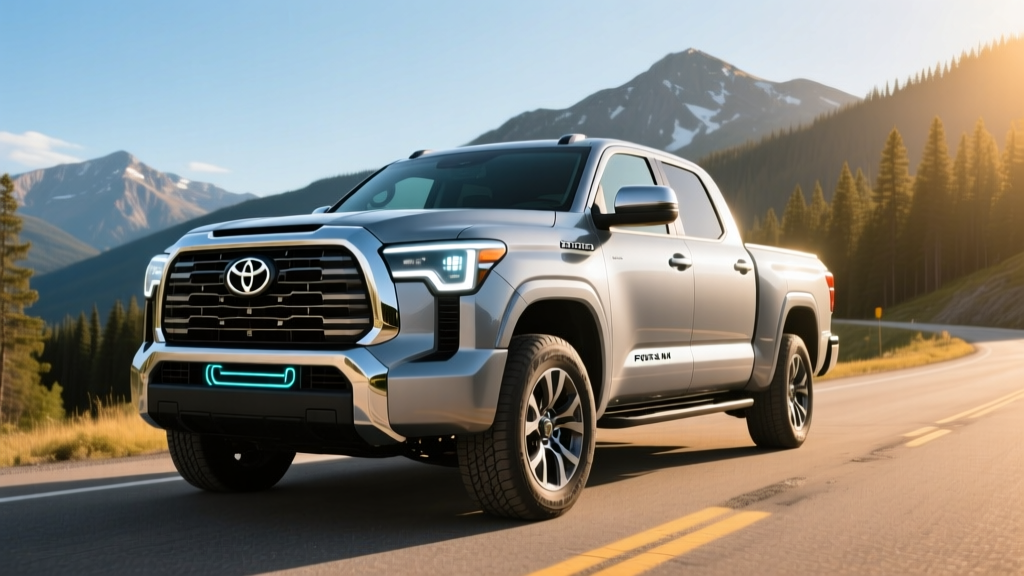
Toyota's hybrid truck strategy centers on one model: the Tundra i-FORCE MAX. Unlike Ford's F-150 PowerBoost or the upcoming Silverado hybrid, Toyota has committed to a single hybrid powertrain across multiple Tundra trims rather than offering a plug-in hybrid (PHEV) variant. For 2026, the Tundra i-FORCE MAX remains Toyota's only hybrid truck offering, with no Tacoma hybrid or PHEV version currently announced.
This matters because buyers searching for "Toyota hybrid trucks" need to understand they're looking at a conventional hybrid (HEV)—not a plug-in. The i-FORCE MAX doesn't require charging, doesn't offer electric-only driving, and doesn't qualify for the federal §30D EV tax credit. What it does deliver is V8-rivaling torque with modest fuel economy improvements over the non-hybrid Tundra.
HEV vs PHEV: What Toyota Actually Offers
| Feature | Tundra i-FORCE MAX (HEV) | PHEV (e.g., F-150 Lightning, RAV4 Prime) |
|---|---|---|
| Plug-in charging required? | No—regenerative braking only | Yes—120V/240V charging |
| Electric-only range | 0 miles | 20-40 miles typical |
| Federal tax credit eligible? | No | Up to $7,500 (income/MSRP limits apply) |
| Battery size | 1.87 kWh (NiMH) | 13-20+ kWh (Li-ion) |
| Primary benefit | Torque fill, modest MPG gain | Electric commuting, gas backup |
Fuel Economy: EPA Ratings vs Real-World MPG
The 2026 Tundra i-FORCE MAX carries forward the powertrain introduced in 2022: a twin-turbo 3.5L V6 paired with a 48-hp electric motor integrated into the 10-speed automatic transmission. Combined output: 437 hp and 583 lb-ft of torque.
| Drivetrain | City MPG | Highway MPG | Combined MPG |
|---|---|---|---|
| 4x2 (RWD) | 20 | 24 | 22 |
| 4x4 | 19 | 22 | 20 |
| TRD Pro / Capstone (4x4) | 18 | 21 | 19 |
For context, the non-hybrid Tundra V6 (i-FORCE, 389 hp) rates 17 city / 23 highway / 19 combined in 4x4 form. The hybrid's advantage is most pronounced in city driving, where the electric motor assists during acceleration and regenerative braking recovers energy. On the highway, the hybrid system provides minimal benefit—the turbo V6 does most of the work.
Powertrain Deep Dive: i-FORCE MAX Specs
| Specification | Value |
|---|---|
| Engine | 3.5L twin-turbo V6 (V35A-FTS) |
| Engine output | 389 hp @ 5,200 rpm / 479 lb-ft @ 2,400 rpm |
| Electric motor | 48 hp / 184 lb-ft (integrated in bell housing) |
| Combined system output | 437 hp @ 5,200 rpm / 583 lb-ft @ 2,400 rpm |
| Transmission | 10-speed automatic (direct shift) |
| Battery | 1.87 kWh nickel-metal hydride (NiMH) |
| 0-60 mph | 5.7 seconds (4x4, MotorTrend tested) |
| Max towing capacity | 11,175 lbs (4x2 SR5) |
| Max payload | 1,760 lbs |
The i-FORCE MAX's electric motor sits between the engine and transmission, providing torque fill at low RPM before the turbos fully spool. This eliminates the lag typical of turbocharged engines and delivers linear acceleration. The system never drives on electric power alone at meaningful speeds—the motor assists, but the gas engine is always engaged above idle.
The 1.87 kWh NiMH battery is notably small compared to PHEV systems (which typically use 13-20 kWh lithium-ion packs). Toyota chose NiMH for its proven durability in hybrid applications—the same chemistry used in millions of Prius vehicles over two decades. The trade-off: lower energy density and no electric-only driving capability.
Pricing, Trims & Tax Credit Eligibility
The i-FORCE MAX hybrid powertrain is standard on higher Tundra trims and optional on mid-range models for 2026:
| Trim | Drivetrain | MSRP (2026) | i-FORCE MAX Standard? |
|---|---|---|---|
| Limited | 4x2 | $52,005 | Optional (+$3,775) |
| Limited | 4x4 | $55,055 | Optional (+$3,775) |
| Platinum | 4x4 | $61,405 | Standard |
| 1794 Edition | 4x4 | $62,555 | Standard |
| TRD Pro | 4x4 | $69,905 | Standard |
| Capstone | 4x4 | $78,405 | Standard |
Tax credit reality check: The Tundra i-FORCE MAX does not qualify for the federal §30D clean vehicle tax credit. That credit applies only to plug-in electric vehicles (BEVs and PHEVs) meeting battery sourcing, MSRP caps, and buyer income requirements. Conventional hybrids like the i-FORCE MAX are excluded under current IRS rules.
Some states offer their own hybrid incentives (typically $500-$1,500), but these vary widely and change frequently. Check your state's energy office or department of environmental quality for current programs.
Reliability, Battery Warranty & Replacement Cost
- Hybrid battery: 10 years / 150,000 miles (whichever comes first)
- Hybrid system components: 8 years / 100,000 miles
- Powertrain (engine/transmission): 5 years / 60,000 miles
Coverage transfers to subsequent owners at no cost.
Toyota's hybrid reliability record is among the strongest in the industry. The Prius, Camry Hybrid, and RAV4 Hybrid have demonstrated NiMH battery longevity exceeding 200,000 miles with minimal degradation. The Tundra's larger battery and truck-duty application haven't shown systemic issues since the i-FORCE MAX's 2022 introduction.
Replacement cost if out of warranty: A Tundra i-FORCE MAX hybrid battery replacement runs approximately $3,000-$4,500 including labor at a Toyota dealer. Independent hybrid specialists often perform the same service for $2,000-$3,000. Given the 10-year/150,000-mile warranty and NiMH chemistry's proven lifespan, most owners will never face this expense.
For comparison, the Tundra's turbo V6 engine carries higher long-term risk than the hybrid system. Direct injection, twin turbos, and a 10-speed automatic represent more complex failure points than the relatively simple motor-generator and NiMH pack.
Who Should Buy the Tundra Hybrid (and Who Shouldn't)
Choose the i-FORCE MAX if:
- You need a full-size truck with 10,000+ lb towing and want V8-class torque (583 lb-ft) without V8 fuel thirst
- Your driving is city-heavy—stop-and-go traffic maximizes hybrid benefit
- You want Toyota's proven hybrid reliability without changing your fueling habits (no plugs, no charging)
- You're already shopping Limited, Platinum, or TRD Pro trims where the hybrid is standard or a small upcharge
Skip the hybrid (or consider alternatives) if:
- You primarily drive highway miles—real-world MPG gain over the non-hybrid V6 is negligible at 70+ mph
- You want electric-only commuting (look at the F-150 Lightning BEV or wait for a PHEV truck)
- You're budget-focused—the hybrid premium adds $3,775 on trims where it's optional, with MPG savings that won't pay back the cost for most drivers
- You tow frequently—hybrid MPG advantage disappears under load (10-13 MPG either way)
Tundra Hybrid vs Competitors: Quick Comparison
| Spec | Toyota Tundra i-FORCE MAX | Ford F-150 PowerBoost | Ford F-150 Lightning |
|---|---|---|---|
| Type | HEV (conventional hybrid) | HEV (conventional hybrid) | BEV (full electric) |
| Combined MPG / MPGe | 20-22 MPG | 22-24 MPG | 70 MPGe (combined) |
| Horsepower | 437 hp | 430 hp | 580 hp |
| Torque | 583 lb-ft | 570 lb-ft | 775 lb-ft |
| Max towing | 11,175 lbs | 12,700 lbs | 10,000 lbs |
| Starting MSRP | $52,005 | $56,335 | $54,995 |
| Federal tax credit | None | None | Up to $7,500* |
*Lightning credit subject to IRS §30D income, MSRP, and battery sourcing requirements.
Hybrid vs PHEV vs EV: Which Truck Fits You?
The truck market now spans three electrification levels, each with distinct trade-offs:
Conventional Hybrid (HEV) — Tundra i-FORCE MAX, F-150 PowerBoost: Best for buyers who want modest fuel savings without changing behavior. No charging, no range anxiety, no tax credit. Ideal if you lack home charging access or frequently tow long distances where BEV range drops dramatically.
Plug-in Hybrid (PHEV) — No full-size PHEV trucks currently available in the US. The midsize Jeep Wrangler 4xe and Toyota RAV4 Prime demonstrate the PHEV formula (20-40 miles electric, gas engine backup), but no manufacturer has brought a PHEV to the full-size truck segment yet. Toyota has not announced a Tundra PHEV.
Battery Electric (BEV) — F-150 Lightning, Silverado EV, Rivian R1T: Best for buyers with home charging who drive under 250 miles daily and want minimal operating costs. Towing range drops 40-50% (expect 120-160 miles towing 7,000+ lbs). Federal tax credit up to $7,500 can offset higher upfront cost.
- Choose Tundra hybrid if: You need Toyota reliability, tow 8,000+ lbs regularly, lack home charging, and want proven tech
- Choose F-150 PowerBoost if: You want slightly better MPG (22-24 combined) and Ford's Pro Power Onboard for job-site use
- Choose F-150 Lightning if: You have Level 2 home charging, drive under 200 miles daily, rarely tow heavy, and want $7,500 tax credit + fuel savings
- Wait if: You want a PHEV truck—none exist yet, but the Ram 1500 REV (EREV) and next-gen Silverado PHEV are anticipated
Frequently Asked Questions
How many MPG does the Toyota Tundra hybrid get?
The 2026 Tundra i-FORCE MAX rates 20 city / 24 highway / 22 combined (4x2) or 19/22/20 (4x4) per the EPA. Real-world mixed driving typically yields 18-21 MPG combined for 4x4 models. Highway driving at 75+ mph often returns 17-18 MPG.
Does the Tundra hybrid need to be plugged in?
No. The i-FORCE MAX is a conventional hybrid (HEV), not a plug-in. The 1.87 kWh battery charges exclusively through regenerative braking and engine power. You fuel it like any gas truck—no charging cable, no outlet required.
How far can the Tundra hybrid drive on electric power alone?
The Tundra i-FORCE MAX cannot drive on electric power alone at any meaningful speed or distance. The electric motor assists the gas engine during acceleration but never powers the truck independently. If you need electric-only driving, you'd need a PHEV (not currently available in full-size trucks) or a BEV like the F-150 Lightning.
Is the Tundra hybrid reliable? What about battery replacement cost?
Toyota's hybrid systems have demonstrated exceptional reliability over 25+ years of Prius production. The Tundra's NiMH battery carries a 10-year/150,000-mile warranty. Out-of-warranty replacement costs approximately $3,000-$4,500 at a dealer, but most owners will never need this service based on historical Toyota hybrid longevity data.
Does the Tundra hybrid qualify for any tax credit?
No. The federal §30D clean vehicle credit applies only to plug-in vehicles (BEVs and PHEVs). The Tundra i-FORCE MAX, as a conventional hybrid, is excluded. Some states offer small hybrid incentives ($500-$1,500), but these vary by jurisdiction and change frequently. The F-150 Lightning BEV can qualify for up to $7,500 federal credit if buyer income and vehicle sourcing requirements are met.
Can I tow with the Tundra hybrid?
Yes. Maximum towing capacity is 11,175 lbs (4x2 SR5 configuration). The hybrid's 583 lb-ft of torque provides strong low-end pulling power. However, expect fuel economy to drop to 10-13 MPG while towing—the hybrid system provides minimal efficiency benefit under heavy load.
Will Toyota make a Tacoma hybrid or Tundra PHEV?
As of early 2026, Toyota has not announced a Tacoma hybrid or a plug-in hybrid Tundra. The current-generation Tacoma (redesigned for 2024) offers the i-FORCE MAX hybrid in select trims using the same powertrain architecture. No PHEV variant is in Toyota's announced product roadmap.