Quick Verdict: The Pioneer That Started Toyota's Plug-In Story
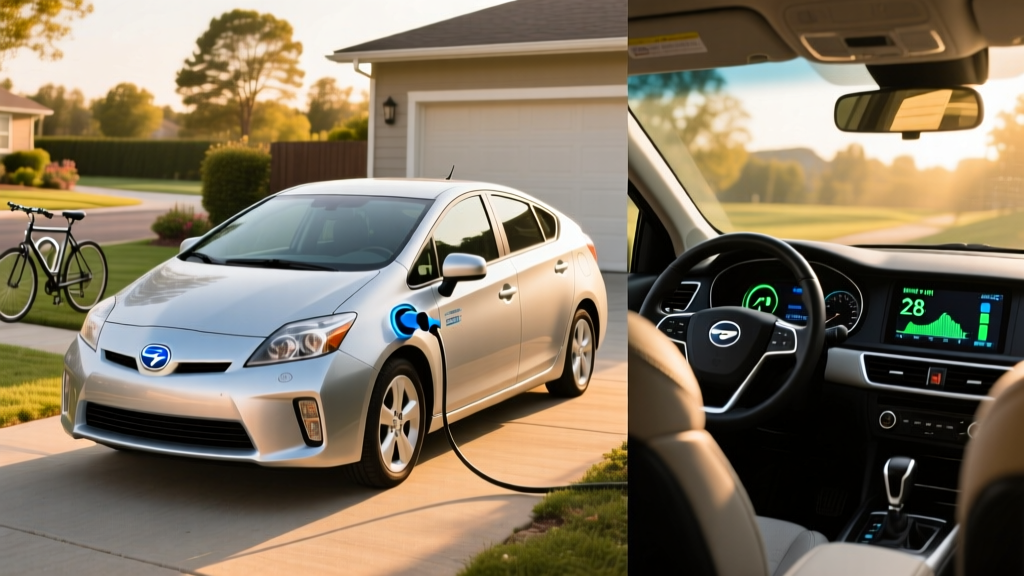
The 2013 Toyota Prius Plug-In Hybrid (officially badged simply as the "Prius Plug-in") was Toyota's first production PHEV sold in the United States. It bridged the gap between the conventional Prius HEV and a full battery-electric vehicle, offering a modest but meaningful electric-only driving range for short commutes. In 2026, this model exists exclusively on the used market — Toyota discontinued the Plug-In after the 2015 model year, replacing it with the Prius Prime starting in 2017 with substantially more electric range.
For used-car shoppers evaluating a 2013 Prius Plug-In Hybrid today, the key questions center on battery health, real-world efficiency, and whether its 11-mile EV range still provides practical value over a standard Prius. This guide breaks down every spec that matters.
HEV vs PHEV: What Made the 2013 Prius Plug-In Different
| Feature | 2013 Prius (Standard HEV) | 2013 Prius Plug-In Hybrid (PHEV) |
|---|---|---|
| Plugs in to charge? | No — charges via engine & regen | Yes — Level 1 (120V) or Level 2 (240V) |
| Battery capacity | 1.3 kWh (NiMH) | 4.4 kWh (Li-ion) |
| Electric-only range | ~1 mile at low speed | EPA-rated 11 miles |
| EV-mode top speed | ~25 mph | Up to 62 mph |
| EPA combined (hybrid mode) | 50 MPG | 50 MPG (hybrid) / 95 MPGe (EV+hybrid) |
| Federal tax credit (original) | None | $2,500 (expired) |
The critical distinction: a conventional hybrid (HEV) like the standard Prius generates all its electricity internally through the gasoline engine and regenerative braking. You never plug it in. A plug-in hybrid (PHEV) like the 2013 Prius Plug-In has a larger battery that you can charge from a wall outlet or charging station, enabling genuine electric-only driving before the gasoline engine engages. Once the EV range is depleted, it operates exactly like a conventional Prius hybrid.
Fuel Economy & Electric Range: The Numbers That Matter
| Metric | EPA Rating | Real-World Expectation (2026) |
|---|---|---|
| EV-only range | 11 miles | 8–10 miles (degraded battery); 6–8 miles in cold weather |
| MPGe (EV + hybrid combined) | 95 MPGe | 75–90 MPGe depending on charging habits |
| MPG city (hybrid mode) | 51 MPG | 48–55 MPG (hybrids often exceed EPA in city) |
| MPG highway (hybrid mode) | 49 MPG | 44–48 MPG |
| MPG combined (hybrid mode) | 50 MPG | 46–52 MPG |
| Total range (EV + gas) | ~540 miles | ~480–530 miles |
| Fuel tank | 10.6 gallons | 10.6 gallons |
The 11-mile EPA electric range was modest even in 2013. By 2026, a 12-to-13-year-old lithium-ion battery will have experienced measurable degradation. Expect roughly 15–25% capacity loss depending on climate exposure, charging habits, and mileage. That translates to a real-world EV range closer to 8–10 miles on a full charge in moderate weather. In freezing temperatures, lithium-ion batteries deliver less usable energy, so plan on 6–8 miles of electric driving in winter.
Once the battery is depleted and the car switches to hybrid mode, the 2013 Prius Plug-In returns the same excellent 50 MPG combined as the standard Prius. In practice, many owners report exceeding 50 MPG in city driving thanks to frequent regenerative braking opportunities, while sustained highway cruising at 70+ mph drops efficiency to the mid-40s.
Battery, Charging & Powertrain Specifications
| Specification | 2013 Prius Plug-In Hybrid |
|---|---|
| Battery chemistry | Lithium-ion (Li-ion) |
| Battery capacity (total / usable) | 4.4 kWh total / ~3.0 kWh usable (new) |
| Engine | 1.8L 4-cylinder Atkinson-cycle (98 hp) |
| Electric motor | 60 kW (80 hp) AC synchronous |
| Combined system horsepower | 134 hp |
| 0–60 mph | ~9.8 seconds |
| Transmission | CVT (eCVT planetary gearset) |
| Drivetrain | Front-wheel drive |
| Level 1 charging (120V) | ~3 hours (0–100%) |
| Level 2 charging (240V) | ~1.5 hours (0–100%) |
| DC fast charging | Not supported |
| Charge connector | SAE J1772 |
| Cargo volume | 21.6 cu ft (rear seats up) |
The 4.4 kWh lithium-ion pack was a significant upgrade over the standard Prius's 1.3 kWh nickel-metal-hydride (NiMH) battery. Toyota intentionally limits the usable window — you'll never see the battery display hit true 0% or 100% — to protect long-term battery health. This buffer strategy is a key reason Toyota hybrid batteries outlast many competitors.
Charging is straightforward but slow by modern standards. A standard 120V household outlet (Level 1) delivers roughly 1.2 kW, filling the small battery in about 3 hours. A 240V Level 2 station cuts that to approximately 1.5 hours at ~3.3 kW. There is no DC fast-charging capability — this was common for PHEVs of this era, as the small battery didn't warrant the added cost and weight of DC hardware. The J1772 connector is the universal North American AC standard, so any public Level 2 station works without adapters.
Battery Lifespan, Warranty & Replacement Cost
Battery longevity is the single biggest concern for used PHEV buyers. Here's what the data shows:
- Toyota's track record: Toyota hybrid batteries routinely last 150,000–200,000+ miles before needing replacement. The Prius Plug-In's Li-ion pack has proven similarly durable, though the smaller usable buffer means degradation is more noticeable in reduced EV range than in overall drivability.
- Expected degradation at 12 years: 15–25% capacity loss is typical. This means your 11-mile EV range becomes 8–10 miles. The car still functions perfectly as a hybrid.
- Replacement cost: A new OEM lithium-ion replacement battery from Toyota runs approximately $3,500–$4,500 including installation at a dealership. Refurbished or reconditioned packs from third-party suppliers range from $1,500–$2,500 installed. Individual module replacement (if only a few cells have failed) can cost $500–$1,200 at a hybrid specialist shop.
- Signs of battery trouble: Rapid EV-range depletion, the engine engaging almost immediately in EV mode, or a "Check Hybrid System" warning light.
Before buying, request a hybrid battery health check from a Toyota dealer or qualified hybrid technician. They can read the battery's State of Health (SoH) through the OBD-II port using Toyota's Techstream diagnostic software or aftermarket tools like Dr. Prius. A healthy 2013 pack should still show 75–85% of original capacity.
Who Should Buy a Used 2013 Prius Plug-In Hybrid?
Pros
- 50 MPG combined in hybrid mode — still class-leading
- Electric-only commuting for very short trips (under 10 miles)
- Toyota reliability and parts availability
- Low used-car price ($7,000–$11,000 in 2026)
- No range anxiety — gas engine always available
- J1772 charging works at any public Level 2 station
Cons
- Only 11-mile EPA EV range (less with degradation)
- No DC fast charging
- Original battery warranty expired
- Dated infotainment (no Apple CarPlay/Android Auto)
- Modest 134 hp — slow by modern standards
- Smaller cargo area than newer Prius Prime
Hybrid vs PHEV vs EV: Which Powertrain Fits You?
| Choose This If... | Best Powertrain | Example |
|---|---|---|
| No home/workplace charging access | HEV (conventional hybrid) | Standard Prius, Honda Accord Hybrid |
| Short commute (under 15 mi) + can plug in at home | PHEV | 2013 Prius Plug-In, newer Prius Prime |
| Want zero gas, have reliable charging | BEV (full electric) | Chevy Bolt, Tesla Model 3 |
| Frequent long road trips, no charging at home | HEV | Toyota Camry Hybrid |
| Short commute + occasional road trips | PHEV | Toyota RAV4 Prime, Prius Prime |
The 2013 Prius Plug-In makes the most sense for a specific buyer: someone with a very short commute (under 10 miles each way), access to a standard 120V outlet at home, and a tight budget who wants maximum fuel efficiency without committing to a full EV. If your commute exceeds 15 miles, the EV range is largely irrelevant and a standard used Prius HEV may be a simpler, equally efficient choice at a lower purchase price.
If you can charge at home and want more electric range, the 2017+ Prius Prime offers 25 miles of EV range (64 MPGe), or newer alternatives like the Toyota RAV4 Prime deliver 42 miles of electric driving. If you have reliable home charging and rarely drive over 250 miles in a day, a used BEV like the Chevy Bolt (259 miles range) eliminates gasoline entirely.
Pricing & Tax Credit Eligibility (2026 Used Market)
As a 2013 model, this vehicle is only available on the used market. Pricing in early 2026 typically ranges from $7,000 to $11,000 depending on mileage, condition, and battery health. Lower-mileage examples (under 80,000 miles) with documented battery health checks command the top of that range.
Federal tax credit status: The original §30D federal tax credit for the 2013 Prius Plug-In was $2,500 (based on its battery capacity). This credit was only available to the original purchaser and has long since expired. The current used-EV credit (up to $4,000 or 30% of sale price, whichever is less) applies only to used plug-in electric vehicles — and while the 2013 Prius Plug-In technically qualifies as a PHEV, the vehicle must be at least two model years old (it qualifies), sold by a licensed dealer, and the buyer must meet income caps ($75,000 single / $150,000 joint). However, the vehicle's sale price must be $25,000 or less, which it meets. Consult a tax professional to confirm eligibility for the used clean vehicle credit on a PHEV purchase.
Frequently Asked Questions
How many MPG does the 2013 Prius Plug-In Hybrid get?
The EPA rates it at 51 city / 49 highway / 50 combined MPG in hybrid mode, and 95 MPGe when combining electric and hybrid driving. In real-world use, many owners report 48–55 MPG in city driving and 44–48 MPG on the highway. The hybrid-mode MPG remains excellent even as the battery ages, since the gasoline engine and regenerative braking system continue to function efficiently.
How far can the 2013 Prius Plug-In go on electric only?
When new, the EPA rated it for 11 miles of electric-only driving at speeds up to 62 mph. In 2026, with typical battery degradation of 15–25%, expect 8–10 miles in moderate temperatures and 6–8 miles in cold weather. This is enough for very short commutes or neighborhood errands but insufficient for most daily driving needs without the engine engaging.
Is the 2013 Prius Plug-In Hybrid reliable?
Yes. Toyota's hybrid powertrains are among the most reliable in the industry. The eCVT transmission has no traditional gears or clutch packs to wear out — it uses a planetary gearset that is extremely durable. The main long-term expense is the hybrid battery, which typically lasts 150,000–200,000+ miles. At 12+ years old, budget for a potential battery replacement ($1,500–$4,500 depending on OEM vs. refurbished) if the current pack shows significant degradation.
What is the battery replacement cost?
A new OEM lithium-ion battery from Toyota costs approximately $3,500–$4,500 installed at a dealership. Third-party refurbished or reconditioned batteries range from $1,500–$2,500 installed. Some hybrid specialist shops can replace individual failed modules for $500–$1,200, extending the pack's life at lower cost. Always get a battery health reading before purchase to assess remaining life.
Does the 2013 Prius Plug-In qualify for any tax credit in 2026?
The original $2,500 federal credit for new purchases expired long ago. However, the IRS used clean vehicle credit (up to $4,000 or 30% of the sale price) may apply if purchased from a licensed dealer for $25,000 or less, and the buyer meets income limits ($75,000 single / $150,000 joint). Because the sale price is typically $7,000–$11,000, the maximum credit would be 30% of that price ($2,100–$3,300). Confirm eligibility with a tax professional, as PHEV qualification under the used credit has specific battery-capacity requirements.
Can I charge it at public charging stations?
Yes, at any public Level 2 station using the standard J1772 connector. A full charge takes about 1.5 hours on a 240V Level 2 charger. It cannot use DC fast chargers (CCS, CHAdeMO, or NACS). Given the small battery, most owners charge at home using a standard 120V outlet, which takes roughly 3 hours — easily done overnight.
How does it compare to the newer Prius Prime?
The 2017+ Prius Prime offers 25 miles of EV range (vs. 11), a more modern interior with available Apple CarPlay/Android Auto, and updated safety features (Toyota Safety Sense). The 2023+ Prius Prime jumps to 44 miles of EV range. If your budget allows, a used 2017–2020 Prius Prime ($16,000–$24,000) provides substantially more daily electric driving. The 2013 Plug-In's advantage is purely its lower entry price.