Quick Verdict: A Proven Hybrid Hatchback for the Budget-Conscious Commuter
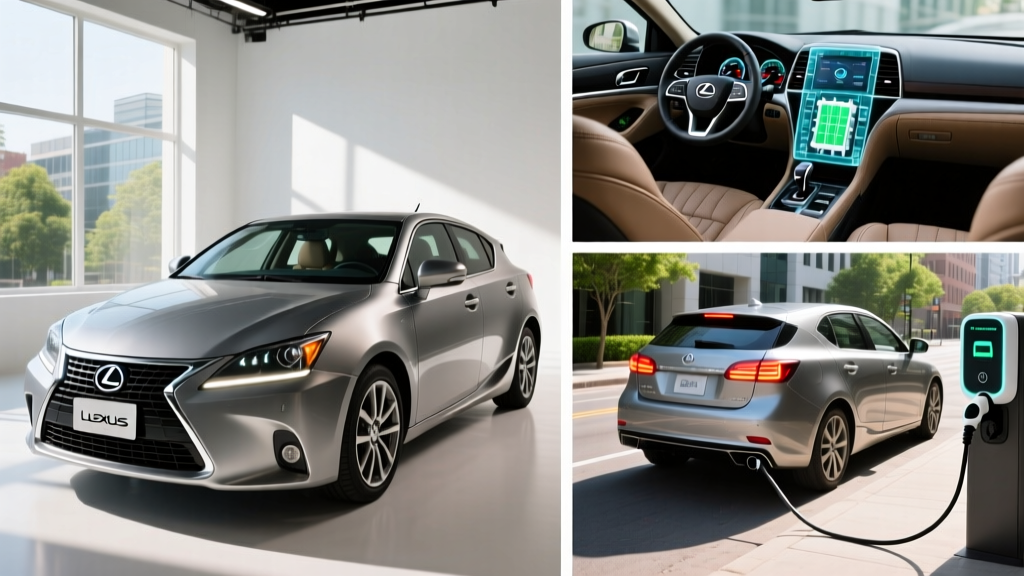
The 2015 Lexus CT 200h hybrid remains one of the most accessible entry points into luxury-badged hybrid ownership on the used market. Built on the same proven powertrain as the Toyota Prius of the same era, the CT 200h pairs a 1.8-liter Atkinson-cycle four-cylinder engine with an electric motor-generator to deliver 134 combined horsepower and an EPA-rated 42 MPG combined. In 2026, well-maintained examples routinely sell between $10,000 and $15,000, making it a compelling alternative to both newer gas-only compacts and pricier plug-in hybrids.
But before you sign the papers, you need to understand what this car is—and what it isn't. The CT 200h is a conventional hybrid (HEV), not a plug-in hybrid (PHEV) or a battery-electric vehicle (BEV). It has no electric-only driving range, no charging port, and no eligibility for the federal §30D EV tax credit. What it does offer is exceptional fuel economy, Toyota-grade reliability, and Lexus dealership service. Here's the complete data-driven breakdown.
HEV vs PHEV vs EV: Where the CT 200h Fits
Buyers cross-shopping the 2015 CT 200h often confuse it with plug-in hybrids. Let's clarify the distinction before diving into specs, because this fundamentally shapes what you can expect from daily ownership.
| Feature | Conventional Hybrid (HEV) e.g., 2015 CT 200h | Plug-In Hybrid (PHEV) e.g., Toyota Prius Prime | Battery Electric (BEV) e.g., Tesla Model 3 |
|---|---|---|---|
| Plug in to charge? | No — regenerative braking & engine charge the battery | Yes — Level 1/Level 2 | Yes — Level 1/2/DC fast |
| Electric-only range | None (motor assists engine at low speeds) | 25–45 miles typical | 250–360+ miles |
| Gas engine | Yes — primary power source | Yes — backup & highway | None |
| Federal tax credit (§30D) | Not eligible | Up to $7,500 (new, subject to sourcing/income rules) | Up to $7,500 (new, subject to sourcing/income rules) |
| Used EV credit (§25E) | Not eligible | Up to $4,000 (used PHEVs that qualify) | Up to $4,000 (used BEVs that qualify) |
| Typical fuel cost | Gas only — ~$0.08/mile at 42 MPG | Gas + electricity — varies by EV-mode usage | Electricity only — ~$0.04/mile home charging |
The 2015 Lexus CT 200h is firmly in the HEV column. You will never plug it in. The 1.3 kWh nickel-metal hydride (NiMH) traction battery charges itself through regenerative braking and the gasoline engine. This means zero charging infrastructure anxiety—but also zero electric-only miles and zero federal tax credit eligibility, even on the used market under the §25E program (which applies only to PHEVs and BEVs).
Fuel Economy: EPA Ratings and Real-World MPG
Fuel efficiency is the CT 200h's headline act. According to fueleconomy.gov, the 2015 Lexus CT 200h carries the following EPA ratings:
| Driving Cycle | EPA Rating | Real-World Expectation |
|---|---|---|
| City | 43 MPG | 44–48 MPG (hybrids excel in stop-and-go) |
| Highway | 40 MPG | 37–40 MPG (aerodynamic drag + small battery limits high-speed regen) |
| Combined | 42 MPG | 40–45 MPG depending on driving mix |
A few things worth noting from real-world ownership data and testing:
- City driving favors hybrids. The CT 200h actually tends to beat its EPA city rating in heavy traffic because regenerative braking recovers energy that a gas car would waste as heat in the brake pads. Owners in urban environments regularly report 45–48 MPG.
- Highway driving is its weakest point. At sustained 70–80 mph speeds, the small hybrid battery provides minimal assist, and the 1.8L engine does most of the work. Expect 37–40 MPG on long interstate trips.
- Cold weather penalty. In sub-freezing temperatures, the engine runs more frequently to maintain cabin heat (there's no electric heater drawing from a large battery as in a PHEV or BEV). Expect a 5–10% fuel economy drop, landing around 38–40 MPG combined in winter.
- Eco mode matters. The CT 200h offers Normal, Eco, and Sport drive modes. Eco mode softens throttle response and optimizes the hybrid system for efficiency. The difference between Eco and Sport in mixed driving can be 3–5 MPG.
At the 2026 national average of roughly $3.15 per gallon, the CT 200h costs approximately $0.075 per mile to fuel. Compare that to a 28 MPG gas compact at ~$0.113/mile, and the savings add up to roughly $570 per year over 15,000 miles of driving.
Powertrain Specs: Engine, Motor, and Combined Output
| Specification | 2015 Lexus CT 200h |
|---|---|
| Engine | 1.8L inline-4, Atkinson cycle (2ZR-FXE) |
| Engine horsepower | 98 hp @ 5,200 rpm |
| Engine torque | 105 lb-ft @ 4,000 rpm |
| Electric motor | Permanent-magnet synchronous (integrated in transaxle) |
| Motor output | 60 kW (80 hp) |
| Combined system horsepower | 134 hp (net) |
| Transmission | ECVT (planetary gearset, not a belt-driven CVT) |
| Drivetrain | Front-wheel drive |
| 0–60 mph | ~9.8 seconds |
| Traction battery | 1.3 kWh, Nickel-Metal Hydride (NiMH) |
| Fuel tank | 10.6 gallons |
| Total range (estimated) | ~445 miles per tank |
| Curb weight | ~3,130 lbs |
The CT 200h uses Toyota's third-generation Hybrid Synergy Drive—the same architecture underpinning the 2010–2015 Prius. The Atkinson-cycle engine sacrifices low-end torque for thermal efficiency, while the electric motor fills in the gap off the line. The eCVT is a planetary gearset that seamlessly blends power from both sources. It's not a rubber-band-style belt CVT; it's a robust, gear-driven unit with an excellent reliability record.
Performance is adequate rather than exciting. The 9.8-second 0–60 time puts it squarely in the "merge with confidence but don't race anyone" category. Sport mode sharpens throttle mapping and adds weight to the electric power steering, but it can't conjure horsepower that isn't there. For a luxury-branded hatchback, the CT 200h prioritizes efficiency over performance—and that trade-off is reflected in its 42 MPG combined rating.
Battery Health, Warranty, and Replacement Cost
The traction battery is the single biggest concern for any used hybrid buyer. Here's what you need to know about the CT 200h's NiMH pack:
Degradation reality: NiMH batteries in Toyota/Lexus hybrids have demonstrated remarkable longevity. Data from fleet operators and owner surveys show most third-generation Prius/CT 200h packs retain 70–80% of original capacity at 150,000 miles. Complete failure before 200,000 miles is uncommon, though individual cell degradation can trigger a check-engine light (P0A80 code) and reduced fuel economy.
Replacement costs in 2026:
- New OEM battery from Lexus: $2,500–$3,500 (part) + $500–$800 (labor) = $3,000–$4,300 installed
- Refurbished/remanufactured pack: $1,200–$2,000 installed from independent hybrid specialists
- Individual cell/module replacement: $300–$600 at a hybrid-specialist shop (replaces only the degraded modules rather than the entire pack)
Before purchasing, request a hybrid battery health check. A Lexus dealer or qualified independent shop can read the battery's State of Health (SoH) via OBD-II scan tool, checking individual module voltage delta and internal resistance. A voltage delta under 0.3V across all modules generally indicates a healthy pack. Anything above 0.5V suggests uneven degradation and a likely replacement within 20,000–40,000 miles.
Pricing and Tax Credit Eligibility in 2026
The 2015 Lexus CT 200h was originally offered in a single, well-equipped trim with optional packages (Premium, Navigation, and F Sport). Original MSRP ranged from approximately $32,350 to $38,000 depending on options.
In the 2026 used market:
- Private-party sales: $9,000–$13,000 (80,000–130,000 miles)
- Dealer retail: $11,000–$16,000 (60,000–100,000 miles, certified pre-available)
- Low-mileage examples (<50,000 mi): $14,000–$18,000
Reliability, Safety, and Ownership Costs
The CT 200h inherits the reliability reputation of the Toyota Prius platform—and that's high praise. The 2ZR-FXE engine is under-stressed, the eCVT has no wear-prone belts or clutch packs, and regenerative braking significantly extends brake pad life (60,000–80,000 miles on original pads is common).
Safety ratings: The 2015 CT 200h earned a Good rating in most IIHS crash tests, though it received a Marginal rating in the small overlap front test (a challenging evaluation for many vehicles of this era). NHTSA awarded it an overall 4-star rating (out of 5). Standard safety equipment includes 8 airbags, stability control, and a rearview camera.
Annual ownership cost estimate (2026):
- Fuel: ~$1,125/year (15,000 miles at 42 MPG, $3.15/gal)
- Insurance: ~$1,200–$1,600/year (varies by state, age, driving record)
- Maintenance: ~$400–$600/year (oil changes every 10,000 miles, cabin air filter, tire rotation; no transmission fluid changes required under normal use)
- Depreciation: Minimal — the CT 200h has largely bottomed out in value
Total estimated annual running cost: roughly $2,725–$3,325, excluding any major hybrid battery repair.
- Proven, bulletproof Toyota hybrid powertrain
- 42 MPG combined, often exceeds EPA in city driving
- Low maintenance costs (long brake life, no transmission fluid service)
- Lexus build quality, quiet cabin, premium materials
- Depreciation largely complete — minimal further value loss
- Hatchback versatility with 14.3 cu ft cargo area
- Sluggish acceleration (9.8 sec 0–60, 134 hp combined)
- Most examples now out of hybrid battery warranty
- Dated infotainment (no Apple CarPlay/Android Auto, non-touch display)
- Firm ride quality, especially with 17-inch sport wheels
- Rear seat space is tight for taller passengers
- No EV tax credit eligibility (HEV only)
Who Should Buy the 2015 CT 200h — And Who Should Look Elsewhere
- You want maximum fuel economy without plugging in or changing your habits
- Your budget is $10,000–$15,000 and you want a luxury-badge hatchback
- You commute in city/suburban traffic where the hybrid system shines (43+ MPG)
- You value proven reliability and low maintenance costs over acceleration and tech
- You live in an apartment or lack home charging access (no plug needed)
- You have home Level 2 charging and want electric-only commuting (consider a used Toyota Prius Prime, Chevrolet Volt, or Hyundai Ioniq PHEV)
- You want federal tax credits — the §25E used-EV credit offers up to $4,000 on qualifying used PHEVs and BEVs priced under $25,000
- You prioritize modern infotainment, Apple CarPlay, or advanced driver-assistance features
- You need strong highway passing power or all-wheel drive
Frequently Asked Questions
How many MPG does the 2015 Lexus CT 200h hybrid get?
The EPA rates the 2015 CT 200h at 43 city / 40 highway / 42 combined MPG. Real-world owners frequently report 44–48 MPG in city driving and 37–40 MPG on the highway. Cold weather can reduce combined economy to 38–40 MPG.
Does the 2015 Lexus CT 200h need to be plugged in?
No. The CT 200h is a conventional hybrid (HEV), not a plug-in hybrid (PHEV). Its 1.3 kWh NiMH battery charges through regenerative braking and the gasoline engine. There is no charging port and no electric-only driving range.
How far can the CT 200h go on electric only?
The CT 200h cannot drive on electric power alone for any meaningful distance. The electric motor assists the gasoline engine at low speeds and during light-load cruising, but the engine is always the primary power source. If you want electric-only commuting, you need a PHEV (like the Prius Prime) or a BEV.
Is the 2015 CT 200h reliable, and what does a battery replacement cost?
Yes, the CT 200h is among the most reliable vehicles in its class, sharing its powertrain with the Toyota Prius. The hybrid battery typically lasts 150,000–200,000+ miles with gradual degradation. A new OEM replacement costs $3,000–$4,300 installed; refurbished packs run $1,200–$2,000. Always get a battery health check before purchasing a used example.
Does the 2015 Lexus CT 200h qualify for any tax credit?
No. The CT 200h is a conventional hybrid (HEV) and does not qualify for the federal §30D new-vehicle credit or the §25E used-vehicle credit. Both credits require a plug-in vehicle (PHEV or BEV) meeting battery capacity, sourcing, income, and MSRP requirements as defined by the IRS. Some states may offer small incentives for used hybrids—check your state energy office.
What is the difference between the CT 200h and a Prius?
Both share the same 1.8L hybrid powertrain and eCVT, but the CT 200h adds a Lexus-tuned suspension, more sound insulation, premium interior materials, a more rigid chassis, and standard luxury features. The trade-off is slightly higher weight (3,130 lbs vs. ~3,040 lbs for the Prius) and a correspondingly small MPG penalty (42 vs. 50 combined for the 2015 Prius). You're paying for refinement, not efficiency gains.
Should I buy a used CT 200h or a newer hybrid?
If your budget is under $15,000, the CT 200h offers excellent value with its proven powertrain and low depreciation risk. However, if you can stretch to $20,000–$25,000, newer options like the 2020+ Toyota Corolla Hybrid (52 MPG combined) or a used Prius Prime PHEV (25 miles electric-only + potential §25E tax credit) offer better efficiency, modern safety tech, and current infotainment. The CT 200h wins on luxury feel per dollar; newer hybrids win on technology and fuel economy.