Toyota RAV4 Hybrid MPG: The Numbers That Actually Matter
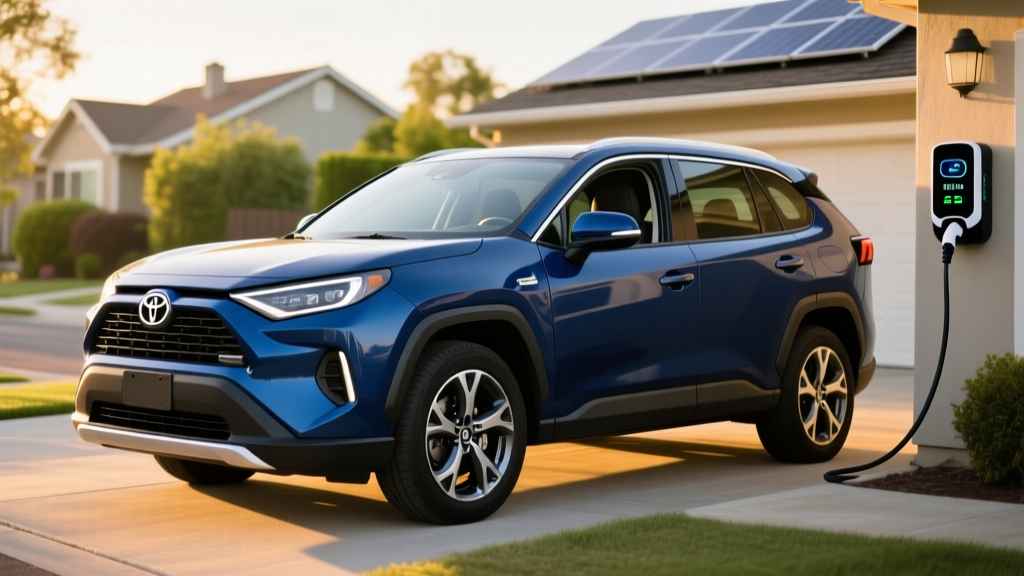
The Toyota RAV4 Hybrid remains one of the most fuel-efficient compact SUVs you can buy without plugging in. For the 2026 model year, the RAV4 Hybrid carries an EPA-estimated 41 MPG city / 38 MPG highway / 39 MPG combined for most LE and XLE trims, with the slightly heavier XSE and Limited trims rated at 40 MPG city / 37 MPG highway / 39 MPG combined. Those figures come straight from fueleconomy.gov and have held remarkably steady since Toyota's fifth-generation RAV4 Hybrid debuted.
But EPA stickers tell only part of the story. Hybrid powertrains behave differently than gas-only or full-electric drivetrains in real-world conditions — and the RAV4 Hybrid is one of the few vehicles where real-world city driving often exceeds the EPA estimate. Here's everything you need to know about actual fuel economy, the HEV vs. PHEV decision, battery longevity, and total ownership cost.
EPA Combined: 39 MPG | City: 40–41 MPG | Highway: 37–38 MPG
Real-World City (owner-reported): 42–45 MPG
Real-World Highway (70+ mph): 34–37 MPG
Real-World Combined (mixed driving): 37–40 MPG
HEV vs. PHEV: Which RAV4 Electrified Powertrain Is Right for You?
Toyota sells the RAV4 in two electrified flavors, and confusing them is the single most common mistake shoppers make. The distinction matters for your wallet, your daily routine, and your tax situation.
| Spec | RAV4 Hybrid (HEV) | RAV4 Prime (PHEV) |
|---|---|---|
| Powertrain Type | Conventional Hybrid — no plug | Plug-in Hybrid — plug required for EV mode |
| Combined Horsepower | 219 HP | 302 HP |
| EPA MPG (Combined) | 39 MPG | 38 MPG (hybrid mode) / 94 MPGe (EV+hybrid) |
| Electric-Only Range | N/A (not a plug-in) | 42 miles EPA |
| Total Range | ~580 miles | ~600 miles (42 EV + 558 hybrid) |
| Traction Battery | 1.6 kWh (NiMH, self-charging) | 18.1 kWh (Li-ion) |
| Charging (Level 2, 240V) | N/A — charges via regenerative braking & engine | ~2.5 hours (6.6 kW onboard charger) |
| DC Fast Charging | N/A | Not supported |
| 0–60 MPH | 7.5 seconds | 5.7 seconds |
| Starting MSRP (2026) | ~$33,575 | ~$44,900 |
| Federal Tax Credit (§30D) | Not eligible | Up to $7,500 (subject to sourcing/income rules) |
The critical difference: The RAV4 Hybrid (HEV) never plugs in. Its small 1.6 kWh battery recharges through regenerative braking and the gasoline engine. You drive it exactly like a conventional car — just fill up with gas and go. The RAV4 Prime (PHEV) has a much larger 18.1 kWh battery that you charge by plugging in, enabling 42 miles of pure electric driving before the gas engine takes over.
Real-World MPG: What Owners Actually Report
The RAV4 Hybrid's EPA numbers are impressive, but hybrid powertrains have a unique real-world characteristic: they tend to beat their EPA city estimates while falling short on the highway. This is the opposite of conventional gas cars.
Here's why: in stop-and-go city driving, the electric motor does the heavy lifting at low speeds, the engine shuts off at stops, and regenerative braking recovers energy that a gas car would waste as heat. On the highway, the gas engine runs continuously, and aerodynamic drag dominates — the hybrid system provides less advantage.
Based on aggregated owner data from Fuelly and real-world testing:
- City / suburban driving (under 45 mph): 42–45 MPG is common. Some hypermilers report 47+ MPG on flat routes with gentle acceleration.
- Highway driving (70–75 mph): Expect 34–37 MPG. At 80+ mph, that can drop to 32–34 MPG.
- Mixed driving (50/50 city-highway): Most owners land between 37–40 MPG combined.
- Cold weather (below 32°F): Expect a 5–10% reduction, bringing combined MPG to roughly 35–38 MPG. The engine runs more frequently to provide cabin heat and maintain battery temperature.
For context, the non-hybrid 2026 RAV4 gas model is rated at 30 MPG combined. The hybrid's 39 MPG combined represents a 30% fuel savings — roughly $450–$600 per year at 15,000 miles driven and $3.50/gallon gas, based on EPA fuel cost estimates.
Powertrain Deep Dive: How 219 HP Gets 39 MPG
The 2026 RAV4 Hybrid uses Toyota's fourth-generation hybrid system, pairing a 2.5-liter Dynamic Force four-cylinder engine (176 HP, 163 lb-ft torque) with two electric motor-generators and an electronically controlled continuously variable transmission (eCVT).
Combined system output is 219 HP. The front electric motor contributes 118 HP and 149 lb-ft of torque, while a rear-mounted motor provides 54 HP for the electronic on-demand all-wheel-drive system (standard on all Hybrid trims). That rear motor activates during acceleration, low-traction conditions, and low-speed corners — there's no mechanical driveshaft to the rear wheels.
The eCVT isn't a belt-driven CVT like those in some competitors. It uses a planetary gearset that seamlessly blends engine and motor power with no fixed gear ratios. The result is smooth, linear acceleration with no gear hunting — though it does produce the characteristic "drone" under hard acceleration that some drivers find intrusive.
The 1.6 kWh nickel-metal hydride (NiMH) traction battery sits under the rear seat. It's small by EV standards — roughly the energy content of a large laptop battery — but it's never fully depleted. The hybrid system keeps the battery between roughly 40% and 80% state of charge, which dramatically extends cycle life.
RAV4 Prime (PHEV): 42 Miles Electric, 302 HP, and Tax Credit Eligibility
If you can plug in at home and your daily commute is under 40 miles, the RAV4 Prime deserves serious consideration. Its 18.1 kWh lithium-ion battery delivers an EPA-estimated 42 miles of electric-only range, enough for most daily driving without burning a drop of gasoline.
When the battery depletes, the Prime seamlessly switches to hybrid mode and delivers 38 MPG combined — nearly identical to the standard Hybrid, despite carrying 300+ extra pounds of battery. Total system output jumps to 302 HP, making the Prime the quickest RAV4 Toyota sells, with a 5.7-second 0–60 time.
Charging the Prime: Using a standard 120V household outlet (Level 1), a full charge takes approximately 12 hours. With a 240V Level 2 home charger, the Prime's 6.6 kW onboard charger tops up the battery in about 2.5 hours. The RAV4 Prime does not support DC fast charging — a notable limitation compared to some PHEV competitors like the Hyundai Tucson PHEV.
The RAV4 Prime may qualify for up to $7,500 under IRS §30D, but eligibility depends on multiple factors that change frequently:
- Buyer income caps: Modified AGI must not exceed $150,000 (single), $225,000 (head of household), or $300,000 (joint). Check current limits at irs.gov.
- MSRP cap: The vehicle's MSRP must not exceed $80,000 for SUVs (the Prime qualifies).
- Battery sourcing requirements: Critical minerals and battery components must meet escalating domestic-content thresholds. These requirements tighten annually and can change mid-year. Verify current compliance on the IRS qualified vehicles list.
- Point-of-sale transfer: As of 2024+, you can transfer the credit to the dealer at purchase for an immediate price reduction, rather than waiting to claim it on your tax return.
Battery Longevity, Warranty, and Replacement Costs
Battery lifespan is consistently the top concern among hybrid shoppers, and it's where Toyota's track record is strongest. The RAV4 Hybrid's NiMH battery and the Prime's Li-ion battery are both engineered for long service life, but the chemistry and warranty details differ.
| Metric | RAV4 Hybrid (HEV) | RAV4 Prime (PHEV) |
|---|---|---|
| Battery Chemistry | Nickel-Metal Hydride (NiMH) | Lithium-Ion (Li-ion) |
| Hybrid Battery Warranty | 10 years / 150,000 miles | 10 years / 150,000 miles |
| Warranty Capacity Threshold | Coverage if battery fails or loses significant capacity | Coverage if EV range drops below ~70% of original |
| Estimated Replacement Cost (out of warranty) | $2,500–$4,000 | $6,000–$9,000 |
| Expected Lifespan | 15+ years / 200,000+ miles | 12–15 years with gradual capacity loss |
Why the RAV4 Hybrid's battery lasts so long: The 1.6 kWh NiMH battery is massively under-utilized. The hybrid system never fully charges or fully depletes it — it operates in a narrow "sweet spot" between roughly 40–80% state of charge. This shallow-cycling approach minimizes chemical stress. Toyota Prius taxis have logged 300,000+ miles on original hybrid batteries using this same strategy.
For the Prime: The 18.1 kWh Li-ion battery sees deeper daily cycles (full charge to depletion is normal), so gradual capacity loss is expected over 10–15 years. A Prime that originally delivered 42 miles of EV range might deliver 33–36 miles after a decade — still functional, just reduced. Toyota's 10-year/150,000-mile warranty covers premature degradation.
Who Should Buy the RAV4 Hybrid vs. a Full EV or Gas Car?
The RAV4 Hybrid occupies a specific sweet spot. It's not the right choice for everyone, but for the right buyer, it's difficult to beat.
Choose the RAV4 Hybrid (HEV) If:
- You can't charge at home (apartment, street parking, no garage)
- You want maximum simplicity — no plugs, no charging apps, no range planning
- Your budget is under $40,000
- You drive 12,000–18,000 miles/year and want low fuel costs without lifestyle changes
- You prioritize proven reliability and low maintenance over peak performance
Choose the RAV4 Prime (PHEV) If:
- You have Level 2 home charging (or can install it)
- Your daily round-trip commute is under 42 miles
- You want EV-like daily driving with gas-engine flexibility for road trips
- You qualify for the §30D tax credit (effectively reducing the price gap with the HEV)
- You want 302 HP and 5.7-second 0–60 performance alongside efficiency
Consider a Full EV (e.g., Tesla Model Y, Ioniq 5) If:
- You have reliable home charging and your daily driving is under 250 miles
- You want zero gasoline expenses and minimal drivetrain maintenance
- You want the lowest per-mile "fuel" cost (electricity is typically 50–70% cheaper per mile than gas)
- You're ready to plan road trips around DC fast-charging stops
- You want the latest ADAS and over-the-air software updates
Pricing Breakdown: 2026 RAV4 Hybrid Trim Levels
The 2026 RAV4 Hybrid is available across six trims, all with standard electronic AWD. Here's the current MSRP structure (destination charge included):
| Trim | MSRP (incl. destination) | EPA MPG | Key Features |
|---|---|---|---|
| LE | $33,575 | 41/38/39 | Toyota Safety Sense 3.0, 8" touchscreen, wireless CarPlay/Android Auto |
| XLE | $35,075 | 41/38/39 | Blind-spot monitoring, dual-zone climate, smart key, 10-way power seat |
| XLE Premium | $37,575 | 41/38/39 | SofTex seats, moonroof, power liftgate |
| SE | $37,325 | 40/37/39 | Sport-tuned suspension, 19" wheels, paddle shifters |
| XSE | $39,075 | 40/37/39 | Sport styling, heated front seats, 12.3" display |
| Limited | $42,100 | 40/37/39 | JBL audio, panoramic moonroof, heated/ventilated front seats, 360° camera |
5-year fuel cost estimate: At 15,000 miles/year and $3.50/gallon, the RAV4 Hybrid (39 MPG combined) will cost approximately $6,730 in fuel over 5 years. The non-hybrid RAV4 gas model (30 MPG combined) would cost approximately $8,750 — a savings of over $2,000 with the hybrid. Against a full EV charging at $0.14/kWh national average, the EV would cost roughly $3,150 in electricity over the same period.
Frequently Asked Questions
How many MPG does the Toyota RAV4 Hybrid actually get?
The EPA rates the 2026 RAV4 Hybrid at 41 city / 38 highway / 39 combined MPG (LE/XLE trims). In real-world driving, owners commonly report 42–45 MPG in city conditions and 34–37 MPG at sustained highway speeds. Your combined real-world figure will likely fall between 37–40 MPG depending on driving style, terrain, and climate.
Does the RAV4 Hybrid need to be plugged in?
No. The RAV4 Hybrid (HEV) is a conventional, self-charging hybrid. It has no plug and no charging port. The battery recharges through regenerative braking and the gasoline engine. You refuel it at any gas station, just like a conventional car. Only the RAV4 Prime (PHEV) variant has a plug for electric-only driving.
Is the RAV4 Hybrid battery expensive to replace?
Out-of-warranty replacement for the RAV4 Hybrid's NiMH battery typically costs $2,500–$4,000 including labor. However, Toyota's hybrid battery warranty covers 10 years/150,000 miles, and real-world data shows these batteries commonly last 200,000+ miles. Most RAV4 Hybrid owners will never need a battery replacement. The Prime's larger Li-ion battery costs $6,000–$9,000 to replace but carries the same warranty.
How does the RAV4 Hybrid compare to a full EV like the Tesla Model Y?
The RAV4 Hybrid costs roughly $10,000–$15,000 less than a Model Y, requires no charging infrastructure, and eliminates range anxiety on long trips. However, a Model Y delivers dramatically lower per-mile energy costs (~$0.04/mile electricity vs. ~$0.09/mile gas), near-zero drivetrain maintenance, faster acceleration, and access to the Supercharger network. If you can charge at home and rarely drive more than 250 miles in a day, a full EV saves more money long-term. If you lack home charging or frequently take long road trips, the RAV4 Hybrid is the pragmatic choice.
Does the 2026 RAV4 Hybrid qualify for any tax credits?
The standard RAV4 Hybrid (HEV) does not qualify for the federal §30D clean vehicle credit — only plug-in vehicles are eligible. Some states and utilities offer small rebates for conventional hybrids, but these vary by jurisdiction. The RAV4 Prime (PHEV) may qualify for up to $7,500 under §30D, subject to buyer income caps, MSRP limits, and battery sourcing requirements. Always verify current eligibility on the IRS clean vehicle credit page before purchasing.
What is the RAV4 Hybrid's towing capacity?
The 2026 RAV4 Hybrid is rated to tow up to 1,750 pounds — sufficient for a small utility trailer, a pair of jet skis, or a lightweight pop-up camper. This matches the non-hybrid RAV4's towing rating. Note that towing will reduce fuel economy significantly, often to 25–30 MPG depending on trailer weight and terrain.
Sources: fueleconomy.gov (EPA estimates), Toyota Motor North America (manufacturer specifications), IRS §30D Clean Vehicle Credits (tax credit eligibility). All pricing and specifications reflect 2026 model year data available at time of publication. Verify with your local dealer for the most current information.