Quick Verdict: A Three-Row PHEV That Actually Makes Sense
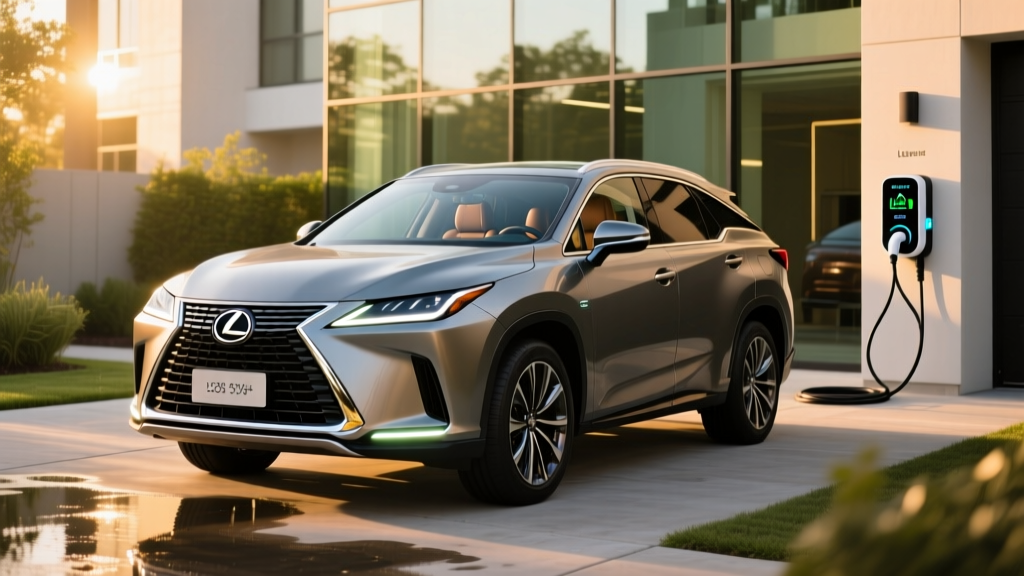
If you need three rows of seating, want meaningful electric-only commuting, and aren't ready to commit to a full battery-electric vehicle, the Lexus TX 550h+ plug-in hybrid occupies a narrow but compelling slice of the market. It pairs a 3.5-liter V6 with a plug-in hybrid system producing 406 combined horsepower, delivers an EPA-estimated 33 miles of electric-only range, and offers the build quality and resale value Lexus is known for — all in a package that seats up to six passengers.
But at a starting MSRP around $78,000, and with a battery that cannot DC fast charge, the TX 550h+ demands a specific buyer profile: someone with home charging access, a commute under 35 miles, and a need for three-row utility without range anxiety on road trips. Here's everything you need to know before signing a lease or purchase agreement.
HEV vs PHEV: What the TX 550h+ Actually Is
Lexus offers the TX in two electrified flavors, and confusing them is easy. Here's the breakdown:
| Feature | TX 500h (HEV) | TX 550h+ (PHEV) |
|---|---|---|
| Powertrain type | Conventional hybrid (self-charging) | Plug-in hybrid (external charging capable) |
| Battery size | ~1.8 kWh (small buffer) | 20.5 kWh usable (NMC lithium-ion) |
| Electric-only driving | Brief low-speed assist only | 33 miles EPA (up to ~75 mph) |
| Plug-in required? | No — regenerative braking only | Yes, to access full EV range |
| Combined horsepower | 366 HP | 406 HP |
| Fuel economy (combined) | 27 MPG | 64 MPGe (EV+gas) / 28 MPG (gas-only) |
| Federal tax credit eligible | No | Potentially — see §30D section below |
The TX 550h+ is a plug-in hybrid electric vehicle (PHEV). You plug it in overnight at home (Level 1 or Level 2), wake up to roughly 33 miles of pure electric range, and commute without burning fuel. Once the battery depletes, the 3.5L V6 and hybrid system take over seamlessly — no range anxiety, no hunting for chargers on road trips. The conventional TX 500h HEV, by contrast, never plugs in and relies on regenerative braking to maintain its small battery buffer.
Fuel Economy: EPA Numbers vs. Real-World MPG
According to fueleconomy.gov, the TX 550h+ posts the following EPA estimates:
| Mode | City | Highway | Combined |
|---|---|---|---|
| Charge-depleting (EV + blended) | 64 MPGe | ||
| Charge-sustaining (gas only, after battery depletes) | 27 MPG | 29 MPG | 28 MPG |
Real-world expectations: In suburban and city driving with frequent regenerative braking opportunities, PHEV owners commonly match or slightly exceed EPA gas-only figures. On a long highway trip with a depleted battery, expect closer to 26–27 MPG at 70–75 mph. In cold weather (below 35°F), electric-only range drops to roughly 25–28 miles as the cabin heater draws from the battery and chemistry slows.
Real-World Expectation: 28–33 miles (warm weather, moderate speeds) / 24–28 miles (cold weather or highway speeds above 65 mph)
Total Combined Range: ~430 miles (18.5-gallon tank + full battery)
The 33-mile electric range covers the average American commute (roughly 16 miles one-way per Census data) with margin to spare. If your daily driving stays under 30 miles and you charge nightly, you may go weeks without visiting a gas station.
Powertrain, Battery, and Charging Specs
| Specification | Detail |
|---|---|
| Engine | 3.5L V6 naturally aspirated + two electric motors |
| Combined system output | 406 HP / 400 lb-ft torque |
| Transmission | eCVT (electronically controlled continuously variable) |
| Drivetrain | Electronic AWD (eAWD) — rear motor drives rear axle |
| Battery chemistry | NMC (nickel manganese cobalt) lithium-ion |
| Battery capacity | 20.5 kWh usable (22.7 kWh gross) |
| Electric-only range | 33 miles (EPA) |
| Max EV speed | ~84 mph |
| Level 1 charging (120V) | ~1.4 kW — full charge in ~14 hours |
| Level 2 charging (240V) | ~6.6 kW — full charge in ~3 hours |
| DC fast charging | Not available |
| Charge port | J1772 (Level 1/2 AC) |
| 0–60 mph | 5.6 seconds |
| Towing capacity | 3,500 lbs |
Critical charging note: The TX 550h+ does not support DC fast charging. This is common for PHEVs — the 20.5 kWh battery is small enough that a 6.6 kW Level 2 home charger refills it in roughly 3 hours, which suits overnight or workplace charging. However, if you were hoping to top up at an Electrify America or Tesla Supercharger station on a road trip, that's not an option. Plan your electric miles around home and work charging.
The eAWD system uses a dedicated rear-axle electric motor rather than a mechanical driveshaft, providing confident traction in rain and light snow without the efficiency penalty of traditional AWD. The 406 combined horsepower makes the TX 550h+ genuinely quick for a three-row SUV — the 5.6-second 0–60 time is notably faster than most competitors in this segment.
Pricing, Trims, and Federal Tax Credit Eligibility
The TX 550h+ is offered in two trims for the 2026 model year:
- TX 550h+ Luxury: MSRP ~$78,090 (including destination)
- TX 550h+ Ultra Luxury: MSRP ~$82,090 (including destination)
Both trims come standard with eAWD, the full PHEV powertrain, a 14-inch touchscreen, wireless Apple CarPlay/Android Auto, Lexus Safety System+ 3.0 (adaptive cruise, lane-keeping, automatic emergency braking), and a panoramic sunroof. The Ultra Luxury adds semi-aniline leather, ventilated second-row captain's chairs, a head-up display, and a Mark Levinson 21-speaker audio system.
Does the TX 550h+ Qualify for the §30D Federal Tax Credit?
This is where PHEV buyers must pay close attention. Under current IRS §30D Clean Vehicle Credit rules, a plug-in hybrid can qualify for up to $7,500 — but eligibility depends on meeting all of the following requirements:
- Battery capacity: At least 7 kWh — the TX 550h+ passes (20.5 kWh usable)
- MSRP cap: SUVs must be at or below $80,000 — the Luxury trim qualifies; Ultra Luxury may exceed the cap depending on options
- Buyer income cap: Modified AGI must not exceed $150,000 (single), $225,000 (head of household), or $300,000 (joint filing)
- Battery component sourcing: A percentage of battery components must be manufactured or assembled in North America, increasing annually
- Critical minerals: A percentage of critical minerals must be sourced from the US or free-trade-agreement countries, increasing annually
- Final assembly: Vehicle must be assembled in North America — the TX is assembled in Princeton, Indiana, which qualifies
Important: The sourcing requirements tighten each year. For 2026, the battery component threshold is 90% and critical minerals threshold is 80%. Always verify current eligibility on the fueleconomy.gov tax credit lookup before purchasing, as manufacturer eligibility can change mid-year. If eligible, the credit can now be transferred to the dealer as a point-of-sale discount under the Inflation Reduction Act provisions.
Also check your state's incentive programs. States like California, Colorado, and New York offer additional rebates for PHEVs, often ranging from $1,000 to $4,000, with their own income and price caps.
Reliability, Battery Warranty, and Replacement Cost
Hybrid System Warranty: 8 years / 100,000 miles
Coverage threshold: Warranty applies if battery capacity falls below approximately 70% of original capacity
Lexus (and parent company Toyota) has the longest track record in hybrid reliability of any automaker. The Prius proved that hybrid batteries can last 200,000+ miles with minimal degradation, and Lexus applies the same engineering philosophy to the TX 550h+. The 20.5 kWh NMC battery is conservatively managed — the system maintains a buffer at the top and bottom of the state-of-charge window, preventing the deep cycling that accelerates degradation.
Expected battery lifespan: Based on Toyota/Lexus hybrid fleet data, expect 85–90% capacity retention at 100,000 miles and 75–85% at 150,000 miles under normal use. Since the TX 550h+ has 33 miles of range new, even 80% retention at 150,000 miles still gives you ~26 miles of electric driving — enough for most commutes.
Battery replacement cost: If out of warranty, a Lexus PHEV battery replacement currently ranges from $8,000 to $12,000 including labor. However, individual module replacement (replacing only degraded cells rather than the entire pack) is often possible and costs $2,000–$4,000. Lexus dealerships are increasingly trained in module-level service.
For overall vehicle reliability, Lexus consistently ranks at or near the top of J.D. Power's Vehicle Dependability Study, and the TX shares its platform with other proven Toyota/Lexus products. The hybrid system adds complexity, but it's a complexity Toyota has refined over 25+ years of production.
Driving Impressions and Daily Ownership
The TX 550h+ drives like a Lexus should: quiet, composed, and effortlessly powerful. In EV mode, the cabin is nearly silent — the V6 doesn't fire up until you demand hard acceleration or exceed the battery's output capacity. The transition from electric to hybrid mode is seamless; most drivers won't notice the engine engagement without watching the power-flow display.
The eCVT avoids the "rubber band" feel of older Toyota hybrids. Under hard acceleration, the V6 and electric motors deliver a combined 406 HP with minimal drone. Ride quality is firm but well-damped, and the TX 550h+ handles its ~5,200-pound curb weight competently through corners — though nobody is buying a three-row Lexus for canyon carving.
Daily charging routine: Plug in when you get home using the included Level 1 cord (120V) for an overnight charge, or install a Level 2 home station for a 3-hour turnaround. Most TX 550h+ owners will find that a Level 2 charger (240V, 32A or higher) is worth the ~$500–$1,200 installation cost for the convenience of a faster top-up, especially if you make multiple short trips per day.
Who Should Buy the TX 550h+ — and Who Shouldn't
Pros
- 33 miles EV range covers most commutes gas-free
- 406 HP provides confident acceleration for a 3-row SUV
- No range anxiety — V6 takes over seamlessly on road trips
- Lexus reliability and 10-year hybrid battery warranty
- eAWD standard for all-weather capability
- Potential $7,500 federal tax credit (verify eligibility)
- Strong resale value typical of Lexus products
Cons
- High starting price (~$78K) before options
- No DC fast charging capability
- 33-mile EV range is modest vs. rivals like the Volvo XC90 Recharge (35 mi)
- Ultra Luxury trim may exceed $80K MSRP tax-credit cap
- 28 MPG gas-only is unremarkable for a hybrid this price
- Third row is best for children, not adults on long trips
Choose the Lexus TX 550h+ If:
- You need three rows but want to commute on electricity most days
- You have reliable home charging (garage or driveway outlet)
- You take regular road trips and don't want to plan around DC chargers
- You value Lexus build quality, dealer network, and long-term reliability
- Your household income qualifies for the §30D credit and the Luxury trim fits the MSRP cap
Look Elsewhere If:
- You can't charge at home (a PHEV without home charging is just an expensive HEV)
- You want 40+ miles of electric range — consider the Volvo XC90 Recharge or wait for next-gen PHEVs
- You're ready for full EV life — the Tesla Model X or Rivian R1S offer three rows with zero gas
- Budget is a primary concern — the Toyota Grand Highlander Hybrid offers three rows at ~$45K with 35 MPG
Frequently Asked Questions
How many MPG does the Lexus TX 550h+ get?
The EPA rates the TX 550h+ at 64 MPGe when combining electric and gas operation. Once the battery is depleted, it operates as a conventional hybrid rated at 27 city / 29 highway / 28 combined MPG. In real-world city driving with regenerative braking, owners may see 28–30 MPG on gas alone.
How far can the TX 550h+ go on electric only?
The EPA estimates 33 miles of electric-only range. In warm weather at moderate speeds, expect 30–33 miles. In cold weather or at sustained highway speeds above 65 mph, expect 24–28 miles. The vehicle can reach up to ~84 mph in EV mode before the engine engages.
Does the TX 550h+ qualify for a federal tax credit?
It may qualify for up to $7,500 under the IRS §30D Clean Vehicle Credit, provided you meet income caps ($300K joint / $150K single), the vehicle MSRP stays at or below $80,000, and battery sourcing requirements are met for the current year. The Luxury trim is more likely to qualify than the Ultra Luxury. Always verify on fueleconomy.gov before purchasing.
Is the Lexus TX 550h+ reliable? What does a battery replacement cost?
Lexus/Toyota has the industry's longest hybrid reliability track record. The hybrid battery is warrantied for 10 years / 150,000 miles. Based on fleet data, expect the battery to retain 75–85% capacity at 150,000 miles. Out-of-warranty replacement costs $8,000–$12,000 for a full pack, though module-level repair often costs $2,000–$4,000.
Hybrid vs PHEV vs EV — which should I choose?
Choose a conventional hybrid (HEV) if you can't charge at home, drive mostly highway miles, and want maximum simplicity — no plugs, no behavior changes. Choose a PHEV like the TX 550h+ if you have home charging, a commute under 35 miles, and also need road-trip flexibility without charger planning. Choose a full EV if you want zero gas costs, have reliable charging access, and are comfortable planning longer trips around DC fast-charger networks.
Can the TX 550h+ use DC fast chargers?
No. The TX 550h+ only accepts AC charging via a J1772 port — Level 1 (120V, ~14 hours for a full charge) or Level 2 (240V, ~3 hours). DC fast chargers (CCS, NACS, CHAdeMO) are not compatible. This is standard for most PHEVs given their smaller battery packs.
How much does it cost to charge the TX 550h+ at home?
A full charge uses about 20.5 kWh. At the US average residential electricity rate of ~$0.16/kWh, that's roughly $3.28 for 33 miles of electric driving — about $0.10 per mile. Compare that to $0.15–$0.18 per mile on premium gasoline at 28 MPG. The savings compound if your utility offers off-peak rates below $0.10/kWh, dropping your per-mile cost to around $0.06.