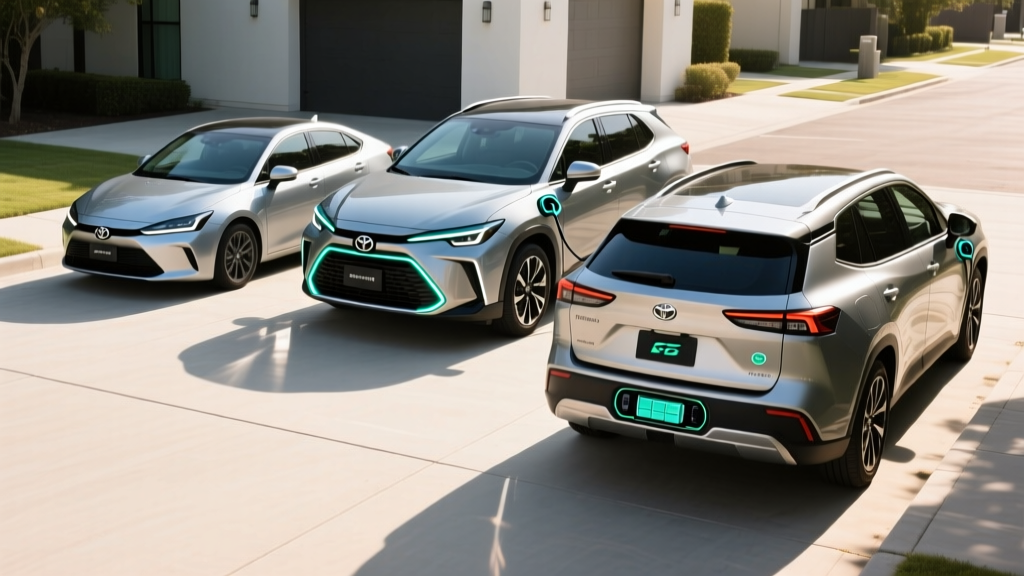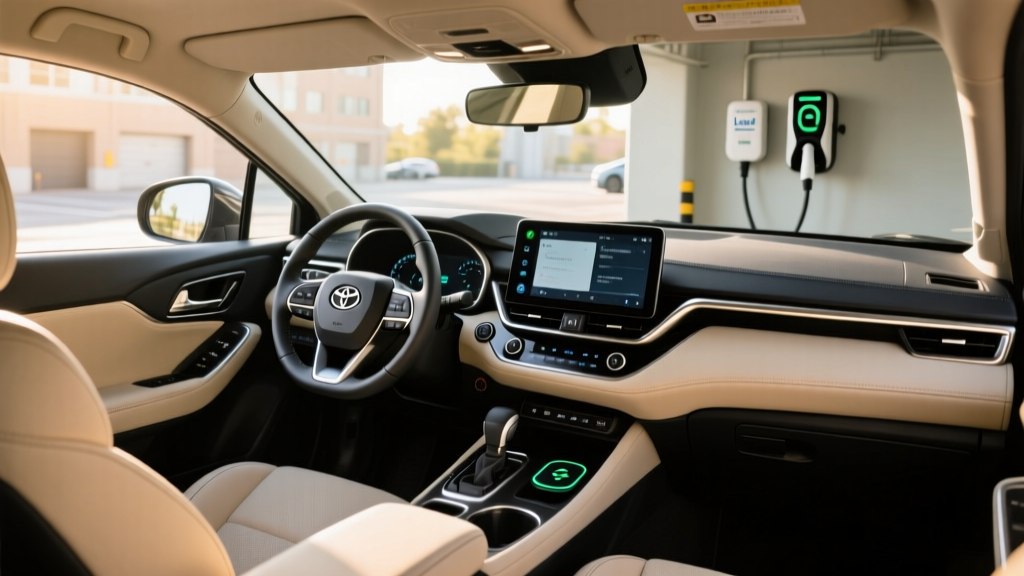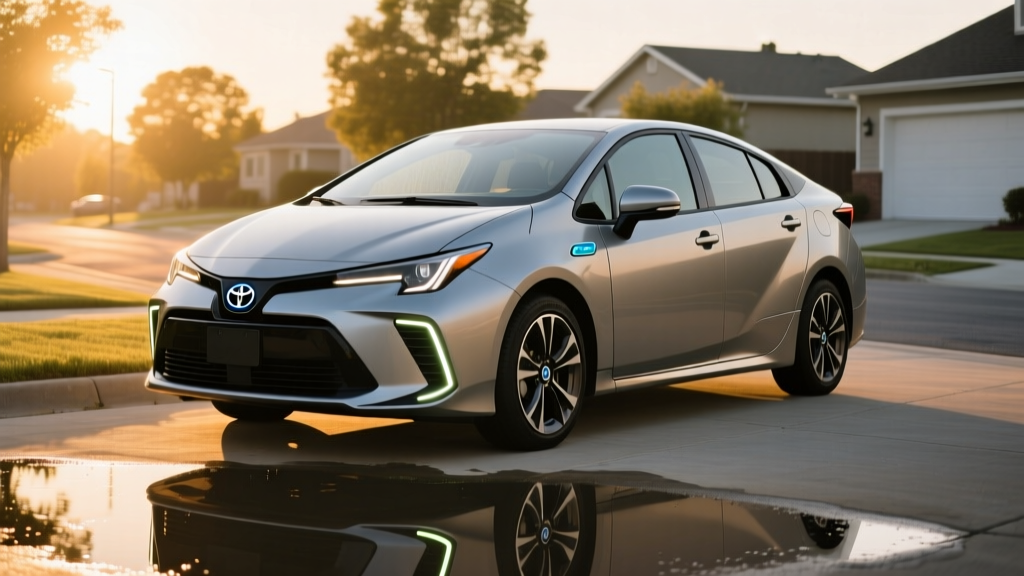
The Toyota Prius has been the benchmark hybrid for over two decades, but the current-generation redesign (introduced for 2023 and carried into 2026) transformed it from a fuel-sipping commuter pod into a genuinely attractive, surprisingly quick compact hatchback. The Prius AWD hybrid variant adds electronic all-wheel drive via a rear-mounted electric motor, trading a small amount of fuel economy for extra traction in rain, snow, and loose surfaces. For 2026, it remains one of the most efficient AWD vehicles sold in the United States — and one of the most practical entry points into electrified driving without plugging in.
This guide covers the 2026 Toyota Prius AWD (the conventional hybrid, or HEV) in full detail: EPA and real-world MPG, powertrain specs, pricing, battery longevity, and how it stacks up against the Prius Prime PHEV and full battery-electric alternatives.
HEV vs. PHEV: Which Prius AWD Are We Talking About?
Toyota offers the Prius in two electrified flavors, and confusing them is the single most common buyer mistake. Here's the distinction:
Prius Hybrid (HEV) — AWD Available
- Powertrain: 2.0L 4-cylinder + front electric motor + rear electric motor (AWD models)
- Battery: ~1.0 kWh lithium-ion (self-charging via regenerative braking and engine)
- Plug-in required: No. You never plug it in — it refuels at any gas station.
- Electric-only driving: Very short distances at low speeds (under ~1 mile)
- AWD availability: Yes — LE, XLE, and Limited trims
Prius Prime (PHEV) — FWD Only
- Powertrain: 2.0L 4-cylinder + larger front electric motor
- Battery: 13.6 kWh lithium-ion (plug-in capable)
- Plug-in required: Yes, to access ~44 miles of electric-only range
- Electric-only driving: Up to 44 EPA-rated miles
- AWD availability: No — the Prius Prime is front-wheel drive only
Key takeaway: If you need all-wheel drive, the conventional Prius hybrid (HEV) is your only option. The plug-in Prius Prime does not offer AWD as of the 2026 model year. This article focuses on the AWD-equipped HEV.
Fuel Economy: EPA Ratings and Real-World MPG
The 2026 Prius AWD carries slightly lower EPA ratings than its front-wheel-drive sibling due to the added weight and mechanical drag of the rear motor. Here's the breakdown by trim:
| Trim | Drivetrain | City MPG | Highway MPG | Combined MPG |
|---|---|---|---|---|
| Prius LE AWD | AWD | 53 | 54 | 54 |
| Prius XLE AWD | AWD | 52 | 52 | 52 |
| Prius Limited AWD | AWD | 49 | 50 | 49 |
| Prius LE FWD (reference) | FWD | 57 | 56 | 57 |
Source: EPA Fuel Economy
Real-World MPG: What Owners Actually See
Toyota hybrids historically perform very close to — and sometimes exceed — their EPA ratings in mixed driving, especially in city conditions where regenerative braking recaptures energy at every stop. Based on aggregated owner reports and independent testing:
- City-heavy commutes (stop-and-go): 54–58 MPG is common on the LE AWD. Hybrids thrive in traffic.
- Highway cruising (70–80 mph): Expect 48–52 MPG. Aerodynamic drag and sustained engine load reduce efficiency, as they do for every vehicle.
- Cold weather (below 30°F): Plan for a 10–15% reduction, bringing combined figures to roughly 45–48 MPG. The engine runs more often to provide cabin heat and warm the catalytic converter.
- Overall mixed driving: Most AWD owners report 50–55 MPG over thousands of miles.
Annual fuel cost estimate: At 52 MPG combined and $3.50/gallon, driving 12,000 miles/year costs approximately $808 in fuel — roughly $1,100 less per year than a comparable 30-MPG compact gasoline car.
Powertrain and Performance Specs
The fifth-generation Prius uses Toyota's latest hybrid architecture, pairing a 2.0-liter Dynamic Force four-cylinder engine with electric motors. AWD models add a rear-mounted motor that engages automatically when the system detects front-wheel slip or during hard acceleration from a stop.
| Specification | 2026 Prius AWD |
|---|---|
| Engine | 2.0L 4-cylinder Dynamic Force (150 hp / 139 lb-ft) |
| Front electric motor | Permanent magnet synchronous (83 kW) |
| Rear electric motor (AWD) | Permanent magnet synchronous (30 kW / 41 hp) |
| Net combined system horsepower | 196 hp |
| Transmission | Continuously variable (eCVT) |
| 0–60 mph | ~7.0 seconds |
| Top speed | 112 mph (electronically limited) |
| Hybrid battery capacity | ~1.0 kWh lithium-ion (sealed) |
| Drivetrain | Electronic on-demand AWD |
| Towing capacity | Not rated for towing |
| Cargo volume (rear seats up) | 23.8 cu ft |
The 196-hp combined output is a dramatic improvement over the prior-generation Prius AWD (which made just 121 hp). The current car accelerates with genuine urgency, merging onto highways and passing without drama. The rear motor's 41 hp may sound modest, but it provides meaningful traction assistance in low-grip conditions without the weight and efficiency penalty of a mechanical driveshaft and rear differential.
How the AWD System Works
Unlike traditional AWD systems that use a mechanical driveshaft to send engine power to the rear wheels, the Prius AWD uses an electronic on-demand setup:
- Normal driving: The front motor and engine handle propulsion. The rear motor stays dormant, saving energy.
- Low-trition conditions: When the system detects front-wheel slip (wet roads, snow, gravel), the rear motor engages automatically, providing up to 41 hp of rear-axle thrust.
- Hard acceleration: The rear motor supplements the front for improved launch grip.
- Low-speed maneuvers: The rear motor can assist during parking-lot-speed turns on slippery surfaces.
This system is not designed for off-roading, deep snow, or high-speed performance driving. It's a traction-assist system that improves confidence in rain and light snow — exactly what most AWD buyers in the U.S. actually need.
Pricing, Trims, and Tax Credit Eligibility
The 2026 Prius AWD is available in three trims. Pricing below reflects manufacturer MSRP before destination charges:
| Trim | MSRP (approx.) | Key Features |
|---|---|---|
| LE AWD | $29,545 | 8-inch touchscreen, Toyota Safety Sense 3.0, wireless CarPlay/Android Auto, LED headlights |
| XLE AWD | $32,995 | SofTex seats, 12.3-inch touchscreen, wireless charging, heated front seats, Smart Key |
| Limited AWD | $36,365 | Heated/ventilated front seats, fixed glass roof, JBL audio, digital rearview mirror, parking assist |
Federal Tax Credit: Does the Prius AWD Qualify?
The conventional Prius hybrid (HEV) does not qualify for the federal §30D Clean Vehicle Credit, which is reserved for plug-in electric vehicles (BEVs and PHEVs) meeting battery sourcing, MSRP, and buyer income requirements. This is a common point of confusion.
However, the Prius Prime (PHEV) may qualify for up to $3,750 under current IRS §30D rules, subject to battery critical-mineral and component sourcing requirements that change annually. The Prime is FWD only, so if AWD is non-negotiable, you will not receive a federal purchase incentive.
Some states offer hybrid-specific rebates or incentives that may apply to the Prius AWD. These vary widely by jurisdiction. Check your state's energy or environmental agency website, or consult resources like the Alternative Fuels Data Center for state-level incentive databases.
Battery Warranty, Reliability, and Replacement Cost
Hybrid battery longevity is the most common concern among first-time hybrid buyers. Here's what you need to know:
Toyota Hybrid Battery Warranty
- Coverage: 10 years / 150,000 miles (whichever comes first)
- What's covered: Hybrid battery pack, battery control module, inverter with converter
- Applies to: All 50 states (California-emissions states previously had extended coverage, but Toyota standardized 10/150k nationally for current-generation models)
- Transferable: Yes, warranty transfers to subsequent owners
Real-World Battery Longevity
Toyota's hybrid battery packs have an excellent track record. The current-generation Prius uses a lithium-ion pack (prior generations used nickel-metal hydride). Based on data from previous-gen Prius fleets:
- Most Toyota hybrid batteries last well beyond 150,000 miles with minimal capacity loss.
- The ~1.0 kWh battery in the HEV is small and operates within a narrow state-of-charge window (roughly 40–80%), which dramatically reduces degradation compared to full EV batteries that cycle from 10–90%.
- Failure before 100,000 miles is rare. When it does occur, it's typically covered under warranty.
Battery Replacement Cost
If the hybrid battery fails outside of warranty:
- New OEM replacement: Approximately $2,500–$4,000 installed (dealer pricing varies by region)
- Refurbished/remanufactured: $1,500–$2,500 installed through independent hybrid specialists
- Individual module replacement: Some shops can replace only the failed cells within the pack for $500–$1,200
For context, a conventional gas car's transmission replacement often costs $3,000–$5,000 and is far more likely to fail within the vehicle's lifetime than a Toyota hybrid battery.
Overall Reliability
Toyota consistently ranks among the top brands in long-term reliability studies (J.D. Power, Consumer Reports). The Prius specifically has been a reliability benchmark for over 20 years. The fifth-generation model's simpler rear motor AWD system (fewer moving parts than mechanical AWD) adds minimal complexity. Toyota Safety Sense 3.0 — the standard ADAS suite — includes automatic emergency braking, lane-keeping assist, adaptive cruise control, and road-sign assist.
Prius AWD Hybrid vs. PHEV vs. Full EV: Which Fits You?
Choosing between a conventional hybrid, plug-in hybrid, and battery-electric vehicle depends on your driving patterns, charging access, and budget. Here's a practical decision framework:
Choose the Prius AWD Hybrid (HEV) if:
- You need AWD for rain, snow, or gravel roads
- You cannot charge at home or work (no garage, no outlet access, apartment living)
- You want maximum simplicity — no plugs, no charging apps, no range planning
- Your budget is under $37,000 and you want the lowest upfront cost
- You drive 12,000–15,000 miles/year in mixed conditions
Choose the Prius Prime (PHEV) if:
- You have reliable Level 2 home charging (garage with 240V outlet)
- Your daily commute is under 44 miles round-trip (you can drive mostly on electricity)
- You want EV-like daily driving with gas-engine backup for road trips
- You don't need AWD
- You may qualify for the partial federal tax credit
Choose a Full EV (BEV) if:
- You have reliable home Level 2 charging
- You want zero tailpipe emissions and the lowest per-mile energy cost
- You're willing to plan around DC fast charging on road trips
- You qualify for the full $7,500 federal tax credit (subject to income, MSRP, and sourcing rules)
- You don't need AWD — or you're willing to pay more for an AWD EV like the Tesla Model Y or Hyundai Ioniq 5
Pros and Cons at a Glance
Pros
- 54 MPG combined (LE AWD) — among the most efficient AWD vehicles sold
- 196 hp makes it genuinely quick for the class (0–60 in ~7.0 seconds)
- No plug-in required — refuel at any gas station
- 10-year / 150,000-mile hybrid battery warranty
- Standard Toyota Safety Sense 3.0 ADAS suite
- Striking design — no longer looks like a penalty for choosing efficiency
- Low annual fuel cost (~$800/year at 12k miles)
Cons
- No federal tax credit for conventional hybrids
- AWD system is traction-assist only — not for serious off-road or deep snow
- Cargo space (23.8 cu ft) is modest vs. small SUVs
- Higher trims push past $36,000, approaching PHEV territory
- Rear seat headroom is tight for taller passengers (sloping roofline)
- No DC fast charging capability (not applicable to HEVs, but worth noting vs. PHEV/EV)
Frequently Asked Questions
How many MPG does the Prius AWD hybrid get?
The 2026 Prius LE AWD is EPA-rated at 53 city / 54 highway / 54 combined. The XLE AWD rates 52 combined, and the Limited AWD rates 49 combined. Real-world mixed driving typically yields 50–55 MPG, with city-heavy routes sometimes exceeding the EPA estimate.
Does the Prius AWD need to be plugged in?
No. The Prius AWD is a conventional hybrid (HEV). Its small lithium-ion battery charges through regenerative braking and the gasoline engine. You never plug it in — just fill up at any gas station.
Is the Prius AWD system good in snow?
The electronic on-demand AWD provides meaningful traction improvement over FWD in rain, light snow, and icy starts. It is not a substitute for winter tires in severe conditions, and it is not designed for deep snow or off-road use. For most drivers in moderate-winter climates (think Mid-Atlantic, Pacific Northwest), the Prius AWD with all-season or winter tires is a capable daily driver.
How long will the Prius hybrid battery last?
Toyota covers the hybrid battery for 10 years or 150,000 miles. In practice, Toyota hybrid batteries routinely last 150,000–200,000+ miles. The small battery operates in a narrow charge window that minimizes wear. Out-of-warranty replacement costs $2,500–$4,000 at a dealer, or less through independent hybrid shops.
Does the Prius AWD hybrid qualify for any tax credit?
The conventional Prius hybrid does not qualify for the federal §30D Clean Vehicle Credit, which applies only to plug-in vehicles. Some states offer rebates or incentives for hybrids — check your state's energy office or the Alternative Fuels Data Center for details.
What's the difference between Prius AWD and Prius Prime?
The Prius AWD is a conventional hybrid you never plug in, with all-wheel drive and up to 54 MPG. The Prius Prime is a plug-in hybrid (PHEV) with ~44 miles of electric-only range, a larger 13.6 kWh battery you charge at home, and front-wheel drive only. They share a platform but serve different needs.
How fast is the Prius AWD?
The 2026 Prius AWD produces 196 combined system horsepower and accelerates from 0–60 mph in approximately 7.0 seconds. That's competitive with turbocharged compact hatchbacks and substantially quicker than the prior-generation Prius AWD (which managed 121 hp and a 10+ second 0–60 time).