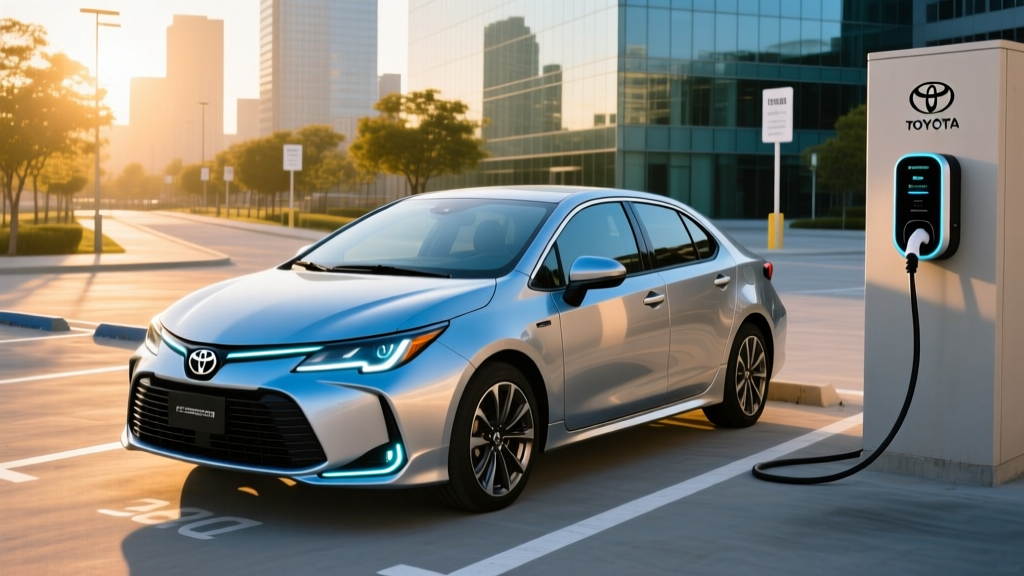
The Toyota Corolla Hybrid occupies a specific lane in the electrified-car market: it is a conventional hybrid electric vehicle (HEV) that requires no plug, no range anxiety, and no charging infrastructure — yet delivers fuel economy that rivals or beats many plug-in hybrids once the battery depletes. For 2026, the Corolla Hybrid continues with Toyota's fifth-generation hybrid powertrain, all-wheel-drive availability, and a starting price that undercuts most competitors in the compact hybrid segment.
This guide covers the exact EPA numbers, real-world fuel economy behavior, powertrain specs, battery longevity data, and purchase economics you need to decide whether the Corolla Hybrid is the right electrified vehicle for your situation — or whether a PHEV or full BEV would serve you better.
HEV vs PHEV: Where the Corolla Hybrid Fits
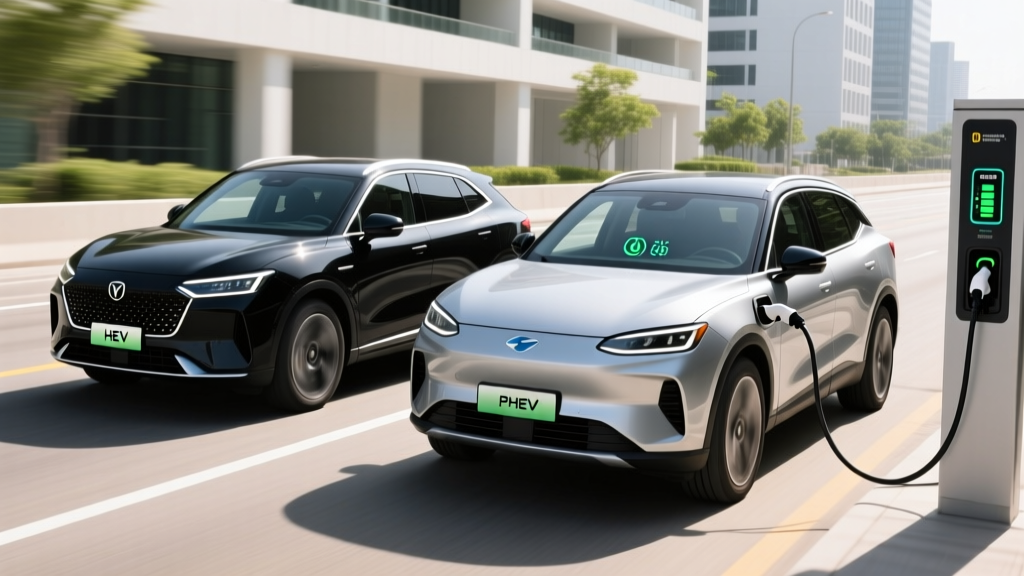
Conventional Hybrid (HEV) — Toyota Corolla Hybrid: The gasoline engine and electric motor work together, with the battery recharged exclusively through regenerative braking and engine power. You never plug it in. The battery is small (~1.3 kWh usable), but the system constantly cycles between electric assist and engine power to maximize efficiency. There is no meaningful electric-only driving range — the motor assists at low speeds and during acceleration, but the engine is always available.
Plug-In Hybrid (PHEV) — e.g., Toyota Prius Prime: A larger battery (~13.6 kWh usable) provides 35–44 miles of electric-only range before the gasoline engine engages. You plug it in to recharge. Once the EV range is exhausted, it operates like a conventional hybrid. PHEVs qualify for the federal §30D tax credit (up to $3,750–$7,500 depending on battery sourcing and income); conventional HEVs like the Corolla Hybrid do not.
If you cannot charge at home or at work, the Corolla Hybrid's HEV architecture is the correct choice — you get 50 MPG without any behavioral change. If you can charge and most of your driving is under 40 miles round-trip, a PHEV may save more fuel. We compare these scenarios in the decision framework below.
Fuel Economy: EPA Ratings and Real-World MPG
| Trim / Drivetrain | City MPG | Highway MPG | Combined MPG |
|---|---|---|---|
| LE FWD | 53 | 46 | 50 |
| LE AWD | 51 | 44 | 48 |
| SE AWD | 50 | 43 | 47 |
Source: EPA Fuel Economy
Real-World MPG Expectations: Toyota hybrids consistently overperform their EPA city ratings in stop-and-go traffic because regenerative braking recovers more energy at low speeds. In mixed suburban driving, owners frequently report 52–56 MPG in the FWD LE. Highway-only trips at 75+ mph typically yield 42–45 MPG, as aerodynamic drag reduces the hybrid system's advantage. In cold weather (below 30°F), expect a 5–8% reduction due to engine warm-up cycles running richer and cabin heating drawing additional load.
The FWD LE's 50 MPG combined is the headline number, but the AWD trades only 2–3 MPG for the traction benefit of a rear-mounted electric motor — a worthwhile exchange for buyers in snow-belt states. The SE trim's sport-tuned suspension and larger 18-inch wheels account for the additional 1 MPG penalty versus the LE AWD.
Powertrain and Performance Specs
| Specification | Detail |
|---|---|
| Engine | 1.8L 4-cylinder Atkinson-cycle |
| Engine HP | 97 hp @ 5,200 rpm |
| Front Electric Motor | 94 hp / 125 lb-ft torque |
| Rear Electric Motor (AWD only) | 40 hp / 38 lb-ft torque |
| Net Combined System HP | 138 hp |
| Transmission | eCVT (planetary gearset, no fixed gears) |
| Hybrid Battery | ~1.3 kWh lithium-ion (NiMH on prior gens) |
| 0–60 mph | ~9.0 seconds (FWD), ~8.8 seconds (AWD) |
| Top Speed | 112 mph (electronically limited) |
| Curb Weight | ~3,085 lbs (FWD LE) |
The 1.8-liter Atkinson-cycle engine is optimized for thermal efficiency rather than peak power — it sacrifices low-end torque for a ~40% thermal efficiency figure that is among the highest in production gasoline engines. The electric motor fills the torque gap during acceleration, which is why the Corolla Hybrid feels more responsive from a stop than its 138 net horsepower suggests. The eCVT is not a belt-and-cone continuously variable transmission; it is a planetary gearset that blends engine and motor power with zero shift shock and no traditional gear ratios.
The AWD system is worth specific attention: it uses a dedicated rear electric motor with no mechanical driveshaft connecting it to the front axle. The rear motor engages automatically during acceleration from a stop and in low-traction conditions, then disconnects during steady-state cruising to avoid parasitic drag. This is why the AWD penalty is only 2 MPG — the rear motor is idle most of the time.
Pricing, Trims, and Tax Credit Eligibility
| Trim | MSRP (2026) | Drivetrain | Key Features |
|---|---|---|---|
| LE | $24,325 | FWD | 8" touchscreen, Toyota Safety Sense 3.0, wireless CarPlay/Android Auto |
| LE AWD | $25,725 | AWD | Same as LE + rear electric motor AWD system |
| SE AWD | $27,225 | AWD | Sport-tuned suspension, 18" alloy wheels, paddle shifters, Sport driving mode |
Source: Toyota Corolla Hybrid
Federal Tax Credit: Not Eligible. The Toyota Corolla Hybrid is a conventional HEV, not a plug-in vehicle. The IRS §30D Clean Vehicle Credit applies only to plug-in electric vehicles (BEVs and PHEVs) with battery capacities of at least 7 kWh. The Corolla Hybrid's ~1.3 kWh battery does not qualify. No federal purchase incentive exists for conventional hybrids as of 2026.
Some states and municipalities offer separate incentives for hybrid purchases or for choosing high-MPG vehicles, but these vary by jurisdiction. Check your state energy office or department of revenue for current programs.
At $24,325 for the LE FWD, the Corolla Hybrid commands roughly a $1,500 premium over the equivalently trimmed gas-only Corolla LE. The fuel savings payback depends on your annual mileage and local gas prices. At 15,000 miles per year and $3.40/gallon, the hybrid saves approximately $680 annually versus the gas Corolla (32 MPG combined), yielding payback in roughly 2.2 years. Against a 25 MPG compact competitor, payback drops to under 18 months.
Battery Longevity, Warranty, and Replacement Cost
| Component | Warranty Coverage |
|---|---|
| Hybrid Battery | 10 years / 150,000 miles (whichever comes first) |
| Hybrid System Components (inverter, motor, eCVT) | 8 years / 100,000 miles |
| Powertrain (engine) | 5 years / 60,000 miles |
| Basic Bumper-to-Bumper | 3 years / 36,000 miles |
Toyota's hybrid battery warranty is one of the strongest in the industry and reflects two decades of real-world data. The Prius, which shares this hybrid architecture lineage, has demonstrated hybrid battery lifespans routinely exceeding 200,000 miles with less than 15% capacity loss. The Corolla Hybrid's lithium-ion pack (upgraded from the nickel-metal hydride packs used in earlier Toyota hybrids) offers improved energy density and thermal stability.
Hybrid battery capacity loss is measured differently than in a BEV. A Corolla Hybrid battery that degrades from 1.3 kWh to 1.1 kWh usable capacity has lost ~15% — but the effect on fuel economy is marginal (perhaps 1–2 MPG) because the system's efficiency depends on the cycling of the battery rather than its total capacity. The engine and regen braking constantly top up and draw down the pack in shallow cycles, which is far less stressful than the deep discharge cycles of a BEV.
Replacement cost if out of warranty: A new OEM hybrid battery for the Corolla Hybrid runs approximately $2,500–$3,500 installed at a Toyota dealer. Third-party refurbished packs are available for $1,200–$1,800 installed. Given the 10-year/150,000-mile warranty and the demonstrated longevity of Toyota hybrid packs, out-of-pocket replacement during typical ownership is uncommon.
Reliability and Safety Ratings
Toyota's hybrid system has accumulated over 25 million vehicles sold globally since 1997, and the Corolla platform itself is one of the most-produced vehicles in automotive history. The combination yields reliability data that is among the most robust in the industry.
The IIHS has historically rated the Corolla sedan platform as a Top Safety Pick when equipped with specific headlights, and Toyota Safety Sense 3.0 comes standard on every trim. This suite includes pre-collision braking with pedestrian detection, full-speed adaptive cruise control, lane-departure alert with steering assist, lane-tracing assist, and automatic high beams.
One reliability consideration specific to the AWD trims: the rear electric motor and its associated inverter add components that the FWD models do not have. While Toyota's eAWD system has proven reliable since its introduction on the Prius AWD-e and RAV4 Hybrid, buyers who do not need all-wheel drive eliminate this additional failure point by choosing the FWD LE.
Corolla Hybrid vs PHEV vs Full EV: Decision Framework
Choose the Corolla Hybrid (HEV) if:
- You cannot install a home charger (apartment, street parking, no garage)
- Your daily driving exceeds 40 miles, making PHEV electric-only range insufficient for most trips
- You want maximum fuel economy with zero behavioral change — no plugging in, no range planning
- Your budget is under $28,000 and you want the lowest upfront cost among electrified vehicles
- You take frequent road trips where DC fast-charging infrastructure is sparse or unreliable
Choose a PHEV (e.g., Prius Prime) if:
- You can charge at home (Level 1 is sufficient for overnight PHEV charging)
- Your daily commute is under 40 miles round-trip, allowing most driving on electricity
- You want to reduce gasoline consumption by 70–90% without range anxiety on longer trips
- You qualify for the §30D federal tax credit (up to $3,750 for the Prius Prime, subject to income and sourcing rules)
Choose a full BEV (e.g., Chevy Equinox EV, Tesla Model 3) if:
- You have reliable home Level 2 charging
- Your daily driving is under 250 miles and you are comfortable planning road-trip charging stops
- You want to eliminate gasoline purchases entirely and minimize maintenance (no oil changes, no engine)
- You qualify for the full $7,500 §30D credit and/or state EV rebates, bringing effective price close to a hybrid
The Corolla Hybrid's advantage is its universality: it works identically whether you live in a condo, a rural area with no public chargers, or a city with expensive electricity. The trade-off is that you remain tethered to gasoline — and while 50 MPG dramatically reduces your fuel bill, it does not eliminate it.
Ownership Economics: 5-Year Cost Snapshot
| Cost Factor (5 Years / 75,000 mi) | Corolla Hybrid LE FWD | Corolla Gas LE (32 MPG) | Compact BEV (250 mi range) |
|---|---|---|---|
| Purchase Price (MSRP) | $24,325 | $22,825 | $35,000 (est. after credit) |
| Fuel / Electricity | $5,100 (gas @ $3.40/gal) | $7,970 (gas @ $3.40/gal) | $2,625 (electric @ $0.14/kWh) |
| Maintenance (est.) | $2,200 | $3,000 | $1,200 |
| Insurance (est. avg) | $7,500 | $7,200 | $8,500 |
| 5-Year Total (approx.) | $39,125 | $40,995 | $47,325 |
The Corolla Hybrid saves roughly $1,870 over five years versus its gas-only sibling, primarily through fuel savings. Against a BEV, the hybrid's lower purchase price offsets the BEV's lower running costs over a five-year window — though the BEV pulls ahead in years six through ten as fuel savings compound and the hybrid's battery approaches warranty expiration.
Insurance costs for the Corolla Hybrid are modestly higher than the gas version due to the hybrid system's replacement cost in a collision, but significantly lower than most BEVs. Maintenance savings come from the engine running less frequently (reducing oil degradation), regenerative braking extending pad life (often 80,000+ miles on original pads), and the eCVT having no belts, chains, or friction clutches to replace.
Frequently Asked Questions
How many MPG does the Toyota Corolla Hybrid get?
The 2026 Corolla Hybrid LE FWD is EPA-rated at 53 city / 46 highway / 50 combined MPG. The AWD trims rate at 48 combined (LE) and 47 combined (SE). In real-world city driving, many owners report exceeding the EPA city figure by 2–6 MPG due to aggressive regenerative braking in stop-and-go traffic.
Does the Corolla Hybrid need to be plugged in?
No. The Corolla Hybrid is a conventional hybrid (HEV). Its small battery recharges through regenerative braking and the gasoline engine. You fuel it exactly like a gas car — there is no plug, no charging cable, and no electric-only driving range to manage.
Is the Corolla Hybrid reliable and what does battery replacement cost?
Toyota's hybrid system has over 25 years of production history with demonstrated battery lifespans exceeding 200,000 miles. The hybrid battery is warranted for 10 years / 150,000 miles. Out-of-warranty replacement costs approximately $2,500–$3,500 for an OEM pack or $1,200–$1,800 for a refurbished unit.
Does the Toyota Corolla Hybrid qualify for any tax credit?
No. The federal §30D Clean Vehicle Credit applies only to plug-in electric vehicles (BEVs and PHEVs) with batteries of at least 7 kWh. The Corolla Hybrid's ~1.3 kWh battery does not meet this threshold. Check your state's energy office for any local hybrid incentives, as these vary by jurisdiction.
Should I get the Corolla Hybrid or the Prius?
The Prius offers slightly higher combined MPG (up to 57 on the LE FWD), a more aerodynamic design, and available PHEV configuration (Prius Prime). The Corolla Hybrid offers a more traditional sedan design, a lower starting price, and the familiarity of the Corolla nameplate. If maximum efficiency and a PHEV option matter, choose the Prius. If budget and conventional styling are priorities, the Corolla Hybrid delivers nearly identical real-world economy.
How does AWD affect fuel economy?
The electronic AWD system on the Corolla Hybrid costs only 2 MPG combined versus FWD (48 vs 50). The rear electric motor engages only during acceleration and low-traction conditions and remains disconnected during steady-state cruising, minimizing efficiency loss. For buyers in regions with snow or rain, the 2 MPG trade-off is typically worthwhile.
Pros
- 50 MPG combined (FWD LE) with no plug-in requirement
- AWD available with only a 2 MPG penalty
- Sub-$25,000 starting price for an electrified vehicle
- 10-year / 150,000-mile hybrid battery warranty
- Toyota Safety Sense 3.0 standard on all trims
- Proven hybrid reliability with 25+ years of Toyota data
Cons
- No federal tax credit eligibility (HEV, not PHEV/BEV)
- Modest 138 hp — adequate for commuting, not for spirited driving
- ~9.0 second 0–60 mph time trails turbocharged gas competitors
- Rear seat legroom is tighter than some compact rivals
- No DC fast charging or meaningful electric-only range
- Still dependent on gasoline prices, however efficiently