What Is a Hybrid Car? The Real Definition Buyers Need
The basic hybrid car definition is straightforward: a vehicle that combines an internal combustion engine with one or more electric motors and a battery pack to improve fuel efficiency, performance, or both. But that single sentence hides a critical fork in the road. In 2026, the term "hybrid" covers two fundamentally different powertrains — the conventional hybrid (HEV) and the plug-in hybrid (PHEV) — and confusing them is the most common mistake shoppers make.
A conventional hybrid generates all its electricity onboard through regenerative braking and the gas engine. You never plug it in. A plug-in hybrid has a larger battery you can charge from a wall outlet or public charger, giving it a meaningful electric-only driving range before the engine kicks in. The ownership experience, fuel cost, and tax-credit eligibility diverge sharply between the two.
This guide defines both architectures with exact numbers, compares them across the metrics that matter, and gives you a decision framework to choose between a hybrid, a PHEV, or a full battery-electric vehicle (BEV).
Conventional Hybrid (HEV): How It Works and What It Delivers
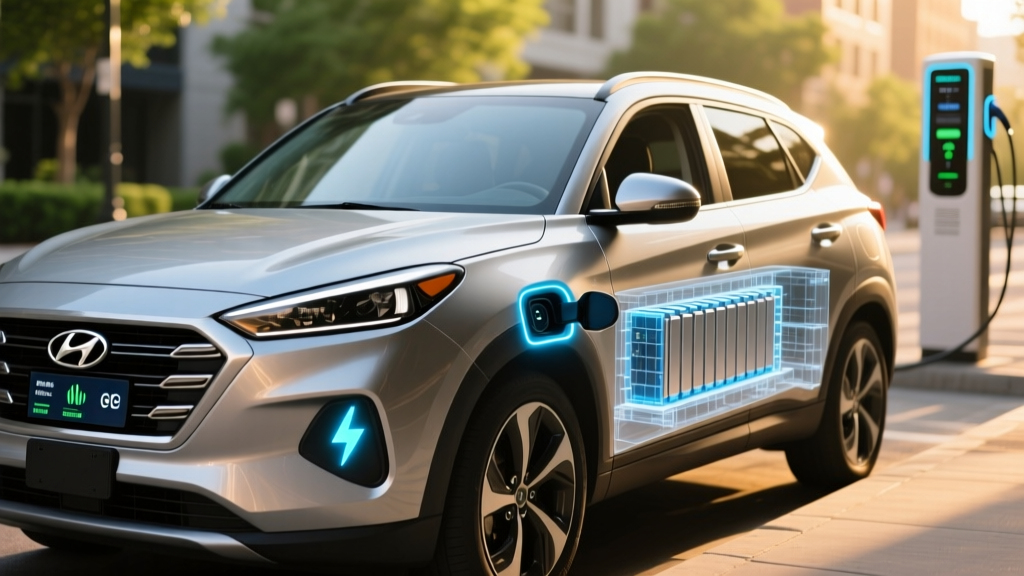
A conventional hybrid — technically called a Hybrid Electric Vehicle (HEV) — uses a small battery pack (typically 1.0 to 2.0 kWh) paired with an electric motor that assists the gasoline engine during acceleration, captures energy during braking, and enables brief electric-only movement at low speeds. The battery recharges exclusively through regenerative braking and engine-driven generation. There is no plug, no charging cable, and no electric-only highway driving.
The result is a meaningful efficiency bump over a comparable gas-only car, especially in stop-and-go city traffic where regenerative braking recovers the most energy. Hybrids routinely exceed their EPA city estimates in real-world urban driving because the electric motor handles the inefficient low-speed work that wastes fuel in conventional cars.
2026 Benchmark HEV: Toyota Prius
The 2026 Toyota Prius remains the segment benchmark. Here are the EPA numbers and real-world expectations:
| Metric | EPA Estimate | Real-World Expectation |
|---|---|---|
| City MPG | 53 | 50–58 (often exceeds in urban driving) |
| Highway MPG | 54 | 48–52 (highway favors ICE less) |
| Combined MPG | 54 | 50–55 |
| Fuel Tank | 11.3 gal | ~570–610 mi total range |
| Powertrain | 2.0L 4-cyl + 2 electric motors, 196 hp combined | |
Source: fueleconomy.gov
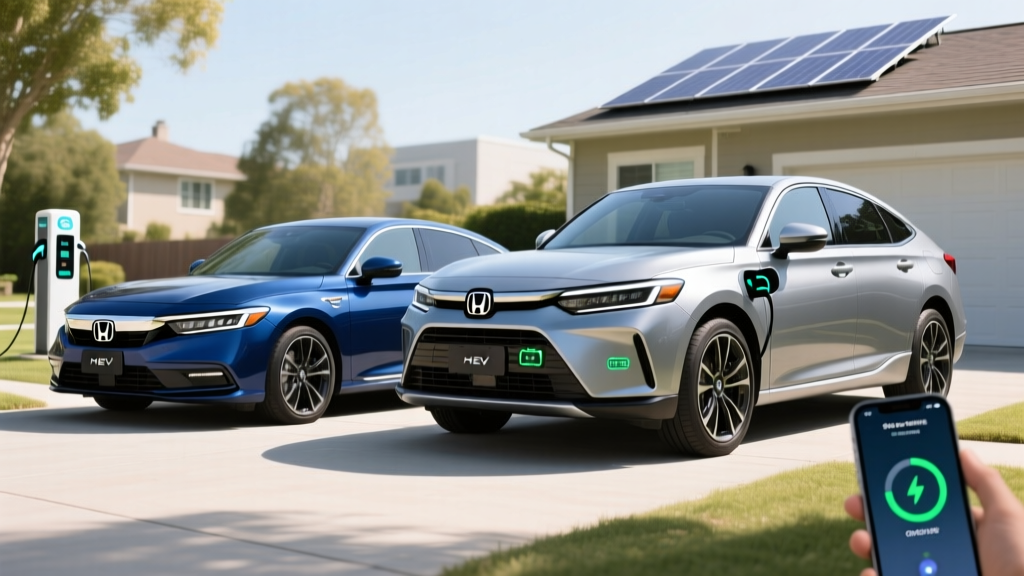
HEVs like the Prius, Honda Accord Hybrid, and Hyundai Tucson Hybrid share common traits: no plug, no range anxiety, lower purchase price than PHEVs, and a seamless driving experience that requires zero behavioral change from a gas-car owner.
Plug-In Hybrid (PHEV): Electric Range Meets Gas Backup
A Plug-In Hybrid Electric Vehicle (PHEV) bridges the gap between a conventional hybrid and a full EV. It carries a significantly larger battery pack — typically 13 to 25 kWh — that you charge by plugging into a Level 1 (120V) or Level 2 (240V) outlet. That battery provides 25 to 50 miles of electric-only driving before the gasoline engine starts and the car operates like a conventional hybrid.
The appeal is practical: most American drivers travel under 40 miles per day (FHWA data), so a PHEV owner who charges at home can complete the vast majority of trips on electricity while retaining the gas engine for road trips, towing, or days when charging isn't possible.
2026 Benchmark PHEV: Toyota RAV4 Prime
| Specification | Value |
|---|---|
| Electric-Only Range (EPA) | 42 miles |
| Battery Capacity | 18.1 kWh (lithium-ion) |
| Combined MPG (after battery depleted) | 38 MPG combined |
| MPGe (electric + gas combined) | 94 MPGe |
| Level 1 Charge Time (120V) | ~12 hours (0–100%) |
| Level 2 Charge Time (240V) | ~2.5 hours (0–100%) |
| DC Fast Charging | Not available |
| Powertrain | 2.5L 4-cyl + electric motors, 302 hp combined |
| 0–60 mph | 5.7 seconds |
| Total Combined Range | ~600 miles |
| Base MSRP | $44,960 |
Source: fueleconomy.gov
HEV vs PHEV vs BEV: Side-by-Side Comparison
Understanding the hybrid car definition means knowing where hybrids sit in the broader electrified-vehicle landscape. Here's how the three architectures compare on the dimensions that drive purchase decisions:
| Attribute | HEV (Hybrid) | PHEV (Plug-In Hybrid) | BEV (Full Electric) |
|---|---|---|---|
| Plug Required? | No | Yes (optional but recommended) | Yes (mandatory) |
| Battery Size | 1.0–2.0 kWh | 13–25 kWh | 50–100+ kWh |
| Electric-Only Range | <1 mile at low speed | 25–50 miles | 200–400+ miles |
| Total Range | 450–650 miles | 450–650 miles | 200–400+ miles |
| Fuel/Energy Cost (per mile) | ~$0.08–$0.10 | ~$0.03–$0.05 (electric), ~$0.10 (gas) | ~$0.03–$0.06 |
| Maintenance Complexity | Low (no plug, proven systems) | Moderate (two full powertrains) | Low (few moving parts) |
| Federal Tax Credit (§30D) | Not eligible | Up to $7,500 (if eligible) | Up to $7,500 (if eligible) |
| Typical Price Premium vs Gas | +$1,000–$3,000 | +$5,000–$10,000 | +$5,000–$15,000 |
| Best For | No home charging, simple ownership | Home charging + road trips | Home charging, daily commuting |
How Many MPG Does a Hybrid Get? Real Numbers by Model
Hybrid fuel economy varies widely depending on the vehicle class, powertrain tuning, and whether the manufacturer prioritizes efficiency or performance. Here's a cross-section of 2026 models to illustrate the range:
| Model | Type | City MPG | Hwy MPG | Combined MPG | EV Range (PHEV) |
|---|---|---|---|---|---|
| Toyota Prius LE | HEV | 53 | 54 | 54 | — |
| Honda Accord Hybrid | HEV | 51 | 44 | 48 | — |
| Hyundai Tucson Hybrid | HEV | 38 | 38 | 38 | — |
| Toyota RAV4 Prime | PHEV | 40* | 36* | 38* | 42 mi |
| Jeep Wrangler 4xe | PHEV | 20* | 20* | 20* | 22 mi |
| Ford Escape PHEV | PHEV | 42* | 37* | 40* | 37 mi |
* MPG figures for PHEVs represent charge-sustaining mode (after battery is depleted). Electric-mode efficiency is measured in MPGe. Source: fueleconomy.gov
Tax Credit Eligibility: Which Hybrids Qualify?
Under the current IRS §30D rules, conventional hybrids (HEVs) do not qualify for the federal clean vehicle tax credit. Only plug-in hybrids and full EVs with sufficient battery capacity are eligible — and even then, qualification depends on a web of requirements:
- MSRP Cap: Vans, SUVs, and pickups must be under $80,000; sedans under $55,000
- Buyer Income Cap: Modified AGI must not exceed $300,000 (joint), $225,000 (head of household), or $150,000 (single)
- Battery Sourcing: Critical minerals and battery components must meet phased-in domestic/free-trade-area sourcing thresholds that tighten annually through 2027
- Assembly: Final assembly must occur in North America
- Point-of-Sale Transfer: Eligible buyers can transfer the credit to the dealer at purchase, reducing the purchase price directly rather than waiting for a tax refund
Among PHEVs, credit eligibility shifts frequently as manufacturers adjust battery supply chains. The Jeep Wrangler 4xe and Chrysler Pacifica PHEV have historically qualified for partial or full credits, but buyers should verify current eligibility on fueleconomy.gov before purchasing. Many PHEVs lose eligibility due to battery-component sourcing rules that tighten each year.
Hybrid Battery Reliability, Warranty, and Replacement Cost
Battery longevity is the single most common concern among first-time hybrid buyers — and it's the area where hybrids have the strongest track record. Modern hybrid battery packs are engineered for the life of the vehicle, with extensive real-world data supporting their durability.
- Federal minimum: 8 years / 100,000 miles (mandated for all hybrid and EV battery packs sold in the US)
- California (CARB states): 10 years / 150,000 miles for PZEV/AT-PZEV certified vehicles
- Toyota: 10 years / 150,000 miles on hybrid battery (all 50 states, from 2020 model year onward)
- Honda: 8 years / 100,000 miles (10 years / 150,000 in CARB states)
- Hyundai/Kia: 10 years / 100,000 miles on hybrid and PHEV battery packs
- Warranty trigger: Typically activates when battery capacity drops below 60–70% of original capacity
Real-World Hybrid Battery Longevity
Toyota's hybrid system, refined over 25+ years since the original 1997 Prius, has demonstrated exceptional longevity. Independent fleet data and owner surveys consistently show:
- Prius battery packs routinely last 150,000–200,000+ miles before significant degradation
- Failure rates before 100,000 miles are under 1% for Toyota and Honda hybrid systems
- Replacement cost for a Toyota Prius hybrid battery: $2,000–$4,000 (refurbished units from $1,500; new OEM packs $3,000–$4,000 installed)
- PHEV battery replacement is higher due to larger packs: $5,000–$9,000 depending on model
For context, a conventional gas car's transmission replacement can cost $3,000–$7,000, and many gas vehicles require timing belt or chain service ($1,000–$2,500) in the same mileage window where hybrid batteries might need attention. The hybrid battery is not the financial liability many buyers fear.
Who Should Choose a Hybrid, PHEV, or Full EV?
The right electrified vehicle depends on your charging access, driving patterns, and ownership priorities. Here's a decision framework based on real-world ownership scenarios:
Choose a Conventional Hybrid (HEV) If:
- You lack access to home or workplace charging
- You want maximum simplicity — no plugs, no charging apps, no behavior change
- Your budget is tighter and you want the lowest upfront cost among electrified options
- You drive in heavy city traffic where regenerative braking maximizes efficiency
- You plan to own the vehicle 10+ years and value Toyota/Honda reliability track records
Choose a Plug-In Hybrid (PHEV) If:
- You have reliable Level 2 home charging (or can install it)
- Your daily commute is under 40 miles round-trip (within electric-only range)
- You take regular road trips and don't want to plan around DC fast chargers
- You want to reduce fuel consumption 60–80% without eliminating the gas engine entirely
- You may qualify for federal or state PHEV tax incentives
Choose a Full EV (BEV) If:
- You have reliable home Level 2 charging and your daily driving is under 250 miles
- You want the lowest per-mile fuel cost (~$0.03–$0.06/mile vs $0.08–$0.12 for gas)
- You want minimal maintenance (no oil changes, no transmission, fewer brake replacements due to regen)
- You qualify for the full $7,500 federal tax credit and applicable state incentives
- You're willing to plan longer road trips around DC fast-charging infrastructure
Frequently Asked Questions
Do conventional hybrids need to be plugged in?
No. A conventional hybrid (HEV) charges its battery entirely through regenerative braking and the gasoline engine. There is no plug, no charging cable, and no need for any electrical infrastructure. You fuel it exactly like a gas car. Only plug-in hybrids (PHEVs) and full EVs require external charging.
How long do hybrid batteries actually last?
Based on 25+ years of real-world data, modern hybrid battery packs from Toyota, Honda, and Hyundai routinely last 150,000–200,000+ miles before significant degradation. All are covered by a minimum 8-year/100,000-mile federal warranty (10 years/150,000 miles in CARB states and for Toyota). Replacement cost, when needed, is typically $2,000–$4,000 for HEV packs.
Is a PHEV worth it if I can't charge at home?
Generally, no. Without regular plug-in charging, a PHEV operates as a heavier, more expensive conventional hybrid once its small battery is depleted. You pay a $5,000–$10,000 premium for the plug-in hardware but capture little of the efficiency benefit. If you can't charge at home or work, a conventional hybrid delivers better value.
Do hybrids cost more to maintain than gas cars?
Typically the opposite. Hybrids experience less brake wear (regenerative braking handles much of the deceleration), and the electric motor reduces strain on the gasoline engine. Toyota and Honda hybrids have demonstrated lower-than-average maintenance costs over 10-year ownership periods. The battery is the only unique cost risk, and it's covered by a long warranty.
What's the difference between a hybrid and a mild hybrid?
A mild hybrid (sometimes called MHEV or 48V hybrid) uses a small electric motor that cannot drive the wheels independently — it only assists the gas engine during acceleration and enables smoother stop-start operation. The efficiency gain is modest (1–3 MPG improvement). A full hybrid (what this guide covers) can move the vehicle on electric power alone at low speeds and delivers 10–20+ MPG improvement over a comparable gas car. Mild hybrids are common in European-market vehicles and some trucks but are not what most consumers mean by "hybrid."
Can I tow with a hybrid or PHEV?
Yes, but capacity varies widely. The Toyota RAV4 Prime (PHEV) is rated for 1,500 lbs of towing — adequate for a small trailer but not a boat. The Ford F-150 PowerBoost (HEV) tows up to 12,700 lbs. The hybrid system's electric motor actually provides strong low-end torque beneficial for towing, but battery capacity and thermal management limit sustained heavy-load operation in smaller PHEVs. Always check the specific model's rated towing capacity.