Subaru's Electrified Lineup: What the 2025 Crosstrek Hybrid Delivers
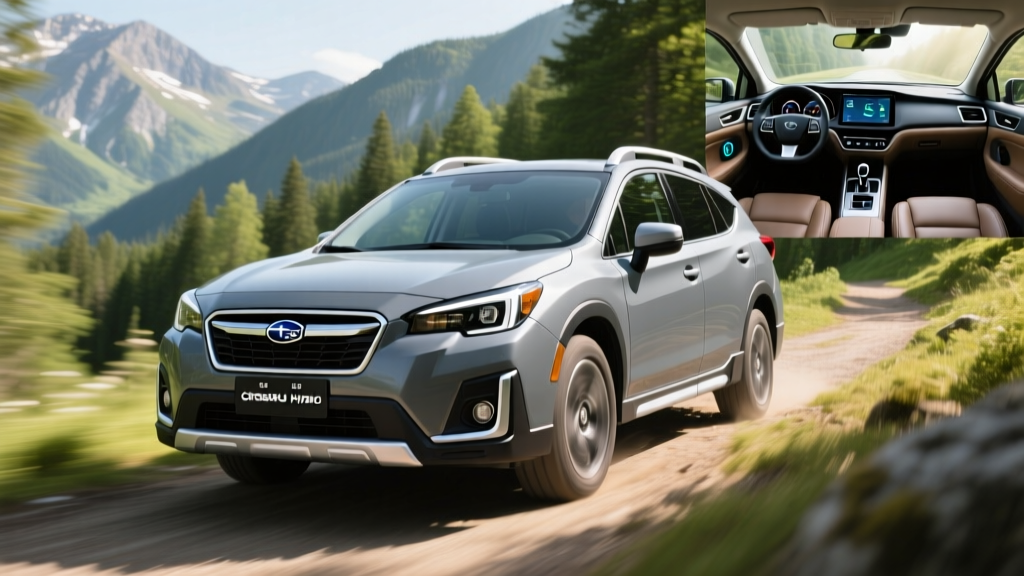
If you've been searching for a Subaru hybrid 2025 model, the answer centers on one vehicle: the Crosstrek Hybrid (also branded Crosstrek Plug-In Hybrid in some markets). Subaru's approach to electrification remains cautious compared to rivals, but for buyers who need standard all-wheel drive, genuine off-road capability, and the option to drive short distances on electricity alone, the 2025 Crosstrek Hybrid occupies a specific niche worth examining closely.
This guide breaks down the powertrain specs, real-world efficiency, battery longevity, and ownership economics you need before deciding whether this PHEV fits your garage — or whether a conventional hybrid, full BEV, or gas Crosstrek makes more sense.
HEV vs. PHEV — What's the Difference Here?
Conventional Hybrid (HEV): A small battery (typically 1–2 kWh) recharged by regenerative braking and the engine. You never plug it in. It improves MPG modestly. Subaru does not currently sell a conventional HEV in the US market for 2025.
Plug-In Hybrid (PHEV): A larger battery (8.8 kWh usable in the Crosstrek Hybrid) that you plug in to recharge, giving you a short electric-only driving range before the gas engine takes over. This is what the 2025 Crosstrek Hybrid is.
EPA Fuel Economy and Electric-Only Range
The 2025 Subaru Crosstrek Hybrid pairs a 2.0-liter flat-four (Boxer) engine with two electric motors integrated into a continuously variable transmission (CVT), delivering a combined system output of 148 horsepower. The 8.8 kWh lithium-ion battery pack enables limited zero-emission driving before the hybrid powertrain engages.
| Metric | Value |
|---|---|
| EV-Only Range | 17 miles |
| MPGe (combined, electric + gas) | 90 MPGe |
| Gas-Only MPG (combined) | 35 MPG |
| City MPG (gas-only mode) | 36 MPG |
| Highway MPG (gas-only mode) | 34 MPG |
| Total Combined Range (EV + Gas) | ~480 miles |
| Fuel Tank Capacity | 13.2 gallons |
Source: EPA Fuel Economy.
Real-World MPG vs. EPA Sticker
The EPA's 35 MPG combined figure for gas-only driving is a reasonable baseline, but real-world results depend heavily on conditions. In city driving with frequent stops, hybrid mode can push past 38 MPG thanks to aggressive regenerative braking. On sustained highway trips at 75+ mph, expect closer to 30–32 MPG — the Boxer engine works harder at speed and the Crosstrek's boxy shape creates aerodynamic drag. In cold weather (below 30°F), the engine fires up sooner to provide cabin heat, effectively eliminating the 17-mile EV range and dropping combined efficiency to roughly 30–32 MPG until the cabin warms.
Charging: How to Refill the 8.8 kWh Battery
The Crosstrek Hybrid uses a relatively small battery compared to full EVs, which keeps charging simple and fast — but also means no DC fast charging capability.
| Charging Level | Power (kW) | 0–100% Time | Connector |
|---|---|---|---|
| Level 1 (120V household outlet) | ~1.2 kW | ~8 hours | J1772 |
| Level 2 (240V home/public) | ~3.3 kW (onboard charger limit) | ~2.5 hours | J1772 |
| DC Fast Charging | Not supported | N/A | N/A |
The 3.3 kW onboard charger is the bottleneck here — even if you plug into a 7.2 kW or 11.5 kW Level 2 station, the car can only accept 3.3 kW. That's fine for overnight home charging, but it means a midday top-up at a public charger won't fill the battery much faster than your home setup.
For most PHEV owners, Level 1 charging from a standard 120V outlet is actually sufficient: 8 hours of overnight charging fully replenishes the 8.8 kWh pack, restoring your 17-mile EV range by morning without any electrical upgrades.
Powertrain Specs and Driving Dynamics
| Specification | Value |
|---|---|
| Engine | 2.0L DOHC Boxer 4-cylinder |
| Electric Motors | 2 integrated motors (traction + generator) |
| Combined System Output | 148 hp |
| Transmission | Lineartronic CVT |
| Drivetrain | Symmetrical AWD (standard) |
| Battery (usable) | 8.8 kWh lithium-ion |
| 0–60 mph | ~8.5 seconds |
| Ground Clearance | 8.7 inches |
| Cargo Volume (rear seats up) | 20.8 cu ft |
| Towing Capacity | 1,000 lbs |
| Base MSRP | ~$36,845 |
The dual-motor setup is borrowed from Toyota's hybrid synergy drive architecture (Subaru and Toyota share platform technology). One motor drives the wheels while the second acts as a generator and starter. The result is smooth, quiet low-speed driving in EV mode — the Crosstrek Hybrid can reach up to 65 mph on electric power alone if you're gentle with the throttle.
However, 148 hp in a 3,700+ lb crossover means acceleration is adequate rather than brisk. Highway merging requires planning, and the CVT drones noticeably under hard acceleration. This is a powertrain optimized for efficiency and smoothness, not performance.
Battery Warranty, Reliability, and Replacement Cost
Hybrid Battery Coverage
- Hybrid Battery Warranty: 8 years / 100,000 miles (10 years / 150,000 miles in CARB states including CA, CT, ME, MA, NJ, NY, OR, RI, VT, WA)
- Powertrain Warranty: 5 years / 60,000 miles
- Limited Vehicle Warranty: 3 years / 36,000 miles
The warranty covers the hybrid battery if capacity drops below a defined threshold (typically ~65–70% state of health) or if cells fail.
Subaru's hybrid system, benefiting from Toyota-derived engineering, has a solid reliability track record. The 8.8 kWh pack is small and conservatively managed — Subaru buffers a significant portion of gross capacity to prevent deep discharge cycles, which extends cell life. Most PHEV batteries from this architecture last well beyond 150,000 miles before meaningful degradation.
If replacement is needed out of warranty, expect a hybrid battery replacement cost between $3,000 and $5,000 (parts and labor) based on current pricing for Toyota/Subaru hybrid packs of this size. Third-party refurbishers may offer lower-cost options as the vehicle ages.
Tax Credit Eligibility and Pricing Breakdown
Here's where the 2025 Crosstrek Hybrid gets complicated for deal-seekers. Under current IRS §30D rules, the federal clean vehicle credit offers up to $7,500 — but PHEVs must meet strict requirements:
- Battery Capacity: Must be ≥7 kWh — the Crosstrek Hybrid's 8.8 kWh pack qualifies ✓
- MSRP Cap: SUVs/vans capped at $80,000 — Crosstrek Hybrid passes ✓
- Buyer Income Cap: AGI ≤ $150,000 (single), $225,000 (head of household), $300,000 (joint) ✓
- Critical Minerals Requirement: Battery minerals must be sourced from US or FTA partners — this is where the Crosstrek Hybrid faces uncertainty ✗
- Battery Component Sourcing: Components must be manufactured/assembled in North America — also uncertain ✗
- Final Assembly: Must occur in North America — the Crosstrek is assembled in Gunma, Japan ✗
Because the 2025 Crosstrek Hybrid is assembled in Japan and uses battery supply chains that may not meet the critical-minerals and component-sourcing thresholds, it does not currently qualify for the full $7,500 federal tax credit. Buyers should verify the latest eligibility on the IRS clean vehicle credit page and fueleconomy.gov before purchase, as sourcing rules tighten annually through 2032.
Some states offer additional PHEV rebates (California's CVRP, for example, has offered up to $1,000–$2,000 for qualifying PHEVs depending on income). Check your state energy office for current programs.
Who Should Buy the 2025 Crosstrek Hybrid?
Pros
- Standard Symmetrical AWD — genuine all-weather, light off-road capability
- 17-mile EV range covers many short commutes emission-free
- 8.7" ground clearance beats most PHEV crossovers
- No range anxiety — gas engine covers long trips seamlessly
- Level 1 charging sufficient for daily use
- X-MODE and Hill Descent Control retained from gas Crosstrek
Cons
- 17-mile EV range is short vs. rivals (RAV4 Prime: 42 mi)
- 3.3 kW onboard charger limits Level 2 speed
- No DC fast charging
- 148 hp feels underpowered for highway merging
- Does not qualify for $7,500 federal tax credit
- Higher MSRP than gas Crosstrek with long payback period
- Cargo space slightly reduced by battery placement
Choose the Crosstrek Hybrid If:
- Your daily commute is under 17 miles round-trip and you can charge at home
- You need AWD and ground clearance for snow, dirt roads, or trail access
- You want to reduce fuel consumption without committing to full EV ownership
- You take road trips to areas with sparse charging infrastructure
Look Elsewhere If:
- You want 30+ miles of EV range → consider the Toyota RAV4 Prime (42 mi) or wait for Subaru's upcoming Solterra-based PHEV
- Tax credits are essential to your budget → few PHEVs from non-North-American assembly qualify in 2025
- You prioritize acceleration and refinement → a full EV like the Hyundai Ioniq 5 delivers smoother, quicker performance
- Your commute is mostly highway → the gas Crosstrek or a conventional hybrid from Toyota/Honda may offer better value
Frequently Asked Questions
How many MPG does the 2025 Subaru Crosstrek Hybrid get?
The EPA rates it at 35 MPG combined (36 city / 34 highway) in hybrid mode after the battery is depleted, and 90 MPGe when factoring in electric driving. Real-world city driving often exceeds 36 MPG thanks to regenerative braking, while highway-heavy trips may yield 30–32 MPG.
How far can the Crosstrek Hybrid go on electric only?
The EPA-rated EV-only range is 17 miles. In practice, warm-weather city driving with a full charge can stretch this to 18–19 miles, while cold weather or aggressive acceleration may cut it to 12–14 miles. The gas engine extends total range to approximately 480 miles.
Is the 2025 Crosstrek Hybrid a conventional hybrid or a plug-in?
It is a plug-in hybrid (PHEV). You can plug it in to charge the 8.8 kWh battery for electric-only driving. However, you don't have to plug it in — if you never charge it, it operates as a conventional hybrid at 35 MPG combined. Plugging in simply unlocks the 17-mile EV bonus.
Is the Subaru hybrid system reliable?
Subaru's hybrid architecture is derived from Toyota's well-proven Hybrid Synergy Drive, which has demonstrated strong long-term reliability across millions of vehicles globally. The hybrid battery is warrantied for 8 years/100,000 miles (10/150,000 in CARB states), and conservative battery management should provide service life well beyond 150,000 miles.
What does a Crosstrek Hybrid battery replacement cost?
Out-of-warranty replacement of the 8.8 kWh hybrid battery pack typically runs $3,000–$5,000 including labor. This is significantly less than a full EV battery replacement due to the smaller pack size. Third-party hybrid battery rebuilders may offer lower-cost alternatives as the vehicle ages.
Does the 2025 Crosstrek Hybrid qualify for the $7,500 federal tax credit?
Currently, no. The Crosstrek Hybrid is assembled in Japan, and its battery supply chain does not meet the North American component-sourcing and critical-minerals requirements under IRS §30D rules for 2025. State-level PHEV incentives may still apply — check your state's clean vehicle program. Always verify current eligibility at IRS.gov before purchasing.
Should I buy the Crosstrek Hybrid or a full EV?
If you have reliable home charging, a commute under 30 miles, and rarely drive to remote areas, a full EV like the Subaru Solterra, Hyundai Ioniq 5, or Tesla Model Y will deliver lower running costs and a smoother driving experience. The Crosstrek Hybrid makes sense if you need the security of a gas engine for long trips, live in an area with limited public charging, or want to ease into electrification without lifestyle changes.