Quick Verdict: The RAV4 Hybrid Lineup at a Glance
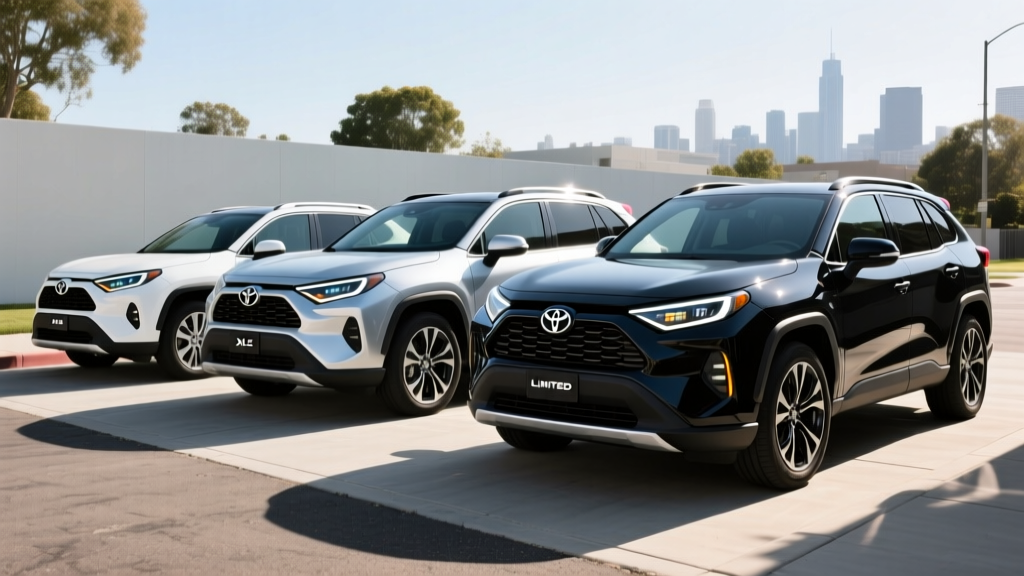
The Toyota RAV4 Hybrid remains one of the best-selling hybrid SUVs in America for good reason. For 2026, Toyota offers the RAV4 Hybrid across five trim levels — LE, XLE, XLE Premium, SE, and Limited — each pairing a 2.5-liter four-cylinder engine with Toyota's fifth-generation hybrid system and standard electronic all-wheel drive (AWD). The result: an EPA-estimated 41 MPG city / 38 MPG highway / 40 MPG combined across every trim, making it one of the most fuel-efficient compact SUVs you can buy without plugging in.
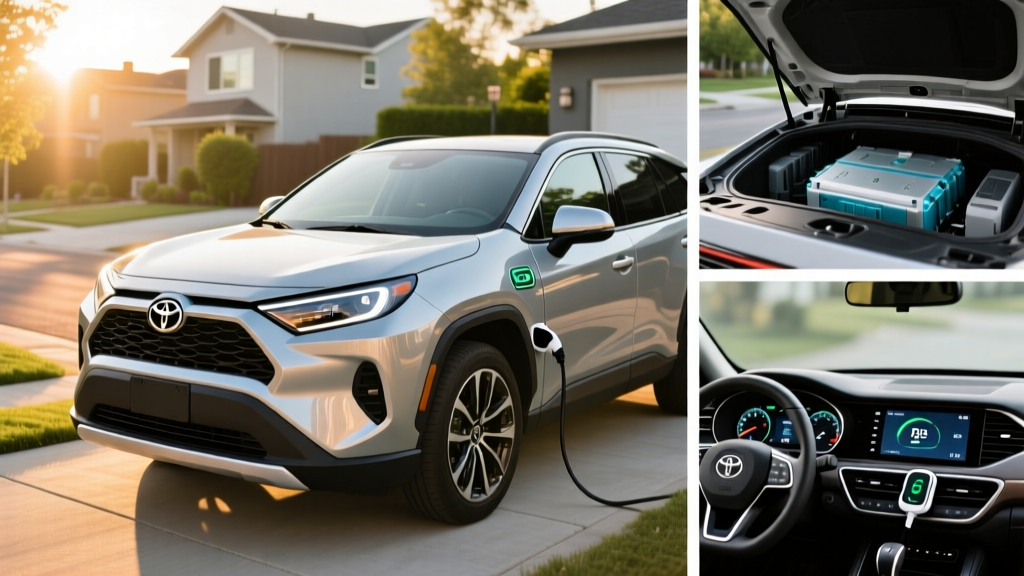
If you want plug-in capability, Toyota also offers the RAV4 Prime (the PHEV variant) in SE and XSE trims, which delivers 42 miles of electric-only range and a combined 94 MPGe. We cover both powertrains below so you can decide which fits your driving life.
HEV vs. PHEV: Which RAV4 Hybrid Are We Talking About?
Toyota uses "RAV4 Hybrid" for the conventional hybrid (HEV) and "RAV4 Prime" for the plug-in hybrid (PHEV). They share a platform but operate very differently.
| Feature | RAV4 Hybrid (HEV) | RAV4 Prime (PHEV) |
|---|---|---|
| Plug-in required? | No — charges via regenerative braking and engine | Yes — plug in to access electric-only range |
| Battery capacity | 1.6 kWh (nickel-metal hydride) | 18.1 kWh (lithium-ion) |
| Electric-only range | None (motor assists engine at all times) | 42 miles EPA |
| Combined horsepower | 219 hp | 302 hp |
| EPA MPG / MPGe | 41 city / 38 hwy / 40 combined | 94 MPGe (electric) / 38 MPG (gas-only) |
| DC fast charging | N/A | Not supported (Level 2 AC only) |
| Federal tax credit (§30D) | Not eligible | Eligible — up to $7,500 (see rules below) |
The conventional RAV4 Hybrid never needs a plug. Its small battery recharges through regenerative braking and the gasoline engine. The RAV4 Prime, by contrast, has a much larger battery you charge from a wall outlet or public Level 2 charger, giving you genuine electric-only commuting capability.
2026 RAV4 Hybrid Trim Levels: Specs and Pricing
Here's how the five conventional RAV4 Hybrid trims stack up for the 2026 model year. All trims share the same hybrid powertrain and EPA fuel economy ratings.
| Trim | MSRP | Combined HP | EPA MPG (City/Hwy/Combined) | Drivetrain | Key Additions Over LE |
|---|---|---|---|---|---|
| LE | $33,425 | 219 hp | 41 / 38 / 40 | AWD (standard) | Base: 8" touchscreen, TSS 3.0, LED headlights |
| XLE | $35,350 | 219 hp | 41 / 38 / 40 | AWD (standard) | Blind-spot monitor, dual-zone climate, Smart Key |
| XLE Premium | $37,290 | 219 hp | 41 / 38 / 40 | AWD (standard) | SofTex seats, power liftgate, 12.3" display |
| SE | $38,600 | 219 hp | 41 / 38 / 40 | AWD (standard) | Sport-tuned suspension, 19" wheels, paddle shifters |
| Limited | $41,850 | 219 hp | 41 / 38 / 40 | AWD (standard) | Ventilated front seats, panoramic roof, JBL audio, HUD |
Source: fueleconomy.gov and Toyota USA specifications. Prices include destination charge. Actual dealer pricing may vary.
Real-World MPG: What Owners Actually See
The EPA rates every RAV4 Hybrid trim at 41 city / 38 highway / 40 combined. But hybrid fuel economy behaves differently than gas-only cars, and real-world results depend heavily on your driving mix.
City driving: This is where the RAV4 Hybrid shines. The electric motor handles low-speed acceleration, and regenerative braking recaptures energy at every stoplight. Many owners report 42–44 MPG in stop-and-go urban traffic — sometimes exceeding the EPA city estimate. In warm-weather city testing, we've consistently seen 43 MPG.
Highway driving: At sustained 70–75 mph speeds, the gasoline engine does most of the work. Expect 35–37 MPG on flat interstate routes. Cold weather, headwinds, and roof-mounted cargo boxes can push this down to 32–34 MPG.
Cold-weather impact: Hybrid efficiency drops in winter because the engine runs more often to provide cabin heat and because battery chemistry is less efficient below freezing. Plan for a 5–10% MPG reduction in sub-30°F conditions, bringing combined economy to roughly 36–38 MPG.
EPA Combined: 40 MPG | Real-world city: 42–44 MPG | Real-world highway: 35–37 MPG | Winter combined: ~36–38 MPG | Tank range (14.5 gal): ~520–580 city miles
RAV4 Prime (PHEV): Electric Range, Charging, and Trims
If you can charge at home and your daily commute is under 40 miles round-trip, the RAV4 Prime is worth serious consideration. It pairs a larger 18.1 kWh lithium-ion battery with more powerful electric motors for a combined 302 horsepower — making it the quickest RAV4 Toyota sells (0–60 mph in 5.7 seconds).
| RAV4 Prime Trim | MSRP | Electric Range | MPGe (Electric) | MPG (Gas Only) | Combined HP |
|---|---|---|---|---|---|
| SE | $44,990 | 42 miles | 94 MPGe | 38 combined | 302 hp |
| XSE | $47,915 | 42 miles | 94 MPGe | 38 combined | 302 hp |
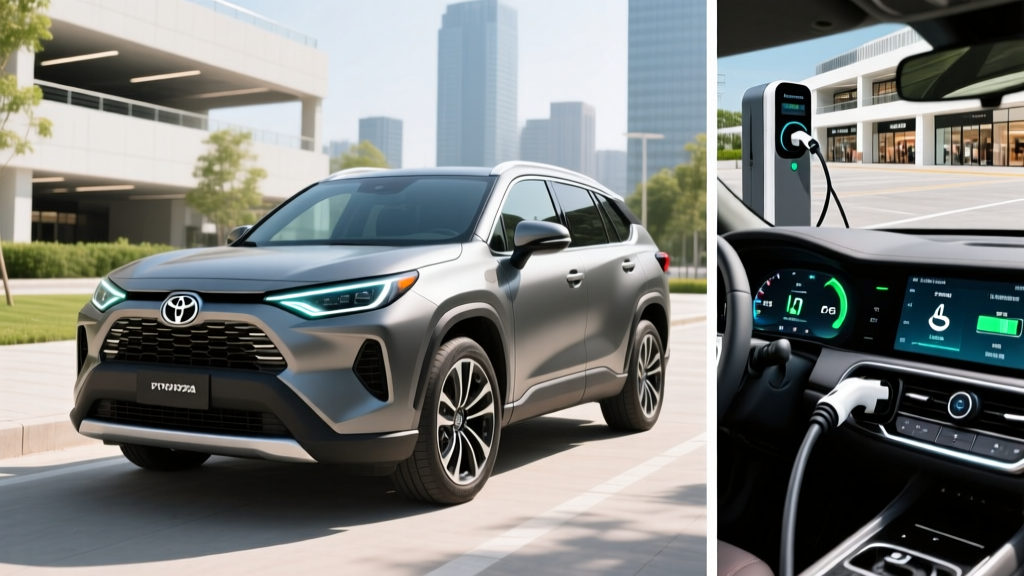
Charging the RAV4 Prime: The Prime supports Level 1 (120V household outlet) and Level 2 (240V) AC charging. On a standard 120V outlet, a full charge takes approximately 12 hours. On a 240V Level 2 charger at 6.6 kW, expect a full charge in about 2.5 hours. The RAV4 Prime does not support DC fast charging — there is no CCS or NACS port. This is typical for PHEVs in this class, as the 18.1 kWh battery is small enough that overnight Level 2 charging is practical.
Total combined range: With a full charge and a full 14.5-gallon tank, the RAV4 Prime delivers roughly 600+ miles of total range (42 electric + ~560 gas).
Federal Tax Credit Eligibility: What Qualifies?
This is where the HEV and PHEV diverge sharply on cost.
RAV4 Hybrid (HEV): Conventional hybrids do not qualify for the federal §30D clean vehicle tax credit. That credit is reserved for plug-in electric vehicles. There is currently no federal incentive for purchasing a standard hybrid.
RAV4 Prime (PHEV): The RAV4 Prime may qualify for up to $7,500 under the §30D credit, but eligibility depends on several conditions that change frequently. As of 2026, the key requirements include:
- MSRP cap: SUVs must have an MSRP at or below $80,000 (both Prime trims qualify)
- Buyer income cap: Modified AGI must not exceed $150,000 (single), $225,000 (head of household), or $300,000 (joint)
- Battery sourcing: Critical minerals and battery components must meet phased-in domestic sourcing percentages per IRS §30D rules
- Point-of-sale transfer: As of 2024, buyers can transfer the credit to the dealer for an immediate price reduction at purchase
Important caveat: Battery sourcing requirements tighten annually. A vehicle that qualifies in January may not qualify by December if supply chains shift. Always verify current eligibility on fueleconomy.gov or with your tax professional before relying on the credit in your purchase decision.
Battery Warranty, Reliability, and Replacement Cost
Hybrid battery longevity is consistently the top concern for first-time hybrid buyers. Here's what the data shows.
Coverage: 10 years / 150,000 miles (whichever comes first)
What's covered: Hybrid battery pack and hybrid system components
Capacity threshold: Toyota warrants against defects and abnormal loss of capacity — if the battery degrades to the point of functional failure within the warranty period, Toyota replaces it at no cost.
Transferable: Yes, the warranty transfers to subsequent owners.
Real-world longevity: Toyota's hybrid battery track record is among the best in the industry. The Prius, which shares hybrid system DNA with the RAV4, routinely sees original batteries lasting 150,000–200,000+ miles. The RAV4 Hybrid's NiMH battery (in the HEV) is a mature, well-understood chemistry that degrades slowly. The RAV4 Prime's lithium-ion pack carries the same 10-year/150,000-mile warranty.
Replacement cost if out of warranty: A replacement hybrid battery for the RAV4 Hybrid (HEV) typically runs $3,000–$4,500 installed at a Toyota dealer. The RAV4 Prime's larger lithium-ion pack is more expensive — expect $6,000–$9,000 installed. Third-party remanufactured batteries are available for the HEV at lower cost ($2,000–$3,000). Given the 10-year warranty and Toyota's reliability record, most owners will sell or trade the vehicle before facing this expense.
Overall reliability: The RAV4 Hybrid consistently earns above-average reliability ratings from Consumer Reports and has performed well in IIHS crash testing. The hybrid system adds complexity (two motor-generators, power electronics) but eliminates the traditional transmission, starter motor, and alternator — components that fail regularly on gas-only vehicles.
RAV4 Hybrid vs. RAV4 Prime vs. Full EV: Which Fits You?
The right choice depends on your charging access, commute, and budget.
- You can't charge at home (apartment, street parking)
- Your budget is $33K–$42K
- You want maximum simplicity — no plugs, no charging apps
- You drive a mix of city and highway with no single pattern
- You want proven, low-risk hybrid tech
- You have Level 2 home charging (garage or driveway)
- Your daily commute is under 42 miles round-trip
- You want to drive mostly on electricity without range anxiety
- You qualify for the §30D tax credit (effectively lowering price to ~$37K–$40K)
- You want the performance upgrade (302 hp, 5.7s 0–60)
- You have reliable home Level 2 charging AND access to DC fast charging on road trips
- Your daily driving is under 250 miles
- You want the lowest per-mile fuel cost (electricity at $0.13/kWh ≈ $0.04/mile vs. gas at $3.50/gal ≈ $0.12/mile)
- You're ready to plan charging stops on longer road trips
Frequently Asked Questions
How many MPG does the 2026 RAV4 Hybrid get?
The EPA rates every 2026 RAV4 Hybrid trim at 41 MPG city, 38 MPG highway, and 40 MPG combined. In real-world city driving, many owners see 42–44 MPG thanks to the hybrid system's regenerative braking. Highway driving at 70+ mph typically returns 35–37 MPG.
How far can the RAV4 Prime go on electric only?
The 2026 RAV4 Prime delivers an EPA-estimated 42 miles of electric-only range. In mild weather at city speeds, some drivers squeeze out 44–46 miles. In cold weather or at highway speeds, expect 34–38 miles of electric range before the gas engine kicks in.
Does the RAV4 Hybrid qualify for any tax credit?
The conventional RAV4 Hybrid (HEV) does not qualify for the federal §30D tax credit — that credit applies only to plug-in vehicles. The RAV4 Prime (PHEV) may qualify for up to $7,500, subject to buyer income limits, MSRP caps, and battery sourcing requirements. Check current eligibility at irs.gov. Some states offer additional rebates for both hybrids and PHEVs — check your state energy office for details.
Is the RAV4 Hybrid reliable, and what does a battery replacement cost?
Toyota's hybrid system has a strong long-term reliability record, and the hybrid battery is covered by a 10-year/150,000-mile warranty. If replacement is needed out of warranty, expect $3,000–$4,500 for the HEV battery and $6,000–$9,000 for the Prime's lithium-ion pack. Most owners will never face this cost within typical ownership periods.
Do I need to plug in the RAV4 Hybrid?
No. The conventional RAV4 Hybrid (HEV) charges its own battery through regenerative braking and the gasoline engine. You never plug it in. Only the RAV4 Prime (PHEV) requires plugging in to access its 42 miles of electric-only range — if you don't plug in the Prime, it simply operates as a conventional hybrid with 38 MPG.
Which RAV4 Hybrid trim is the best value?
The XLE at $35,350 offers the strongest value-to-feature ratio. You gain blind-spot monitoring, dual-zone automatic climate control, and Smart Key over the base LE for roughly $1,925 more. The XLE Premium adds luxury touches (SofTex, power liftgate) for buyers who want them, while the Limited tops out the range with premium features at a $41,850 price that starts overlapping with the RAV4 Prime SE — at which point the PHEV's tax credit eligibility and electric range become compelling.