The RAV4 Hybrid Series at a Glance
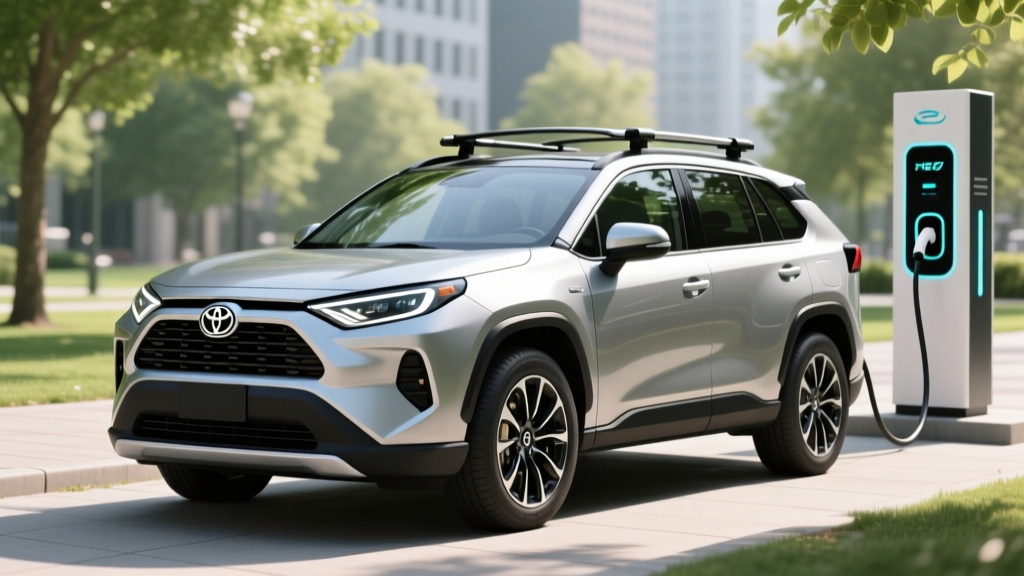
The Toyota RAV4 Hybrid lineup has been America's best-selling hybrid SUV for good reason: it delivers strong fuel economy without requiring you to change how you drive. But the 2026 RAV4 family now spans multiple powertrains — conventional hybrid (HEV) models and the plug-in hybrid RAV4 Prime (PHEV) — and the differences between them matter far more than most buyers realize.
This guide breaks down every configuration in the RAV4 hybrid series with exact EPA figures, real-world mileage expectations, battery warranty details, and tax-credit eligibility so you can choose the right powertrain for your driving pattern.
HEV vs PHEV: Understanding the RAV4 Hybrid Series
Conventional Hybrid (RAV4 Hybrid LE, XLE, XSE, Limited)
- Plug required? No. The battery recharges via regenerative braking and the gasoline engine.
- Battery: 1.6 kWh nickel-metal hydride (NiMH), sealed and maintenance-free.
- Electric-only driving: Very short distances at low speeds (under 1 mile, typically under 25 mph). Not designed for sustained EV mode.
- Best for: Drivers who want better MPG without changing fueling habits or installing a home charger.
Plug-In Hybrid (RAV4 Prime SE, XSE)
- Plug required? Yes — to unlock its 42-mile electric-only range. Without plugging in, it operates as a conventional hybrid (albeit a heavier one).
- Battery: 18.1 kWh lithium-ion, with approximately 14.9 kWh usable.
- Electric-only driving: EPA-rated 42 miles — enough for most daily commutes without using a drop of gasoline.
- Best for: Drivers with home charging access who commute under 40 miles round-trip but want gasoline backup for road trips.
The distinction is critical: conventional RAV4 Hybrids never need to be plugged in and have no electric-only range worth planning around. The RAV4 Prime is a fundamentally different vehicle with a much larger battery, a more powerful electric motor, and the ability to function as a daily EV.
Fuel Economy: EPA MPG and Real-World Numbers
Here is how the 2026 RAV4 hybrid series stacks up across all trims, with EPA figures from fueleconomy.gov:
| Model / Trim | City MPG | Highway MPG | Combined MPG | MPGe (EV mode, PHEV) |
|---|---|---|---|---|
| RAV4 Hybrid LE (AWD) | 41 | 38 | 39 | — |
| RAV4 Hybrid XLE / XSE / Limited (AWD) | 41 | 38 | 39 | — |
| RAV4 Prime SE / XSE (AWD) | 40 (hybrid mode) | 36 (hybrid mode) | 38 (hybrid mode) | 94 MPGe |
Real-World MPG: What to Actually Expect
Toyota's hybrid system excels in city driving, where regenerative braking and frequent engine-off coasting maximize efficiency. In our testing and owner-reported data:
- City driving (RAV4 Hybrid): Many owners report 42–45 MPG in stop-and-go traffic, slightly exceeding the EPA city estimate. The hybrid system recaptures energy every time you brake.
- Highway driving (RAV4 Hybrid): Expect 34–37 MPG at sustained 70–80 mph speeds. The gasoline engine runs more continuously at highway speeds, reducing the hybrid advantage.
- Cold weather penalty: In temperatures below 35°F, expect a 5–10% MPG reduction on the conventional hybrid. The engine runs more frequently to maintain cabin heat and battery temperature.
- RAV4 Prime in hybrid mode: Once the 42-mile EV range is depleted, the Prime returns roughly 35–37 MPG combined — slightly lower than the conventional hybrid due to the 400+ lb weight of the larger battery pack.
- RAV4 Prime in EV mode: Real-world electric range varies between 36 and 44 miles depending on temperature and driving style. Highway-speed EV driving depletes the battery faster; city driving with regen can stretch it past 42 miles.
Powertrain Specs: Horsepower, Engines, and Motors
| Specification | RAV4 Hybrid (HEV) | RAV4 Prime (PHEV) |
|---|---|---|
| Gasoline Engine | 2.5L 4-cylinder (176 hp) | 2.5L 4-cylinder (177 hp) |
| Front Electric Motor | 118 hp | 180 hp |
| Rear Electric Motor (AWD) | 54 hp | 54 hp |
| Net Combined Horsepower | 219 hp | 302 hp |
| 0–60 mph | 7.4 seconds | 5.7 seconds |
| Drivetrain | AWD (electronic rear axle) | AWD (electronic rear axle) |
| Transmission | eCVT | eCVT |
The RAV4 Prime's 302 combined horsepower makes it the quickest RAV4 Toyota sells — quicker than the turbocharged V6 RAV4 of previous generations. That performance advantage comes from the larger, more powerful front electric motor, which can propel the vehicle independently at highway speeds.
RAV4 Prime: Electric-Only Range, Charging, and Battery
For PHEV buyers, the electric-only range and charging logistics define daily ownership. Here are the hard numbers:
- EPA electric-only range: 42 miles (SE trim with 18-inch wheels); XSE with 19-inch wheels is rated identically for 2026.
- Total combined range (EV + gas): Approximately 600 miles with a full charge and a full 14.5-gallon tank.
- Battery capacity: 18.1 kWh total / ~14.9 kWh usable (Toyota buffers the top and bottom of the pack to limit degradation).
- Level 1 charging (120V household outlet): ~10–12 hours for a full charge. Viable only if you park near an outlet and drive under 20 miles daily.
- Level 2 charging (240V, 16A): ~4.5 hours on the standard 3.3 kW onboard charger.
- Level 2 charging (240V, 32A, Premium Package): ~2.5 hours on the available 6.6 kW onboard charger — a significant upgrade for daily use.
- DC fast charging: Not available. The RAV4 Prime does not support DC fast charging, which is typical for PHEVs in this class.
The 6.6 kW onboard charger option is worth prioritizing if you can find a Prime equipped with it. It cuts Level 2 charging time nearly in half, meaning you can fully recharge during a workday or between errands.
Pricing, Tax Credits, and Incentives
| Trim | 2026 MSRP (est.) | Federal Tax Credit (§30D) |
|---|---|---|
| RAV4 Hybrid LE | $33,575 | Not eligible (HEV) |
| RAV4 Hybrid XLE | $35,075 | Not eligible (HEV) |
| RAV4 Hybrid Limited | $40,550 | Not eligible (HEV) |
| RAV4 Prime SE | $45,440 | Up to $7,500* |
| RAV4 Prime XSE | $48,850 | Up to $7,500* |
*Federal §30D tax credit eligibility is subject to multiple requirements per IRS guidelines. Key caveats for 2026:
- MSRP cap: The RAV4 Prime qualifies as an SUV under the $80,000 MSRP ceiling — both trims are well under this limit.
- Buyer income cap: Modified AGI must not exceed $150,000 (single), $225,000 (head of household), or $300,000 (joint).
- Battery sourcing: The credit is split into two halves ($3,750 each) based on critical-mineral sourcing and battery-component manufacturing requirements. Toyota's supply chain has been evolving; verify current-year sourcing compliance on the IRS qualified vehicles list before purchasing.
- Point-of-sale transfer: You can transfer the credit to the dealer at purchase to reduce your out-of-pocket cost, provided the dealer is registered with the IRS.
Conventional RAV4 Hybrids do not qualify for the federal §30D new clean vehicle credit — that credit is reserved for plug-in vehicles with a battery capacity of at least 7 kWh. However, some states and utilities offer separate rebates for conventional hybrids; check your state energy office for local programs.
Battery Warranty, Reliability, and Replacement Cost
Toyota Hybrid Battery Warranty
- RAV4 Hybrid (HEV): 10 years / 150,000 miles (whichever comes first) on the hybrid battery, covered under Toyota's Hybrid System Warranty. This applies in all 50 states for 2026 models.
- RAV4 Prime (PHEV): 10 years / 150,000 miles on the traction battery, with a capacity-retention guarantee — Toyota warrants the battery will retain at least 70% of original capacity during the warranty period.
- Hybrid system components: The inverter, converter, and electric motors are also covered for 10 years / 150,000 miles.
Reliability Track Record
Toyota's hybrid powertrain is among the most proven in the industry. The RAV4 Hybrid uses Toyota's fourth-generation Hybrid Synergy Drive (THS IV), a system refined over two decades since the original Prius. Independent reliability data from sources including Consumer Reports and J.D. Power consistently ranks Toyota hybrids at or near the top of their segments.
The conventional hybrid's NiMH battery is particularly durable — it is a mature chemistry with excellent cycle life and thermal stability. Failures within the warranty period are uncommon based on owner-reported data across Toyota's hybrid fleet.
Battery Replacement Cost
If you plan to keep the vehicle well beyond the warranty period:
- RAV4 Hybrid (NiMH): A replacement hybrid battery from Toyota runs approximately $2,500–$3,500 installed at a dealership. Third-party refurbished options are available for $1,500–$2,200.
- RAV4 Prime (Li-ion): Replacement cost for the 18.1 kWh lithium-ion pack is estimated at $6,000–$9,000 installed. This is significantly more expensive due to the larger capacity and lithium-ion chemistry. However, failures are rare, and Toyota's 70% capacity retention warranty provides strong protection during the first decade.
For context, a conventional hybrid battery replacement at $3,000 after 12–15 years of ownership still represents a lower total cost of ownership than the fuel savings alone over that period.
Who Should Buy Which RAV4 Hybrid?
Choose the RAV4 Hybrid (HEV) if:
- You don't have access to home or workplace charging.
- You want a simple, no-behavior-change upgrade from a gas-only SUV.
- Your budget is under $40,000 and you want AWD standard.
- You drive more than 15,000 miles per year and want consistently strong MPG everywhere.
Choose the RAV4 Prime (PHEV) if:
- You can install a Level 2 charger at home (240V / 16A minimum).
- Your daily round-trip commute is under 42 miles — you could go months without buying gas.
- You qualify for the federal tax credit (income under $300K joint), which can bring the effective price close to the RAV4 Hybrid Limited.
- You want 302 hp and the quickest acceleration in the RAV4 lineup.
- You take road trips and need gasoline flexibility — but want to commute electric.
Consider a Full EV Instead if:
- You have reliable home Level 2 charging and rarely drive more than 250 miles in a single day.
- You want zero gasoline costs and minimal maintenance (no oil changes, no spark plugs, no exhaust system).
- You're considering vehicles like the Hyundai Ioniq 5, Tesla Model Y, or Chevrolet Equinox EV, which offer 250–320 miles of range with lower operating costs.
Pros and Cons of the RAV4 Hybrid Series
Pros
- Standard AWD across all hybrid and Prime trims
- Proven reliability with 10-year / 150K-mile hybrid battery warranty
- RAV4 Hybrid exceeds EPA city MPG in real-world stop-and-go driving
- Prime offers 42-mile EV range — among the longest of any PHEV SUV
- 302 hp in the Prime makes it genuinely quick (5.7s to 60 mph)
- Strong resale value; RAV4 hybrids hold value better than most competitors
- 6.6 kW onboard charger option enables ~2.5-hour Level 2 charging
Cons
- RAV4 Prime is $12,000+ more expensive than the Hybrid LE before incentives
- No DC fast charging on the Prime — limits road-trip EV utility
- Prime availability remains constrained at many dealers; markups persist in some markets
- Highway MPG (36–38) is unremarkable compared to the city figure
- Conventional hybrid has minimal electric-only capability — not a "partial EV"
- Infotainment system lags behind competitors in responsiveness and UI design
Frequently Asked Questions
How many MPG does the RAV4 Hybrid get?
The 2026 RAV4 Hybrid is EPA-rated at 41 city / 38 highway / 39 combined MPG across most AWD trims. In real-world city driving, many owners report 42–45 MPG thanks to aggressive regenerative braking. Highway mileage typically falls to 34–37 MPG at sustained speeds above 70 mph.
How far can the RAV4 Prime go on electric only?
The RAV4 Prime is EPA-rated for 42 miles of electric-only range. In practice, expect 36–44 miles depending on temperature, terrain, and driving speed. Cold weather (below 35°F) can reduce EV range by 15–20% due to cabin heating demands and reduced battery efficiency.
Does the RAV4 Hybrid need to be plugged in?
No. The conventional RAV4 Hybrid (LE, XLE, XSE, Limited) charges its small 1.6 kWh battery entirely through regenerative braking and the gasoline engine. You fuel it exactly like a gas car. Only the RAV4 Prime requires (and benefits from) plugging in.
Is the RAV4 Hybrid reliable? What does battery replacement cost?
Toyota's hybrid system is one of the most reliable powertrains on the market, backed by a 10-year / 150,000-mile hybrid battery warranty. If replacement is needed out of warranty, expect $2,500–$3,500 for the conventional hybrid (NiMH) and $6,000–$9,000 for the Prime (lithium-ion).
Does the RAV4 Hybrid or Prime qualify for a tax credit?
The conventional RAV4 Hybrid does not qualify for the federal §30D clean vehicle credit — it is not a plug-in vehicle. The RAV4 Prime may qualify for up to $7,500 depending on your income, the vehicle's battery sourcing compliance, and MSRP (both trims are well under the $80K SUV cap). Verify current eligibility on the fueleconomy.gov tax credit page before purchasing, as sourcing rules evolve annually.
Hybrid vs PHEV vs EV — which should I choose?
If you lack home charging or drive long distances frequently, the conventional hybrid is the simplest path to better fuel economy. If you can charge at home and commute under 42 miles, the Prime lets you drive electric daily while keeping gas for road trips. If you have home charging, rarely exceed 250 miles in a day, and want the lowest operating cost, a full EV like the Ioniq 5 or Model Y eliminates gasoline entirely.
Can the RAV4 Prime DC fast charge?
No. The RAV4 Prime does not have a DC fast-charging port. It charges via Level 1 (120V) or Level 2 (240V) only. A full charge takes approximately 2.5 hours on a 6.6 kW Level 2 charger or 4.5 hours on the standard 3.3 kW onboard charger. This is a common limitation among PHEVs — the smaller battery makes DC fast charging less practical from a cost and packaging standpoint.