The 2008 Honda Civic Hybrid: A Mileage Benchmark That Still Matters
More than fifteen years after it rolled off the assembly line, the 2008 Honda Civic Hybrid sedan remains one of the most fuel-efficient used cars you can buy. If you're researching the 2008 Honda Civic Hybrid sedan MPG, you're likely weighing a budget-friendly, high-efficiency daily driver against newer hybrids, plug-in hybrids, or even a full battery-electric vehicle. This guide gives you the exact numbers — EPA ratings, real-world fuel economy, battery longevity data, and total cost context — so you can make an informed decision in 2026.
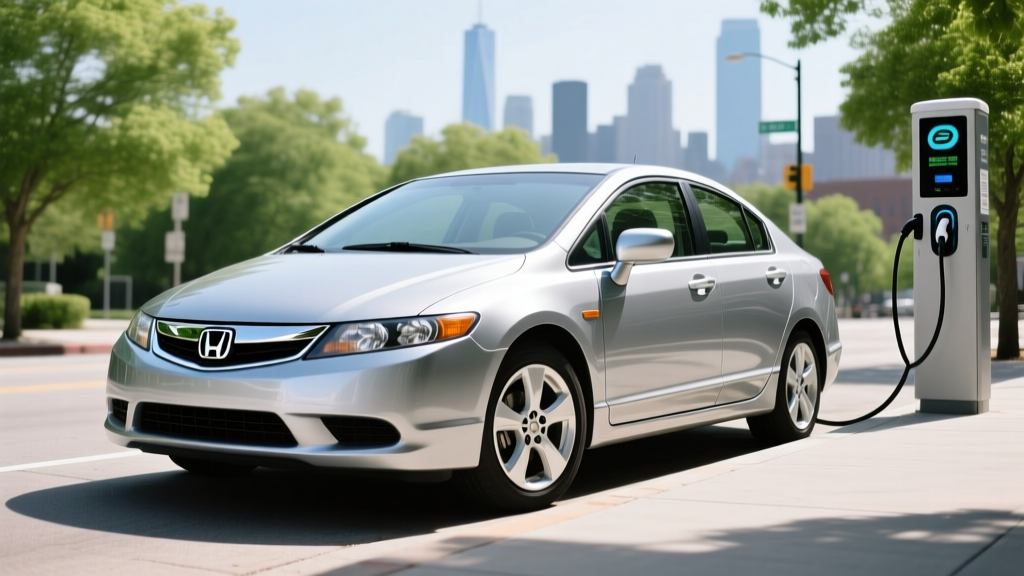
Before we get into the data, an important clarification: the 2008 Civic Hybrid is a conventional hybrid (HEV), not a plug-in hybrid (PHEV). It charges its own small battery through regenerative braking and the gasoline engine. You never plug it in. This distinction matters because it affects everything from daily operation to tax-credit eligibility.
2008 Honda Civic Hybrid MPG: EPA Ratings and Real-World Numbers
The EPA rated the 2008 Honda Civic Hybrid with the continuously variable transmission (CVT) at 40 MPG city / 45 MPG highway / 42 MPG combined. These figures were revised downward by the EPA in later years from the original window-sticker numbers (which were higher), so 42 combined is the authoritative, adjusted figure you'll find on fueleconomy.gov.
| Metric | Value |
|---|---|
| City MPG | 40 MPG |
| Highway MPG | 45 MPG |
| Combined MPG | 42 MPG |
| Fuel type | Regular unleaded (87 octane) |
| Fuel tank capacity | 13.2 gallons |
| EPA estimated range | ~554 miles per tank |
| Annual fuel cost (EPA est., 15k mi/yr) | ~$1,250 (at ~$3.15/gal) |
Real-World MPG: What Owners Actually Report
Conventional hybrids like this Civic tend to meet or exceed their EPA city rating in stop-and-go driving because regenerative braking recovers energy that a gas-only car wastes as heat. On the highway, where the electric motor assists less, real-world figures often land slightly below the EPA highway number.
Based on aggregated owner reports and long-term testing data:
- City driving: 38–44 MPG (drivers who maximize regen and avoid hard acceleration often hit 44+)
- Highway driving (70–80 mph): 37–42 MPG
- Mixed commuting: 39–43 MPG
- Cold-weather penalty: Expect a 5–10% drop in winter (short trips with a cold engine are the worst-case scenario for any hybrid)
For a car this age, actual fuel economy also depends heavily on maintenance — a clogged air filter, old spark plugs, or a degraded IMA battery will reduce efficiency. More on the battery below.
Powertrain: How Honda's IMA System Works
The 2008 Civic Hybrid uses Honda's Integrated Motor Assist (IMA) system — a parallel hybrid architecture where a thin electric motor is sandwiched between the gasoline engine and the transmission. Unlike Toyota's more complex Hybrid Synergy Drive (which can propel the car on electric power alone at low speeds), Honda's IMA system requires the engine to be engaged whenever the car is moving, with the electric motor providing supplemental torque.
| Component | Specification |
|---|---|
| Gasoline engine | 1.3L inline-4, i-VTEC, 8-valve |
| Engine output | 93 hp @ 6,000 rpm / 89 lb-ft torque @ 1,000 rpm |
| Electric motor | 15 kW (20 hp) permanent-magnet |
| Combined system output | 110 hp @ 6,000 rpm / 123 lb-ft torque @ 1,000–2,500 rpm |
| Transmission | Continuously Variable (CVT) |
| Drivetrain | Front-wheel drive |
| 0–60 mph | ~10.5 seconds |
| IMA battery | Nickel-Metal Hydride (NiMH), ~0.35 kWh (nominal) |
| Curb weight | ~2,857 lbs |
The 0.35 kWh NiMH battery pack is tiny by modern standards — a 2026 Toyota Prius Prime PHEV carries roughly 13.6 kWh — but it's sufficient for torque-fill acceleration assist and regenerative energy capture. The Civic Hybrid was never designed for electric-only driving; its efficiency comes from the engine shutting off at stops (auto idle-stop) and the motor smoothing out the engine's torque delivery.
Hybrid vs. Plug-In Hybrid vs. Full EV: Which Fits You?
If you're cross-shopping a used 2008 Civic Hybrid against newer electrified options, here's a functional framework to decide which powertrain type matches your situation:
HEV vs. PHEV vs. BEV — Quick Decision Matrix
| Factor | HEV (e.g., 2008 Civic Hybrid) | PHEV (e.g., 2026 Prius Prime) | BEV (e.g., 2026 Chevy Equinox EV) |
|---|---|---|---|
| Plug in required? | No | Optional (but recommended) | Yes — mandatory |
| Electric-only range | 0 miles | 25–44 miles typical | 250–350+ miles |
| Home charging needed? | No | 120V OK, 240V ideal | Level 2 strongly recommended |
| Used price (2026) | $3,500–$7,000 | $28,000–$38,000 | $18,000–$35,000 (used/new) |
| Federal tax credit | None | Up to $7,500 (if eligible) | Up to $7,500 (if eligible) |
| Best for | Budget commuters, no home charger access | Short commutes + road-trip flexibility | Home-charging access, low running costs |
Choose the 2008 Civic Hybrid (HEV) if: You want the lowest possible upfront cost, you don't have access to home or workplace charging, your commute is moderate (under 40 miles/day), and you want maximum simplicity with no plug-in routine.
Choose a PHEV if: Your daily driving is under 30–40 miles, you can install a Level 2 charger at home, and you want the option of gas-free commuting without range anxiety on longer trips.
Choose a full EV (BEV) if: You have reliable home charging, your daily mileage is within the vehicle's range, and you want the lowest per-mile energy cost and minimal maintenance.
IMA Battery Lifespan, Reliability, and Replacement Cost
The single biggest concern for any used-hybrid buyer is the traction battery. The 2008 Civic Hybrid's NiMH IMA battery pack has a well-documented history — and it's a mixed one.
Battery Warranty & Lifespan
Original warranty: Honda covered the IMA battery for 10 years / 150,000 miles in states that adopted California Air Resources Board (CARB) emissions standards (including CA, CT, MA, ME, NJ, NY, OR, RI, VT, WA). In all other states, coverage was 8 years / 80,000 miles.
Current status (2026): All 2008 Civic Hybrid battery warranties have expired by age. You are responsible for any battery-related repairs.
Typical lifespan: Many original IMA batteries lasted 100,000–150,000 miles before showing significant degradation. Some failed earlier (80,000–100,000 miles), particularly in hot climates where heat accelerates NiMH cell deterioration.
Signs of IMA Battery Degradation
- IMA warning light on the dashboard
- Reduced fuel economy (dropping to 30–35 MPG or lower)
- Recalibration messages or frequent "auto-stop" failures
- Reduced assist during acceleration
- The battery gauge showing rapid fluctuations
Battery Replacement Cost in 2026
| Option | Cost Range | Notes |
|---|---|---|
| Refurbished/remanufactured pack (aftermarket) | $800–$1,400 | Most common choice; available from hybrid-specialty shops. Typically includes 1–3 year warranty. |
| Individual cell replacement (DIY or specialist) | $200–$500 | Requires technical skill; replaces only failed cells within the pack. Risk of imbalance. |
| New OEM Honda pack | $2,000–$3,000+ (if available) | Honda has discontinued some older IMA packs; availability is limited and expensive. |
| Grid charger / reconditioning | $100–$300 (equipment) | A grid charger can sometimes rebalance a degraded pack and extend life by months to a few years. Not a permanent fix. |
For a car with a current market value of $3,500–$7,000, a $1,000–$1,400 refurbished battery replacement is often economically justifiable — especially if the rest of the car (transmission, suspension, body) is in good shape. Many owners report getting another 80,000+ miles out of a refurbished pack.
Overall Reliability
Beyond the IMA battery, the 2008 Civic Hybrid is mechanically robust. The 1.3L i-VTEC engine is under-stressed and long-lived. The CVT in this generation has a better reliability record than some earlier Honda CVTs, though fluid changes at 30,000–60,000-mile intervals are essential. The starter motor (which also serves as the engine restart mechanism for auto idle-stop) can wear out around 120,000–150,000 miles. Overall, with proper maintenance and a healthy IMA battery, these cars routinely reach 200,000+ miles.
Does the 2008 Honda Civic Hybrid Qualify for Any Tax Credit?
No. The 2008 Honda Civic Hybrid does not qualify for the current federal §30D Clean Vehicle Credit. That credit, governed by IRS rules, applies only to new plug-in electric vehicles (PHEVs and BEVs) that meet battery sourcing, MSRP, and buyer income requirements. Conventional hybrids (HEVs) have never qualified for §30D.
Historically, the Civic Hybrid qualified for a much smaller federal tax credit (up to $2,100) under pre-2010 energy legislation, but that credit expired for Honda vehicles many years ago and is no longer available.
Some states offer their own incentives for used EVs or hybrids, but these vary widely by jurisdiction. Check your state's energy or DMV website for current programs. There is no federal used-vehicle credit available for conventional hybrids — the $4,000 used clean vehicle credit under §25E applies only to used BEVs and PHEVs under $25,000.
2008 Civic Hybrid vs. Modern Alternatives: Is It Still Worth It?
To put the 2008 Civic Hybrid's 42 MPG combined into context, here's how it compares against current-generation efficiency leaders you might cross-shop in 2026:
| Vehicle | Type | EPA Combined | Approx. Used/New Price (2026) |
|---|---|---|---|
| 2008 Honda Civic Hybrid | HEV | 42 MPG | $3,500–$7,000 (used) |
| 2026 Toyota Prius LE | HEV | 57 MPG | ~$29,000 (new) |
| 2026 Hyundai Elantra Hybrid Blue | HEV | 54 MPG | ~$27,000 (new) |
| 2026 Toyota Prius Prime SE | PHEV | 44 MPG + 44 mi electric | ~$33,500 (new) |
| 2016–2020 Toyota Prius | HEV | 52–56 MPG | $12,000–$20,000 (used) |
The 2008 Civic Hybrid's 42 MPG combined is still competitive — it beats many non-hybrid 2026 compact cars (which average 30–35 MPG combined). However, modern hybrids have pulled significantly ahead, with the latest Prius delivering 57 MPG combined. The efficiency gap is roughly 15 MPG, which translates to about $200–$300 per year in additional fuel cost for the Civic at current gas prices (assuming 15,000 miles/year at $3.15/gallon).
That said, the cost-of-entry difference is massive. A 2008 Civic Hybrid costs $3,500–$7,000, while a new Prius starts around $29,000. Even factoring in the fuel savings and potential $7,500 federal tax credit on a new PHEV, the used Civic Hybrid has a payback advantage of many years for budget-conscious buyers.
Pros
- 42 MPG combined — still excellent for the price
- Very low purchase cost ($3,500–$7,000)
- No plug-in charging required
- Strong reliability record (engine, CVT)
- Regular unleaded fuel (87 octane)
- Honda parts availability and mechanic familiarity
Cons
- IMA battery likely needs replacement if original
- No electric-only driving capability
- Modest 110 hp — slow acceleration (10.5s 0–60)
- Outdated safety tech (no AEB, lane-keep, or blind-spot monitoring)
- No federal or state tax credit eligibility
- NiMH battery less durable than modern lithium-ion packs
Frequently Asked Questions
How many MPG does the 2008 Honda Civic Hybrid actually get?
The EPA rates it at 40 city / 45 highway / 42 combined MPG. In real-world driving, most owners report 38–44 MPG in mixed use. City driving with frequent stops often yields the best results thanks to regenerative braking, while sustained highway driving at 75+ mph may drop to 37–40 MPG. Cold weather and short trips reduce efficiency by 5–10%.
Can I plug in the 2008 Civic Hybrid to charge?
No. This is a conventional hybrid (HEV), not a plug-in hybrid (PHEV). The IMA battery charges exclusively through regenerative braking and the gasoline engine. There is no charge port, no electric-only driving mode, and no need for any charging infrastructure.
Is the IMA battery expensive to replace?
A refurbished IMA battery pack costs $800–$1,400 installed at a hybrid-specialty shop. A new OEM pack (if available) runs $2,000–$3,000+. Given the car's value of $3,500–$7,000, a refurbished pack is the most common and economically sensible choice. Many refurbished packs last 80,000+ additional miles.
How does the 2008 Civic Hybrid compare to a used Prius?
A 2016–2020 Toyota Prius delivers 52–56 MPG combined (10–14 MPG more than the Civic Hybrid) but typically costs $12,000–$20,000 on the used market — significantly more. The Civic Hybrid is the better budget pick; the Prius is the better efficiency pick. Toyota's hybrid system also tends to have longer-lasting battery packs (lithium-ion in later models vs. the Civic's NiMH).
Is the 2008 Civic Hybrid a good first car for a new driver?
It's a reasonable option: low insurance costs, excellent fuel economy, and Honda reliability. However, it lacks modern active safety features like automatic emergency braking, lane-departure warning, and blind-spot monitoring that are standard on most 2020+ vehicles. If safety technology is a priority, consider a newer used vehicle with IIHS Top Safety Pick credentials.
Does the 2008 Civic Hybrid qualify for the $7,500 federal tax credit?
No. The §30D Clean Vehicle Credit applies only to new plug-in vehicles (PHEVs and BEVs). Conventional hybrids have never qualified. There is also no used-vehicle credit available for HEVs under current IRS guidelines.
What maintenance does the Civic Hybrid need beyond a regular Civic?
Very little. The IMA system is largely maintenance-free (no belts, no brushes). The main hybrid-specific items are: keeping the IMA battery cooling fan filter clean (behind the rear seat), using the correct Honda CVT fluid (HMMF or HCF-2, depending on the exact transmission), and monitoring the IMA battery state of health. All other maintenance (oil changes, brakes, suspension) is identical to a gas-only Civic — and regenerative braking actually extends brake pad life significantly.