RAV4 Hybrid MPG: The Numbers That Matter
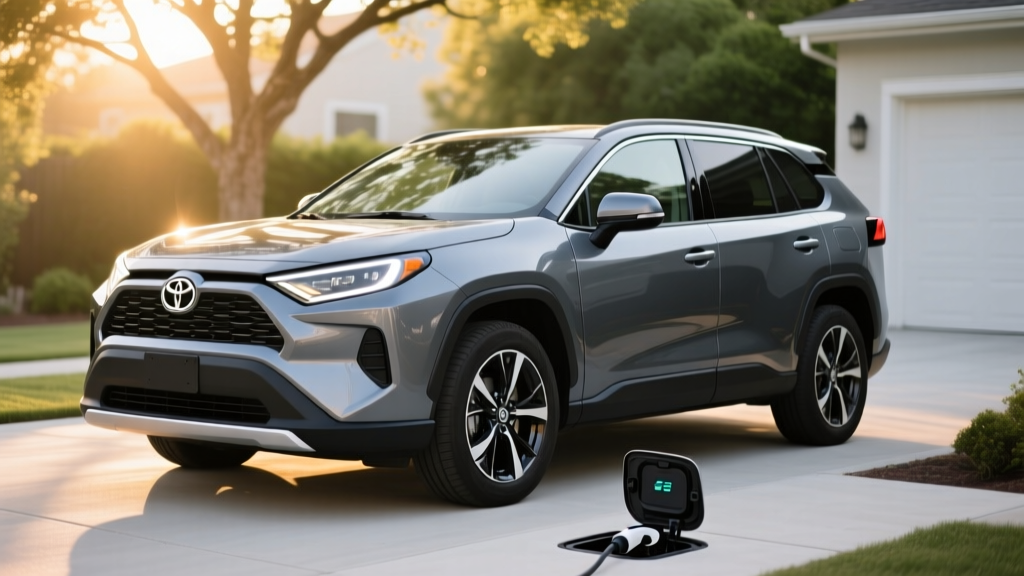
Buyers searching for rav4 hybrid miles per gallon data want one answer fast: how much fuel does it actually use? The 2026 Toyota RAV4 Hybrid carries EPA ratings that place it among the most efficient compact crossovers on the market — and in real-world city driving, it often beats its own sticker numbers.
| Driving Cycle | EPA MPG | Real-World Expectation |
|---|---|---|
| City | 41 MPG | 38–44 MPG (hybrids excel in stop-and-go) |
| Highway | 38 MPG | 34–37 MPG (aerodynamic drag at 75+ mph) |
| Combined | 40 MPG | 36–41 MPG depending on route mix |
Source: EPA fueleconomy.gov
HEV vs. PHEV: Which RAV4 Electrified Powertrain Fits You?
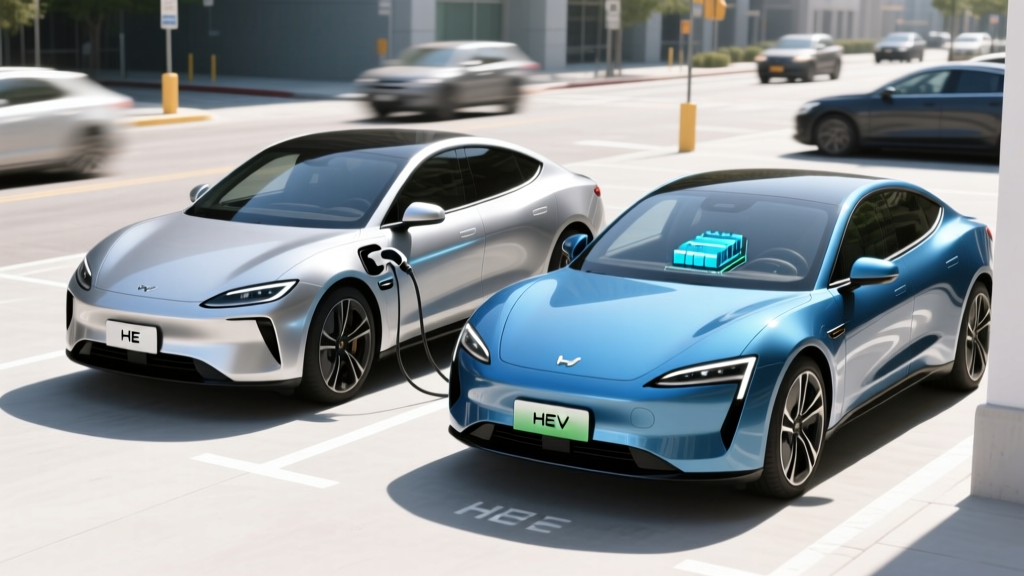
Toyota offers the RAV4 in two electrified flavors, and confusing them is one of the most common buyer mistakes. Here is the hard line between them:
RAV4 Hybrid (HEV)
- No plug required. The 1.6 kWh nickel-metal hydride (NiMH) traction battery charges exclusively through regenerative braking and the gas engine.
- Electric-only driving: Very short, low-speed EV mode (under ~1 mile at parking-lot speeds). This is not a plug-in vehicle.
- Fuel: Runs entirely on gasoline. 40 MPG combined EPA.
- Price advantage: Starts roughly $5,000–$7,000 below the PHEV variant.
RAV4 Prime (PHEV)
- Plug-in required for EV mode. 18.1 kWh lithium-ion battery charges via Level 1 (120V) or Level 2 (240V) — no DC fast charging.
- Electric-only range: EPA-rated 42 miles on battery alone, enough for most daily commutes without burning a drop of gas.
- Total range: ~600+ miles combined (42 mi electric + ~560 mi gas).
- MPGe: 94 MPGe combined (electric + gas), 38 MPG combined once the battery depletes.
| Specification | RAV4 Hybrid (HEV) | RAV4 Prime (PHEV) |
|---|---|---|
| Engine | 2.5L 4-cylinder Atkinson cycle | 2.5L 4-cylinder Atkinson cycle |
| Combined System Horsepower | 219 HP | 302 HP |
| Traction Battery | 1.6 kWh NiMH | 18.1 kWh Lithium-Ion |
| Drivetrain | AWD (e-AWD rear motor) | AWD (e-AWD rear motor) |
| 0–60 MPH | 7.4 seconds | 5.7 seconds |
| EPA EV-Only Range | N/A (no plug) | 42 miles |
| Level 2 Charge Time (0–100%) | N/A | ~2.5 hours (6.6 kW onboard charger) |
| DC Fast Charge | No | No |
| EPA Combined MPG / MPGe | 40 MPG | 94 MPGe / 38 MPG (gas only) |
Neither the RAV4 Hybrid nor the RAV4 Prime supports DC fast charging. The Prime's 6.6 kW onboard charger means a full Level 2 replenishment takes about 2.5 hours — adequate for overnight or workplace top-ups, but you cannot quickly add range at a highway charging station.
Real-World Fuel Economy: When Hybrids Beat the Sticker
The RAV4 Hybrid's Atkinson-cycle engine paired with Toyota's Hybrid Synergy Drive is engineered for city efficiency. Regenerative braking recovers energy at every stoplight, and the electric motor handles low-speed acceleration where gasoline engines are least efficient. This means:
- City-heavy commuters (60%+ urban driving) routinely log 41–44 MPG over thousands of miles, as tracked on fueleconomy.gov's owner-reported data.
- Highway road trippers should expect 34–37 MPG at sustained 70–80 mph speeds. Aerodynamic drag rises exponentially, and the hybrid system has less opportunity to regenerate.
- Cold-weather impact is moderate — expect a 2–4 MPG drop in sub-freezing temperatures as the engine runs more frequently for cabin heat and battery conditioning. This is far less severe than the 20–30% range loss a battery-electric vehicle experiences in the same conditions.
- Towing (rated 1,750 lbs) will drop fuel economy to the mid-to-high 20s.
For comparison, the non-hybrid gas-only RAV4 AWD achieves 30 MPG combined EPA. The hybrid's 10 MPG advantage translates to roughly 150–180 gallons saved per year for a driver covering 15,000 miles — worth approximately $500–$600 annually at $3.50/gallon.
Pricing, Trims, and Tax Credit Eligibility
The 2026 RAV4 Hybrid lineup spans from the LE to the Woodland Edition, with pricing that positions it as a value leader in the compact hybrid SUV segment:
- RAV4 Hybrid LE: ~$33,500 MSRP
- RAV4 Hybrid XLE: ~$35,500 MSRP
- RAV4 Hybrid SE: ~$37,000 MSRP
- RAV4 Hybrid Woodland Edition: ~$38,500 MSRP
- RAV4 Hybrid Limited: ~$41,000 MSRP
Tax Credit Reality Check
- RAV4 Hybrid (HEV): Does NOT qualify for the federal §30D Clean Vehicle Credit. Conventional hybrids without plug-in capability are excluded under current IRS rules.
- RAV4 Prime (PHEV): May qualify for up to $7,500 under §30D, but eligibility depends on battery component sourcing, critical mineral requirements, buyer income caps ($150K single / $300K joint), and the $80,000 MSRP cap for SUVs. Toyota's supply chain sourcing has varied by model year — confirm current eligibility on the IRS clean vehicle list before purchasing.
- Point-of-sale transfer: If eligible, the §30D credit can be transferred to the dealer at purchase, reducing your out-of-pocket cost immediately rather than waiting for tax filing.
- State incentives: Some states (CA, CO, NY, and others) offer additional rebates for PHEVs. Check your state energy office for current programs.
Battery Warranty, Reliability, and Replacement Costs
Hybrid battery longevity is the single biggest concern for first-time hybrid buyers. Toyota's track record here is among the strongest in the industry, dating back to the original Prius in 1997.
2026 RAV4 Hybrid Battery Warranty
- Hybrid Battery: 10 years / 150,000 miles (whichever comes first)
- Hybrid System Components: 8 years / 100,000 miles (inverter, transaxle, control modules)
- Capacity Retention: Toyota warranties the hybrid battery against failure and excessive capacity loss — not a specific percentage threshold like EV manufacturers, but replacement is covered if the battery cannot hold sufficient charge for hybrid operation
Real-world data from fleets and high-mileage owners shows the RAV4 Hybrid's NiMH battery pack typically lasts well beyond 150,000 miles before significant degradation. The smaller battery (1.6 kWh vs. 60–100 kWh in a full EV) means shallower charge cycles and less thermal stress — key factors in longevity.
If replacement is needed out of warranty: A new OEM hybrid battery for the RAV4 Hybrid runs approximately $2,500–$3,500 installed at a Toyota dealer. Refurbished units from reputable suppliers cost $1,500–$2,200. This is dramatically lower than EV battery replacements ($8,000–$20,000+), reflecting the smaller pack size.
Toyota's hybrid powertrain reliability consistently earns top marks from long-term durability studies. The e-CVT transaxle has no traditional gears or belts to wear, and the electric motor-generators have proven exceptionally durable.
Who Should Choose the RAV4 Hybrid vs. a PHEV or Full EV?
The RAV4 Hybrid occupies a specific niche. Here is a practical decision framework:
Choose the RAV4 Hybrid (HEV) If:
- You have no access to home or workplace charging (apartment, street parking, no garage outlet)
- You want maximum fuel efficiency with zero behavior change — no plugging in, no range planning
- Your budget is under $40,000 and you need AWD cargo space
- You drive 12,000–18,000 miles/year with a mix of city and highway
- You want proven reliability with minimal maintenance (no oil changes more frequent than any gas car, but no charging infrastructure to manage)
Choose the RAV4 Prime (PHEV) If:
- You can install a Level 2 charger at home and your commute is under 42 miles round-trip
- You want electric daily driving but gas flexibility for road trips
- You value the 302 HP performance upgrade (5.7-second 0–60)
- You qualify for the §30D tax credit, which can offset the Prime's ~$7,000 price premium over the HEV
Choose a Full EV (e.g., Tesla Model Y, Hyundai Ioniq 5) If:
- You have reliable Level 2 home charging and want to eliminate gasoline entirely
- Your daily driving is under 250 miles and you road-trip fewer than 5 times per year
- You want the lowest per-mile energy cost (electricity at $0.14/kWh ≈ $0.04/mile vs. $0.09/mile for the RAV4 Hybrid at 40 MPG)
- You want the full §30D $7,500 credit without PHEV sourcing complications
RAV4 Hybrid Pros
- 40 MPG combined — class-leading for an AWD compact SUV
- No charging infrastructure required
- Proven hybrid reliability with 10yr/150K battery warranty
- Strong resale value (Toyota hybrids hold premium)
- 219 HP provides confident highway merging
- Low battery replacement cost if ever needed (~$2,500–$3,500)
RAV4 Hybrid Cons
- No federal tax credit eligibility
- Engine noise under hard acceleration (e-CVT drone)
- Highway MPG drops to mid-30s at 75+ mph
- 1,750-lb towing limit (below some turbocharged gas competitors)
- No EV-only commuting capability
- Infotainment system lags some competitors in responsiveness
Frequently Asked Questions
How many miles per gallon does the RAV4 Hybrid actually get?
The 2026 RAV4 Hybrid AWD is EPA-rated at 41 city / 38 highway / 40 combined MPG. In real-world driving, city-heavy commuters often see 41–44 MPG thanks to regenerative braking, while highway-only driving at 75+ mph typically yields 34–37 MPG. Cold weather reduces these figures by 2–4 MPG.
Does the RAV4 Hybrid need to be plugged in?
No. The RAV4 Hybrid (HEV) is a conventional hybrid that charges its small 1.6 kWh battery entirely through regenerative braking and the gasoline engine. You never plug it in. The RAV4 Prime (PHEV) is the plug-in variant with 42 miles of electric-only range — that one does require plugging in for EV mode.
How far can the RAV4 Prime go on electric only?
The 2026 RAV4 Prime is EPA-rated for 42 miles of electric-only range on its 18.1 kWh lithium-ion battery. Real-world EV range is typically 38–42 miles depending on temperature and speed. Once the battery depletes, it operates as a conventional hybrid at 38 MPG combined.
Is the RAV4 Hybrid reliable, and what does a battery replacement cost?
Toyota's hybrid system is one of the most proven electrified powertrains in production, with over 25 years of real-world data. The hybrid battery is warranted for 10 years/150,000 miles. Out-of-warranty replacement costs approximately $2,500–$3,500 for an OEM battery, or $1,500–$2,200 for a refurbished unit. Most batteries last well beyond warranty limits.
Does the RAV4 Hybrid qualify for a tax credit?
The conventional RAV4 Hybrid (HEV) does not qualify for the federal §30D Clean Vehicle Credit, as it lacks plug-in capability. The RAV4 Prime (PHEV) may qualify for up to $7,500 depending on current IRS battery sourcing requirements, buyer income limits, and MSRP caps. Verify eligibility on the IRS clean vehicle credit page before purchasing.
How does the RAV4 Hybrid compare to a full EV on cost per mile?
At 40 MPG and $3.50/gallon, the RAV4 Hybrid costs approximately $0.088 per mile in fuel. A comparable EV charging at home at $0.14/kWh and 3.5 miles/kWh costs about $0.04 per mile — roughly half. However, the EV requires home charger installation ($500–$2,000+) and may carry higher insurance premiums. The hybrid wins on upfront cost and fueling flexibility; the EV wins on per-mile energy cost.