Quick Verdict: Is the 2026 Honda CR-V Hybrid Worth It?
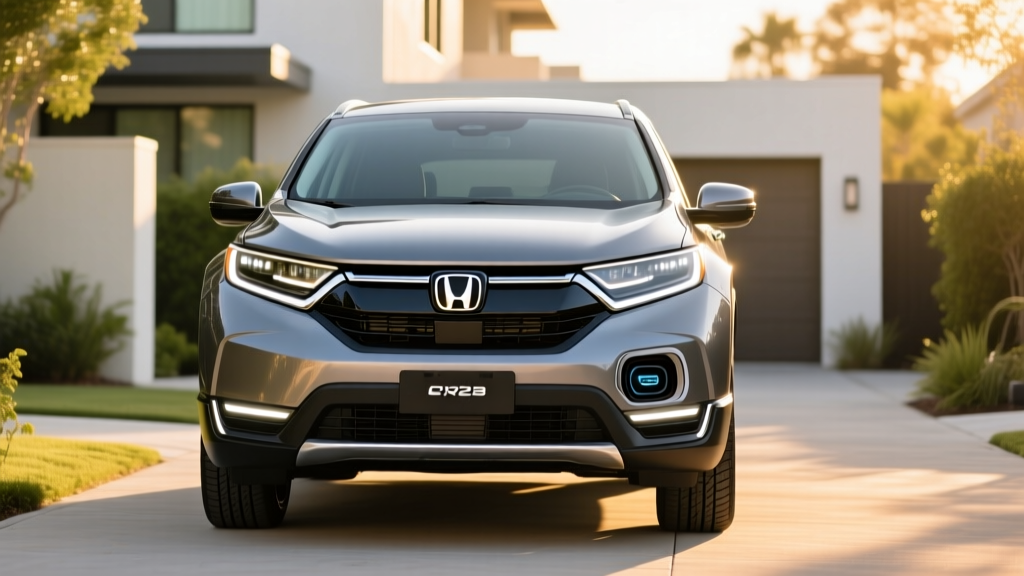
The 2026 Honda CR-V Hybrid remains one of the most sensible compact SUVs on the market, pairing a proven two-motor hybrid system with Honda's trademark practicality. Starting at $36,395 for the Sport trim (including destination), it undercuts many hybrid rivals while delivering an EPA-estimated 40 MPG combined with front-wheel drive. If you need all-wheel drive — and most buyers in snow-belt states do — the penalty is minimal: just 3 MPG combined and roughly $1,500 across the trim lineup.
For 2026, Honda continues the sixth-generation CR-V Hybrid lineup with the Sport, Sport-L, and Sport Touring trims. The powertrain is unchanged: a 2.0-liter Atkinson-cycle four-cylinder paired with a two-motor hybrid system producing 204 combined horsepower and a robust 247 lb-ft of torque. This is a conventional hybrid (HEV), not a plug-in — meaning you never need to plug it in, and there's no electric-only driving mode to manage.
| Spec | Value |
|---|---|
| Base MSRP (Sport FWD) | $36,395 |
| Top Trim MSRP (Sport Touring AWD) | $42,895 |
| Powertrain | 2.0L I-4 Atkinson + 2-motor hybrid |
| Combined Horsepower | 204 hp |
| Combined Torque | 247 lb-ft |
| EPA MPG (FWD) | 43 city / 36 hwy / 40 combined |
| EPA MPG (AWD) | 40 city / 34 hwy / 37 combined |
| Fuel Tank | 15.3 gallons |
| Total Range (FWD) | ~612 miles |
| Drivetrain | FWD standard; AWD available |
| Hybrid Battery Warranty | 8 years / 100,000 miles |
| Federal Tax Credit (§30D) | Not eligible (HEV, not PHEV/BEV) |
2026 Honda CR-V Hybrid Price by Trim
Honda keeps the CR-V Hybrid pricing straightforward with three trims, all built on the same hybrid powertrain. Here's the 2026 lineup with destination charges included:
- Sport (FWD): $36,395 — The value pick. Includes 18-inch wheels, Apple CarPlay/Android Auto, Honda Sensing suite, heated front seats, and a 7-inch touchscreen.
- Sport (AWD): $37,895 — Adds Honda's real-time AWD system with torque vectoring for wet and snowy conditions.
- Sport-L (FWD): $38,695 — Adds leather-trimmed seats, power liftgate, wireless Apple CarPlay, and a 9-inch touchscreen.
- Sport-L (AWD): $40,195
- Sport Touring (AWD only): $42,895 — The loaded option. Includes Bose 12-speaker audio, wireless phone charging, heated steering wheel, navigation, heated rear seats, and a hands-free power tailgate.
For context, the non-hybrid 2026 CR-V EX starts around $34,000, meaning the hybrid premium is roughly $2,400 at the Sport trim. At 40 MPG combined versus 30 MPG combined for the gas model, the hybrid pays back that premium in approximately 3.5 to 4 years for a driver covering 15,000 miles annually at $3.40/gallon fuel prices.
Fuel Economy: EPA Ratings and Real-World MPG
The CR-V Hybrid's EPA ratings place it near the top of the compact hybrid SUV segment. Here's the full breakdown per fueleconomy.gov:
| Drivetrain | City | Highway | Combined | Annual Fuel Cost* |
|---|---|---|---|---|
| FWD | 43 MPG | 36 MPG | 40 MPG | $1,275 |
| AWD | 40 MPG | 34 MPG | 37 MPG | $1,378 |
*Based on 15,000 miles/year, 55% city driving, $3.40/gallon regular unleaded.
Real-World MPG: What Owners Actually See
Honda's two-motor hybrid system excels in city driving, where the electric motors handle low-speed propulsion and the gas engine acts primarily as a generator. In real-world use, many owners report exceeding the EPA city estimate — commonly seeing 44-46 MPG on suburban routes with frequent stops, thanks to aggressive regenerative braking.
Highway driving tells a different story. At sustained 70-80 MPH speeds, the CR-V Hybrid typically delivers 33-35 MPG with FWD and 31-33 MPG with AWD. The boxy SUV shape and hybrid system weight (roughly 250 lbs more than the gas model) work against highway efficiency. On a 400-mile road trip at 75 MPH in 90°F heat with A/C running, expect closer to 32 MPG FWD.
Cold-weather impact: In sub-freezing temperatures (20-32°F), expect a 5-10% reduction in fuel economy due to increased engine runtime for cabin heat and reduced battery efficiency. This is far less severe than the 20-30% range loss a full EV experiences in the same conditions, but it's worth budgeting for if you live in the Upper Midwest or Northeast.
Hybrid vs. PHEV vs. Full EV: Which Is Right for You?
The 2026 CR-V Hybrid is a conventional hybrid (HEV). It charges its small lithium-ion battery pack entirely through regenerative braking and the gasoline engine — there is no plug, no charging cable, and no electric-only driving range. This is fundamentally different from a plug-in hybrid (PHEV) or a battery-electric vehicle (BEV).
| Feature | HEV (CR-V Hybrid) | PHEV (e.g., Toyota RAV4 Prime) | BEV (e.g., Tesla Model Y) |
|---|---|---|---|
| Plugs in? | No | Yes | Yes |
| Electric-only range | None (motor assists only) | 25-42 miles typical | 250-330 miles typical |
| Battery size | ~1.1 kWh | 14-18 kWh | 60-82 kWh |
| Gas engine? | Yes (primary power) | Yes (backup/range extender) | No |
| Home charging needed? | No | Recommended (Level 2) | Essential (Level 2) |
| Federal tax credit | Not eligible | Up to $7,500 (if eligible) | Up to $7,500 (if eligible) |
| Best for | No home charging access; simplicity | Short commutes + road trips | Home charging + low running costs |
Who Should Choose the CR-V Hybrid?
The CR-V Hybrid is ideal if you:
- Don't have access to home or workplace charging — apartment dwellers, street-parkers, and those without a garage benefit from a hybrid's zero-plug convenience.
- Drive 12,000-20,000 miles per year with a mix of city and highway, where the hybrid system's city efficiency shines.
- Want lower fuel costs without behavioral changes — no route planning, no charging apps, no preconditioning routines.
- Live in an area with limited public charging infrastructure — the gas station network remains the most reliable refueling option in rural America.
Who Should Look at a PHEV or Full EV Instead?
Consider a plug-in hybrid like the Toyota RAV4 Prime (42 miles electric-only, $44,500 starting) if you have a garage with a 120V or 240V outlet and a commute under 40 miles round-trip. You'd drive most days on electricity alone while keeping the gas engine for road trips.
Consider a full EV like the Tesla Model Y or Hyundai Ioniq 5 if you have reliable Level 2 home charging, want to eliminate gas entirely, and can benefit from the federal §30D tax credit (up to $7,500, subject to income limits, MSRP caps, and battery-sourcing requirements).
Powertrain Details: How the CR-V Hybrid System Works
Honda's hybrid system in the CR-V uses a series-parallel architecture with two electric motors and no traditional transmission. Here's the breakdown:
- Gasoline engine: 2.0-liter Atkinson-cycle inline-4, producing 146 hp and 134 lb-ft of torque on its own. The Atkinson cycle sacrifices peak power for thermal efficiency — it's the same cycle used in the Toyota Prius.
- Propulsion motor: One electric motor drives the front wheels directly, producing up to 181 hp and 247 lb-ft of torque. This is the motor you feel during acceleration.
- Generator motor: The second motor acts as a generator, converting engine output into electricity to feed the propulsion motor or charge the battery.
- Combined system output: 204 hp and 247 lb-ft of torque.
- Battery: A compact lithium-ion pack (approximately 1.1 kWh capacity) mounted under the cargo floor. This is far smaller than a PHEV or BEV battery and is designed for frequent shallow charge/discharge cycles, not deep cycling.
The system operates in three modes automatically: EV Drive (battery powers the motor at low speeds for brief distances), Hybrid Drive (engine generates electricity for the motor), and Engine Drive (engine connects directly to the wheels via a lock-up clutch at steady highway speeds). You don't select modes — the system manages everything.
The result is a 0-60 MPH time of approximately 7.8 seconds, which is adequate for merging and passing but not sporty. The 247 lb-ft of electric torque gives strong initial acceleration from a stop, making the CR-V Hybrid feel quicker in city driving than the 0-60 number suggests.
Battery Warranty, Reliability, and Replacement Cost
Hybrid battery longevity is the single most common concern among first-time hybrid buyers. Here's what the data shows:
Honda CR-V Hybrid Battery Warranty
- Hybrid battery: 8 years / 100,000 miles (10 years / 150,000 miles in CARB states including CA, NY, MA, CT, and others)
- Hybrid system components: 8 years / 100,000 miles
- Powertrain warranty: 5 years / 60,000 miles
- Bumper-to-bumper: 3 years / 36,000 miles
The warranty covers battery capacity below a threshold (typically 60-70% of original capacity) and any hybrid system component failure under normal use.
Real-World Reliability Data
Honda's two-motor hybrid system has been in production since 2014 (first in the Accord Hybrid) and has proven highly durable. The CR-V Hybrid, introduced for the 2020 model year, has accumulated substantial field data. According to NHTSA complaint databases, hybrid-specific issues are rare, with most complaints relating to infotainment or minor build quality — not the hybrid powertrain itself.
The lithium-ion battery pack is designed to last the life of the vehicle under normal use. Unlike a full EV battery, which undergoes deep charge/discharge cycles, the CR-V Hybrid's small battery operates in a narrow state-of-charge window (roughly 40-60%), which dramatically extends cell life. Toyota Prius taxis have been documented exceeding 300,000 miles on original hybrid batteries, and Honda's system uses similar operating principles.
Hybrid Battery Replacement Cost
If the hybrid battery does fail outside of warranty, replacement costs have come down significantly:
- Dealer replacement (OEM): $2,500 - $4,000 including labor
- Refurbished/remanufactured pack: $1,500 - $2,500 including labor
- Individual cell replacement: $500 - $1,200 at specialized hybrid repair shops
For context, this is far less than a full EV battery replacement ($8,000-$20,000+) and comparable to a conventional automatic transmission replacement. Given the 8-10 year warranty coverage, most original owners will never face this cost.
Tax Credits and Incentives for the 2026 CR-V Hybrid
Here's where the math gets important: the 2026 Honda CR-V Hybrid does not qualify for the federal §30D Clean Vehicle tax credit. The §30D credit applies only to plug-in electric vehicles — battery-electric vehicles (BEVs) and plug-in hybrids (PHEVs) with at least 7 kWh of battery capacity. The CR-V Hybrid's ~1.1 kWh battery doesn't come close.
Federal §30D Tax Credit — Why the CR-V Hybrid Doesn't Qualify
- ❌ Vehicle must be a plug-in EV or PHEV (CR-V Hybrid is an HEV)
- ❌ Battery capacity must be at least 7 kWh (CR-V Hybrid has ~1.1 kWh)
- ❌ Must meet critical mineral and battery component sourcing requirements (applies to PHEVs/BEVs only)
- ❌ Buyer income caps: $150K single / $300K joint (applies to eligible vehicles only)
- ❌ MSRP caps: $55K for sedans, $80K for SUVs/trucks (CR-V Hybrid passes, but moot)
State-level incentives: A handful of states offer modest rebates for conventional hybrids, though these are increasingly rare as policy shifts toward plug-in vehicles. Check your state's energy or environmental agency website for current programs. Some utility companies also offer small rebates for hybrid purchases.
Indirect savings: While there's no purchase incentive, the CR-V Hybrid's fuel savings are substantial. At 40 MPG combined versus 25 MPG for a comparable gas-only compact SUV, a driver covering 15,000 miles annually saves approximately $765 per year at $3.40/gallon — or $3,825 over five years. That's effectively a self-funding tax credit paid at the pump.
CR-V Hybrid vs. Competitors: How It Stacks Up
The compact hybrid SUV segment is competitive. Here's how the 2026 CR-V Hybrid compares to its three main rivals:
| Model | Starting Price | EPA Combined MPG | Horsepower | Cargo (cu ft) |
|---|---|---|---|---|
| Honda CR-V Hybrid | $36,395 | 40 (FWD) | 204 | 36.3 / 76.5 |
| Toyota RAV4 Hybrid | $33,425 | 39 (AWD std) | 219 | 37.6 / 69.8 |
| Hyundai Tucson Hybrid | $34,485 | 38 (AWD std) | 232 | 38.7 / 80.3 |
| Ford Escape Hybrid | $35,390 | 39 (FWD) | 198 | 34.4 / 60.8 |
The CR-V Hybrid's key advantages are its best-in-class cargo versatility (with a low, flat load floor), top-tier safety ratings from IIHS (Top Safety Pick+ when equipped with specific headlights), and a refined driving experience that feels more premium than its price suggests. The RAV4 Hybrid is cheaper and offers standard AWD, while the Tucson Hybrid has more power and cargo room but slightly lower MPG.
Pros
- 40 MPG combined FWD — among the best in segment
- Spacious, well-designed interior with 76.5 cu ft max cargo
- Honda Sensing ADAS suite standard on all trims
- No plug-in required — zero lifestyle change from a gas car
- Strong resale value and proven hybrid reliability
- Excellent IIHS safety ratings
Cons
- No federal tax credit eligibility (HEV, not PHEV)
- Highway MPG drops to 34-36 — less impressive than city
- AWD costs extra (standard on RAV4 Hybrid)
- No plug-in hybrid variant offered (RAV4 Prime exists)
- Infotainment system lags behind rivals in responsiveness
- Base Sport trim has a 7-inch screen (small for 2026)
Frequently Asked Questions
How many MPG does the 2026 Honda CR-V Hybrid get?
The FWD model achieves 43 city / 36 highway / 40 combined MPG per the EPA. The AWD model rates at 40 city / 34 highway / 37 combined. In real-world city driving, many owners exceed the EPA city estimate, seeing 44-46 MPG. Highway driving at 70+ MPH typically yields 32-35 MPG.
Does the CR-V Hybrid need to be plugged in?
No. The 2026 CR-V Hybrid is a conventional hybrid (HEV). It charges its battery entirely through regenerative braking and the gasoline engine. You simply fill it with regular unleaded gasoline like any other car. There is no plug, no charging cable, and no electric-only driving mode.
Is there a plug-in hybrid (PHEV) version of the CR-V?
As of the 2026 model year, Honda does not offer a CR-V plug-in hybrid in the United States. If you want a compact SUV PHEV, the Toyota RAV4 Prime (42 miles electric-only, ~$44,500) and the Hyundai Tucson PHEV (33 miles electric-only, ~$38,000) are the leading alternatives. Honda has signaled interest in electrification but has not announced a CR-V PHEV for the U.S. market.
Does the 2026 CR-V Hybrid qualify for a tax credit?
The CR-V Hybrid does not qualify for the federal §30D Clean Vehicle tax credit because it is not a plug-in vehicle. The credit requires a minimum 7 kWh battery and plug-in capability. Some states or utilities may offer small hybrid incentives — check your local programs. The fuel savings (~$765/year vs. a gas-only SUV) partially offset the lack of a purchase credit.
How long will the CR-V Hybrid battery last?
Honda warranties the hybrid battery for 8 years/100,000 miles (10 years/150,000 miles in CARB states). In practice, Honda's hybrid batteries routinely last 150,000-200,000+ miles because the system keeps the battery in a narrow charge window, avoiding the deep cycling that degrades cells. If replacement is needed out of warranty, expect $2,500-$4,000 at a dealer or $1,500-$2,500 for a refurbished unit.
Is the CR-V Hybrid reliable?
Yes. Honda's two-motor hybrid system has been in production since 2014 and has accumulated extensive real-world reliability data. NHTSA complaint data shows very few hybrid-specific issues. The CR-V Hybrid earns top marks from Consumer Reports and IIHS for reliability and safety. The hybrid system actually has fewer wear items than a conventional powertrain — no traditional transmission, no starter motor, and regenerative braking extends brake pad life significantly.
Hybrid vs. full EV — which should I choose?
Choose the CR-V Hybrid if you lack home charging access, drive long highway routes frequently, live in an area with sparse public charging, or simply don't want to change your refueling habits. Choose a full EV if you have reliable Level 2 home charging, your daily driving is under 250 miles, you want the lowest per-mile fuel cost, and you can take advantage of the up-to-$7,500 federal tax credit. A PHEV splits the difference — electric commuting with gas backup for road trips.
Final Assessment: Who Should Buy the 2026 CR-V Hybrid
The 2026 Honda CR-V Hybrid at $36,395 is a pragmatic choice for buyers who want meaningful fuel savings without the infrastructure requirements of a plug-in vehicle. Its 40 MPG combined EPA rating translates to real savings at the pump — roughly $765 annually versus a gas-only compact SUV — and the hybrid system's proven reliability means those savings come without maintenance anxiety.
It's not the cheapest option (the RAV4 Hybrid starts $3,000 lower), and it lacks the plug-in variant that Toyota offers with the RAV4 Prime. But for buyers prioritizing interior space, safety technology, and Honda's long-term durability reputation, the CR-V Hybrid remains the segment benchmark. If you can charge at home and want maximum savings, a full EV will ultimately cost less to operate. But if you need the flexibility of gas stations and the simplicity of a no-plug ownership experience, the CR-V Hybrid is hard to beat.