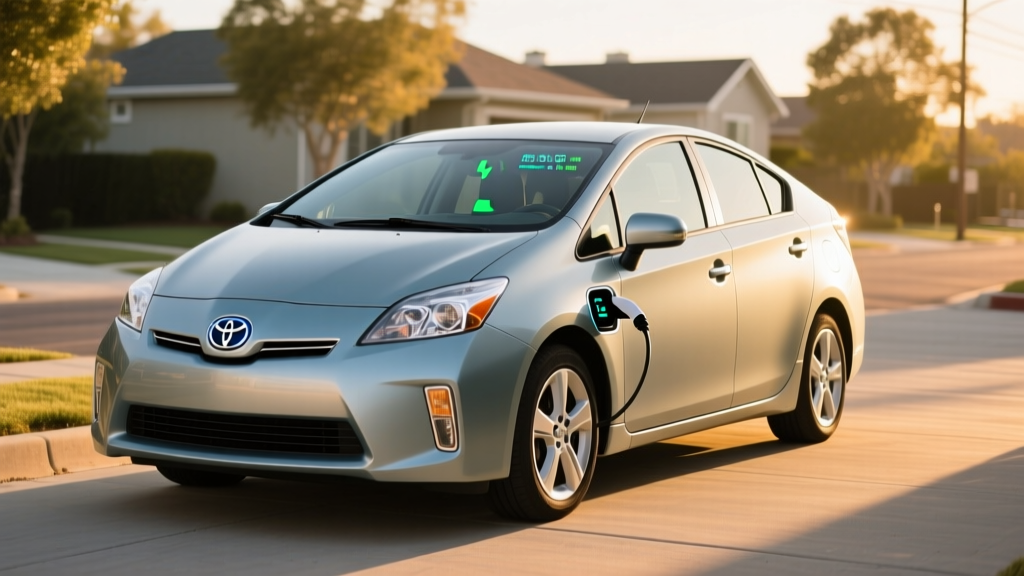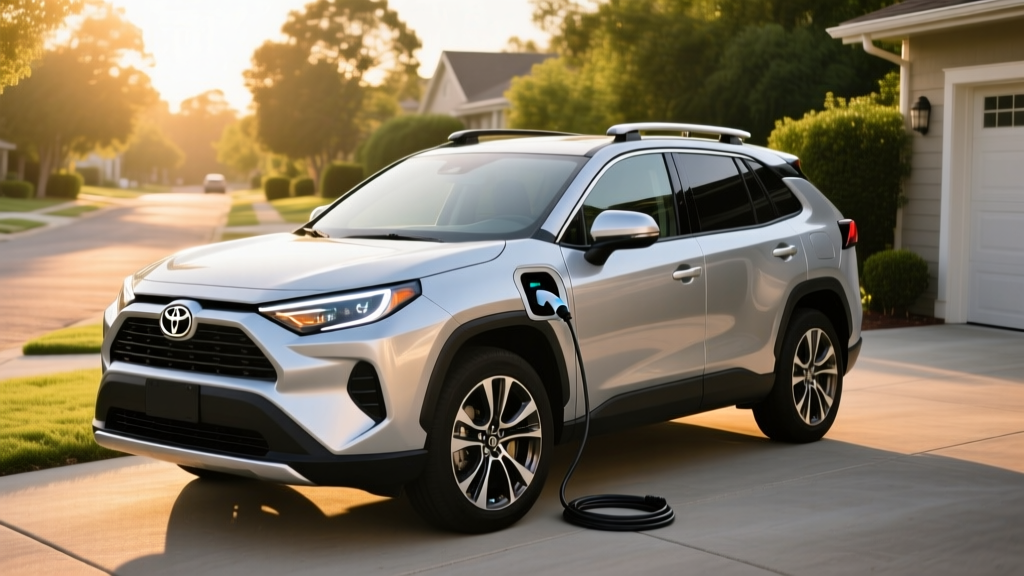
The Toyota RAV4 Hybrid has been America's best-selling hybrid SUV for years, and the Limited trim sits at the top of the non-plug-in lineup. If you're researching the RAV4 Hybrid Limited, you're likely weighing its fuel-sipping efficiency against its premium price tag — and wondering whether a plug-in hybrid (RAV4 Prime) or a full battery-electric vehicle might serve you better. This guide breaks down the exact numbers that matter: EPA MPG, real-world fuel economy, powertrain specs, battery longevity, and total cost of ownership for the 2026 model year.
2026 RAV4 Hybrid Limited: Quick Verdict
The RAV4 Hybrid Limited is a conventional hybrid (HEV) — it charges its own battery through regenerative braking and the gasoline engine. You never plug it in. What you get in return is a combined 39 MPG from a 219-horsepower all-wheel-drive powertrain, Toyota's reputation for hybrid reliability, and a well-equipped cabin with a 10.5-inch touchscreen, heated and ventilated front seats, and the full Toyota Safety Sense 3.0 suite. The trade-off is a starting MSRP that pushes past $40,000, making it one of the pricier non-luxury compact SUVs on the market.
| Specification | Value |
|---|---|
| Powertrain | 2.5L 4-cyl + 3 electric motors (AWD) |
| Combined Horsepower | 219 hp |
| EPA MPG (City / Hwy / Combined) | 41 / 38 / 39 MPG |
| Fuel Tank Capacity | 14.5 gallons |
| Total Driving Range | ~565 miles |
| 0–60 mph | 7.4 seconds |
| Cargo Volume (behind rear seats) | 37.5 cu ft |
| Towing Capacity | 1,750 lbs |
| Hybrid Battery | ~1.6 kWh (NiMH / Li-ion depending on build) |
| Drivetrain | Electronic On-Demand AWD (eAWD) |
| Base MSRP (Limited AWD) | ~$40,550 |
Fuel Economy: EPA Ratings vs. Real-World MPG
The EPA rates the RAV4 Hybrid at 41 MPG city, 38 MPG highway, and 39 MPG combined across all AWD trims, including the Limited. These figures come from fueleconomy.gov and apply to the 2026 model year's 2.5-liter Dynamic Force engine paired with Toyota's fourth-generation hybrid system.
| Driving Condition | EPA MPG | Real-World Expectation |
|---|---|---|
| City | 41 MPG | 42–45 MPG (hybrids excel in stop-and-go) |
| Highway (70 mph cruise) | 38 MPG | 34–37 MPG (aero drag reduces regen benefit) |
| Combined | 39 MPG | 37–41 MPG (depends on city/highway mix) |
| Cold Weather (below 30°F) | — | 33–36 MPG (engine runs more for cabin heat) |
Hybrids often exceed their EPA city rating in real-world driving because regenerative braking recaptures energy during frequent stops. Highway driving is the opposite story: sustained high speeds mean less regen activity and greater aerodynamic drag, so expect 34–37 MPG on a 70 mph interstate run. In cold weather, the gasoline engine runs more frequently to provide cabin heat (the RAV4 Hybrid uses engine waste heat rather than a dedicated heat pump), which can drop combined economy into the low-to-mid 30s.
For context, the gas-only RAV4 AWD returns 30 MPG combined — meaning the hybrid saves roughly 2.3 gallons per 100 miles, or about $450–$600 per year in fuel at 15,000 miles driven and $3.50/gallon.
HEV vs. PHEV: RAV4 Hybrid vs. RAV4 Prime
Toyota offers the RAV4 in two electrified flavors, and buyers frequently confuse them. Here's the critical distinction:
- RAV4 Hybrid (HEV): A conventional, self-charging hybrid. The small ~1.6 kWh battery recharges via regenerative braking and the gas engine. You never plug it in. It cannot drive on electric power alone for meaningful distances.
- RAV4 Prime (PHEV): A plug-in hybrid with a larger 18.1 kWh battery. You plug it in to charge. It delivers 42 miles of electric-only range before the gas engine engages. It also produces 302 combined horsepower — significantly more than the HEV.
| Attribute | RAV4 Hybrid (HEV) | RAV4 Prime (PHEV) |
|---|---|---|
| Plug-In Required? | No | Yes (Level 1 or Level 2) |
| Battery Capacity | ~1.6 kWh | 18.1 kWh (lithium-ion) |
| Electric-Only Range | N/A | 42 miles (EPA) |
| Combined Horsepower | 219 hp | 302 hp |
| Combined MPG / MPGe | 39 MPG | 94 MPGe (electric) / 38 MPG (gas) |
| Total Range | ~565 miles | ~600 miles (42 EV + 558 gas) |
| 0–60 mph | 7.4 sec | 5.7 sec |
| DC Fast Charging | N/A | No (Level 2 AC only, ~2.5 hrs at 240V) |
| Starting MSRP | ~$33,550 (LE) | ~$44,500 (SE) |
| Federal Tax Credit (§30D) | Not eligible | Not eligible (as of 2026) |
The RAV4 Prime's 42-mile electric range covers most daily commutes without burning a drop of gas, and its 302 hp makes it the quickest RAV4 Toyota sells. However, it costs roughly $8,000–$10,000 more than a comparably equipped RAV4 Hybrid, and as of 2026, it no longer qualifies for the federal §30D tax credit because its battery components no longer meet critical-mineral sourcing requirements outlined by the IRS. The HEV has never qualified for §30D, as conventional hybrids are excluded from the clean-vehicle credit.
Powertrain Deep Dive: How the Hybrid System Works
The RAV4 Hybrid Limited uses Toyota's AWD-e powertrain, which pairs a 2.5-liter four-cylinder engine (176 hp, 163 lb-ft) with three electric motor-generators:
- MG1: Acts as a starter, generator, and engine-speed controller within the planetary gearset (eCVT).
- MG2: The primary front drive motor, providing direct propulsion and regenerative braking.
- Rear motor: A smaller, independent motor on the rear axle providing on-demand AWD traction — there is no mechanical driveshaft connecting the front and rear axles.
Combined system output is 219 hp. The eCVT (electronically controlled continuously variable transmission) uses a planetary gearset rather than a belt or chain, which contributes to the system's long-term reliability — there are no traditional transmission clutches, bands, or torque converters to wear out.
The 0–60 mph time of 7.4 seconds is adequate for merging and passing, though it won't feel quick compared to turbocharged competitors or the RAV4 Prime. Where the hybrid shines is low-speed responsiveness: the electric motor delivers instant torque from a stoplight, making the RAV4 Hybrid feel peppier in city driving than its 0–60 number suggests.
Interior, Tech, and the Limited Trim Advantage
The Limited trim justifies its premium over the XLE and XSE with several notable upgrades:
- 10.5-inch Toyota Audio Multimedia touchscreen (vs. 8-inch on lower trims)
- SofTex-trimmed heated and ventilated front seats with heated steering wheel
- Wireless phone charging pad
- Power tilt/slide moonroof
- Digital rearview mirror with HomeLink
- 12.3-inch digital instrument cluster
- Toyota Safety Sense 3.0: pre-collision with pedestrian detection, full-speed dynamic radar cruise control, lane departure alert with steering assist, lane tracing assist, road sign assist, and automatic high beams
Cargo volume is 37.5 cubic feet behind the rear seats — competitive with the Honda CR-V Hybrid (39.4 cu ft) and slightly less than the Hyundai Tucson Hybrid (38.7 cu ft). Fold the rear seats and you get 69.8 cu ft, enough for bulky gear or a week's worth of camping equipment.
Battery Longevity, Warranty, and Replacement Cost
Hybrid battery lifespan is consistently the top concern among first-time hybrid buyers, and it's an area where Toyota's track record is exceptionally strong. The Prius, now in its 25th year of US sales, has demonstrated that Toyota's hybrid batteries routinely last 150,000–200,000+ miles with minimal capacity loss.
Hybrid Battery Warranty Coverage
| Hybrid Battery Warranty | 10 years / 150,000 miles (whichever comes first) |
| Hybrid System Components | 8 years / 100,000 miles |
| Capacity Retention Threshold | Toyota replaces if battery fails to hold sufficient charge for hybrid operation (not a fixed % like EV warranties) |
| Out-of-Warranty Replacement Cost | ~$3,000–$5,000 (OEM battery pack, installed) |
| Refurbished/Aftermarket Option | ~$1,500–$2,500 (third-party reconditioned packs) |
Toyota's hybrid battery warranty covers 10 years or 150,000 miles. This applies to the traction battery pack and is transferable to subsequent owners. The broader hybrid system — including the inverter, motor-generators, and eCVT — is covered for 8 years / 100,000 miles.
Should the battery eventually need replacement outside of warranty, OEM packs typically run $3,000–$5,000 installed at a Toyota dealer. Refurbished or aftermarket packs are available for $1,500–$2,500. Given that the battery is a small ~1.6 kWh unit (far simpler and cheaper than a 75+ kWh EV battery), replacement is a manageable expense — not the catastrophic cost some buyers fear.
Real-world degradation is minimal. Unlike EV batteries that cycle deeply every day, the RAV4 Hybrid's battery operates in a narrow state-of-charge window (roughly 40–80% SoC), which dramatically reduces wear. The hybrid system never fully charges or fully depletes the pack, preserving cycle life over hundreds of thousands of miles.
Pricing, Trims, and Tax Credit Eligibility
The 2026 RAV4 Hybrid Limited starts at approximately $40,550 MSRP, including destination. Adding options like the Advanced Technology Package (panoramic view monitor, front and rear parking assist with automatic braking) or premium paint can push the out-the-door price to $42,000–$43,500.
For buyers who want RAV4 Hybrid efficiency at a lower price point, the LE trim starts around $33,550 and the XLE around $35,500 — both carrying the same 39 MPG combined rating and 219 hp powertrain.
Federal Tax Credit Status: RAV4 Hybrid
- §30D New Clean Vehicle Credit: NOT eligible. The federal credit applies only to plug-in electric vehicles (BEVs and PHEVs) meeting battery-sourcing and MSRP requirements. Conventional hybrids (HEVs) are excluded by statute.
- RAV4 Prime (PHEV): As of 2026, the RAV4 Prime also does NOT qualify for §30D due to updated critical-mineral and battery-component sourcing rules that took effect in 2024. Verify current status at irs.gov.
- State/Local Incentives: Some states offer rebates or HOV lane access for hybrids. Check your state's energy office or Alternative Fuels Data Center for current programs.
- Fuel Savings Offset: At 15,000 miles/year and $3.50/gallon, the hybrid saves ~$500–$600 annually vs. the gas RAV4 AWD (30 MPG combined), partially offsetting the higher MSRP over a 5-year ownership period.
RAV4 Hybrid Limited vs. Full EV vs. Gas: Which Fits You?
Decision Framework
Choose the RAV4 Hybrid Limited if:
- You want maximum fuel efficiency without changing your fueling habits (no charging required)
- You take frequent long road trips and don't want to plan around charging stops
- You live in an area with limited public charging infrastructure
- You want Toyota's proven hybrid reliability with a 10-year battery warranty
- Your daily commute involves significant stop-and-go traffic where the hybrid system excels
Choose the RAV4 Prime (PHEV) if:
- You have reliable home Level 2 charging and a commute under 42 miles round-trip
- You want to drive mostly on electricity during the week and use gas for weekend road trips
- You value the 302 hp performance upgrade
- You can absorb the ~$8,000+ price premium over the HEV
Choose a full EV (e.g., Tesla Model Y, Hyundai Ioniq 5) if:
- You have home charging and want to eliminate gasoline entirely
- Your daily driving is under 250 miles and you're comfortable with DC fast charging on road trips
- You want to access the §30D federal tax credit (up to $7,500 for qualifying BEVs)
- You prioritize lower per-mile energy costs (~$0.04–$0.06/mile on home electricity vs. ~$0.10–$0.12/mile on gas for the hybrid)
Choose the gas-only RAV4 if:
- Upfront cost is the primary concern (gas RAV4 LE AWD starts ~$30,500)
- You drive fewer than 8,000 miles per year, where fuel savings won't offset the hybrid premium
Ownership Costs: 5-Year Estimate
| Category | Estimated Cost |
|---|---|
| Purchase Price (MSRP + dest.) | ~$40,550 |
| Fuel (15,000 mi/yr, 39 MPG, $3.50/gal) | ~$6,730 |
| Insurance (national avg. for compact SUV) | ~$8,500 |
| Maintenance (oil changes, tires, brakes) | ~$3,200 |
| Federal Tax Credit | $0 (HEV ineligible) |
| Estimated Depreciation (5-yr) | ~$16,000 |
| Total Estimated 5-Year Cost | ~$58,980 |
Toyota RAV4 Hybrids hold their value well. According to industry depreciation data, the RAV4 Hybrid retains roughly 55–60% of its value after five years — better than most competitors and significantly better than many EVs, which have seen steeper depreciation in recent years due to price wars and rapid technology advancement.
Maintenance costs are low. The hybrid system requires no additional service beyond a standard gasoline vehicle. In fact, brake wear is often reduced because regenerative braking handles much of the deceleration, extending pad and rotor life. Oil change intervals remain at 10,000 miles with synthetic 0W-16 oil.
Pros and Cons
Pros
- 39 MPG combined with no plug-in requirement — zero lifestyle change
- Toyota's industry-leading hybrid reliability and 10-year battery warranty
- Strong resale value (55–60% retention at 5 years)
- Standard AWD with a dedicated rear electric motor
- Limited trim is well-equipped: ventilated seats, 10.5" screen, moonroof
- Competitive cargo space (37.5 cu ft) and 1,750-lb towing
Cons
- Limited trim at ~$40,550 is expensive for a non-luxury compact SUV
- No federal tax credit eligibility (HEV excluded from §30D)
- Highway MPG drops to mid-30s at sustained 70+ mph speeds
- Engine noise is noticeable under hard acceleration (eCVT drone)
- Not as quick as turbocharged rivals or the RAV4 Prime (7.4 sec 0–60)
- Towing limited to 1,750 lbs (less than some gas-powered competitors)
Frequently Asked Questions
How many MPG does the RAV4 Hybrid Limited get?
The EPA rates it at 41 MPG city, 38 MPG highway, and 39 MPG combined. In real-world driving, expect 42–45 MPG in city traffic (where regenerative braking excels) and 34–37 MPG on sustained highway runs at 70 mph. Cold weather below 30°F can reduce combined economy to the low-to-mid 30s.
Does the RAV4 Hybrid need to be plugged in?
No. The RAV4 Hybrid is a conventional hybrid (HEV). Its small battery recharges automatically through regenerative braking and the gasoline engine. You fuel it like any other car — just fill up with regular unleaded gasoline.
How far can the RAV4 Prime go on electric only?
The RAV4 Prime (PHEV) delivers 42 miles of EPA-rated electric-only range. This is separate from the RAV4 Hybrid (HEV), which does not offer meaningful electric-only driving. If your daily commute is under 42 miles round-trip and you can charge at home, the Prime lets you drive on electricity most days while retaining a gas engine for longer trips.
Is the RAV4 Hybrid reliable? What does a battery replacement cost?
Toyota's hybrid systems are among the most proven in the industry, with over 25 years of real-world data from the Prius lineage. The hybrid battery is warranted for 10 years / 150,000 miles. Out-of-warranty replacement costs approximately $3,000–$5,000 for an OEM pack, or $1,500–$2,500 for a refurbished unit. Most owners never need to replace the battery during their ownership.
Does the RAV4 Hybrid qualify for any tax credit?
The RAV4 Hybrid (HEV) does not qualify for the federal §30D Clean Vehicle Credit, which is limited to plug-in vehicles. The RAV4 Prime (PHEV) also lost eligibility as of 2024 due to updated battery-sourcing rules. Some states may offer separate incentives for hybrids — check the Alternative Fuels Data Center for your area. Consult a tax professional for personal eligibility guidance.
Hybrid vs. PHEV vs. EV — which should I choose?
Choose the Hybrid (HEV) if you want efficiency without changing your fueling routine or if you lack home charging access. Choose the PHEV (RAV4 Prime) if you can charge at home and want electric-only commuting with gas-engine flexibility. Choose a full EV if you have home charging, want to eliminate gas entirely, and qualify for the federal tax credit. The right answer depends on your charging access, daily mileage, road-trip frequency, and budget.
How does the RAV4 Hybrid compare to the Honda CR-V Hybrid?
The Honda CR-V Hybrid Sport Touring returns 40 MPG combined (43 city / 36 highway) and starts around $40,000 — very close to the RAV4 Hybrid Limited on price and efficiency. The CR-V Hybrid offers slightly more rear-seat legroom and cargo volume, while the RAV4 Hybrid provides standard AWD across all trims (the CR-V Hybrid is also AWD standard) and Toyota's longer track record in hybrid technology. Both are strong choices; the decision often comes down to brand preference, dealer experience, and which interior layout you prefer.
Sources: EPA fuel economy data from fueleconomy.gov; federal tax credit rules from irs.gov; state incentive data from the Alternative Fuels Data Center. Specifications reflect 2026 model year data available at time of publication. Verify pricing and credit eligibility with your dealer and tax professional before purchasing.