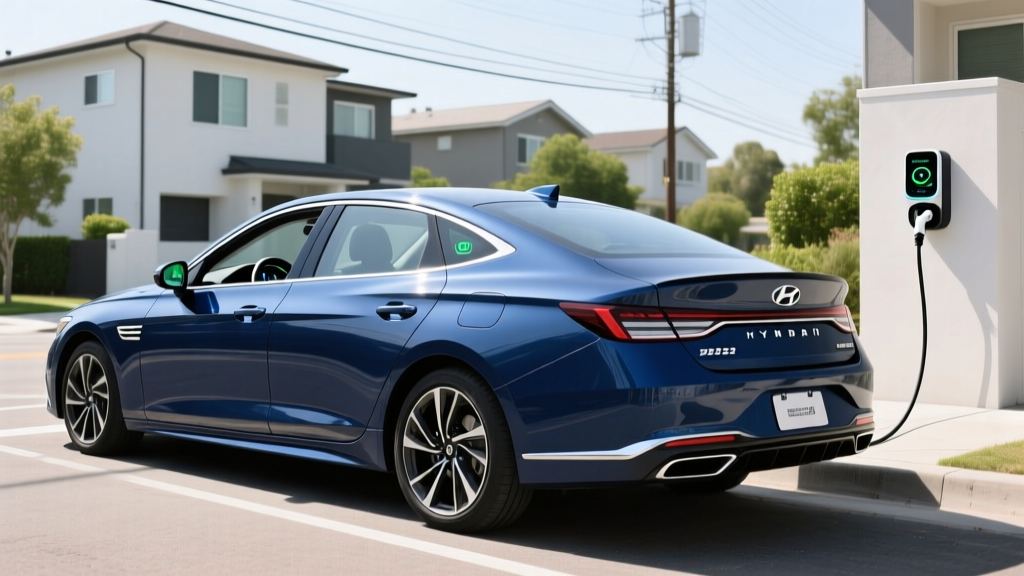
The 2022 Hyundai Sonata Hybrid occupies a practical middle ground for buyers who want electrified efficiency without plug-in dependency. With an EPA-estimated 52 MPG combined and a starting MSRP that made it one of the most fuel-efficient midsize sedans of its model year, it remains a compelling option on the used market in 2026. This guide covers exactly what you're getting — powertrain numbers, real-world fuel economy, battery longevity, and whether a federal tax credit still applies if you buy one today.
2022 Hyundai Sonata Hybrid: Key Specifications
| Attribute | Specification |
|---|---|
| Powertrain Type | Conventional Hybrid (HEV) — no plug-in required |
| Engine | 2.0L inline-4 GDI + electric motor |
| Combined Horsepower | 192 hp |
| Transmission | 6-speed automatic |
| EPA MPG (City / Hwy / Combined) | 50 / 54 / 52 (Blue trim); 45 / 51 / 47 (SEL/Limited) |
| Fuel Tank Capacity | 13.2 gallons |
| Total Driving Range | ~686 miles (Blue trim, EPA est.) |
| Hybrid Battery | 1.76 kWh lithium-ion polymer |
| 0-60 mph | ~7.5 seconds |
| Original MSRP (Base Blue) | $28,500 |
| Hybrid Battery Warranty | 10 years / 100,000 miles (original owner); varies on transfer |
Understanding the Sonata Hybrid: HEV, Not PHEV
A critical distinction before we go further: the 2022 Sonata Hybrid is a conventional hybrid electric vehicle (HEV). It does not have a plug, cannot be charged from a wall outlet, and has no meaningful electric-only driving range. Hyundai did sell a Sonata Plug-in Hybrid in earlier model years (through 2019), but that variant was discontinued before the 2022 model year.
As an HEV, the Sonata Hybrid recovers energy through regenerative braking and its gasoline engine to charge its small 1.76 kWh battery pack. The electric motor assists the engine during acceleration and can propel the car at low speeds for very short distances (typically under a mile at parking-lot speeds), but the gasoline engine does the vast majority of the work. You fuel it exactly like a conventional car — at the gas station — and the hybrid system handles efficiency optimization automatically.
HEV vs PHEV vs BEV: Where the Sonata Hybrid Fits
| Feature | Sonata Hybrid (HEV) | Typical PHEV | Full EV (BEV) |
|---|---|---|---|
| Plug-in Charging | No | Yes | Yes |
| Electric-Only Range | Negligible (<1 mi low speed) | 20-45 miles typical | 200-400+ miles |
| Gasoline Engine | Yes (primary power) | Yes (backup/extended range) | No |
| Home Charger Needed | No | Recommended (Level 2) | Essential (Level 2) |
| Best For | No home charging access, long commutes | Short electric commutes + road trips | Home charging + daily driving under 300 mi |
| Fuel Cost per Mile | Low (gas only) | Very low (electric commute) to moderate | Lowest (electric only) |
Fuel Economy: EPA Numbers vs Real-World MPG
The 2022 Sonata Hybrid comes in three trims, and fuel economy varies by trim due to weight and wheel-size differences:
| Trim | City MPG | Highway MPG | Combined MPG |
|---|---|---|---|
| Blue (base) | 50 | 54 | 52 |
| SEL | 45 | 51 | 47 |
| Limited | 45 | 51 | 47 |
Source: EPA Fuel Economy Guide
The Blue trim's 52 MPG combined figure is exceptional for a midsize sedan. The SEL and Limited trims drop to 47 combined — still excellent — due to larger 18-inch wheels, additional sound insulation, and more feature content adding weight.
Real-World MPG: What Owners Actually Report
Hybrids often exceed their EPA city estimates in stop-and-go driving, where regenerative braking recovers the most energy. The Sonata Hybrid's EPA highway number (54 for Blue) is actually higher than its city figure, which is somewhat unusual for a hybrid and reflects its efficient 2.0L Atkinson-cycle engine at steady speeds.
In real-world ownership, expect:
- City driving: 48-55 MPG — regenerative braking is highly effective in traffic, and many owners report matching or slightly exceeding EPA city estimates
- Highway driving: 45-52 MPG at 70-75 mph — sustained high speeds reduce the hybrid system's advantage; winter highway driving can dip into the low 40s
- Cold-weather penalty: Expect a 5-10% MPG reduction in sub-freezing temperatures as the engine runs more frequently for cabin heat and the battery operates less efficiently
- Combined real-world average: Most owners report 46-52 MPG in mixed driving, closely tracking EPA estimates
With the 13.2-gallon fuel tank and 52 MPG combined (Blue trim), the Sonata Hybrid can theoretically travel over 680 miles between fill-ups — a genuine road-trip advantage over most EVs and a significant cost saver over conventional sedans.
Powertrain and Driving Experience
The Sonata Hybrid pairs a 2.0-liter gasoline direct-injection (GDI) four-cylinder engine producing 150 hp and 139 lb-ft of torque with a 39 kW (52 hp) electric motor integrated into the transmission housing. Combined system output is 192 horsepower.
Unlike many competitors that use a continuously variable transmission (CVT), Hyundai equips the Sonata Hybrid with a traditional 6-speed automatic. This gives the car a more familiar driving feel — you feel distinct gear shifts rather than the rubber-band sensation of a CVT — at a minor cost to peak efficiency.
The 0-60 mph time of approximately 7.5 seconds places it squarely in adequate territory for a midsize sedan. It's not quick in the way a Tesla Model 3 or Hyundai Ioniq 6 would be, but it merges onto highways and passes with confidence. The hybrid system's electric motor provides immediate torque fill at low RPMs, making around-town driving feel responsive despite the modest power figures.
The solar-panel roof on the Limited trim is a distinctive feature — it trickle-charges the 12V auxiliary battery and, to a very minor degree, the hybrid battery. Hyundai estimates it can add roughly 2 miles of equivalent range per day in ideal conditions. It's a clever feature but not a meaningful efficiency driver.
Hybrid Battery Longevity, Warranty, and Replacement Cost
Battery Warranty Coverage
Hyundai provides one of the strongest hybrid battery warranties in the industry:
- Original owner: 10 years / 100,000 miles
- Second owner (transfer): In many states, the powertrain/hybrid warranty transfers but may reduce to 5 years / 60,000 miles. Check with Hyundai or your dealer for your specific VIN and state regulations.
- Coverage threshold: Hyundai covers battery replacement if capacity drops below approximately 70% of original capacity during the warranty period
The 2022 Sonata Hybrid's 1.76 kWh lithium-ion polymer battery is small compared to a full EV's pack (which typically runs 60-100 kWh), and it operates within a narrow state-of-charge window managed by the car's computer to minimize degradation. This partial-cycling strategy is why hybrid batteries routinely last 150,000-200,000+ miles before requiring replacement.
For a 2022 model purchased in 2026 with typical mileage (30,000-50,000 miles), the original 10-year/100,000-mile battery warranty likely still applies if you're the original owner. Second owners should verify transfer terms before purchase.
Battery Replacement Cost
If the hybrid battery does require replacement out of warranty — unlikely for a 2022 model for many years — expect the following:
- OEM replacement battery: $2,000-$3,500 (parts only)
- Labor: $500-$1,000
- Total out-of-pocket: $2,500-$4,500 at a dealership
- Refurbished/aftermarket options: $1,200-$2,500 installed at an independent hybrid specialist
This is dramatically less than a full EV battery replacement ($10,000-$20,000+) because the hybrid battery pack is small and less complex. It's also a cost most Sonata Hybrid owners will never face during their ownership.
Pricing in 2026 and Tax Credit Eligibility
Since the 2022 Sonata Hybrid is no longer sold new, you'll be shopping the used market. Here's what to expect:
| Trim (2022) | Original MSRP | Estimated Used Price (2026, 30-50K mi) |
|---|---|---|
| Blue | $28,500 | $20,000-$23,000 |
| SEL | $30,550 | $22,000-$25,500 |
| Limited | $36,050 | $26,000-$30,000 |
Used prices vary significantly by mileage, condition, and regional demand. Hybrids have held value well as fuel prices fluctuate and some buyers seek alternatives to full EVs without charging infrastructure access.
Does the 2022 Sonata Hybrid Qualify for a Federal Tax Credit?
New purchase (when sold new): No. Conventional hybrids (HEVs) have never qualified for the federal §30D plug-in vehicle tax credit, which is reserved for plug-in hybrids and battery-electric vehicles. The Sonata Hybrid did not qualify for the federal credit when it was sold new.
Used purchase in 2026 — the Used Clean Vehicle Credit (§25E): This is where it gets nuanced. The §25E credit provides up to $4,000 (or 30% of the sale price, whichever is less) for qualifying used clean vehicles. However, conventional hybrids (HEVs) generally do not qualify for the §25E used credit — the IRS requires the vehicle to be a plug-in electric vehicle (PHEV or BEV) with a minimum battery capacity. The Sonata Hybrid, as an HEV without a plug, does not meet this requirement.
For full details on current eligibility rules, consult the IRS Used Clean Vehicle Credit page and verify with a tax professional before purchase.
Reliability and Ownership Costs
The Sonata Hybrid benefits from Hyundai's strong reliability track record with its hybrid powertrains. The 2.0L GDI engine is a proven design, the 6-speed automatic avoids the reliability concerns some CVTs have shown, and the hybrid battery system has been refined over multiple Sonata generations.
Key reliability considerations for a used 2022 model:
- Hybrid system: Hyundai's hybrid components have proven durable. The inverter, electric motor, and battery management system are well-tested across the Hyundai/Kia lineup
- Brake wear: Regenerative braking significantly reduces wear on the friction brakes — expect brake pads to last 60,000-80,000+ miles
- 12V battery: Like all modern vehicles, the 12V auxiliary battery may need replacement every 3-5 years ($150-$250). The solar roof on the Limited trim can extend this slightly
- Maintenance schedule: Standard gasoline-engine maintenance applies — oil changes every 7,500-10,000 miles, coolant, transmission fluid, and air filters. There are no hybrid-specific maintenance items beyond periodic battery health checks
Insurance costs for the Sonata Hybrid are typically in line with or slightly above the non-hybrid Sonata, reflecting the higher repair cost of hybrid-specific components in a collision. Expect annual premiums of $1,400-$1,800 depending on your profile and location.
Pros
- 52 MPG combined (Blue trim) — among the highest of any midsize sedan
- No plug-in required; no charging infrastructure dependency
- 686-mile total range — excellent for road trips
- Strong 10-year/100,000-mile hybrid battery warranty
- Conventional 6-speed automatic avoids CVT feel
- Spacious interior with competitive trunk volume (15.1 cu ft)
- Comprehensive standard safety suite (Hyundai SmartSense)
Cons
- SEL/Limited trims drop to 47 MPG combined
- No electric-only driving range — not eligible for HOV lane stickers in most states
- No federal tax credit eligibility (new or used)
- Modest 192 hp — adequate but not quick
- Road noise at highway speeds is noticeable vs. competitors
- Solar roof (Limited) adds cost with negligible efficiency benefit
Who Should Choose the Sonata Hybrid vs a Full EV or Gas Car?
Decision Framework
Choose the 2022 Sonata Hybrid if:
- You don't have access to home or workplace charging (apartment, street parking, no garage)
- You drive long distances regularly and don't want to plan around charging stops
- You want maximum fuel efficiency with zero behavior change — just fill up with gas as usual
- Your annual mileage is high (15,000+ miles/year) and fuel cost savings matter
- You want a midsize sedan with a proven hybrid system and strong warranty
Choose a plug-in hybrid (PHEV) instead if:
- You have home charging access and a commute under 30 miles — a PHEV like the Toyota Prius Prime lets you drive most days on electricity alone
- You want to reduce gasoline consumption dramatically without full EV commitment
Choose a full EV instead if:
- You have reliable home Level 2 charging
- Your daily driving is under 250 miles and you rarely take road trips over 300 miles
- You want the lowest per-mile fuel cost and minimal maintenance
- You want to qualify for federal tax credits (§30D for new, §25E for used EVs/PHEVs)
Frequently Asked Questions
How many MPG does the 2022 Hyundai Sonata Hybrid get?
The Blue trim achieves an EPA-estimated 50 city / 54 highway / 52 combined MPG. The SEL and Limited trims rate at 45 city / 51 highway / 47 combined. Real-world fuel economy closely tracks these estimates, with many owners reporting 46-52 MPG in mixed driving. Cold weather and sustained high-speed highway driving can reduce MPG by 5-10%.
Does the Sonata Hybrid need to be plugged in?
No. The 2022 Sonata Hybrid is a conventional hybrid (HEV). It charges its own battery through regenerative braking and the gasoline engine. You never plug it in — you simply refuel at a gas station like any other car. Hyundai discontinued the Sonata Plug-in Hybrid after the 2019 model year.
Is the 2022 Sonata Hybrid reliable, and what does battery replacement cost?
Hyundai's hybrid system has proven reliable across multiple generations. The hybrid battery is covered by a 10-year/100,000-mile warranty for the original owner. Out-of-warranty battery replacement typically costs $2,500-$4,500 at a dealership, though refurbished options are available for less. Most hybrid batteries last well beyond 150,000 miles. The conventional 6-speed automatic transmission and proven 2.0L engine contribute to low long-term maintenance costs.
Does the 2022 Sonata Hybrid qualify for any federal tax credit?
No. As a conventional hybrid (HEV) without plug-in capability, the Sonata Hybrid does not qualify for the federal §30D new vehicle credit or the §25E used clean vehicle credit. These credits are reserved for plug-in hybrids (PHEVs) and battery-electric vehicles (BEVs). Some states or localities may offer minor incentives for hybrids, but federal credits do not apply. Consult the IRS clean vehicle credit guidelines for current rules.
How does the Sonata Hybrid compare to the Toyota Camry Hybrid?
The 2022 Toyota Camry Hybrid achieves up to 52 MPG combined (LE trim), matching the Sonata Hybrid Blue. The Camry Hybrid uses a CVT and has a slightly different power delivery feel. Both offer strong reliability records, similar pricing on the used market, and comparable interior space. The Sonata Hybrid's 6-speed automatic appeals to drivers who dislike CVT characteristics, while the Camry Hybrid has a longer track record in the hybrid market. Both are excellent choices — the decision often comes down to styling preference and dealer availability in your area.
What is the total cost of ownership versus a gas-only Sonata?
At 52 MPG combined and $3.50/gallon gasoline, the Sonata Hybrid costs approximately $0.067 per mile in fuel. A comparable gas-only 2022 Sonata (30 MPG combined) costs about $0.117 per mile. Over 15,000 miles per year, that's a fuel savings of roughly $750 annually. Over five years and 75,000 miles, you'd save approximately $3,750 in fuel — enough to offset the Sonata Hybrid's original price premium over the gas model. Maintenance costs are comparable, though the hybrid's regenerative braking extends brake pad life.