Quick Verdict: A Performance Hybrid Ahead of Its Time
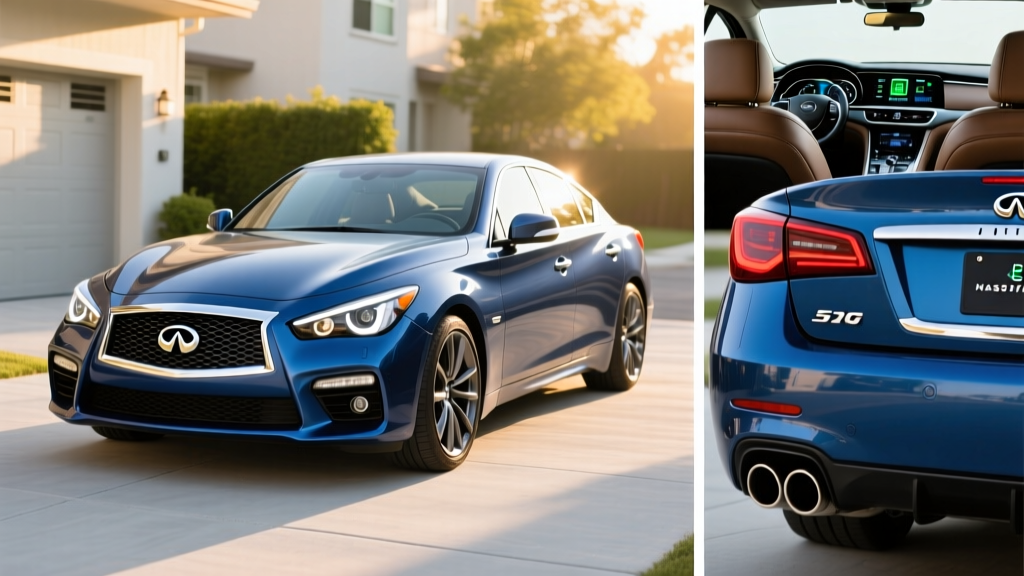
The 2015 Infiniti Q50 Hybrid pairs a 3.5-liter V6 with an electric motor for a combined 360 horsepower — making it one of the quickest luxury sedans in its class while returning a respectable 29 MPG combined. As a conventional hybrid (HEV), it never needs to be plugged in, using regenerative braking and its gasoline engine to keep a small lithium-ion battery charged. Over a decade after its debut, the Q50 Hybrid remains a compelling used-car proposition for buyers who want sport-sedan acceleration without the fuel thirst of a pure gasoline V6, but who aren't ready to commit to a plug-in hybrid or full electric vehicle.
This guide covers everything a prospective used buyer needs: EPA and real-world fuel economy, the hybrid powertrain layout, battery longevity and replacement cost, reliability data, and how the Q50 Hybrid stacks up against today's electrified alternatives in 2026.
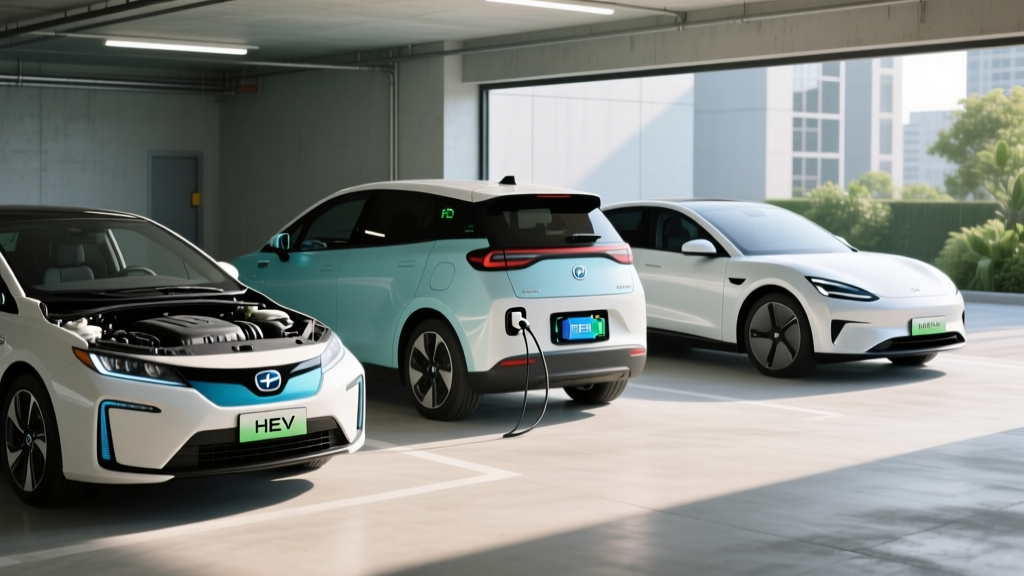
HEV vs PHEV: Where the Q50 Hybrid Fits
Conventional Hybrid (HEV) — this car: The 2015 Q50 Hybrid is a self-charging hybrid. It uses a small battery (approximately 1.4 kWh) and an electric motor integrated between the engine and transmission to assist during acceleration, enable brief electric-only driving at low speeds, and recapture energy during braking. You never plug it in. Fuel is the only energy input.
Plug-In Hybrid (PHEV): Vehicles like the current BMW 330e or Toyota RAV4 Prime carry much larger batteries (15–20 kWh) and can travel 20–45 miles on electricity alone before the gas engine starts. They require regular plug-in charging to realize their efficiency advantage and may qualify for federal tax credits under IRS §30D rules.
Full EV (BEV): Battery-electric vehicles like the Tesla Model 3 or Hyundai Ioniq 6 have no gasoline engine, run entirely on grid electricity, and offer 250–400 miles of EPA range.
The Q50 Hybrid is strictly an HEV. Infiniti never offered a plug-in variant of this generation. If you're looking for electric-only commuting range, this isn't the car — but if you want effortless hybrid efficiency with zero behavior change from a gas car, it delivers.
Fuel Economy: EPA Numbers and Real-World MPG
The EPA rated the 2015 Infiniti Q50 Hybrid at 29 MPG combined (29 city / 30 highway) for the rear-wheel-drive model. The available all-wheel-drive (AWD) variant drops slightly to 28 MPG combined (28 city / 29 highway), per fueleconomy.gov.
| Drivetrain | City MPG | Highway MPG | Combined MPG |
|---|---|---|---|
| RWD | 29 | 30 | 29 |
| AWD | 28 | 29 | 28 |
Real-World MPG: What Owners Actually See
Hybrid fuel economy often exceeds EPA estimates in city driving, where regenerative braking and electric-motor assist do the most work. However, highway-heavy commutes can see figures dip below the sticker. Based on owner-reported data from Fuelly and enthusiast forums:
- City-dominant driving: 28–32 MPG — many owners report beating the EPA city number in stop-and-go traffic
- Highway-dominant driving: 26–29 MPG — at sustained 70+ MPH speeds, the V6 carries more of the load
- Mixed real-world average: 27–30 MPG, closely tracking the EPA combined estimate
- Cold-weather impact: Expect a 5–10% reduction in winter months as the engine runs more frequently for cabin heat and battery conditioning
For context, the non-hybrid 2015 Q50 with the 3.7L V6 (RWD) is rated at 20 city / 29 highway / 23 combined — meaning the hybrid delivers roughly 26% better combined fuel economy while producing significantly more horsepower.
Powertrain and Performance Specs
The Q50 Hybrid's powertrain is a variant of Nissan's Direct Response Hybrid system, shared conceptually with the M35h (later Q70 Hybrid). It's oriented toward performance augmentation as much as fuel savings.
| Specification | Detail |
|---|---|
| Engine | 3.5L V6 (VQ35HR) |
| Engine Output | 302 HP / 258 lb-ft torque |
| Electric Motor | 67 HP / 214 lb-ft torque |
| Combined System Output | 360 HP |
| Transmission | 7-speed automatic (1-motor, 2-clutch system) |
| Battery Type | Lithium-ion (approx. 1.4 kWh) |
| Drivetrain | RWD standard; AWD optional |
| 0–60 MPH | ~4.9 seconds (RWD) |
| EPA Combined MPG | 29 (RWD) / 28 (AWD) |
| Fuel Tank | 20.0 gallons |
| Total Driving Range | ~580 miles (RWD) |
| Plug-In Capable? | No — conventional HEV only |
The 1-motor, 2-clutch architecture places the electric motor between the engine and the 7-speed transmission. Clutches on either side of the motor allow the system to disconnect the engine for brief electric-only propulsion at low speeds (typically under 25 MPH for short distances) and to decouple the motor during high-speed cruising. This is fundamentally different from the power-split systems in Toyota hybrids, and it gives the Q50 a more direct, responsive feel under acceleration.
Battery Longevity, Warranty, and Replacement Cost
Original Hybrid Battery Warranty: Infiniti covered the 2015 Q50 Hybrid's lithium-ion battery for 8 years / 100,000 miles (whichever came first) under the federal emissions-related hybrid component warranty. In California and states adopting CARB emissions standards, coverage extended to 10 years / 150,000 miles.
Current Status (2026): The factory hybrid battery warranty has expired for all 2015 models outside of CARB states, and will expire in 2025 for CARB-state vehicles as well. Used buyers should budget for potential battery service.
How Long Does the Q50 Hybrid Battery Last?
Lithium-ion hybrid batteries in Nissan/Infiniti applications have proven generally durable. Because the system uses a relatively small battery with conservative charge/discharge cycling (the battery management system maintains a buffer, never fully charging or depleting the pack), degradation is gradual. Real-world data suggests:
- Typical lifespan: 120,000–180,000 miles before noticeable capacity loss or failure
- Age-related degradation: Calendar aging matters — even low-mileage examples from 2015 are now 11 years old, and lithium-ion chemistry degrades with time regardless of use
- Failure symptoms: Reduced fuel economy, more frequent engine engagement, hybrid system warning light, or inability to hold charge in EV mode
Battery Replacement Cost
Replacement costs for the Q50 Hybrid battery have moderated as the platform has aged and aftermarket options have appeared:
- OEM new battery (Infiniti dealer): $3,500–$5,000 including labor
- Refurbished/remanufactured battery: $1,800–$3,000 from independent hybrid specialists
- Individual cell/module replacement: $800–$1,500 if only specific modules have failed — requires a shop with hybrid battery diagnostics capability
Before purchasing, have a qualified technician perform a hybrid battery health check using a scan tool that can read battery state-of-health (SoH) data. This $100–$200 pre-purchase inspection can reveal whether the pack is near end-of-life or still in good condition.
Reliability and Ownership Costs
The 2015 Q50 Hybrid's reliability record is mixed. The VQ35HR engine is a proven Nissan/Infiniti workhorse with a strong longevity track record, but the hybrid system adds complexity. Key ownership considerations:
Common Issues Reported
- Hybrid battery degradation: The primary long-term concern, as discussed above. More common in hot-climate vehicles and high-mileage examples.
- 12V auxiliary battery: Like all hybrids, the Q50 has a conventional 12V battery that can fail independently of the hybrid pack. A dead 12V battery can prevent the car from starting even if the hybrid battery is healthy.
- Brake actuator recalls: Infiniti issued recalls for certain model years related to the brake system. Check NHTSA.gov using the VIN to confirm all recalls have been addressed.
- Transmission behavior: The 7-speed automatic in hybrid mode can feel slightly disconnected at low speeds — this is normal for the 2-clutch system, not necessarily a fault.
Insurance and Maintenance
Insurance premiums for a used 2015 Q50 Hybrid typically run $1,200–$1,800 annually depending on driver profile and location — comparable to the non-hybrid V6 Q50. Routine maintenance costs align with other Infiniti/Nissan V6 platforms: synthetic oil changes, brake service (regenerative braking extends pad life significantly), and standard fluid intervals. The hybrid system requires no scheduled maintenance beyond periodic inverter coolant checks.
Used Pricing in 2026 and Tax Credit Eligibility
The 2015 Q50 Hybrid was originally priced from approximately $43,000 (MSRP). In the 2026 used market, expect the following ranges based on condition, mileage, and drivetrain:
- High mileage (100,000+ miles): $8,000–$11,000
- Average mileage (60,000–100,000 miles): $11,000–$15,000
- Low mileage / excellent condition (under 60,000 miles): $14,000–$18,000
Federal Tax Credit Status
The 2015 Infiniti Q50 Hybrid does not qualify for the federal §30D Clean Vehicle Credit. Under current IRS rules, this credit applies only to new plug-in electric vehicles (BEVs and PHEVs) meeting battery-sourcing, MSRP cap, and buyer income requirements. Conventional hybrids (HEVs) have never been eligible for §30D.
Additionally, the Used Clean Vehicle Credit (up to $4,000 / 30% of sale price, whichever is less) under §25E requires the vehicle to be a plug-in EV or fuel-cell vehicle. The Q50 Hybrid, as a non-plug-in HEV, does not qualify.
Some states offer rebates or HOV-lane access for hybrids, but these programs vary widely and have largely shifted focus to plug-in vehicles. Check your state's energy office or DMV for current availability.
Who Should Buy the 2015 Q50 Hybrid?
Pros
- 360 HP provides genuine sport-sedan performance (0–60 in ~4.9 sec)
- 29 MPG combined is strong for a 360-HP luxury sedan
- No plug-in charging required — behaves like a normal gas car
- ~580-mile total range eliminates range anxiety entirely
- Depreciation has been steep — strong value at current used prices
- Regenerative braking extends brake pad life
Cons
- Factory hybrid battery warranty has expired on most examples
- No electric-only commuting range (unlike a PHEV)
- No federal tax credit eligibility (HEV, not plug-in)
- Hybrid system adds repair complexity vs. non-hybrid Q50
- Infotainment and driver-assist tech are dated by 2026 standards
- AWD hybrid variant is rare on the used market
Decision Framework
Choose the 2015 Q50 Hybrid if: You want a fast, comfortable luxury sedan with meaningful fuel savings over a gas V6, you lack access to plug-in charging, and you're comfortable with the risk of out-of-warranty hybrid battery service. Budget $2,000–$4,000 in reserve for potential battery work.
Consider a PHEV instead if: You have home or workplace charging and want 20–40 miles of electric-only commuting. Current models like the BMW 330e or Volvo S60 Recharge offer this, though at higher used prices.
Consider a full EV instead if: You have reliable Level 2 home charging, want zero tailpipe emissions, and are ready to adapt to EV ownership. A used Tesla Model 3 or Chevrolet Bolt offers lower running costs but requires charging infrastructure.
Frequently Asked Questions
How many MPG does the 2015 Q50 Hybrid get?
The EPA rates it at 29 MPG combined (29 city / 30 highway) for RWD, and 28 combined for AWD. Real-world averages cluster around 27–30 MPG, with city driving often exceeding the EPA estimate and highway cruising sometimes falling slightly below.
Can the 2015 Q50 Hybrid drive on electric power alone?
Yes, but only briefly. The hybrid system can propel the car on electric power alone at low speeds (typically under 25 MPH) for very short distances — a few hundred yards at most. This is not a plug-in hybrid; there is no meaningful electric-only range for commuting. The electric motor primarily assists the V6 during acceleration and enables regenerative braking.
Is the 2015 Q50 Hybrid reliable?
The V6 engine and transmission are proven components with strong longevity records. The primary reliability concern is the hybrid battery, which is now 11 years old and out of factory warranty. Many examples are still running on original batteries, but failure risk increases with age and mileage. A pre-purchase hybrid battery health scan is strongly recommended.
What does a Q50 Hybrid battery replacement cost?
Expect $3,500–$5,000 for a new OEM battery at a dealer, $1,800–$3,000 for a refurbished unit from an independent hybrid specialist, or $800–$1,500 for individual module replacement if only part of the pack has failed.
Does the 2015 Q50 Hybrid qualify for any tax credit?
No. Federal tax credits under §30D (new vehicles) and §25E (used vehicles) require plug-in electric capability. The Q50 Hybrid is a conventional HEV with no plug, making it ineligible for both credits. Check your state's programs for any remaining hybrid incentives, though most have shifted to plug-in vehicles.
How does the Q50 Hybrid compare to a Toyota Camry Hybrid?
The Camry Hybrid (2015 era) achieves roughly 40–41 MPG combined but produces only about 200 HP. The Q50 Hybrid trades roughly 11 MPG for 160 additional horsepower and a luxury interior. If efficiency is the priority, the Camry wins decisively. If performance and luxury matter more, the Q50 Hybrid occupies a niche the Camry doesn't fill.
Should I buy a 2015 Q50 Hybrid or a non-hybrid Q50?
The non-hybrid 2015 Q50 (3.7L V6, 328 HP) returns 23 MPG combined and is simpler mechanically, with lower long-term repair risk. The Hybrid gives you 360 HP, 29 MPG combined, and a more refined low-speed experience — at the cost of hybrid-system complexity and potential battery replacement. If you drive 15,000+ miles per year, the fuel savings (~$400–$600 annually at current gas prices) can offset the hybrid premium over time.