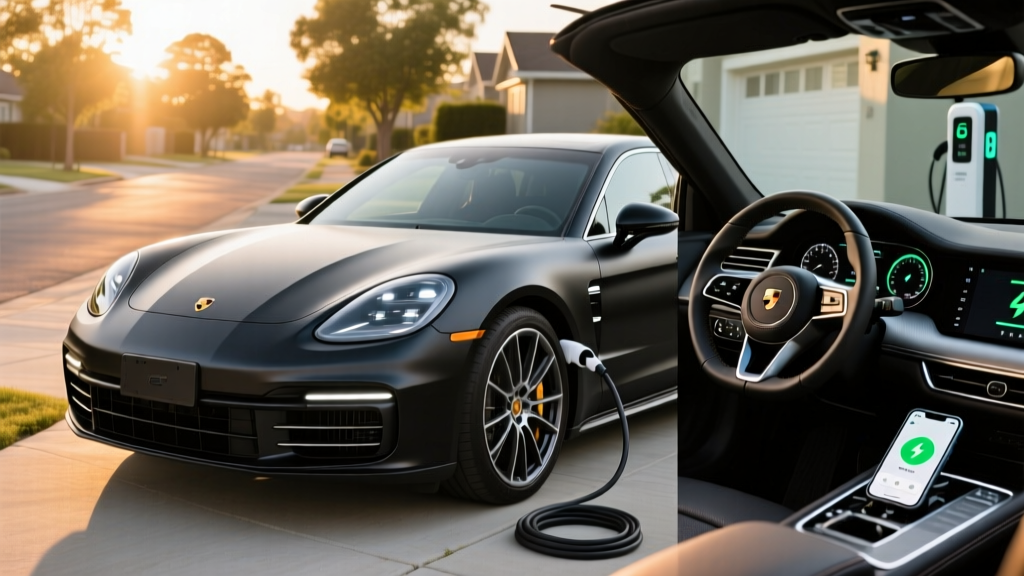
The Porsche Panamera 4 E-Hybrid occupies a narrow but compelling lane: a full-size luxury sports sedan that can commute on electricity alone, then unleash 463 combined horsepower when the road opens up. For the 2025 model year (carried into 2026), Porsche overhauled the E-Hybrid powertrain with a larger battery, more electric-only range, and a revised hybrid module that integrates the electric motor directly into the transmission housing. The result is a plug-in hybrid (PHEV) that finally feels like it was engineered around electrification rather than adapted to it.
This guide covers everything a prospective buyer needs: real-world fuel economy versus EPA estimates, electric-only driving range, home charging logistics, battery warranty coverage, and whether the Panamera 4 E-Hybrid qualifies for any federal tax incentives in 2026. We'll also clarify the distinction between conventional hybrids (HEVs) and plug-in hybrids (PHEVs) so you can evaluate this car against alternatives like the BMW 750e xDrive, Mercedes-Benz S 580e, or a fully electric Porsche Taycan.
HEV vs. PHEV: Where the Panamera 4 E-Hybrid Fits
Before diving into specs, it's critical to understand the two hybrid categories, because they behave very differently in daily use:
| Feature | Conventional Hybrid (HEV) | Plug-in Hybrid (PHEV) |
|---|---|---|
| Battery size | Small (~1–2 kWh) | Large (18–25+ kWh) |
| Electric-only range | 0–1 mile at low speed | 20–50 miles at highway speed |
| Plug-in charging | No — charges via regen and engine | Yes — Level 2 or Level 1 |
| DC fast charging | No | Rare (Panamera 4 E-Hybrid: No) |
| Federal tax credit | No longer eligible (§30D) | Possible, subject to sourcing rules |
| Example | Toyota Prius | Porsche Panamera 4 E-Hybrid |
The Panamera 4 E-Hybrid is a PHEV. It carries a 25.9 kWh (gross) lithium-ion battery pack and can drive approximately 30 miles on electricity alone before the twin-turbo V6 engine engages. You can plug it in to recharge, and doing so is essential to capturing its efficiency and cost advantages. If you never plug in a PHEV, you're simply carrying hundreds of pounds of dead battery weight — the car will still function as a conventional hybrid, but you'll sacrifice most of the fuel-economy benefit.
Powertrain and Performance Specs
| Specification | 2025/2026 Porsche Panamera 4 E-Hybrid |
|---|---|
| Engine | 2.9L twin-turbo V6 |
| Engine output | 348 hp / 369 lb-ft |
| Electric motor | Integrated in PDK transmission housing |
| Electric motor output | ~188 hp |
| Combined system output | 463 hp / 516 lb-ft |
| 0–60 mph | 4.1 seconds |
| Top speed | 174 mph |
| Drivetrain | All-wheel drive (AWD) |
| Transmission | 8-speed PDK dual-clutch |
| Battery capacity (gross) | 25.9 kWh |
| Battery capacity (usable) | ~20.6 kWh |
| EV-only range (EPA est.) | ~30 miles |
| Total combined range | ~430 miles (EV + gas) |
| Fuel tank | 21.1 gallons |
The combined 463 hp puts the Panamera 4 E-Hybrid in serious performance territory. The electric motor provides instant torque fill while the turbos spool, eliminating the lag that plagued earlier Panamera hybrid generations. Porsche's E-Hybrid system can also pre-charge the battery using the engine or deploy full electric boost for overtaking — the driver manages this through steering-wheel-mounted hybrid mode selectors (E-Power, Hybrid Auto, Sport, Sport Plus).
Fuel Economy: EPA Ratings and Real-World MPG
| Metric | EPA Estimate | Real-World Expectation |
|---|---|---|
| Combined MPGe (electric + gas) | 52 MPGe | 48–54 MPGe (depends on charge frequency) |
| EV energy consumption | ~49 kWh/100 mi | 45–55 kWh/100 mi |
| Gas-only combined MPG | 24 MPG | 22–26 MPG |
| Gas-only city MPG | 22 MPG | 20–24 MPG |
| Gas-only highway MPG | 27 MPG | 25–29 MPG |
The MPGe figure (52 combined) only tells the full story if you charge regularly and drive within the ~30-mile electric envelope. Owners who plug in nightly and commute under 30 miles round-trip may go weeks without burning fuel. On longer road trips where the battery depletes, the car operates as a conventional hybrid, and the 24 MPG combined gas-only figure is what you'll see — respectable for a 5,000+ lb luxury sedan with a V6, but not class-leading.
According to fueleconomy.gov, the Panamera 4 E-Hybrid's efficiency profile is typical for a large luxury PHEV. Real-world highway efficiency tends to be slightly better than EPA city estimates when the engine is running at steady state, but cold weather will reduce the electric-only range by 15–25% due to cabin heating demands and reduced battery output.
Charging: What You Need at Home
The Panamera 4 E-Hybrid supports Level 2 AC charging but does not support DC fast charging — a limitation common among PHEVs, which prioritize cost and packaging over rapid recharge capability.
| Charging Level | Power | Time (0–100%) | Notes |
|---|---|---|---|
| Level 1 (120V household) | ~1.4 kW | ~14–16 hours | Emergency/trickle only |
| Level 2 (240V, 32A) | ~7.2 kW | ~3–3.5 hours | Recommended home setup |
| DC Fast Charging | Not supported | N/A | CCS/NACS not available |
With a 25.9 kWh battery, a full Level 2 charge at 7.2 kW takes roughly 3 to 3.5 hours. Most owners will plug in overnight and wake to a full charge every morning. The onboard charger is limited to 7.2 kW, so installing a 48A (11.5 kW) home charger won't speed things up — the car simply can't accept more than 7.2 kW AC. A standard 32A Level 2 wallbox (like a ChargePoint Home Flex or Emporia Level 2) is the cost-effective choice.
Home Level 2 installation typically costs $800–$2,000 total (charger unit + electrician labor + permit), depending on your electrical panel's proximity to the parking spot and whether a panel upgrade is needed. For a PHEV with a modest battery, the investment pays back quickly through daily electric commuting.
Battery Warranty, Lifespan, and Replacement Cost
| Warranty Item | Coverage |
|---|---|
| High-voltage battery | 8 years / 100,000 miles (whichever comes first) |
| Capacity retention threshold | Below 70% of original capacity triggers warranty claim |
| Hybrid system components | 8 years / 100,000 miles |
| Powertrain (engine + transmission) | 4 years / 50,000 miles (standard Porsche warranty) |
Porsche's 8-year/100,000-mile hybrid battery warranty aligns with the federal minimum mandated by the EPA and is standard across the luxury PHEV segment. The 70% capacity retention threshold means Porsche will repair or replace the battery if it degrades to below 70% of its original 25.9 kWh capacity within the warranty period.
In practice, modern PHEV battery packs from established manufacturers like Porsche experience minimal degradation in the first 5–7 years — typically 5–10% capacity loss under normal use. The Panamera's thermal management system actively conditions the battery during charging and heavy discharge, which is the primary defense against accelerated degradation. If you do face an out-of-warranty battery replacement, expect a cost in the $12,000–$18,000 range based on current luxury PHEV battery pricing, though this figure may decrease as the supply chain matures.
Pricing, Trims, and Federal Tax Credit Eligibility
The 2025 Porsche Panamera 4 E-Hybrid starts at approximately $109,950 (including destination). Well-optioned examples with Executive (long-wheelbase) body style, Sport Chrono, rear-axle steering, and premium packages routinely push past $130,000–$140,000.
Does the Panamera 4 E-Hybrid qualify for the §30D federal tax credit in 2026?
- MSRP cap: Sedans must be under $55,000 — the Panamera 4 E-Hybrid at ~$109,950 far exceeds this cap. Not eligible.
- Battery sourcing: Even if the price qualified, critical mineral and battery component sourcing requirements under the Inflation Reduction Act must be met (verified via IRS eligible vehicle list).
- Buyer income cap: AGI limits of $150K single / $300K joint apply to any qualifying vehicle.
- Point-of-sale transfer: Available for qualifying vehicles, but moot here due to MSRP cap.
Verdict: The Panamera 4 E-Hybrid does not qualify for the $7,500 federal EV tax credit under §30D due to its MSRP exceeding the $55,000 sedan cap. Buyers should consult a tax professional regarding any state-level incentives, which vary by jurisdiction.
Some states offer their own PHEV incentives that may apply regardless of MSRP — California's Clean Fuel Rebate, for example, has historically included PHEVs, though amounts and eligibility change frequently. Check your state's energy or environmental agency website for current programs.
Who Should Choose the Panamera 4 E-Hybrid?
Choose the Panamera 4 E-Hybrid if:
- You want a luxury sports sedan that can handle school runs and commutes on electric power alone
- Your daily driving is under 30 miles round-trip with reliable home charging access
- You take regular road trips where EV charging infrastructure gaps are a concern
- You value Porsche's driving dynamics and don't want to compromise for electrification
- Tax credits are not a primary purchase motivator at this price point
Consider a full EV (like the Porsche Taycan) if:
- Your commute exceeds 30 miles and you want to maximize electric driving
- You want access to DC fast charging (Taycan: up to 320 kW, 10–80% in ~18 min)
- You want lower maintenance costs (no engine oil, spark plugs, or transmission fluid)
- You have reliable home and workplace charging access
Consider a conventional HEV (like the BMW 5 Series mild-hybrid) if:
- You cannot install a home charger and have no workplace charging
- You want hybrid efficiency without the plug-in discipline
- You don't need electric-only driving capability
Pros
- 463 hp with genuine Porsche handling dynamics
- ~30 miles EV range covers most daily commutes
- Seamless transitions between electric and gas power
- Premium interior with excellent build quality
- No range anxiety on long trips — gas backup always available
Cons
- No DC fast charging capability
- $109,950+ starting price; no federal tax credit
- EV range drops to ~22–25 miles in cold weather
- Heavy (~5,100 lbs) — impacts tire wear and braking distances
- Complex powertrain means more potential service points long-term
Frequently Asked Questions
How many MPG does the Porsche Panamera 4 E-Hybrid get?
The EPA rates it at 52 MPGe combined when factoring in electric driving, and 24 MPG combined (22 city / 27 highway) when running on gasoline alone after the battery depletes. Real-world gas-only MPG typically falls between 22–26 depending on driving style and conditions.
How far can the Panamera 4 E-Hybrid go on electric only?
The EPA estimates approximately 30 miles of electric-only range. In real-world conditions — especially highway speeds above 65 mph or cold weather below 40°F — expect 22–27 miles. Gentle city driving in mild weather may yield up to 32 miles.
Does the Panamera 4 E-Hybrid qualify for a federal tax credit?
No. Under current IRS §30D rules, sedans must have an MSRP below $55,000 to qualify. The Panamera 4 E-Hybrid starts at approximately $109,950, well above the cap. Always verify current rules on the IRS eligible vehicles page and consult a tax professional.
Is the Panamera E-Hybrid battery reliable, and what does replacement cost?
Porsche's hybrid battery is covered for 8 years / 100,000 miles and uses active thermal management to minimize degradation. Most owners report 5–10% capacity loss in the first 5 years. An out-of-warranty replacement is estimated at $12,000–$18,000, though this may decrease over time.
Can I charge the Panamera 4 E-Hybrid at a Tesla Supercharger?
No. The Panamera 4 E-Hybrid does not support DC fast charging of any kind. It charges exclusively via AC (Level 1 or Level 2) using a J1772 connector. Tesla Superchargers, Electrify America, and other DC networks are not compatible.
Hybrid vs. PHEV vs. EV — which should I choose?
If you can charge at home and drive under 30 miles daily, the PHEV lets you commute on electricity while keeping gas for road trips. A full EV (like the Taycan) offers more electric range and faster charging but requires more infrastructure planning. A conventional HEV (no plug) suits those without charging access who still want better fuel economy than a gas-only car.