The Current State of Plug-In Subaru Models in 2026
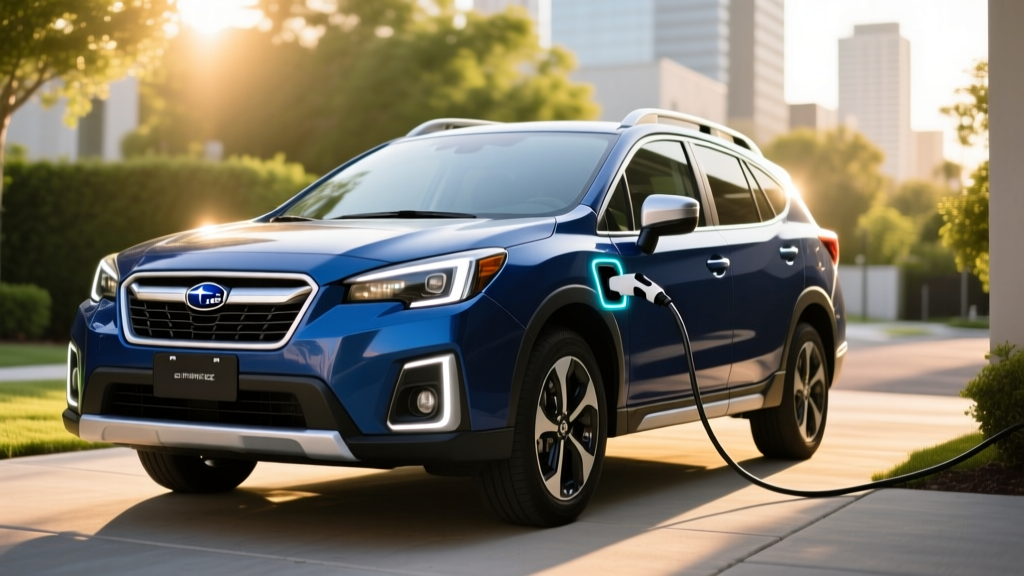
If you've been searching for a plug-in Subaru, your options in the 2026 model year center on one vehicle: the Subaru Crosstrek Hybrid (also marketed as the Crosstrek PHEV in some regions). Subaru discontinued the earlier plug-in versions of the Outback and Forester that were briefly available in California-emissions states, and the automaker has consolidated its electrified strategy around the Crosstrek platform and its upcoming Solterra EV lineup.
The 2026 Crosstrek Hybrid pairs Subaru's legendary symmetrical all-wheel drive with a plug-in hybrid powertrain, targeting buyers who want some electric-only commuting capability without giving up the go-anywhere AWD traction the brand is known for. But with a modest battery and limited EV range, is it the right electrified vehicle for you? This guide breaks down every spec that matters.
Quick Primer: Hybrid (HEV) vs. Plug-In Hybrid (PHEV)
Conventional Hybrid (HEV): Uses a small battery recharged by regenerative braking and the gas engine. You never plug it in. It improves MPG but offers no meaningful electric-only driving.
Plug-In Hybrid (PHEV): Carries a larger battery (typically 8–20 kWh) that you can charge from a wall outlet or Level 2 charger. It provides 15–40+ miles of electric-only range before the gas engine kicks in, functioning as a regular hybrid afterward.
The Crosstrek Hybrid is a PHEV — you plug it in to unlock its electric range. Subaru does not currently sell a conventional HEV in the U.S. market for 2026.
2026 Subaru Crosstrek Hybrid: Powertrain and Performance Specs
The 2026 Crosstrek Hybrid uses a 2.0-liter horizontally opposed (Boxer) four-cylinder engine paired with an electric motor integrated into Subaru's Lineartronic CVT. The system sends power to all four wheels through Subaru's Symmetrical All-Wheel Drive.
| Spec | Value |
|---|---|
| Combined System Horsepower | 194 hp |
| Gas Engine | 2.0L Boxer 4-cyl (152 hp) |
| Electric Motor | 88 kW (118 hp) |
| Battery Capacity (Usable) | 13.5 kWh (Lithium-ion, NMC chemistry) |
| EV-Only Range (EPA) | 17 miles |
| Total Combined Range | ~440 miles |
| 0–60 mph | ~7.8 seconds |
| Drivetrain | Symmetrical AWD (standard) |
| Towing Capacity | 1,000 lbs |
| Cargo Volume (behind rear seats) | 19.9 cu ft |
| Ground Clearance | 8.7 inches |
The 194 combined horsepower is a meaningful bump over the gas-only Crosstrek's 152 hp, and you feel it in passing maneuvers. The electric motor provides instant torque off the line, making the PHEV noticeably quicker in city driving than its non-hybrid sibling. However, once the battery depletes below the EV threshold, performance reverts closer to the standard 2.0L engine's output — plan your overtaking accordingly on long highway trips.
Fuel Economy: EPA MPG and Real-World Expectations
Fuel economy is where the plug-in Subaru story gets nuanced. The EPA rates the Crosstrek Hybrid in two modes: charge-depleting (blended EV + gas) and charge-sustaining (hybrid mode after the battery is depleted).
| Mode | City | Highway | Combined |
|---|---|---|---|
| Charge-Depleting (Blended EV/Gas) | — | — | 90 MPGe |
| Charge-Sustaining (Hybrid Only) | 36 MPG | 34 MPG | 35 MPG |
| Gas-Only Crosstrek (2.0L AWD, for comparison) | 28 MPG | 33 MPG | 30 MPG |
Real-world MPG vs. EPA: In mixed suburban driving with regular plug-in charging, owners commonly report 40–50 MPG equivalent over short commutes that fall within the 17-mile EV window. Once the battery is depleted and you're driving in hybrid mode, expect 33–36 MPG combined in real-world conditions — closely tracking the EPA's 35 MPG estimate. Highway driving at 75+ mph will push that toward 30–32 MPG. In cold weather (below 30°F), expect a 15–25% reduction in EV-only range, dropping it to roughly 12–14 miles before the engine engages.
According to fueleconomy.gov, the Crosstrek Hybrid's combined 35 MPG in hybrid mode represents a 17% improvement over the gas-only model — meaningful savings over a year of driving, especially with AWD engaged full-time.
Electric-Only Range, Charging Speed, and Battery Details
The 13.5 kWh usable battery is the heart of the plug-in Subaru proposition. Here's what you need to know about living with it daily:
Real-world expectation: 14–17 miles in mild weather with moderate driving; 11–14 miles in freezing temperatures or aggressive acceleration. This range covers the average American one-way commute (approximately 16 miles per the U.S. Census Bureau), but just barely — longer commutes will require gas-engine assistance.
Charging Times
| Charging Level | Power | 0–100% Time | Connector |
|---|---|---|---|
| Level 1 (120V household outlet) | ~1.4 kW | ~9 hours | |
| Level 2 (240V home/public charger) | ~3.3 kW (onboard charger max) | ~4.5 hours | |
| DC Fast Charging | Not supported | N/A |
Critical detail: The Crosstrek Hybrid cannot DC fast charge. The onboard AC charger maxes out at 3.3 kW, meaning even at a public Level 2 station, you're looking at roughly 4.5 hours for a full charge. This is a deliberate engineering choice — Subaru prioritized cabin and cargo space over a larger battery and faster charging hardware. For a PHEV with a 13.5 kWh pack, overnight Level 1 charging from a standard 120V outlet is actually feasible if you plug in when you get home and unplug in the morning.
kW vs. kWh refresher: The battery stores 13.5 kWh of energy (think of it as the fuel tank size). The onboard charger accepts power at up to 3.3 kW (the rate at which energy flows in). A 3.3 kW charger filling a 13.5 kWh battery takes roughly 4.5 hours — basic math, but a distinction many buyers confuse when comparing vehicles.
Pricing, Trims, and Tax Credit Eligibility
The 2026 Crosstrek Hybrid is offered in a single, well-equipped trim that roughly mirrors the gas model's Sport/Limited content level.
| Trim | MSRP (incl. destination) |
|---|---|
| Crosstrek Hybrid (single trim) | $38,495 |
That represents roughly a $7,500–$8,000 premium over a comparably equipped gas-only Crosstrek Limited. The question is whether fuel savings and electric commuting offset that gap.
Federal Tax Credit (§30D) Eligibility
Does the 2026 Crosstrek Hybrid qualify for the $7,500 federal tax credit? Under current IRS §30D rules for 2026, eligibility depends on several criteria:
- Vehicle MSRP cap: SUVs must be under $80,000 — the Crosstrek Hybrid clears this easily at $38,495.
- Buyer income cap: Modified AGI must not exceed $150,000 (single) / $300,000 (joint).
- Battery sourcing requirements: A percentage of critical minerals and battery components must be sourced from the U.S. or free-trade-agreement countries. Subaru's battery supply chain for the Crosstrek PHEV has historically relied on Japanese and Chinese-sourced cells, which may limit or eliminate credit eligibility under current critical-mineral rules.
- Point-of-sale transfer: If eligible, you can transfer the credit to the dealer at purchase for an immediate price reduction.
Bottom line: Consult the IRS clean vehicle credits page and a tax professional before counting on the full $7,500. PHEVs with Japanese/Chinese battery supply chains have faced partial or full credit disqualification in recent model years. Some buyers may qualify for $3,750 (meeting one of two sourcing thresholds) or $0.
Additionally, check your state's incentive programs. States like California, Colorado, and New York offer additional rebates for PHEVs that stack with federal credits, though amounts and eligibility vary by jurisdiction and are subject to change.
Battery Warranty, Reliability, and Long-Term Ownership
Battery longevity is consistently the top concern for hybrid and PHEV buyers. Subaru backs the Crosstrek Hybrid's battery pack with a strong warranty that aligns with industry norms.
8 years / 100,000 miles (whichever comes first), covering defects and capacity loss below a defined threshold (typically 60–70% of original capacity). In California-emissions states (CARB states), the warranty extends to 10 years / 150,000 miles under PZEV/AT-PZEV provisions.
Battery replacement cost: If the battery fails outside of warranty coverage, a replacement pack for the Crosstrek Hybrid currently runs between $3,500 and $5,500 including labor, based on dealer estimates. This is considerably less than a full EV battery replacement (often $10,000–$20,000+), reflecting the smaller 13.5 kWh pack size.
Reliability outlook: Subaru's hybrid system uses Toyota-derived PHEV components (a legacy of the Toyota-Subaru partnership), which have demonstrated strong long-term reliability across the Prius Prime and RAV4 Prime platforms. According to NHTSA and owner forums, major battery failures in Toyota/Subaru PHEV systems remain rare within the first 100,000 miles. The Crosstrek Hybrid also earned strong marks from the IIHS, continuing Subaru's safety reputation.
The gasoline Boxer engine requires standard maintenance (oil changes, spark plugs, timing chain inspection). Unlike a full EV, the PHEV still has a multi-speed transmission (CVT), exhaust system, and all the maintenance touchpoints of a conventional car — just with slightly less brake wear thanks to regenerative braking.
Who Should Buy a Plug-In Subaru — and Who Shouldn't
Choose the Crosstrek Hybrid PHEV if:
- Your daily round-trip commute is under 30 miles and you can charge at home overnight.
- You need standard AWD for snow, rain, or light off-road use.
- You want to reduce gas consumption without committing to full EV charging infrastructure.
- You live in a rural or mountainous area with limited DC fast-charging access.
- You value Subaru's 8.7 inches of ground clearance and roof-rail utility for outdoor gear.
Choose a Full EV (like the Subaru Solterra or Hyundai Ioniq 5) if:
- Your commute is longer but predictable, and you can install a Level 2 home charger.
- You want to eliminate oil changes, spark plugs, and transmission fluid entirely.
- You want 200+ miles of range and DC fast-charging capability for road trips.
- You want to maximize federal tax credit eligibility (many EVs qualify more cleanly than PHEVs under current sourcing rules).
Choose the Gas-Only Crosstrek if:
- You cannot charge at home (apartment, no garage, no outlet access).
- The $7,500+ PHEV premium doesn't pencil out given your low annual mileage.
- You want the lowest upfront purchase price and simplest ownership experience.
Pros
- Standard AWD with 8.7" ground clearance — genuine off-road and snow capability
- 17 miles EV-only covers many short commutes gas-free
- 35 MPG combined in hybrid mode beats the gas model by ~5 MPG
- 194 hp combined is the quickest Crosstrek in the lineup
- Can charge on a standard 120V outlet overnight
- Strong battery warranty (8yr/100k mi; 10yr/150k in CARB states)
Cons
- Only 17 miles of EV range — shorter than most PHEV competitors (RAV4 Prime: 42 mi)
- No DC fast charging; 3.3 kW max AC charge rate is slow
- $7,500+ premium over gas Crosstrek with uncertain tax-credit offset
- Cargo space slightly reduced vs. gas model due to battery placement
- Federal tax credit eligibility uncertain due to battery sourcing rules
- Single trim offering limits configuration choices
Frequently Asked Questions
How many MPG does the plug-in Subaru Crosstrek Hybrid get?
The EPA rates the 2026 Crosstrek Hybrid at 35 MPG combined (36 city / 34 highway) when operating in hybrid mode after the battery is depleted. In blended EV/gas mode with a charged battery, it achieves 90 MPGe. Real-world owners report 33–36 MPG in hybrid mode and 40–50+ MPG equivalent on short commutes within the EV window.
How far can the Crosstrek Hybrid go on electric only?
The EPA rates it at 17 miles of electric-only range. In real-world driving with moderate temperatures and gentle acceleration, expect 14–17 miles. In cold weather (below 30°F), that drops to roughly 11–14 miles. Once depleted, the gas engine takes over seamlessly.
Hybrid vs. PHEV vs. EV — which is right for me?
If you can charge at home and your commute is under 17 miles one-way, the Crosstrek PHEV lets you drive mostly electric on weekdays and take gas-powered road trips on weekends with no range anxiety. If you want zero tailpipe emissions and have reliable charging access, a full EV like the Solterra offers 220+ miles of range. If you can't charge at home at all, a conventional hybrid (which Subaru doesn't currently offer in the U.S.) or the gas Crosstrek makes more sense — a PHEV you never plug in is just a heavier, more expensive hybrid.
Is the Subaru Crosstrek Hybrid reliable, and what does battery replacement cost?
Subaru's PHEV system uses proven Toyota-derived components with a strong reliability track record. The battery is warranted for 8 years/100,000 miles (10 years/150,000 miles in CARB states). Out-of-warranty battery replacement runs approximately $3,500–$5,500 including labor — significantly less than a full EV battery swap.
Does the 2026 Crosstrek Hybrid qualify for the federal tax credit?
Possibly, but it's not guaranteed. The vehicle's MSRP is well under the $80,000 SUV cap, and most buyers will meet the income thresholds. However, the battery component and critical mineral sourcing requirements under §30D may reduce or eliminate the credit. Check the IRS clean vehicle credits page for the current eligibility determination, and consult a tax professional for your specific situation.
Can I charge the Crosstrek Hybrid at a public fast-charging station?
No. The Crosstrek Hybrid does not support DC fast charging. It can use public Level 2 (240V) chargers via its J1772 port, but at a maximum rate of 3.3 kW, a full charge still takes about 4.5 hours. This vehicle is designed primarily for home charging.
How does the Crosstrek Hybrid compare to the Toyota RAV4 Prime?
The RAV4 Prime offers 42 miles of EV range, a 6.6 kW onboard charger, and 302 combined horsepower — substantially outperforming the Crosstrek Hybrid on paper. However, the RAV4 Prime is larger, more expensive (starting around $44,000), and has been subject to significant dealer markups and limited availability. The Crosstrek Hybrid is more compact, more affordable, and offers better off-road ground clearance relative to its size. If you need more EV range and power, the RAV4 Prime wins. If you want a smaller, more trail-capable PHEV at a lower price, the Crosstrek is the better fit.
Sources: fueleconomy.gov (EPA fuel economy data), IRS §30D Clean Vehicle Credits, Subaru of America official specifications, IIHS safety ratings.