Quick Verdict: The Only Plug-In Hybrid Minivan That Matters
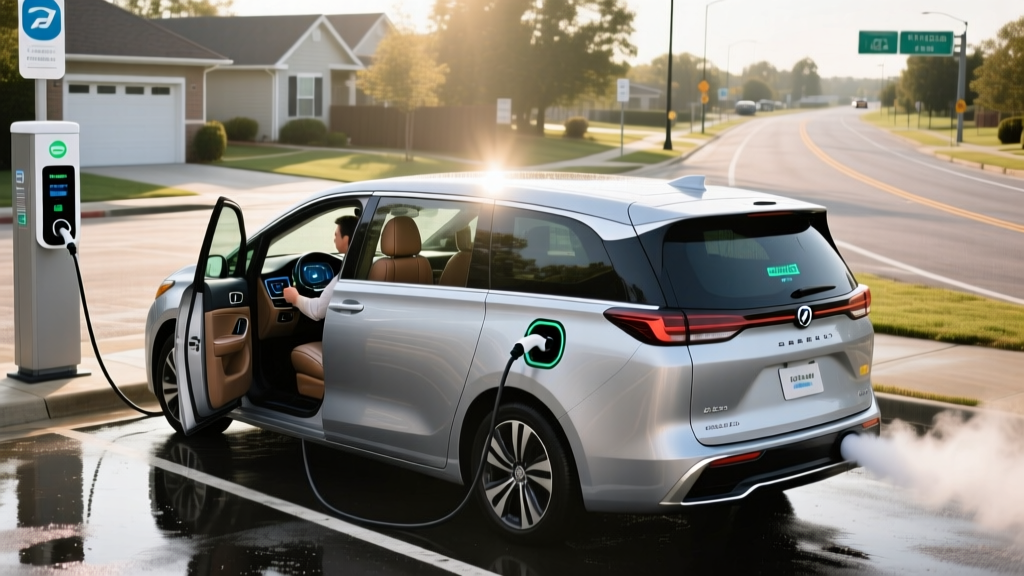
The Chrysler Pacifica Hybrid remains the sole plug-in hybrid minivan on the US market, and for 2026 it continues to offer a compelling formula: 32 miles of electric-only driving for school runs and errands, then a seamless transition to hybrid operation for road trips. If your family needs minivan space but you want to eliminate daily gas consumption, the plug in hybrid Pacifica occupies a unique niche no full EV or conventional hybrid can match.
But with a starting MSRP near $51,000 and a modest 16 kWh battery, the math only works if your daily driving fits within its electric envelope and you have reliable home charging access. Let's break down the exact numbers.
| Spec | Value |
|---|---|
| EPA Electric Range | 32 miles |
| EPA Combined MPGe (electric + gas) | 82 MPGe |
| EPA Combined MPG (gas-only hybrid mode) | 30 MPG |
| Total Combined Range | ~520 miles |
| Battery Capacity (usable) | 16 kWh |
| Battery Chemistry | NMC (Nickel Manganese Cobalt) |
| Combined System Horsepower | 260 hp |
| Level 2 Charge Time (0–100%) | ~2 hours at 7.2 kW |
| DC Fast Charging | Not available |
| 0–60 mph | ~7.1 seconds |
| Base MSRP (Pinnacle trim) | ~$51,095 |
| Battery/Powertrain Warranty | 10 yr / 100,000 mi |
HEV vs PHEV: Why the Pacifica Hybrid Is a Plug-In, Not a Conventional Hybrid
Chrysler does not offer a conventional hybrid (HEV) Pacifica — the only electrified variant is the plug-in hybrid (PHEV). Understanding the distinction is essential before you buy:
| Feature | Conventional Hybrid (HEV) | Plug-In Hybrid (PHEV) |
|---|---|---|
| Plugs in to charge? | No — charges via regenerative braking and engine | Yes — plugs into Level 1 or Level 2 |
| Electric-only range | 0–2 miles at low speed | 32 miles (Pacifica PHEV) |
| Battery size | 1–2 kWh | 16 kWh |
| Daily gas use (short commutes) | Reduced but always burns some fuel | Zero gas if within electric range |
| Price premium over gas model | ~$1,500–$3,000 | ~$8,000–$12,000 |
The Pacifica PHEV's 16 kWh battery is large enough to handle most daily family logistics — school drop-off, grocery runs, commuting under 30 miles round-trip — entirely on electricity. Once the battery is depleted, the 3.6-liter Pentastar V6 and dual-motor eFlite transmission take over as a conventional hybrid, returning a respectable 30 MPG combined.
Fuel Economy: EPA Numbers vs Real-World Results
The EPA rates the Pacifica Hybrid at 82 MPGe when operating in combined electric and gas mode, and 30 MPG combined once the battery is depleted. Here is the full breakdown from fueleconomy.gov:
| Mode | City | Highway | Combined |
|---|---|---|---|
| Charge-sustaining (hybrid mode, battery depleted) | 29 MPG | 30 MPG | 30 MPG |
| Charge-depleting (blended EV + gas) | 82 MPGe combined | ||
| Electric-only energy consumption | ~2.0 kWh/mile (33 kWh/100 mi) | ||
Real-World MPG: What Owners Actually See
Hybrid and PHEV fuel economy is highly dependent on driving patterns. Here is what to expect:
- City-heavy driving with nightly charging: Many owners report burning zero gasoline for weeks at a time. If your daily round-trip is under 30 miles and you charge every night, the engine may only start for longer trips or cold-weather cabin heating.
- Highway road trips (battery depleted): Expect 27–29 MPG at 70–75 mph. The minivan's aerodynamic profile and 4,800+ lb curb weight work against it at sustained highway speeds. This is slightly below the EPA's 30 MPG highway figure, which is typical for real-world highway driving.
- Cold weather impact: Below 40°F, expect electric-only range to drop to 22–26 miles due to battery chemistry limitations and cabin heating demands. Hybrid-mode MPG may dip to 26–28 MPG in winter conditions.
Electric Range, Charging, and the No-DCFC Limitation
The Pacifica PHEV's 32-mile EPA electric range is competitive for a plug-in hybrid, though it trails newer PHEVs like the Toyota RAV4 Prime (42 miles). For a minivan, however, 32 miles covers the majority of daily family trips.
Charging Speeds and Times
Unlike full battery-electric vehicles, the Pacifica PHEV does not support DC fast charging. This is standard for most PHEVs — the smaller battery makes Level 2 charging practical enough. Here is the breakdown:
- Level 1 (120V household outlet): ~14 hours for a full charge. Plug in overnight and you'll wake up to a full battery, but a midday top-up is impractical.
- Level 2 (240V, 32A): ~2 hours for a full charge at the van's 7.2 kW onboard charger maximum. This is the recommended home-charging setup.
Battery Warranty & Longevity: Chrysler covers the Pacifica Hybrid's 16 kWh battery pack for 10 years or 100,000 miles (whichever comes first) in all 50 states, which exceeds the standard 8-year/100,000-mile PHEV battery warranty. The warranty guarantees the battery will retain a minimum capacity threshold (typically ~70% of original capacity). If the battery falls below this threshold within the warranty period, Chrysler will repair or replace it at no cost.
Out-of-warranty replacement cost: A full battery pack replacement runs approximately $7,000–$9,500 including parts and labor based on current dealer pricing. However, NMC batteries in PHEV applications with nightly shallow cycling tend to degrade slowly — many owners report 90%+ state of health after 5 years and 60,000+ miles.
Powertrain: How 260 Horsepower Moves a 5,000-lb Minivan
The Pacifica Hybrid pairs a 3.6-liter Atkinson-cycle Pentastar V6 with a dual-motor eFlite continuously variable transmission. Combined system output is 260 horsepower. The electric motors provide immediate torque off the line, making the van feel responsive around town despite its weight.
Acceleration to 60 mph takes approximately 7.1 seconds — competitive with the non-hybrid V6 Pacifica and adequate for highway merging. The transition between electric-only and hybrid modes is notably smooth; most passengers won't notice when the engine fires up.
One important operational detail: the Pacifica PHEV is front-wheel drive only. Chrysler does not offer AWD on the hybrid variant (AWD is available on gas-only Pacifica trims). If you need all-wheel drive for snow-belt winters, you'll need to weigh the PHEV's efficiency against the traction advantage of the gas AWD model or look at AWD PHEV SUVs like the Toyota Sienna (which is a conventional hybrid, not a PHEV).
Pricing, Tax Credits, and the §30D Eligibility Reality
The 2026 Chrysler Pacifica Hybrid is offered in Select and Pinnacle trims:
- Pacifica Hybrid Select: ~$51,095 MSRP (including destination)
- Pacifica Hybrid Pinnacle: ~$55,595 MSRP (including destination)
Federal Tax Credit Eligibility
Under current IRS §30D Clean Vehicle Credit rules, the Pacifica Hybrid's credit eligibility depends on several factors that change periodically based on battery sourcing and critical mineral requirements:
- MSRP cap: Vans and SUVs must have an MSRP under $80,000 — the Pacifica Hybrid clears this easily.
- Buyer income cap: Modified adjusted gross income must not exceed $150,000 (single), $225,000 (head of household), or $300,000 (joint filing).
- Battery sourcing requirements: The percentage of critical minerals and battery components that must be sourced from the US or FTA partners increases annually. This requirement has disqualified several PHEVs from the full $7,500 credit in recent years.
- Point-of-sale transfer: If eligible, you can transfer the credit to the dealer at purchase, reducing your out-of-pocket cost immediately rather than waiting for a tax refund.
Important: Verify current credit eligibility with your dealer and a tax professional before purchasing. Battery sourcing rules tighten each year, and a vehicle that qualified in 2025 may have different eligibility in 2026. Chrysler's Stellantis has worked to localize battery component sourcing, but confirm the exact credit amount (which may be $3,750, $7,500, or $0 depending on the current sourcing threshold) at the time of purchase.
Who Should Buy the Plug In Hybrid Pacifica — And Who Shouldn't
Pros
- Only PHEV minivan available — no direct competitor
- 32-mile electric range covers most daily family trips
- Seamless gas-hybrid operation for road trips (520+ mi total range)
- 10-year/100,000-mile battery warranty in all states
- Stow 'n Go second-row seating retained (unlike early hybrid models)
- Level 2 home charging fully replenishes in ~2 hours
Cons
- No DC fast charging — public charging impractical
- FWD only — no AWD option for the PHEV
- ~$8,000–$12,000 premium over gas Pacifica
- Electric range drops to ~22–26 mi in cold weather
- Third-row and cargo space slightly reduced vs gas model (battery packaging)
- Tax credit eligibility uncertain year to year due to sourcing rules
Decision Framework: Is the Pacifica PHEV Right for You?
Choose the Pacifica PHEV if:
- Your daily driving is under 30 miles round-trip and you can charge at home nightly
- You want minivan space (7 passengers, sliding doors, Stow 'n Go) but want to cut daily fuel costs to near zero
- You take road trips 3+ times per year and don't want to plan around EV charging infrastructure
- You live in a region with high gasoline prices ($4+/gallon) where the payback period shortens
Choose a full EV (like the Kia EV9) instead if:
- You have reliable home charging and your daily driving exceeds 30 miles but stays under 250 miles
- You want zero maintenance (no oil changes, no engine) and the lowest per-mile fuel cost
- You qualify for the full $7,500 federal EV credit and your state offers additional EV incentives
Choose the gas Pacifica (or Toyota Sienna HEV) instead if:
- You cannot install a Level 2 home charger (apartment, no garage, street parking only)
- Your daily driving regularly exceeds 40+ miles, erasing the PHEV's electric advantage
- You need AWD for severe winter conditions
- The $8,000+ PHEV premium doesn't pencil out given your annual mileage and local gas prices
Frequently Asked Questions
How many MPG does the Chrysler Pacifica Hybrid get?
The EPA rates the Pacifica Hybrid at 82 MPGe when combining electric and gas operation, and 30 MPG combined (29 city / 30 highway) in charge-sustaining hybrid mode after the battery is depleted. In real-world driving, owners who charge nightly and drive under 30 miles daily often use little to no gasoline during the week. On highway road trips with a depleted battery, expect 27–29 MPG at 70+ mph.
How far can the Pacifica Hybrid go on electric only?
The EPA rates the Pacifica PHEV at 32 miles of electric-only range on a full charge. In mild weather (60–80°F) with moderate speeds, some owners report 34–36 miles. In cold weather below 40°F, expect 22–26 miles due to battery chemistry limitations and resistive cabin heating drawing from the pack.
Does the Pacifica Hybrid qualify for a federal tax credit?
It may, but eligibility under IRS §30D depends on current-year battery sourcing requirements, your income, and the vehicle's MSRP. The Pacifica Hybrid clears the $80,000 MSRP cap for vans, but critical mineral and battery component sourcing thresholds tighten annually. Confirm exact credit eligibility ($3,750, $7,500, or potentially $0) with your dealer and a tax professional at the time of purchase. The credit can be transferred to the dealer at point of sale if eligible.
Is the Pacifica Hybrid reliable, and what does battery replacement cost?
The Pacifica Hybrid's powertrain has been in production since the 2017 model year, and Chrysler has issued multiple software updates to address early-model issues. The 16 kWh NMC battery is covered by a 10-year/100,000-mile warranty across all states. Out-of-warranty battery replacement costs approximately $7,000–$9,500. PHEV batteries generally experience slower degradation than full EV batteries because they operate in a narrower state-of-charge window, which reduces stress on the cells.
Can the Pacifica Hybrid charge at public DC fast chargers?
No. The Pacifica PHEV only supports Level 1 (120V) and Level 2 (240V) AC charging. It uses a standard J1772 connector. There is no DC fast charging capability, which is typical for plug-in hybrids — the 16 kWh battery charges fully in about 2 hours on Level 2, making home charging the practical solution. Public Level 2 chargers at shopping centers or workplaces can provide a useful midday top-up.
How does the Pacifica Hybrid compare to the Toyota Sienna?
The Toyota Sienna is a conventional hybrid (HEV), not a plug-in hybrid. It achieves an EPA-estimated 36 MPG combined without ever plugging in, and it offers available AWD. However, it cannot drive on electric power alone for meaningful distances. The Pacifica Hybrid offers 32 miles of EV range for daily zero-emission driving but returns only 30 MPG once the battery is depleted. If you can charge at home, the Pacifica PHEV will use less gasoline for daily trips. If you cannot charge at home, the Sienna HEV is the more practical and efficient choice.
Ownership Costs: 5-Year Outlook
Here is a realistic 5-year ownership cost estimate for the Pacifica Hybrid compared to the gas-only Pacifica, assuming 15,000 miles per year, 60% of daily driving within the 32-mile electric range, $3.50/gallon gasoline, and $0.14/kWh home electricity:
| Cost Category | Pacifica PHEV | Gas Pacifica (FWD, 22 MPG combined) |
|---|---|---|
| Fuel / Electricity | ~$5,200 | ~$11,900 |
| Maintenance (oil, filters, brakes) | ~$2,800 | ~$4,200 |
| Insurance (avg) | ~$9,500 | ~$8,800 |
| Total operating cost (5 yr) | ~$17,500 | ~$24,900 |
The PHEV saves approximately $7,400 in operating costs over 5 years for this driving profile. Factor in a potential $7,500 federal tax credit and the PHEV's price premium can be largely offset — but only if your driving pattern keeps you within the electric range most days. Drivers who regularly exceed 32 miles without charging will see the advantage shrink considerably.
Sources: EPA fueleconomy.gov, IRS §30D Clean Vehicle Credit, Chrysler Pacifica Hybrid specifications