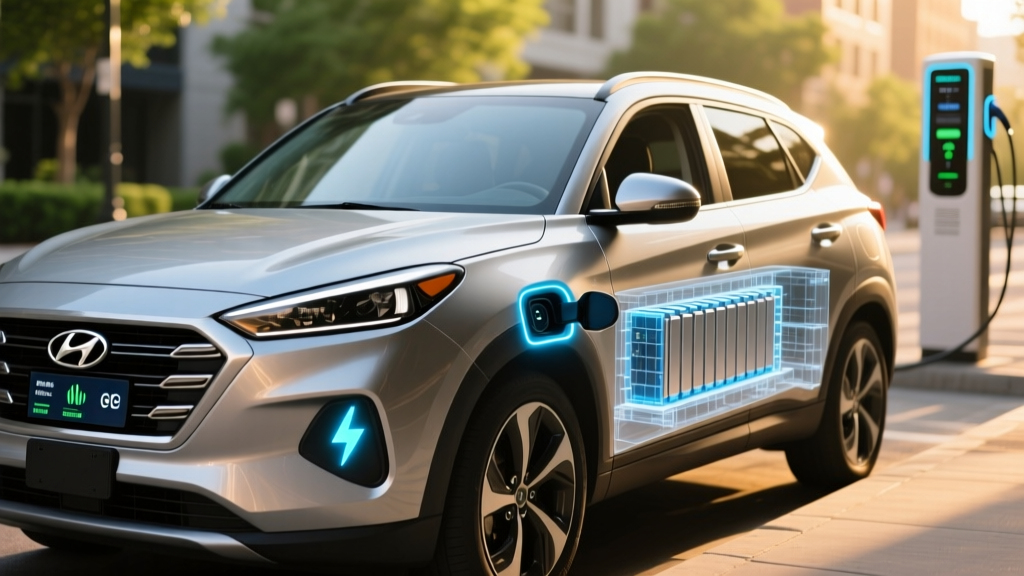
The 2025 Hyundai Tucson Plug-In Hybrid occupies a precise niche: compact-crossover buyers who want meaningful electric-only commuting without surrendering the flexibility of a gasoline engine for longer trips. With an EPA-rated 32 miles of electric range, 268 combined horsepower, and available all-wheel drive, it competes directly with the Toyota RAV4 Prime and Ford Escape PHEV. But spec sheets only tell half the story — real-world efficiency, charging logistics, and tax-credit eligibility determine whether this PHEV actually saves you money.
HEV vs PHEV: Which Tucson Is Which?
Hyundai sells two electrified Tucson variants, and confusing them is the most common buyer mistake. The conventional hybrid (HEV) pairs a 1.6L turbocharged engine with a small electric motor and a 1.49 kWh battery. It never plugs in — regenerative braking and the engine keep the battery topped up. It earns an EPA-estimated 38 MPG combined.
The 2025 Hyundai Tucson Plug-In Hybrid (PHEV) uses the same 1.6L turbo engine but pairs it with a much larger 13.8 kWh battery and a more powerful 72 kW (96 hp) electric motor. You plug it in to charge, and it can drive up to 32 miles on electricity alone before the gasoline engine seamlessly engages. Once the battery depletes, it operates like a conventional hybrid at roughly 35 MPG combined.
| Attribute | Tucson Hybrid (HEV) | Tucson Plug-In Hybrid (PHEV) |
|---|---|---|
| Battery Capacity | 1.49 kWh | 13.8 kWh (usable ~11.2 kWh) |
| Plug-In Charging | No | Yes (Level 1 / Level 2) |
| Electric-Only Range | None | 32 miles (EPA) |
| Combined Horsepower | 226 hp | 268 hp |
| EPA Fuel Economy | 38 MPG combined | 80 MPGe (electric) / 35 MPG (gas-only) |
| Drivetrain | AWD | AWD (HTRAC) |
| Starting MSRP | ~$33,950 | ~$39,650 |
Fuel Economy and Electric Range: The Numbers That Matter
The EPA rates the 2025 Tucson PHEV at 80 MPGe when operating on its combined electric-plus-gasoline charge-depleting cycle, and 35 MPG combined once the battery is depleted and the vehicle runs as a conventional hybrid. Here is the full breakdown:
| Mode | City | Highway | Combined |
|---|---|---|---|
| Charge-Depleting (EV+Gas) | 80 MPGe combined | ||
| Charge-Sustaining (Gas Only) | 35 MPG | 35 MPG | 35 MPG |
Electric-only range: The EPA rates the Tucson PHEV at 32 miles of zero-emission driving on a full charge. In real-world conditions, expect 26–30 miles in warm weather with moderate city driving, and as little as 22–25 miles in freezing temperatures or sustained highway speeds above 65 mph. The battery's usable capacity is approximately 11.2 kWh of the total 13.8 kWh — Hyundai reserves a buffer to protect long-term battery health.
Total combined range: With a full charge and a full 11.1-gallon fuel tank, the Tucson PHEV delivers roughly 420–440 total miles of range — enough for most drivers to cover a week of commuting on electricity alone, then tackle a 300-mile road trip without a single charging stop.
Real-world MPG vs. EPA: PHEVs often exceed their EPA city MPG estimates in stop-and-go traffic, where regenerative braking recovers the most energy. Owners who charge nightly and commute under 30 miles report using very little gasoline at all — some logging 80+ MPGe averages over months of driving. Conversely, drivers who rarely plug in will see the charge-sustaining figure of roughly 33–36 MPG, slightly below the EPA's 35 MPG combined due to the extra weight of the larger battery.
Powertrain, Performance, and Drivetrain
| Specification | Value |
|---|---|
| Engine | 1.6L Turbocharged 4-Cylinder (178 hp / 195 lb-ft) |
| Electric Motor | 72 kW (96 hp / 224 lb-ft) |
| Combined System Output | 268 hp / 271 lb-ft |
| Transmission | 6-Speed Automatic |
| Battery | 13.8 kWh Lithium-Ion Polymer |
| Drivetrain | HTRAC All-Wheel Drive (standard) |
| 0–60 mph | ~7.0 seconds |
| Towing Capacity | 2,000 lbs |
| Cargo Volume (behind 2nd row) | 38.5 cu ft |
The 268-horsepower combined output makes the Tucson PHEV the quickest variant in the Tucson lineup — noticeably more responsive than the HEV's 226 hp, particularly in the 0–40 mph range where the electric motor's instant torque dominates. The 6-speed automatic transmission is a conventional torque-converter unit (not a CVT), which most drivers find more natural and quieter under hard acceleration than the rubber-band feel of CVT-equipped competitors.
HTRAC all-wheel drive is standard on every Tucson PHEV trim. The system uses the electric motor to drive the rear axle independently, providing torque distribution without a mechanical driveshaft. In practice, this means confident traction in rain and light snow, though it is not a dedicated off-road system.
Charging: What You Need to Know Before You Buy
The Tucson PHEV accepts Level 1 (120V) and Level 2 (240V) AC charging via a J1772 connector. It does not support DC fast charging — a limitation shared by nearly every PHEV on the market, since the relatively small battery doesn't justify the cost and weight of DC hardware.
| Charging Level | Power (kW) | 0–100% Time | Notes |
|---|---|---|---|
| Level 1 (120V household outlet) | ~1.4 kW | ~8 hours | Suitable for overnight top-ups; full charge requires long dwell time |
| Level 2 (240V, 32A home charger) | ~7.2 kW | ~2 hours | Recommended for daily full charges; requires 240V circuit |
| DC Fast Charging | Not supported | ||
Home charging setup: Most PHEV owners find a Level 1 outlet sufficient if they drive less than 30 miles daily and can park near a standard 120V outlet overnight. However, a Level 2 home charger (typically $500–$800 for equipment plus $300–$1,200 for electrician installation, depending on panel proximity) cuts charge time to roughly two hours — ideal for drivers who make multiple trips per day and want the battery replenished between outings.
The onboard charger is rated at 7.2 kW, meaning you will not benefit from installing a 48A or higher-amperage Level 2 circuit specifically for this vehicle — a 32A circuit on a NEMA 14-50 outlet or hardwired Level 2 station is the practical maximum.
Pricing, Trims, and Tax Credit Eligibility
The 2025 Hyundai Tucson Plug-In Hybrid is offered in two trims:
| Trim | MSRP (est.) | Key Features |
|---|---|---|
| SEL | ~$39,650 | 10.25" touchscreen, heated front seats, SmartSense ADAS suite, 17" alloy wheels, wireless CarPlay/Android Auto |
| Limited | ~$46,350 | Leather seats, panoramic sunroof, Bose premium audio, ventilated front seats, highway driving assist, 19" alloy wheels |
Does the Tucson PHEV Qualify for the Federal Tax Credit?
Under IRS §30D rules, the 2025 Tucson PHEV may qualify for up to $7,500 in federal tax credits — but eligibility depends on several factors that change regularly:
- MSRP cap: The vehicle must have an MSRP at or below $80,000 for SUVs — both Tucson PHEV trims clear this threshold.
- Buyer income cap: Modified adjusted gross income must not exceed $150,000 (single), $225,000 (head of household), or $300,000 (married filing jointly).
- Battery sourcing requirements: As of 2025, a percentage of critical minerals and battery components must be sourced from the US or free-trade-agreement countries. Hyundai has been working to shift supply chains, but eligibility can change mid-year. Always verify on the fueleconomy.gov tax credit page before purchasing.
- Point-of-sale transfer: Buyers can elect to transfer the credit to the dealer at purchase, reducing the purchase price directly rather than waiting to claim it on their tax return.
Critical caveat: Hyundai manufactures the Tucson PHEV in South Korea, and battery-sourcing compliance has been a moving target for imported PHEVs. Check the IRS qualified vehicles list for the specific model year and build date before counting on the credit. State incentives (such as those in California, Colorado, and New York) may also apply — consult your state energy office for current amounts.
Battery Warranty, Reliability, and Long-Term Costs
• High-voltage battery: 10 years / 100,000 miles (capacity retention threshold: 70% of original capacity)
• Hybrid system components (motor, inverter, controller): 10 years / 100,000 miles
• Powertrain (engine, transmission): 10 years / 100,000 miles
• New vehicle limited warranty: 5 years / 60,000 miles
Hyundai's 10-year/100,000-mile hybrid battery warranty is among the most comprehensive in the segment, matching Kia and exceeding the 8-year/100,000-mile federal minimum that most automakers follow. The warranty covers battery capacity loss below 70% — meaning if your Tucson PHEV's electric range drops below roughly 22 miles from the original 32 within the warranty period, Hyundai will repair or replace the battery at no cost.
Battery replacement cost: If the battery fails outside of warranty, a full high-voltage battery replacement for the Tucson PHEV typically runs between $6,000 and $9,000 including parts and labor. However, PHEV battery failures are rare within the first 150,000 miles based on data from Hyundai's earlier PHEV models (Ioniq PHEV, Sonata PHEV). The larger buffer and active thermal management in the Tucson PHEV's battery pack are designed to minimize degradation.
Reliability outlook: Hyundai's 1.6L turbocharged engine is well-proven across the brand's lineup. The PHEV powertrain adds complexity (electric motor, inverter, high-voltage wiring, onboard charger), but Hyundai has been building hybrid and PHEV variants since 2011. The Tucson PHEV carries average predicted reliability ratings from major evaluators. For the latest crash-test performance, check IIHS and NHTSA ratings, where the Tucson has historically scored well.
Who Should Buy the Tucson PHEV — and Who Shouldn't?
✓ Pros
- 32 miles of electric range covers most daily commutes
- 268 hp makes it the quickest Tucson variant
- Standard AWD without fuel-economy penalty
- 10-year/100,000-mile battery and powertrain warranty
- Conventional 6-speed automatic (no CVT drone)
- 38.5 cu ft cargo space competitive for the segment
✗ Cons
- No DC fast charging capability
- Premium ~$5,700 over Tucson HEV takes years to recoup
- Tax credit eligibility uncertain due to import/sourcing rules
- Electric range drops significantly in cold weather
- Only two trims offered (SEL and Limited)
- 2,000-lb towing capacity lags some competitors
Decision Framework: Is the Tucson PHEV Right for You?
Choose the Tucson PHEV if:
- Your daily round-trip commute is under 30 miles and you can charge at home every night
- You want electric commuting but regularly take road trips exceeding 200 miles
- You live in a region with harsh winters where full-EV range loss is a concern
- You want AWD and don't want to pay the premium for a luxury PHEV
Choose the Tucson HEV instead if:
- You cannot install or access any charging (apartment, street parking)
- Your budget is tighter and the ~$5,700 PHEV premium doesn't pencil out
- You drive mostly highway miles where the PHEV's electric advantage is minimal
Choose a full BEV (like the Ioniq 5) instead if:
- You have reliable home Level 2 charging and rarely drive more than 250 miles in a single day
- You want zero gasoline costs, zero oil changes, and maximum federal tax credit certainty
- Your household already has a gas vehicle for long trips
Frequently Asked Questions
How many MPG does the 2025 Tucson Plug-In Hybrid get?
The EPA rates the Tucson PHEV at 80 MPGe when combining electric and gasoline operation, and 35 MPG combined (35 city / 35 highway) once the battery is depleted and the vehicle runs on gasoline alone. In real-world driving, owners who charge regularly and commute short distances often see effective averages well above 80 MPGe, while those who never plug in should expect roughly 33–36 MPG.
How far can the Tucson PHEV go on electric power alone?
The EPA rates the 2025 Tucson PHEV at 32 miles of electric-only range. Real-world results vary: expect 26–30 miles in warm city driving, and 22–25 miles in freezing temperatures or at sustained highway speeds. The total combined range (electric + full fuel tank) is approximately 420–440 miles.
Does the Tucson PHEV qualify for the $7,500 federal tax credit?
It may, but eligibility under IRS §30D depends on battery-sourcing compliance, buyer income limits, and MSRP caps. Because the Tucson PHEV is manufactured in South Korea, battery-component and critical-mineral sourcing requirements have been a variable factor. Always verify current eligibility on the IRS qualified vehicles list and fueleconomy.gov before purchasing, and consult a tax professional for your specific situation.
Is the Tucson Plug-In Hybrid reliable, and what does battery replacement cost?
Hyundai's PHEV powertrain is well-established, and the Tucson PHEV is backed by a 10-year/100,000-mile hybrid battery and powertrain warranty — one of the best in the industry. Out-of-warranty battery replacement typically costs $6,000–$9,000, but failures within the first 150,000 miles are uncommon based on historical data from Hyundai's hybrid lineup.
Do I need to install a Level 2 charger at home for the Tucson PHEV?
No. A standard 120V household outlet (Level 1) will fully charge the Tucson PHEV in roughly 8 hours, which is adequate for most overnight charging needs. A Level 2 charger (240V) reduces charge time to about 2 hours and is recommended if you make multiple trips per day or want faster turnaround. The onboard charger maxes out at 7.2 kW, so a 32A Level 2 circuit is sufficient.
How does the Tucson PHEV compare to the RAV4 Prime?
The Toyota RAV4 Prime offers a longer 42-mile electric range and 302 combined horsepower, but carries a higher starting price (approximately $44,000+) and has been subject to significant dealer markups. The Tucson PHEV is more affordable, offers a more conventional driving feel with its 6-speed automatic, and provides competitive cargo space. If electric range is your top priority, the RAV4 Prime wins; if value and warranty coverage matter more, the Tucson PHEV has the edge.
Sources: EPA fuel economy data via fueleconomy.gov, Hyundai Motor America specifications, IRS §30D qualified plug-in vehicle list via irs.gov. All specifications reflect 2025 model year data available at time of publication. Tax credit eligibility is subject to change — verify with official sources before purchase.