The 2006 Toyota Highlander Hybrid Limited in 2026: A Pioneering Hybrid SUV Revisited
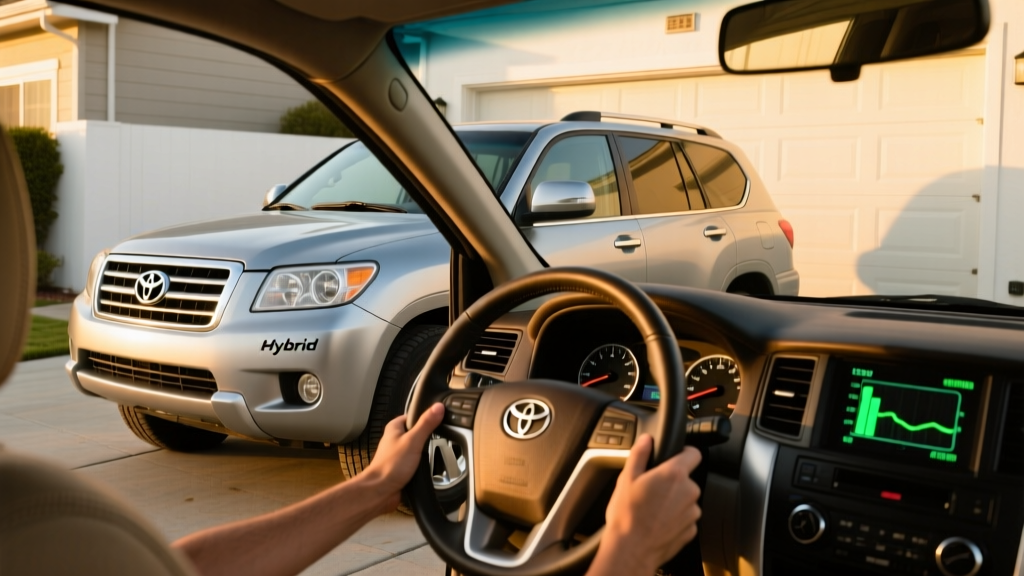
When Toyota launched the first-generation Highlander Hybrid for the 2006 model year, it was one of the earliest hybrid-electric SUVs on the market — a seven-passenger, all-wheel-drive family hauler that promised meaningful fuel savings without the compromises of early subcompact hybrids. Nearly two decades later, the 2006 Toyota Highlander Hybrid Limited remains a fixture on the used market, often priced between $4,000 and $8,000 depending on mileage and condition.
But does a 20-year-old hybrid still make financial sense in 2026? The answer hinges on three variables: the state of its nickel-metal hydride (NiMH) traction battery, real-world fuel economy versus modern alternatives, and the cost of inevitable hybrid-system maintenance. This guide covers every number you need before handing over cash.
2006 Toyota Highlander Hybrid Limited — Key Specifications
| Specification | Value |
|---|---|
| Powertrain | 3.3L V6 + front electric motor + rear electric motor (AWD-i) |
| Combined Horsepower | 270 hp (net system output) |
| Engine Output | 208 hp @ 5,600 rpm (gasoline V6 alone) |
| Front Motor Output | 123 kW (165 hp) peak |
| Rear Motor Output | 50 kW (67 hp) peak |
| Traction Battery | NiMH, ~6.5 kWh gross (sealed, non-plug-in) |
| Transmission | eCVT (planetary gearset, no fixed gears) |
| Drivetrain | Electronic AWD (AWD-i, no mechanical driveshaft) |
| EPA Fuel Economy | 31 city / 27 highway / 29 combined MPG |
| Curb Weight | ~4,505 lbs |
| Seating | Up to 7 passengers (3-row) |
| Original MSRP (Limited) | ~$42,510 (2006) |
| Used Price Range (2026) | $4,000–$8,000 (80k–180k miles) |
How Many MPG Does the 2006 Highlander Hybrid Actually Get?
The EPA rated the 2006 Toyota Highlander Hybrid at 31 MPG city, 27 MPG highway, and 29 MPG combined for the AWD-i model with the standard 18-inch wheels that came on the Limited trim. These figures are published on fueleconomy.gov and remain the official benchmark.
EPA Fuel Economy Breakdown
| Driving Cycle | EPA Rating | Real-World Expectation |
|---|---|---|
| City | 31 MPG | 28–33 MPG (hybrids often exceed EPA in stop-and-go) |
| Highway | 27 MPG | 24–27 MPG (less regen benefit at steady speed) |
| Combined | 29 MPG | 25–29 MPG (depends on driving mix and battery health) |
The real-world spread matters. Toyota's Hybrid Synergy Drive system recovers kinetic energy during braking and uses the electric motor at low speeds, which means city driving is where this SUV shines relative to its gasoline counterpart. The conventional 2006 Highlander V6 AWD was rated at just 20 combined MPG — making the hybrid roughly 45% more efficient in city traffic.
However, a degraded NiMH battery will shrink that advantage. If the hybrid battery has lost significant capacity (common past 150,000 miles or 15+ years), the system relies more heavily on the gasoline engine, and owners report combined figures dropping to 22–25 MPG. A healthy battery is essential to achieving sticker numbers.
HEV vs. PHEV vs. EV: Where Does This Highlander Fit?
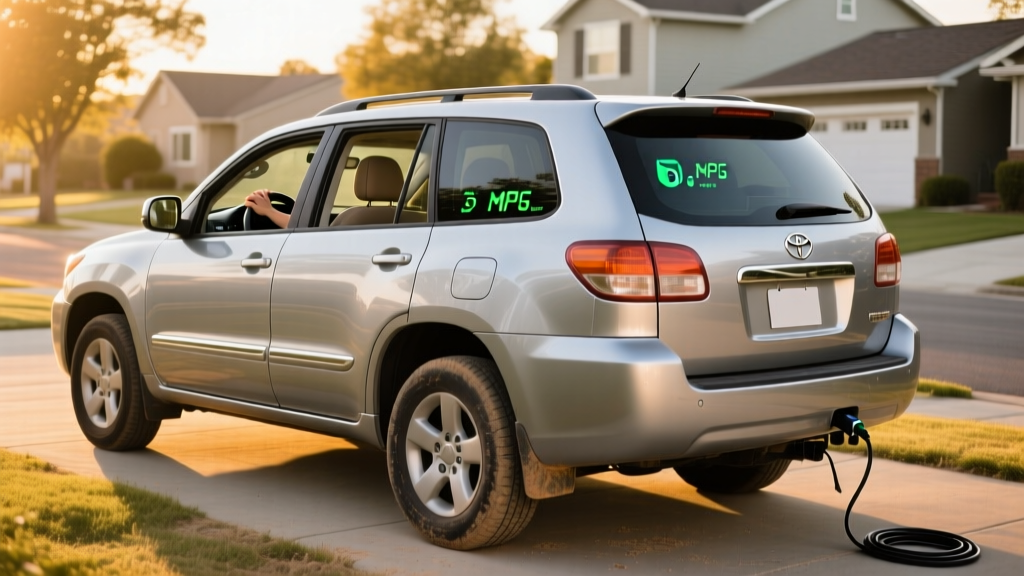
The 2006 Highlander Hybrid is a conventional hybrid electric vehicle (HEV). It cannot be plugged in. The battery recharges exclusively through regenerative braking and the gasoline engine. There is no electric-only driving range to speak of — the system uses the electric motor to assist acceleration and enable brief low-speed electric creep, but the gas engine is always the primary energy source.
Understanding the Distinction
| Feature | HEV (This Highlander) | PHEV (e.g., 2026 RAV4 Prime) | BEV (e.g., 2026 Tesla Model Y) |
|---|---|---|---|
| Plug-in Charging | No — never plug in | Yes — Level 1 or Level 2 | Yes — Level 2 or DC fast charge |
| Electric-Only Range | Effectively 0 miles | ~42 miles | ~300+ miles |
| Battery Size | ~6.5 kWh (NiMH) | ~18.1 kWh (lithium-ion) | ~75–82 kWh (lithium-ion) |
| Gasoline Engine | Yes (primary source) | Yes (backup after EV range) | None |
| Federal Tax Credit (New) | Not eligible | Up to $7,500 (§30D) | Up to $7,500 (§30D) |
| Fuel Cost per Mile | ~$0.12–$0.14 (gas) | ~$0.04 (electric) / ~$0.12 (gas) | ~$0.03–$0.05 (electric) |
If you're shopping for a plug-in hybrid SUV, this 2006 model is not it. Toyota didn't introduce a plug-in Highlander until much later in other markets, and the US-spec Highlander Hybrid has always been a self-charging HEV. For a modern PHEV comparison point, the 2026 Toyota RAV4 Prime offers 42 miles of electric-only range, a combined 94 MPGe on electricity, and 38 MPG once the battery is depleted — a generational leap in efficiency, but at a new-vehicle price north of $44,000.
Powertrain Deep Dive: The Original Hybrid Synergy Drive
The 2006 Highlander Hybrid uses Toyota's THS-II (Toyota Hybrid System, second generation) with the AWD-i configuration. Here's how the hardware breaks down:
- 3.3L 3MZ-FE V6 engine: 208 hp and 212 lb-ft of torque. A proven, timing-belt-driven engine shared with the Camry and Sienna of the era.
- Front electric motor (MG2): 123 kW peak, integrated into the transaxle. Provides primary electric drive torque and regenerative braking.
- Generator motor (MG1): Starts the engine, generates electricity, and controls the planetary gearset ratio.
- Rear electric motor: 50 kW, mounted on the rear axle. Provides electric AWD without a mechanical driveshaft — the rear wheels are driven purely by electricity when the system detects slip.
- NiMH battery pack: Located under the second-row seats, approximately 6.5 kWh gross capacity (with a usable window far smaller, as the system never fully charges or depletes it to preserve longevity).
The combined net system output is 270 horsepower, which made this one of the quickest midsize SUVs of its era — Toyota claimed a 0–60 mph time of approximately 7.8 seconds. The eCVT provides seamless, gearless acceleration, though some drivers find the engine drone under hard acceleration (a characteristic of the planetary gearset holding the engine at a fixed RPM).
Hybrid Battery Lifespan, Warranty, and Replacement Cost
For any used hybrid buyer, the traction battery is the single largest financial risk. Here's what you need to know about the 2006 Highlander Hybrid's NiMH pack:
Original Battery Warranty
Toyota originally warranted the hybrid battery for 8 years / 100,000 miles (extended to 10 years / 150,000 miles in California Air Resources Board states). That warranty expired long ago for every 2006 model on the road. You are buying this vehicle with zero remaining factory hybrid-battery coverage unless a previous owner purchased an extended warranty that is still active and transferable.
Expected battery lifespan: Toyota's NiMH batteries in this generation typically last 150,000–200,000 miles before significant degradation forces a replacement. Some original batteries have survived beyond 200,000 miles, but capacity loss is inevitable with age regardless of mileage — a 20-year-old NiMH pack will have degraded even if the odometer reads only 80,000 miles.
Replacement cost breakdown (2026 estimates):
| Option | Cost Range | Notes |
|---|---|---|
| New OEM Toyota battery | $3,000–$4,500 (parts + labor) | Best longevity, dealer or certified hybrid shop install |
| Remanufactured battery | $1,500–$2,500 | Rebuilt with tested cells; 1–3 year warranty typical |
| Used/salvage battery | $500–$1,200 | Highest risk — unknown remaining life, minimal warranty |
| Individual module replacement | $400–$900 | Only viable if 1–2 modules are bad; requires diagnostics |
A pre-purchase inspection by a qualified hybrid technician is non-negotiable. They can read the battery's state-of-health (SoH) data through the OBD-II port, check for voltage imbalance between modules, and identify whether the pack is on borrowed time. Expect to pay $100–$200 for this diagnostic — money well spent against a $3,000+ surprise.
Tax Credits, Insurance, and Total Ownership Cost
Federal tax credit: The 2006 Toyota Highlander Hybrid does not qualify for any current federal tax credit. The IRS §30D Clean Vehicle Credit applies only to new plug-in electric vehicles (BEVs and PHEVs) meeting battery-sourcing, MSRP, and buyer-income requirements. Conventional hybrids (HEVs) have never been eligible for §30D. The hybrid tax credit that existed under the Energy Policy Act of 2005 (up to $2,200 for this model) phased out for Toyota in 2007.
State incentives: A handful of states previously offered rebates or HOV-lane access for hybrids, but nearly all of these programs have shifted to plug-in vehicles. Check your state's current energy office or DMV website — but don't count on any financial incentive for purchasing a used conventional hybrid in 2026.
Insurance: Expect annual premiums of $900–$1,400 depending on your driving record, location, and coverage levels. Older vehicles generally cost less to insure due to low actual cash value, but hybrid components can raise comprehensive/collision payouts.
Fuel cost at 29 MPG combined: With the national average regular gasoline price hovering around $3.30/gallon in early 2026, you're spending roughly $0.11–$0.13 per mile on fuel. Compare that to a modern BEV at ~$0.04/mile on home electricity or a PHEV in electric mode at similar rates. The Highlander Hybrid saves money versus its gasoline counterpart (20 MPG combined = ~$0.17/mile), but it cannot match the per-mile cost of any plug-in vehicle charged at home.
Reliability and Common Issues Beyond the Battery
The 3.3L 3MZ-FE V6 is one of Toyota's most durable engines, but at 20 years old, several maintenance items demand attention:
- Timing belt and water pump: Due every 90,000 miles or ~7 years. If there's no documentation of a recent replacement, budget $800–$1,200 immediately. A snapped timing belt on this interference engine means catastrophic damage.
- Inverter coolant pump: The hybrid system has a separate electric coolant pump for the inverter. These can fail silently, leading to inverter overheating and a $2,000+ repair. Check for coolant flow in the inverter reservoir with the car in READY mode.
- Brake actuator: The electro-hydraulic brake system (which blends regenerative and friction braking) has a known failure mode on this generation. Replacement runs $1,200–$1,800. Listen for unusual pump cycling or a spongy pedal.
- Transmission fluid: The eCVT uses Toyota ATF WS fluid. While Toyota called it "lifetime," most hybrid specialists recommend a drain-and-fill every 60,000 miles.
- Rust: Check the rear subframe and undercarriage, especially in salt-belt states. Structural rust is a dealbreaker.
Pros
- 29 MPG combined is still competitive for a 7-passenger AWD SUV
- 270 hp provides confident merging and passing power
- Toyota reliability pedigree — powertrain is proven past 200k miles
- Limited trim includes leather, JBL audio, power liftgate, nav (for the era)
- AWD-i works without a fuel-economy-draining mechanical driveshaft
- Low purchase price: $4,000–$8,000 entry point
Cons
- Hybrid battery replacement ($1,500–$4,500) is likely overdue or imminent
- No plug-in capability — cannot access EV-only driving or charging incentives
- Outdated safety tech: no AEB, no lane-keeping, no blind-spot monitoring
- 20-year-old interior materials, infotainment, and NVH feel dated
- Timing belt service is mandatory and expensive if neglected
- Resale value is minimal — this is a terminal-value vehicle
Who Should Buy This Hybrid — And Who Shouldn't
The Verdict
Choose the 2006 Highlander Hybrid Limited if: You need a cheap, spacious AWD family hauler for $5,000–$8,000, you drive mostly in the city (where hybrid efficiency shines), you're willing to budget $2,000–$4,000 for hybrid battery and deferred maintenance in the first year, and you have access to a hybrid-savvy mechanic.
Choose a modern PHEV (e.g., 2026 RAV4 Prime, Tucson PHEV) if: You can charge at home, want 30–42 miles of electric-only daily driving, want current safety technology (AEB, lane centering), and can spend $40,000+ (offset by a potential $7,500 §30D tax credit if you meet income and sourcing requirements).
Choose a full BEV (e.g., 2026 Model Y, Ioniq 5) if: You want the lowest per-mile fuel cost, have reliable home Level 2 charging, want zero tailpipe emissions, and are ready to commit to electric-only driving with 300+ miles of EPA range.
Choose a conventional gas SUV if: You drive very few miles annually (under 8,000), lack charging access, and want to avoid hybrid battery replacement risk entirely — a 2015–2018 gasoline Highlander will cost similar money with no high-voltage system to maintain.
Frequently Asked Questions
How many MPG does the 2006 Toyota Highlander Hybrid Limited get?
The EPA rates it at 31 city / 27 highway / 29 combined MPG. In real-world driving with a healthy battery, expect 25–31 MPG combined depending on your city/highway mix. A degraded battery can drop combined figures to 22–25 MPG.
Can I plug in the 2006 Highlander Hybrid to charge it?
No. This is a conventional hybrid (HEV), not a plug-in hybrid (PHEV). The battery charges only through regenerative braking and the gasoline engine. There is no charging port and no electric-only driving range.
How much does it cost to replace the hybrid battery?
A new OEM battery runs $3,000–$4,500 installed. Remanufactured options range from $1,500–$2,500. Used salvage batteries cost $500–$1,200 but carry significant risk. Always get a pre-purchase battery health diagnostic before buying.
Does the 2006 Highlander Hybrid qualify for any tax credit?
No. The original federal hybrid tax credit (up to $2,200) phased out for Toyota in 2007. The current IRS §30D Clean Vehicle Credit applies only to new plug-in vehicles (BEVs and PHEVs). There is no federal or typical state incentive for purchasing a used conventional hybrid in 2026.
Is the 2006 Highlander Hybrid reliable at high mileage?
The 3.3L V6 and eCVT are fundamentally robust, and examples past 200,000 miles are common. The critical variables are hybrid battery health, timing belt maintenance, and inverter coolant pump condition. A well-maintained example with a fresh battery can be very reliable; a neglected one will be expensive.
How does it compare to a modern hybrid SUV?
A 2026 Toyota Highlander Hybrid achieves 35–36 MPG combined — about 20% more efficient — with a smaller, lighter lithium-ion battery, modern safety systems, and a full factory warranty. However, a new Highlander Hybrid starts around $42,000, making the 2006 model a budget alternative for buyers who accept the maintenance trade-off.
What should I check before buying a used 2006 Highlander Hybrid?
Prioritize: (1) hybrid battery state-of-health scan via OBD-II, (2) timing belt and water pump service history, (3) inverter coolant pump operation, (4) brake actuator function, (5) undercarriage rust inspection. Budget $2,000–$4,000 for deferred maintenance in year one unless comprehensive service records prove otherwise.