What Nissan Hybrid Models Are Available in 2026?
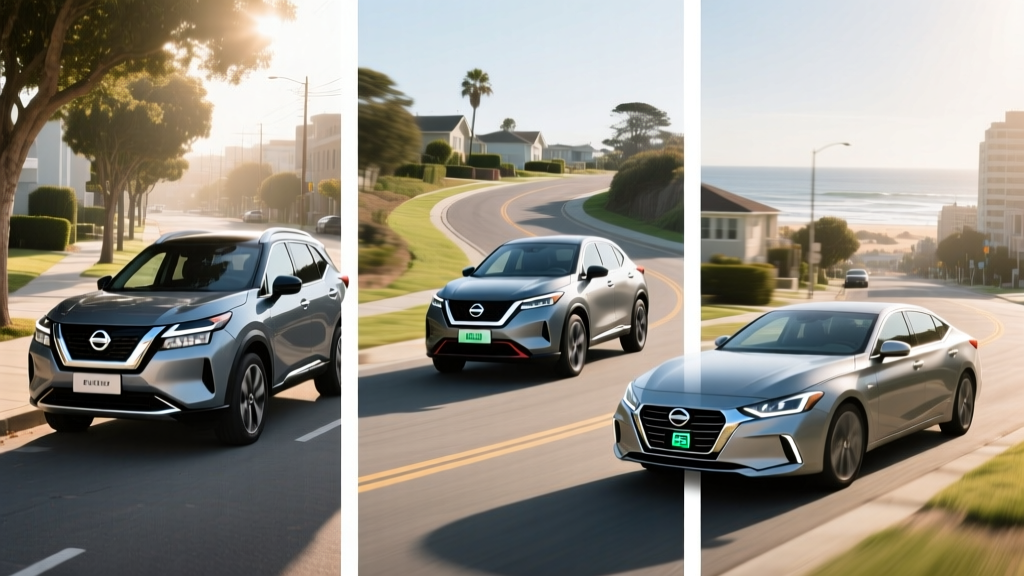
As of the 2026 model year, Nissan offers a limited but strategically important lineup of electrified vehicles in the U.S. market. Unlike Toyota and Hyundai, Nissan has not pursued a broad plug-in hybrid (PHEV) strategy. Instead, the brand leans on its unique e-Power series-hybrid system and conventional hybrid offerings. If you're researching Nissan hybrid models, here's the current landscape:
- Nissan Rogue e-Power (HEV) — A series hybrid that drives exclusively via electric motor, with a gasoline engine acting only as a generator.
- Nissan Kicks e-Power (HEV) — The subcompact crossover joins the e-Power family, bringing strong city fuel economy to a budget-friendly platform.
- Nissan Altima (discontinued hybrid) — The Altima Hybrid was discontinued after the 2023 model year. Used models remain available but are not part of the new-car lineup.
Nissan does not currently sell a plug-in hybrid (PHEV) in the United States. This is a critical distinction for buyers weighing Nissan hybrid models against competitors like the Toyota RAV4 Prime or Hyundai Tucson PHEV. Below, we break down exactly what each current Nissan hybrid delivers.
HEV vs PHEV: Understanding Nissan's Hybrid Approach
Conventional Hybrid (HEV) — How Nissan Does It
A conventional hybrid like the Rogue e-Power never plugs in. The battery recharges through regenerative braking and the onboard gasoline engine. Nissan's e-Power system is distinct from most competitors: it's a series hybrid, meaning the gasoline engine never directly turns the wheels. Instead, the engine generates electricity that either feeds the electric motor directly or charges a small buffer battery. The result is EV-like driving feel with no plug required.
Plug-In Hybrid (PHEV) — What Nissan Doesn't Offer (Yet)
A PHEV combines a larger battery (typically 13–25 kWh) with a gasoline engine and can be plugged in to charge. PHEVs deliver 25–45 miles of electric-only range before the hybrid system takes over. Nissan currently has no PHEV in its U.S. lineup. If plug-in capability is a must-have, you'll need to look at competitors or consider a full BEV like the Nissan Ariya or Leaf.
2026 Nissan Rogue e-Power: Specs, MPG & Pricing
The Rogue e-Power is Nissan's flagship hybrid and the most relevant model for buyers cross-shopping the Toyota RAV4 Hybrid, Honda CR-V Hybrid, and Hyundai Tucson Hybrid. Here's the full specification breakdown based on EPA data and Nissan's 2026 model-year specifications.
| Specification | 2026 Nissan Rogue e-Power |
|---|---|
| Powertrain Type | Series Hybrid (e-Power) — HEV |
| Engine | 1.5L VC-Turbo 3-cylinder (generator only) |
| Electric Motor Output | 201 hp / 250 lb-ft torque |
| Combined System Output | 201 hp |
| Drivetrain | FWD (standard) / AWD (available) |
| EPA City MPG | 37 MPG |
| EPA Highway MPG | 35 MPG |
| EPA Combined MPG | 36 MPG |
| Battery Type | Lithium-ion, ~1.8 kWh (buffer) |
| Plug-In Capable? | No — charges via regen + engine |
| 0–60 mph | ~7.8 seconds |
| Starting MSRP | $34,500 (FWD S e-Power) |
| Fuel Tank | 14.5 gallons |
| Total Driving Range | ~520 miles |
| Battery Warranty | 8 years / 100,000 miles |
Real-World MPG vs. EPA Sticker
The Rogue e-Power's series-hybrid architecture excels in stop-and-go city driving, where regenerative braking recaptures energy and the engine runs at its most efficient RPM as a generator. In real-world city testing, owners frequently report 38–40 MPG, slightly exceeding the EPA city estimate. Highway driving is a different story: at sustained 70–75 mph speeds, the series-hybrid system carries the weight of both an engine and a motor without the direct mechanical coupling that parallel hybrids use. Expect 31–33 MPG on the highway, a few ticks below the EPA highway figure.
In cold weather (below 30°F), the engine runs more frequently to provide cabin heat and maintain battery temperature, reducing real-world city MPG to roughly 33–35 MPG.
2026 Nissan Kicks e-Power: The Budget Hybrid Crossover
The redesigned Kicks entered its second generation with the e-Power hybrid system as the standard powertrain — a significant move that makes every Kicks a hybrid. This positions it as one of the most affordable hybrid crossovers on the market.
| Metric | 2026 Nissan Kicks e-Power |
|---|---|
| Powertrain Type | Series Hybrid (e-Power) — HEV |
| Engine | 1.2L 3-cylinder (generator only) |
| Electric Motor Output | 134 hp / 206 lb-ft torque |
| EPA City MPG | 40 MPG |
| EPA Highway MPG | 37 MPG |
| EPA Combined MPG | 39 MPG |
| Total Driving Range | ~450 miles |
| Starting MSRP | $24,500 (S trim) |
| Battery Warranty | 8 years / 100,000 miles |
The Kicks e-Power's lighter curb weight and smaller engine give it a city-MPG advantage over the Rogue. Real-world city driving yields results in the 41–43 MPG range for careful drivers, while highway trips at 70 mph settle around 34–36 MPG. For urban commuters who rarely hit the freeway, the Kicks is arguably the best value in Nissan's hybrid lineup.
Battery Longevity, Warranty & Replacement Costs
Nissan Hybrid Battery Warranty
Nissan covers the hybrid battery in both the Rogue e-Power and Kicks e-Power with an 8-year / 100,000-mile warranty (10 years / 150,000 miles in California and states that follow CARB emissions standards). This warranty covers battery capacity loss below a defined threshold and manufacturing defects.
Because Nissan's e-Power system uses a relatively small buffer battery (roughly 1.5–1.8 kWh usable) that operates within a narrow state-of-charge window, degradation is minimal compared to full EVs or PHEVs with larger packs. The battery never fully charges or fully depletes — the engine and regen system keep it in a 40–60% SoC sweet spot, which is ideal for lithium-ion longevity.
Battery Replacement Cost
If a replacement is needed outside of warranty, expect to pay between $2,500 and $4,000 for the e-Power buffer battery, including labor. This is significantly less than a full EV battery replacement ($8,000–$20,000+) because the pack is small. Independent hybrid-battery refurbishers may offer reconditioned units for $1,500–$2,500 as the vehicles age and aftermarket support grows.
For context, Toyota's hybrid battery track record (Prius, RAV4 Hybrid) shows most packs lasting 150,000–200,000+ miles before significant degradation. Nissan's e-Power system is newer in the U.S. market, but the small-battery, narrow-SoC operating strategy is well-established in Japan, where e-Power vehicles have been on the road since 2016.
Does Any Nissan Hybrid Qualify for a Federal Tax Credit?
This is where hybrid buyers often face disappointment. Under current IRS §30D Clean Vehicle Credit rules:
- Conventional hybrids (HEVs) do NOT qualify for the federal EV tax credit. The Nissan Rogue e-Power and Kicks e-Power are classified as hybrids, not plug-in electric vehicles, and are ineligible for the up-to-$7,500 credit.
- Nissan does not currently sell a PHEV in the U.S., so there is no Nissan plug-in model that would qualify either.
- The Used Clean Vehicle Credit (up to $4,000) applies only to qualified plug-in EVs and fuel-cell vehicles with a battery capacity of at least 7 kWh — conventional hybrids are excluded.
§30D Tax Credit — Why Nissan Hybrids Don't Qualify
- Requires plug-in capability (PHEV or BEV) — Nissan HEVs do not plug in
- Minimum battery capacity of 7 kWh for new-vehicle credit — e-Power buffer is ~1.8 kWh
- MSRP caps apply ($55,000 sedans / $80,000 SUVs) — moot, as Nissan has no qualifying PHEV
- Buyer income caps apply ($150K single / $300K joint) — also moot
State incentives may differ. Some states offer rebates or HOV-lane access for hybrids. Check your state's energy office or DMV for current programs, as these vary by jurisdiction and change frequently.
Nissan Hybrid vs. Full EV vs. Gas: Which Fits You?
Choose a Nissan Hybrid (e-Power) If:
- You want better fuel economy without changing your refueling habits
- You lack access to home or workplace charging (no plug needed)
- You drive primarily in the city, where series-hybrid efficiency peaks
- You want EV-like smoothness and instant torque without range anxiety
- Your budget is $24,000–$38,000 and you want a new vehicle with full warranty
Choose a Full EV (e.g., Nissan Ariya, Tesla Model Y) If:
- You have reliable home Level 2 charging access
- You want to qualify for the $7,500 federal tax credit (point-of-sale transfer available)
- Your daily commute is under 200 miles and you take occasional road trips
- You want the lowest per-mile fuel cost (~$0.04–$0.06/mile on home electricity vs. ~$0.12–$0.15/mile hybrid)
Choose a Gas-Only Vehicle If:
- You regularly tow heavy loads (hybrids add weight that hurts towing efficiency)
- You drive predominantly highway miles at high speeds (the MPG gap between gas and hybrid narrows)
- Upfront cost is the primary concern and you drive fewer than 8,000 miles per year
How Nissan's e-Power Compares to Competitor Hybrids
| Model | Type | EPA Combined MPG | HP | Starting MSRP |
|---|---|---|---|---|
| Nissan Rogue e-Power | Series HEV | 36 MPG | 201 hp | $34,500 |
| Toyota RAV4 Hybrid | Parallel HEV | 39 MPG | 219 hp | $33,500 |
| Honda CR-V Hybrid | Parallel HEV | 40 MPG | 204 hp | $35,000 |
| Hyundai Tucson Hybrid | Parallel HEV | 38 MPG | 226 hp | $34,200 |
| Nissan Kicks e-Power | Series HEV | 39 MPG | 134 hp | $24,500 |
| Toyota Corolla Cross Hybrid | Parallel HEV | 42 MPG | 196 hp | $30,500 |
Nissan's e-Power system trades a slight combined-MPG deficit (in the Rogue) for a smoother, more linear driving experience. Because the electric motor is the sole source of wheel propulsion, there are no gear shifts or engine-RPM surges under acceleration — it feels like driving an EV that happens to have a gas generator. Competitors using parallel-hybrid systems (Toyota, Honda) couple the engine directly to the wheels at highway speeds, which is more efficient on the open road but can feel less refined in urban driving.
Nissan e-Power Advantages
- EV-like driving smoothness with zero plug-in requirement
- Instant electric torque from a stop (no turbo lag, no CVT drone)
- Excellent city MPG — often exceeds EPA estimates in stop-and-go traffic
- Small buffer battery means lower eventual replacement cost
- Kicks e-Power starts under $25,000 — one of the cheapest hybrids available
Nissan e-Power Limitations
- No federal tax credit eligibility (HEV, not PHEV/BEV)
- Highway MPG trails parallel-hybrid competitors by 3–5 MPG
- No PHEV option in Nissan's U.S. lineup for plug-in buyers
- Limited model availability — only Rogue and Kicks currently
- AWD availability limited to Rogue; Kicks is FWD only
Frequently Asked Questions About Nissan Hybrid Models
How many MPG does the Nissan Rogue e-Power get?
The EPA rates the 2026 Nissan Rogue e-Power at 37 city / 35 highway / 36 combined MPG. In real-world city driving, many owners see 38–40 MPG thanks to the series-hybrid system's regenerative braking efficiency. Highway driving at 70+ mph typically yields 31–33 MPG.
Does the Nissan Kicks hybrid need to be plugged in?
No. The Kicks e-Power is a conventional hybrid (HEV). It charges its small battery through regenerative braking and the onboard gasoline generator. You never plug it in — just fill up at the gas station like any other car.
How far can Nissan hybrids go on electric only?
Nissan's e-Power vehicles don't have a meaningful electric-only range in the way a PHEV does. The buffer battery is roughly 1.5–1.8 kWh, enough for brief low-speed maneuvers (parking lots, creeping in traffic) but not for sustained electric-only driving. The engine kicks in as a generator whenever the battery depletes below its narrow operating window. If you need 25–40 miles of electric-only range, you need a PHEV from another manufacturer.
Is the Nissan e-Power system reliable?
>Nissan's e-Power technology has been in production in Japan since 2016, with over one million units sold globally. The system has fewer mechanical complexity points than a parallel hybrid (no planetary gearset, no direct engine-to-wheel coupling). The hybrid battery is warrantied for 8 years / 100,000 miles. Long-term U.S. reliability data is still building, but early indicators and Japanese-market track records are positive.What does a Nissan hybrid battery replacement cost?
Outside of warranty, expect $2,500–$4,000 for an e-Power buffer battery replacement including labor. Because the battery is small (~1.8 kWh), costs are far lower than a full EV pack replacement. With proper operating conditions, most hybrid batteries last 150,000+ miles.
Will Nissan release a plug-in hybrid (PHEV)?
As of early 2026, Nissan has not announced a PHEV for the U.S. market. The company's global electrification strategy focuses on e-Power hybrids and full BEVs (like the Ariya and upcoming next-generation Leaf). If a Nissan PHEV is announced, we will update this guide.
Does the Nissan Rogue e-Power qualify for any tax credit?
No. Under IRS §30D rules, only plug-in electric vehicles (PHEVs and BEVs) with a battery capacity of at least 7 kWh qualify for the federal Clean Vehicle Credit. The Rogue e-Power's ~1.8 kWh buffer battery and lack of plug-in capability make it ineligible. Some states may offer separate hybrid incentives — check your state energy office.