Quick Verdict: The Used Hybrid SUV That Still Pays Off
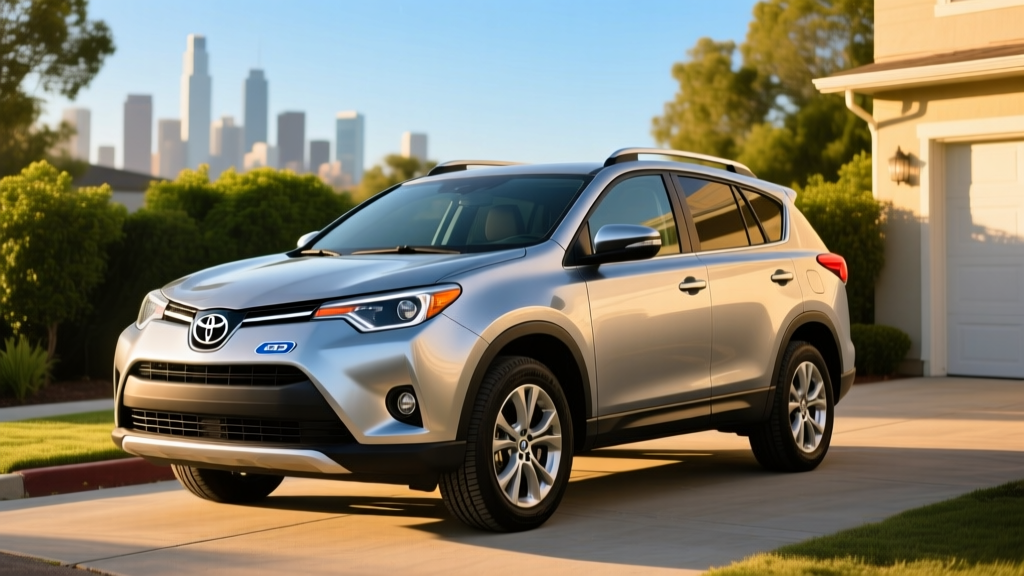
The 2016 Toyota RAV4 Hybrid was Toyota's first hybrid compact SUV, and nearly a decade later it remains one of the smartest used-vehicle purchases in the segment. With an EPA-estimated 32 MPG combined, standard all-wheel drive, and Toyota's proven hybrid synergy drive system, this HEV delivers real fuel savings without requiring a plug, a charging routine, or any change in driving habit. In 2026, with used examples trading between $14,000 and $21,000 depending on mileage and condition, the RAV4 Hybrid is a practical bridge for buyers who want electrified efficiency but aren't ready for a full battery-electric vehicle.
This guide covers everything a used buyer needs to know: real-world fuel economy, powertrain specs, hybrid battery longevity and replacement cost, and how this conventional hybrid stacks up against plug-in hybrids and full EVs available today.
| Spec | 2016 Toyota RAV4 Hybrid |
|---|---|
| Powertrain | 2.5L 4-cyl Atkinson-cycle + 2 electric motors (AWD-i) |
| Combined Horsepower | 194 hp |
| 0–60 mph | 7.8 seconds |
| EPA MPG (City / Hwy / Combined) | 34 / 31 / 32 |
| Drivetrain | Electronic AWD (AWD-i, rear motor) |
| Hybrid Battery | 1.6 kWh NiMH (sealed, not plug-in) |
| Fuel Tank | 14.8 gallons |
| Total Range | ~474 miles |
| Cargo Volume | 38.4 cu ft (rear seats up) |
| Original MSRP (XLE) | $29,270 |
| Used Price Range (2026) | $14,000–$21,000 |
Fuel Economy: EPA Numbers and Real-World MPG
The EPA rates the 2016 RAV4 Hybrid at 34 MPG city, 31 MPG highway, and 32 MPG combined. Unlike full-electric or gas-only vehicles, conventional hybrids tend to outperform their EPA city estimates in real-world stop-and-go driving because regenerative braking recaptures energy that a gas car wastes as heat.
| Driving Scenario | Expected MPG |
|---|---|
| EPA City | 34 |
| EPA Highway | 31 |
| EPA Combined | 32 |
| Real-World City (owner-reported) | 33–37 |
| Real-World Highway (70+ mph) | 28–31 |
| Real-World Combined (mixed) | 31–34 |
| Cold Weather (below 30°F, short trips) | 27–30 |
On highway road trips at sustained speeds above 70 mph, expect fuel economy to dip toward 28–30 MPG — the electric motors contribute less at constant high speed, and the 2.5L engine carries more of the load. In cold weather, short-trip city driving can drop into the upper 20s as the engine runs more frequently to heat the cabin and bring the catalytic converter to operating temperature.
For comparison, the gas-only 2016 RAV4 AWD is rated at 22 city / 29 highway / 25 combined. The hybrid's 7 MPG combined advantage translates to roughly 100 fewer gallons per year for a driver covering 15,000 miles annually — approximately $300–$400 in annual fuel savings at 2026 gas prices.
HEV vs. PHEV vs. EV: Where the RAV4 Hybrid Fits
A common source of confusion is the difference between a conventional hybrid (HEV) and a plug-in hybrid (PHEV). The 2016 RAV4 Hybrid is a conventional HEV. It cannot be plugged in. Its small 1.6 kWh nickel-metal hydride battery charges solely through regenerative braking and the gasoline engine. There is no electric-only driving mode of any meaningful distance — the electric motors assist the engine during acceleration and low-speed maneuvering, but the gas engine is always part of the equation.
| Feature | HEV (This RAV4 Hybrid) | PHEV (e.g., RAV4 Prime) | Full EV (e.g., Tesla Model Y) |
|---|---|---|---|
| Plug-in Required? | No | Yes (Level 1 or 2) | Yes (Level 2 or DC fast) |
| Electric-Only Range | N/A (motor assist only) | 42 miles (RAV4 Prime) | 300+ miles |
| Gasoline Engine? | Yes (primary) | Yes (backup) | No |
| Home Charging Needed? | No | Recommended | Essential |
| Federal Tax Credit (New) | None | Up to $7,500 (§30D) | Up to $7,500 (§30D) |
| Fuel Cost (per mile) | ~$0.10 | ~$0.04 (electric) / $0.10 (gas) | ~$0.03–$0.05 |
| Best For | No plug access, simple ownership | Home charging + short commutes | Home charging + low running cost |
Choose the HEV (this RAV4 Hybrid) if you park on the street or in a garage without an outlet, want zero change to your fueling routine, and prioritize low purchase price and proven reliability over maximum fuel savings. Choose a PHEV like the current RAV4 Prime if you can install a Level 2 charger at home and most daily driving is under 40 miles. Choose a full EV if you have reliable home charging and want the lowest per-mile operating cost.
Powertrain and Driving Impressions
The 2016 RAV4 Hybrid pairs a 2.5-liter Atkinson-cycle four-cylinder engine (150 hp, 152 lb-ft) with a front-mounted electric motor (105 kW) and a rear-mounted motor (50 kW) that provides all-wheel drive without a mechanical driveshaft. Combined system output is 194 horsepower. Toyota's AWD-i system engages the rear motor automatically when slip is detected or during hard acceleration, giving the RAV4 Hybrid legitimate all-weather capability without the drivetrain losses of a traditional AWD system.
The 0–60 mph time of 7.8 seconds is competitive for the class and noticeably quicker than the gas-only RAV4's 8.9 seconds. The hybrid's electric torque fill makes it feel responsive around town, and the continuously variable transmission (eCVT) keeps acceleration smooth, if occasionally droning under hard throttle. The transition between electric and gas power is nearly imperceptible in normal driving — a hallmark of Toyota's Hybrid Synergy Drive system refined over two decades of Prius development.
Hybrid Battery Longevity, Warranty, and Replacement Cost
The single biggest concern for any used hybrid buyer is the traction battery. The 2016 RAV4 Hybrid uses a 1.6 kWh nickel-metal hydride (NiMH) pack — a chemistry Toyota has deployed in millions of vehicles since the original Prius. NiMH is less energy-dense than modern lithium-ion but is exceptionally durable and thermally stable.
Battery Warranty (Original)
- Hybrid Battery: 8 years / 100,000 miles (10 years / 150,000 miles in California and CARB-adopting states)
- Hybrid System Components: 8 years / 100,000 miles
- Capacity Retention Threshold: Toyota covers the battery if it fails to hold sufficient charge to operate the hybrid system — there is no published percentage threshold as with EV batteries
In practice, Toyota hybrid batteries routinely exceed 150,000 miles before showing meaningful degradation. Owner forums and repair databases are filled with reports of original NiMH packs lasting 200,000+ miles. Degradation manifests gradually as slightly reduced fuel economy and less electric-motor assist — not as a sudden failure.
If replacement is needed, here's what to budget:
| Replacement Option | Cost Range | Notes |
|---|---|---|
| New OEM Toyota battery | $3,000–$4,000 | Dealership installed, full warranty |
| Remanufactured battery | $1,500–$2,500 | Reconditioned cells, 1–3 year warranty |
| Individual cell module replacement | $500–$1,200 | Independent hybrid specialist; replaces only failed modules |
For a 2016 model in 2026, original factory warranty coverage has expired unless the vehicle has unusually low mileage (under 100,000 miles and purchased new in late 2016). Budget $1,500–$3,000 as a contingency for hybrid battery service if purchasing a high-mileage example. A pre-purchase inspection at a Toyota dealer or hybrid specialist can check battery state of health via the OBD-II port.
Pricing and Tax Credit Eligibility
As a used vehicle in 2026, the 2016 RAV4 Hybrid does not qualify for the new-vehicle federal tax credit under IRS §30D. That credit applies only to new vehicle purchases and has specific MSRP caps, buyer income limits, and battery-component sourcing requirements.
However, the Used Clean Vehicle Credit (also under §25E) may apply if all conditions are met:
Used EV / Hybrid Tax Credit Requirements (§25E)
- Credit Amount: 30% of sale price, up to $4,000 maximum
- Vehicle Sale Price Cap: $25,000 or less
- Vehicle Age: Must be at least 2 model years old (2016 qualifies)
- Buyer Income Cap: AGI ≤ $75,000 (single) / $112,500 (head of household) / $150,000 (joint)
- Dealer Requirement: Must purchase from a licensed dealer (private-party sales excluded)
- Eligible Vehicles: Must be a qualifying clean vehicle — the RAV4 Hybrid's battery capacity (1.6 kWh) is below the 7 kWh minimum threshold, making it ineligible for this credit
- First-Time Transfer: Credit can only be claimed once per vehicle VIN
Bottom line: The 2016 RAV4 Hybrid's battery is too small to meet the 7 kWh minimum for the used-vehicle credit. Expect to pay full used-market price with no federal incentive. Check fueleconomy.gov and your state's energy office for any state-level hybrid rebates that may still apply to used purchases.
Reliability, Safety, and Ownership Costs
The 2016 RAV4 Hybrid inherits Toyota's strong reliability reputation. The hybrid system adds complexity (two electric motors, power electronics, a high-voltage battery) but removes complexity elsewhere (no traditional starter motor, no alternator, no accessory belt, regenerative braking extends brake pad life to 80,000–100,000+ miles). The 2.5L 2AR-FXE engine is a derivative of one of Toyota's most widely produced engines and is known for longevity well past 200,000 miles with basic maintenance.
Safety ratings are strong. The NHTSA awarded the 2016 RAV4 a 5-star overall safety rating. The IIHS named it a Top Safety Pick+ when equipped with the optional Toyota Safety Sense-P (TSS-P) suite, which includes pre-collision braking, lane departure alert, automatic high beams, and full-speed adaptive cruise control. TSS-P was standard on the Hybrid XLE and Limited trims — a significant advantage for a 2016 vehicle, as many competitors did not offer automatic emergency braking at all that year.
Pros
- 32 MPG combined with AWD — no plug required
- Standard TSS-P active safety (AEB, adaptive cruise)
- Proven NiMH hybrid battery with 200k+ mile track record
- Quick for the class (7.8 sec 0–60)
- Low maintenance costs, long brake pad life
- Competitive used pricing ($14k–$21k)
Cons
- Dated infotainment (no Apple CarPlay / Android Auto)
- Rear cargo floor higher than gas RAV4 (battery placement)
- Modest electric-only assist (not a PHEV)
- Original hybrid battery warranty likely expired
- No DC fast charging capability (not applicable to HEV)
- Road noise noticeable at highway speeds
Who Should Buy the 2016 RAV4 Hybrid?
This vehicle is the right choice if you need a compact SUV with AWD, want meaningful fuel savings over a gas-only equivalent, and do not have access to plug-in charging at home or work. It's ideal for apartment dwellers, street parkers, and drivers who want electrified efficiency with the simplicity of a gas-station fill-up. The low used price, strong safety equipment, and Toyota reliability make it one of the lowest-risk entry points into hybrid ownership.
It is not the right choice if you want to drive on electricity alone for your commute (look at a RAV4 Prime PHEV or a full EV), if you need modern infotainment with phone mirroring, or if you want the lowest possible per-mile energy cost. A full EV with home charging will cost roughly 3–5 cents per mile to fuel versus the RAV4 Hybrid's 10 cents per mile at current gas prices.
Frequently Asked Questions
How many MPG does the 2016 Toyota RAV4 Hybrid get?
The EPA rates it at 34 city / 31 highway / 32 combined MPG. Real-world owners commonly report 31–37 MPG in mixed and city driving, with highway-only trips at 70+ mph yielding 28–31 MPG.
Does the 2016 RAV4 Hybrid need to be plugged in?
No. This is a conventional hybrid (HEV), not a plug-in hybrid (PHEV). The battery charges through regenerative braking and the gasoline engine. You fuel it exclusively at gas stations.
How far can it drive on electric power alone?
The 2016 RAV4 Hybrid cannot drive meaningful distances on electric power alone. The electric motors assist the gas engine during acceleration and low-speed driving, but the gasoline engine is always engaged for sustained propulsion. If electric-only range is a priority, consider the current RAV4 Prime PHEV (42 miles electric-only) or a full EV.
Is the hybrid battery reliable and what does replacement cost?
Toyota's NiMH hybrid batteries are among the most durable in the industry, routinely lasting 150,000–200,000+ miles. If replacement is needed, expect $1,500–$2,500 for a remanufactured unit or $3,000–$4,000 for a new OEM battery. Individual cell-module repair at a hybrid specialist can cost $500–$1,200.
Does the 2016 RAV4 Hybrid qualify for any tax credit?
No. The federal used clean vehicle credit (§25E) requires a minimum 7 kWh battery capacity, and the RAV4 Hybrid's 1.6 kWh NiMH pack does not meet that threshold. The new-vehicle §30D credit does not apply to used purchases. No federal tax incentive is available for this vehicle in 2026.
How does it compare to the gas-only 2016 RAV4?
The hybrid gets 32 MPG combined versus 25 MPG for the gas AWD model — a 28% improvement. It's also quicker (7.8 vs. 8.9 seconds to 60 mph) and includes standard TSS-P safety tech that was optional or unavailable on base gas trims. The trade-offs are a slightly higher cargo floor, a higher original MSRP, and a dated infotainment system shared across all 2016 RAV4 trims.
What should I check before buying a used 2016 RAV4 Hybrid?
Prioritize a pre-purchase inspection that includes a hybrid battery health check via OBD-II scan. Verify maintenance records (especially coolant changes for the hybrid inverter cooling system). Check for any outstanding recalls via the NHTSA VIN lookup tool. Confirm that the TSS-P system (camera and radar) is functioning — recalibration can cost $300–$500 if a windshield was replaced without proper calibration.