If you are shopping the used compact-SUV market in 2026, the 2018 RAV4 Hybrid remains one of the most searched models — and for good reason. It was the final model year of the fourth-generation RAV4 before Toyota's complete redesign for 2019, and it paired a proven 2.5-liter Atkinson-cycle four-cylinder with a rear electric motor to deliver all-wheel drive and strong city fuel economy without ever needing a plug. With used examples now priced well under $20,000 and many approaching 100,000 miles, the key questions shift from "what does it get?" to "how much battery life is left?" This guide covers the exact numbers you need before signing the paperwork.
HEV vs PHEV: What the 2018 RAV4 Hybrid Actually Is
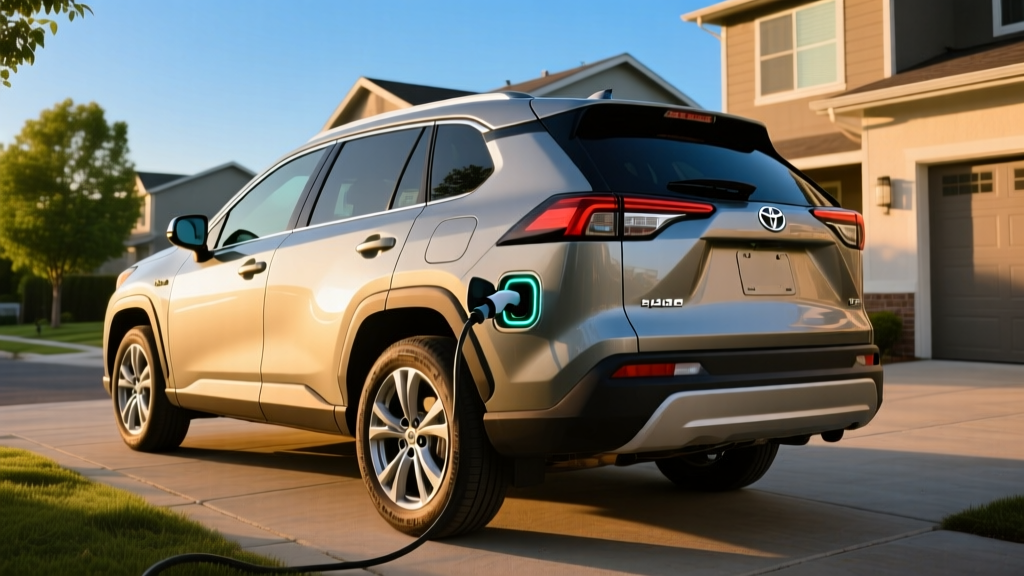
The 2018 Toyota RAV4 Hybrid is a conventional hybrid electric vehicle (HEV). It does not have a charging port, it cannot run on electric-only power for meaningful distances, and it never needs to be plugged in. The small 1.6 kWh nickel-metal hydride (NiMH) traction battery recharges exclusively through regenerative braking and the gasoline engine.
This is a critical distinction because Toyota did not offer a plug-in hybrid (PHEV) RAV4 until the 2021 RAV4 Prime, which carries an 18.1 kWh lithium-ion battery, a charging port, and 42 miles of EPA-rated electric-only range. If a seller or listing describes the 2018 RAV4 Hybrid as a "plug-in," they are mistaken. Here is how the two architectures differ:
| Attribute | 2018 RAV4 Hybrid (HEV) | 2021+ RAV4 Prime (PHEV) |
|---|---|---|
| Plugs in? | No | Yes (Level 1/Level 2) |
| Traction battery | 1.6 kWh NiMH | 18.1 kWh Lithium-ion |
| Electric-only range | <1 mile at low speed | 42 miles (EPA) |
| Combined HP | 194 hp | 302 hp |
| EPA combined MPG / MPGe | 32 MPG | 94 MPGe / 38 MPG (gas) |
| Federal tax credit (new) | None | Up to $7,500 (phased out for Toyota in 2023) |
Fuel Economy: EPA Ratings and Real-World MPG
The EPA rates the 2018 RAV4 Hybrid at 34 MPG city / 30 MPG highway / 32 MPG combined. These figures apply to all three trims (XLE, SE, and Limited) because Toyota equipped every 2018 Hybrid with the same powertrain and electronic on-demand AWD.
| Driving Cycle | EPA Rating | Real-World Expectation |
|---|---|---|
| City | 34 MPG | 33–37 MPG (hybrids excel in stop-and-go) |
| Highway (70 mph) | 30 MPG | 27–30 MPG (aero drag hurts at speed) |
| Combined | 32 MPG | 30–34 MPG depending on terrain and climate |
| Cold weather (below 30°F) | — | 26–29 MPG (engine runs more for cabin heat) |
According to fueleconomy.gov, owners reporting actual fuel economy cluster readings average around 31–33 MPG combined. Hybrid systems inherently favor city driving because regenerative braking recaptures energy that a conventional car wastes as heat, and the engine shuts off at stops. Highway driving, where the gasoline engine runs continuously and aerodynamic drag dominates, narrows the gap between the Hybrid and the gas-only 2018 RAV4 (rated at 25 MPG combined with AWD).
Powertrain and Performance Specs
| Specification | 2018 RAV4 Hybrid |
|---|---|
| Engine | 2.5L 4-cyl Atkinson-cycle (150 hp, 152 lb-ft) |
| Front electric motor | 105 kW (141 hp) |
| Rear electric motor | 50 kW (67 hp) — AWD only |
| Net combined system output | 194 hp |
| Transmission | eCVT (planetary gearset, no belt) |
| 0–60 mph | 7.8 seconds (Car and Driver tested) |
| Drivetrain | Electronic on-demand AWD |
| Towing capacity | 1,750 lbs |
| Cargo volume (rear seats up / down) | 35.6 / 70.2 cu ft |
The eCVT is not a traditional belt-and-pulley CVT. Toyota's Hybrid Synergy Drive uses a planetary gearset that seamlessly blends engine and motor power. There are no clutch packs, torque converter, or shift bands to wear out — a major reason this powertrain consistently tops reliability surveys.
Battery Health, Warranty, and Replacement Cost
The 2018 RAV4 Hybrid's 1.6 kWh NiMH battery pack sits beneath the rear seat. Toyota originally warranted the hybrid battery and related components for 8 years / 100,000 miles in most states, and 10 years / 150,000 miles in California Air Resources Board (CARB) states (CA, CT, ME, MA, NJ, NY, OR, RI, VT, WA, and others adopting CARB standards).
NiMH hybrid batteries degrade more gracefully than early lithium-ion packs. Rather than a sudden cliff, capacity loss typically manifests as slightly reduced fuel economy and more frequent engine cycling. Based on long-term fleet data from taxi and rideshare use of the same Toyota hybrid system, NiMH packs commonly reach 150,000–200,000 miles before requiring service.
If replacement is needed:
- New OEM battery from Toyota: $2,500–$3,500 (parts) plus $500–$800 labor
- Refurbished / reconditioned pack: $1,200–$2,000 installed
- Individual module replacement: Some independent hybrid specialists replace only the degraded modules within the pack for $500–$900, though this is a shorter-term fix
Pricing in 2026 and Tax Credit Eligibility
As of early 2026, used 2018 RAV4 Hybrid pricing typically falls in the $14,000–$19,500 range depending on mileage, condition, and trim. The Limited trim with navigation and the JBL audio package commands a $1,500–$2,000 premium over the XLE base.
Federal tax credit: The 2018 RAV4 Hybrid does not qualify for the IRS §30D Clean Vehicle Credit. That credit applies only to plug-in electric vehicles (BEVs and PHEVs) with a minimum 7 kWh battery capacity. Conventional hybrids like this one — with a 1.6 kWh pack and no plug — are excluded under current IRS guidelines.
Some states offer separate incentives for used hybrid purchases or registrations, but these vary by jurisdiction and change frequently. Check your state's department of revenue or energy office for current programs.
Reliability and Safety Record
The 2018 RAV4 Hybrid earned the IIHS Top Safety Pick designation when equipped with the optional front crash prevention package. Toyota Safety Sense-P (pre-collision, lane departure alert, automatic high beams, and full-speed adaptive cruise control) was standard on all trims — a significant value proposition at this price point.
On reliability, the fourth-generation RAV4 Hybrid powertrain is among the most proven in Toyota's lineup. The 2AR-FXE engine and eCVT share architecture with the Camry Hybrid and Lexus NX 300h, with millions of cumulative miles in service. Common non-powertrain issues reported on owner forums include:
- Water pump seepage around 80,000–100,000 miles ($400–$600 repair)
- Rear differential fluid change recommended at 60,000-mile intervals (often neglected)
- 12V auxiliary battery replacement every 4–5 years (standard AGM group size)
Who Should Buy the 2018 RAV4 Hybrid vs a PHEV or Full EV
Pros
- 32 MPG combined with no plug-in requirement
- Standard AWD and Toyota Safety Sense
- Proven, low-maintenance eCVT powertrain
- Strong cargo space (35.6 cu ft)
- Sub-$20K entry price in 2026
Cons
- No electric-only driving range
- Dated infotainment (no Apple CarPlay / Android Auto on 2018)
- Modest 194 hp — not a quick SUV
- No federal tax credit eligibility
- NiMH battery warranty likely expired
Choose the 2018 RAV4 Hybrid if: You want a reliable, fuel-efficient AWD SUV under $20,000, you lack access to home or workplace charging, and your daily commute is under 40 miles of mixed driving.
Choose a used RAV4 Prime (PHEV) if: You can install a Level 2 charger at home, your commute is under 42 miles round-trip, and you want to drive mostly on electricity while keeping gas for road trips.
Choose a used BEV (e.g., Tesla Model Y, Hyundai Ioniq 5) if: You have reliable home charging, your daily driving is under 200 miles, and you want to eliminate gasoline costs and oil changes entirely.
Frequently Asked Questions
How many MPG does the 2018 RAV4 Hybrid get?
The EPA rates it at 34 city / 30 highway / 32 combined MPG. In real-world driving, most owners report 30–34 MPG combined, with city driving often exceeding the EPA estimate and highway cruising falling slightly below.
Can I plug in the 2018 RAV4 Hybrid to charge?
No. The 2018 RAV4 Hybrid is a conventional HEV with no charging port. Its 1.6 kWh battery recharges only through regenerative braking and the gasoline engine. If you want a plug-in RAV4, you need the 2021 or newer RAV4 Prime.
How far can the 2018 RAV4 Hybrid drive on electric only?
Less than one mile, and only at very low speeds (under 25 mph) on a fully charged battery. The electric motors assist the gasoline engine continuously but are not designed for standalone propulsion. For meaningful electric-only range, you need a PHEV or BEV.
Is the hybrid battery reliable and what does replacement cost?
Toyota's NiMH hybrid batteries are among the most durable in the industry, commonly lasting 150,000–200,000 miles. A new OEM replacement runs $3,000–$4,000 installed; refurbished packs cost $1,200–$2,000. The original 8yr/100k-mile warranty has likely expired on a 2018 model unless it was titled in a CARB state (10yr/150k).
Does the 2018 RAV4 Hybrid qualify for any tax credit?
Not the federal §30D credit, which requires a plug-in vehicle with at least 7 kWh of battery capacity. The 2018 RAV4 Hybrid has a 1.6 kWh battery and no plug. Some states may offer minor incentives for efficient used vehicles — check your local programs.
What should I check before buying a used 2018 RAV4 Hybrid?
Prioritize a hybrid battery health check at a Toyota dealer (they can read the battery's internal resistance and state-of-health via Techstream diagnostics). Also verify the hybrid system coolant has been changed, the rear differential fluid is current, and that the 12V auxiliary battery is less than three years old.